
Length
InferredAbout 3 m; institutional reference
Holtz lists an educational reconstruction without a named specimen, maturity assessment or method; this is not an adult species range. [D6]
EXHIBIT 134
Montanoceratops cerorhynchus
Montanoceratops was a small beaked ceratopsian; incomplete skull material has repeatedly changed how its head is reconstructed. [1]
TWO WAYS TO PICTURE THE PAST
Compare the evidence with the familiar movie image. The illustrations are not to a shared scale.
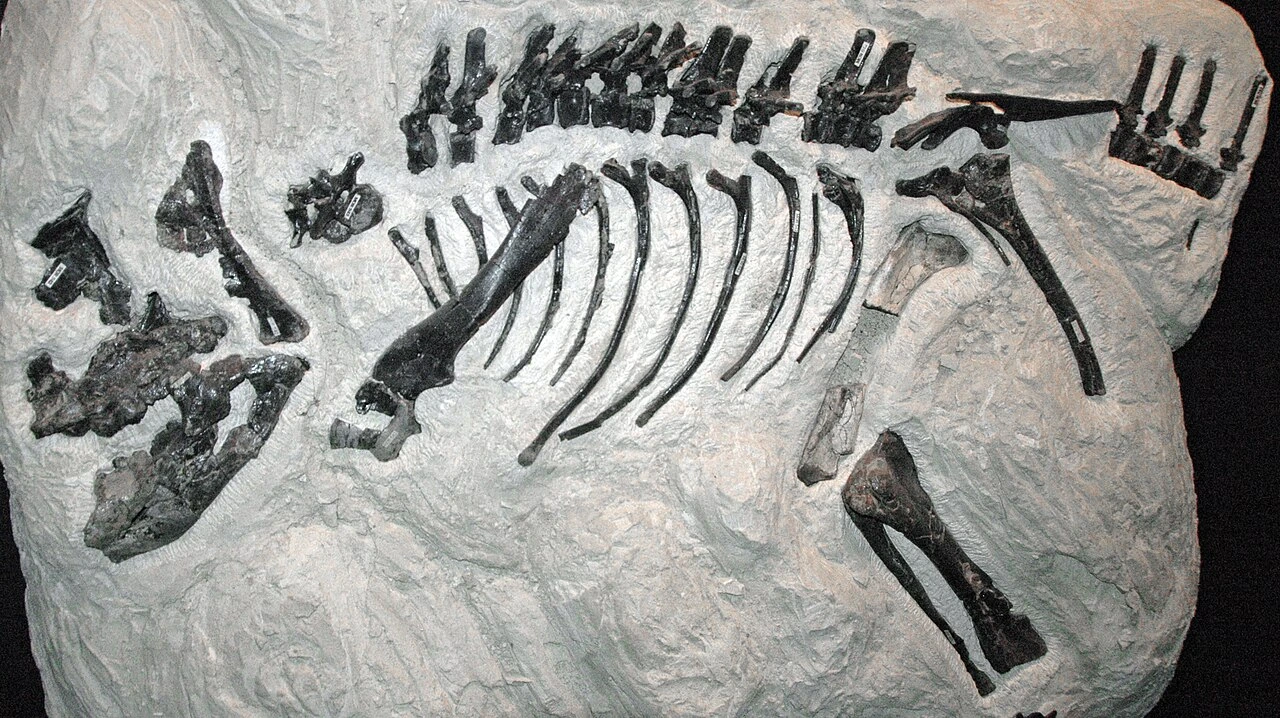
Juvenile M. cerorhynchus MOR542 displayed at the Museum of the Rockies. This incomplete skeleton does not establish the missing nasal anatomy. Fossil colors do not establish living colors or soft tissues. [2]
Montanoceratops MOR 542.jpg · James St. John. CC BY 2.0. Proportionally resized Commons preview and converted to WebP; no anatomy edits.
The photograph or figure shows the credited fossil material; displayed mounts and labels can include interpretation.
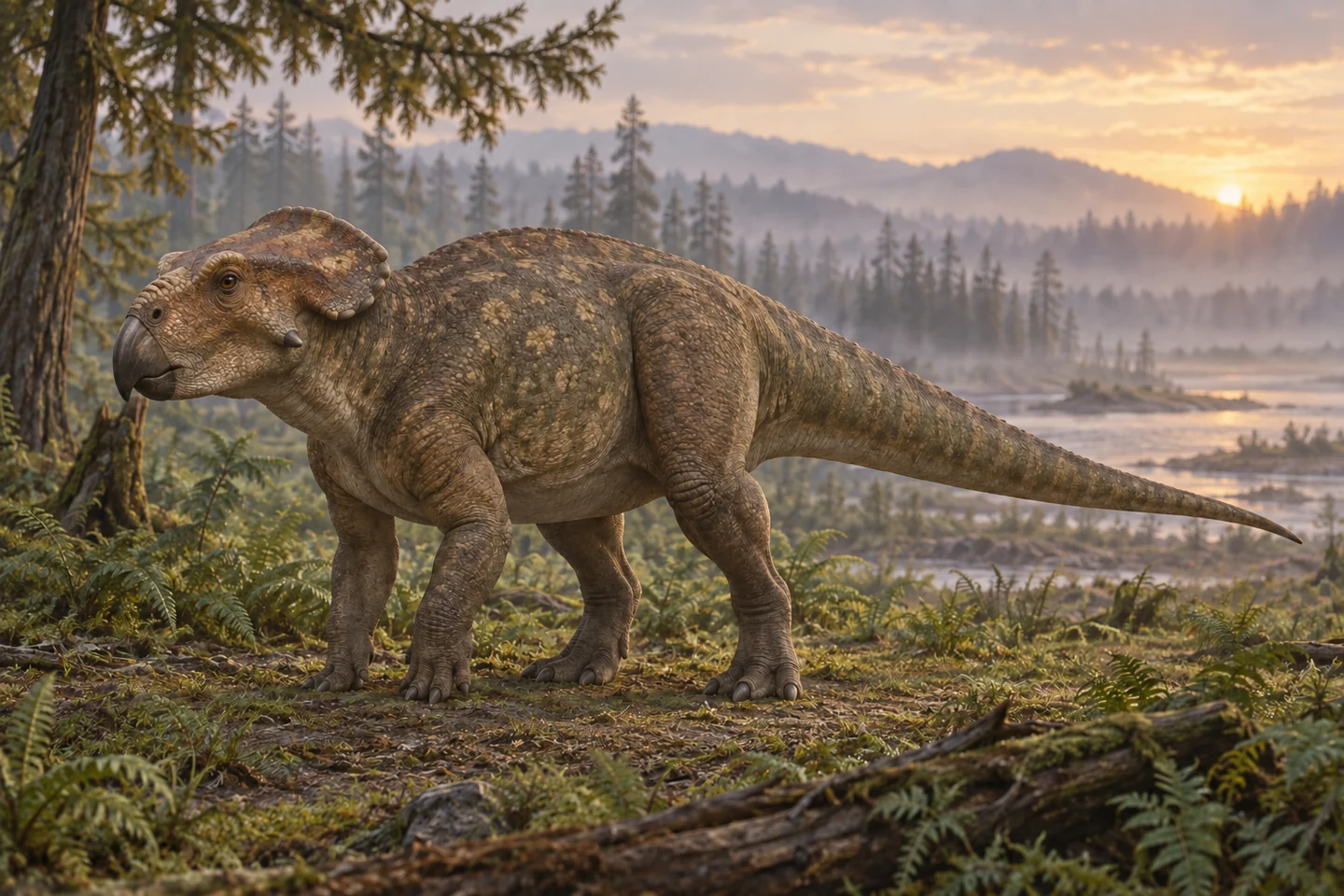
Original cinematic interpretation of Montanoceratops cerorhynchus. Colors, soft tissues, scenery and missing anatomy are reconstructed artistic choices; this is not a directly observed individual or behavior. The nasal and portions of the body are incompletely known; the historical nose horn is omitted, and posture is comparative. The short frill and restored tail/body contours remain interpretations rather than a known complete living outline. Lighting, coloration and scenery are artistic choices. This image does not document a fossil locality or behavior.
Original artwork · artistic interpretation.
Scientific view: source-informed reconstruction, credited paleoart or specimen-based imagery. Movie-style view: Original artistic interpretation. Reconstructions involve uncertainty.
MEET THE ANIMAL
Montanoceratops was a plant-eating dinosaur known from North American fossils. Museum signage for a juvenile specimen identifies slicing teeth and a narrow beak, features consistent with gathering vegetation. A young animal is a growth-stage example, rather than a standard adult. Its displayed proportions should therefore remain connected to that juvenile identity. [D8]
Reviewed occurrences include Montana and Alberta in the Maastrichtian, near the end of the Cretaceous. Its nasal anatomy remains unknown in the relevant material. An old nose-horn reconstruction used misplaced cheek material, so the familiar horn cannot be treated as directly preserved evidence. A damaged or incomplete skull can invite restoration errors that persist in complete-looking images. [D2]
A second partial skeleton added a braincase, shoulder-girdle elements, and a hand. These discoveries expand the anatomical picture without turning the earlier specimen into one complete animal. Each find has its own preserved parts and limits. Montanoceratops illustrates why a profile should follow the actual evidence across specimens, rather than treating a fully assembled mount as the exact skeleton recovered from one place. [D3]
PREHISTORIC ANIMAL DOSSIER
The animal, the evidence, and the questions still open.
Its historical mounted skull contains substantial restoration. Later reviews find the nasal unknown, so a confidently restored nose horn is unjustified. [D1] [D2]
Profile scope: M. cerorhynchus, anchored by AMNH5464 and referred material; disputed referrals and Cerasinops MOR300 are excluded. [D7]
Source supported identifies a description documented by the cited source. Inferred marks a reconstruction or functional estimate. Debated marks competing interpretations. Not established means the sources reviewed for this dossier do not support a firm conclusion; it does not mean a behavior never occurred.
A size reference is an estimate, not a population range. Nesting evidence does not by itself establish courtship, mate choice, or lifelong pairing.
About 3 m; institutional reference
Holtz lists an educational reconstruction without a named specimen, maturity assessment or method; this is not an adult species range. [D6]
About 170 kg; AMNH5464 model
Paul uses reconstructed volume and limb scaling. Missing anatomy is restored; maturity is unconfirmed. [D5]
Plant eater
Museum signage identifies slicing teeth and a narrow beak consistent with herbivory. Preferred plant species are not established. [D8]
Continental Maastrichtian settings
Reviewed occurrences include Montana St. Mary River beds and Alberta material. Uncertain provenance and excluded referrals limit finer age and habitat reconstruction. [D2]
Quadrupedality favored by comparative anatomy
A straight femur and shoulder features are compatible with walking on four limbs. The reconstruction does not establish maximum speed or exclude every bipedal movement. [D4]
Beaked skull; nasal anatomy unresolved
The nasal is unknown in the reviewed material. The old nose-horn reconstruction used misplaced cheek material; it should not be treated as an observed nasal horn. [D2] [D6]
Not established here
A second partial skeleton expands anatomical coverage. It does not establish nesting, clutch size, parental care or reproductive maturity. [D3]
Not established here
Incomplete skulls do not demonstrate sex-specific frills or mate choice. No genus-specific courtship evidence was identified in the reviewed accounts. [D1]
Not established here
The reviewed partial skeletons and referrals do not establish herds, communal nests or a characteristic group size. [D3]
Sources and inspection notes for the claims in this profile.
THE STORY IN THE FOSSILS
The AMNH5464 mount once supplied a seemingly complete view of the animal. In reality, its plaster skull and modeled missing bones filled substantial gaps, making the fossil itself essential to anatomical interpretation. [1]
Current comparative work identifies MOR300 as Cerasinops. Excluding that specimen preserves Montanoceratops’s taxonomic and measurement scope. [7]
The dossier identifies the scope of each reference estimate. A mount, an individual fossil and a species-wide adult range are different measurements. Comparison metrics remain unavailable where adult scope has not been established. Unknown does not mean zero.
Sources support the stated claims and scopes. Refer to the evidence notes for uncertainty.
KEEP EXPLORING
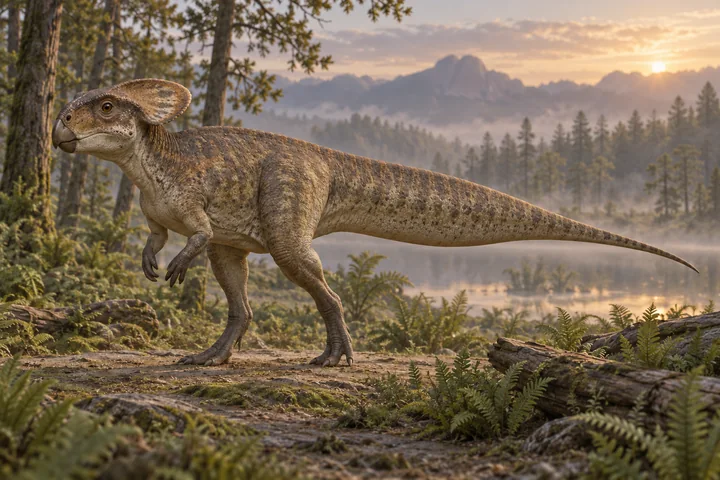
Yamaceratops dorngobiensis
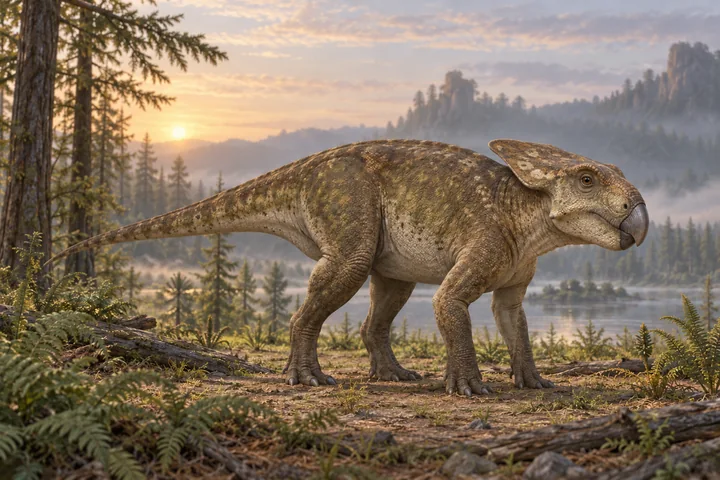
Yamaceratops was a small beaked ceratopsian whose cheek and jaw anatomy records a distinctive early neoceratopsian combination.
Leptoceratops gracilis
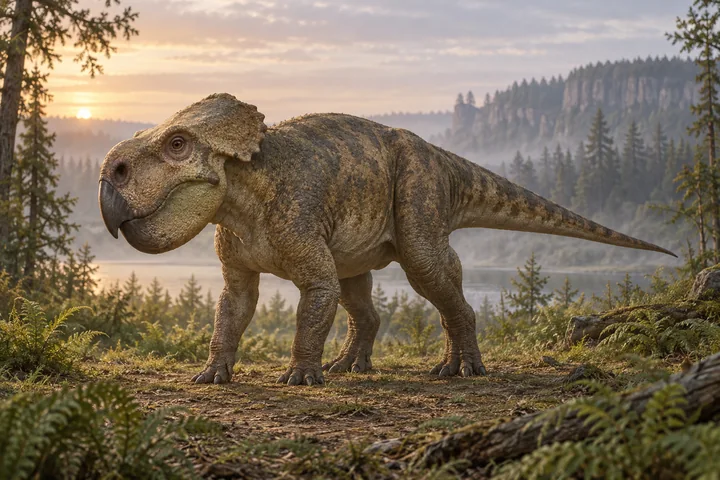
Leptoceratops was a hornless, short-frilled plant eater whose teeth preserve evidence of complex chewing.
Udanoceratops tschizhovi
Udanoceratops was a large beaked ceratopsian with a strikingly deep lower jaw and an incompletely known body.