EXPLORE PREHISTORY 220 prehistoric animal profiles · Scientific & movie-style image galleries

EXHIBIT 81

Lesothosaurus

Lesothosaurus diagnosticus

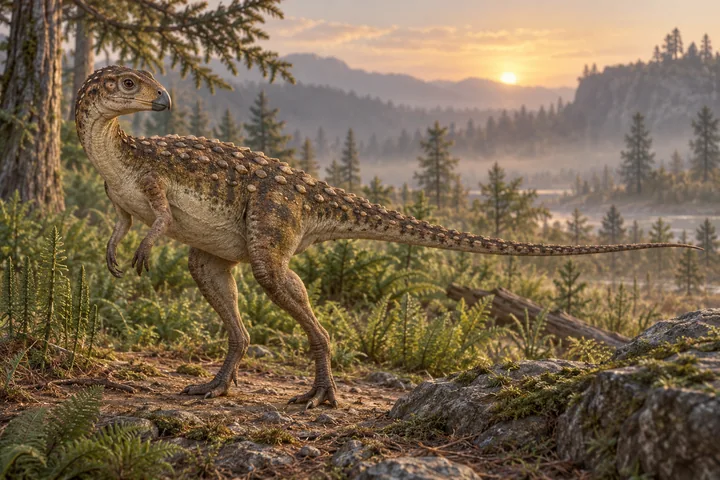
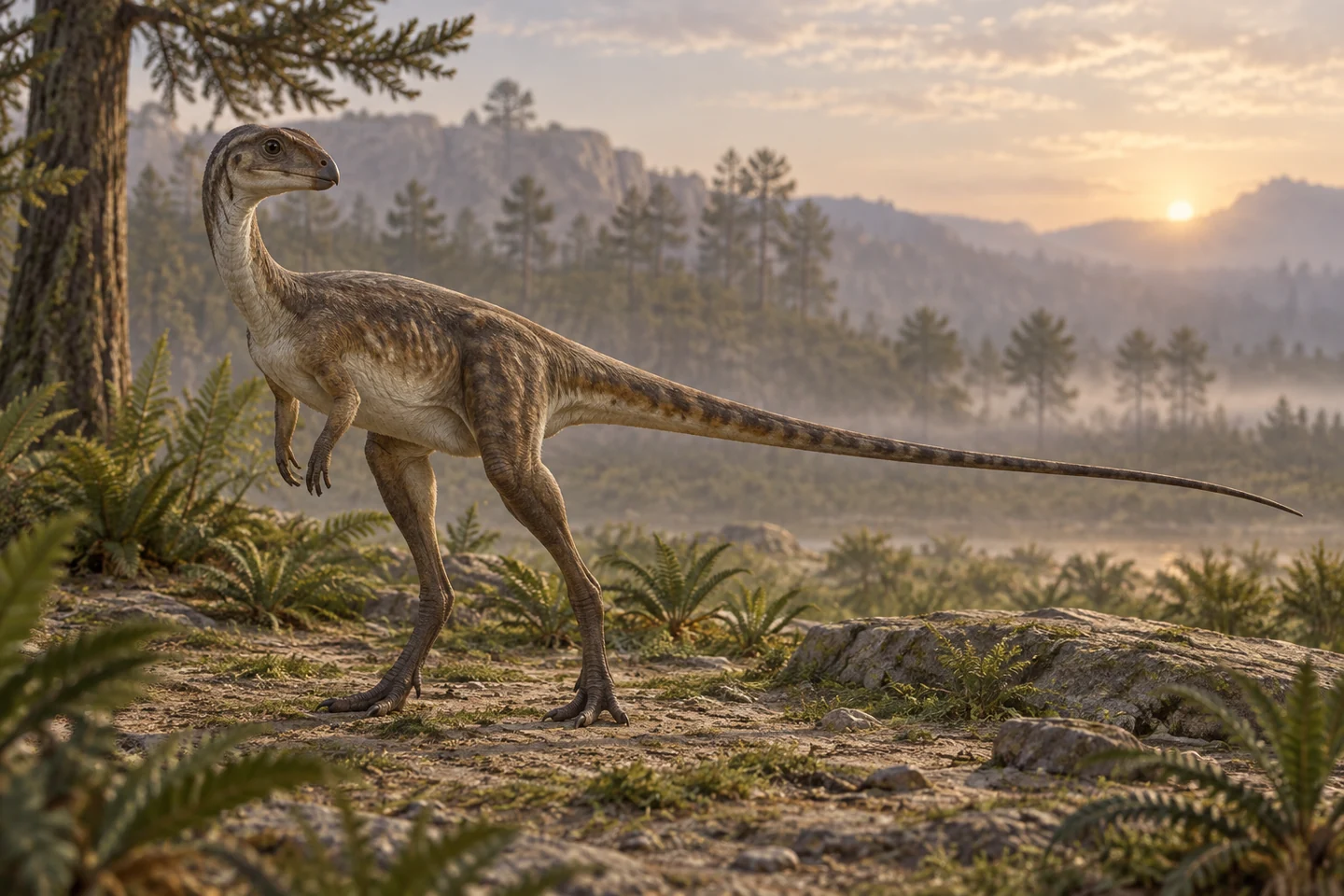
Lesothosaurus was a small early ornithischian.

Evidence profile
PERIODEarly Jurassic[2]
DIETHerbivore / possible omnivoreEvidence and uncertainty in the dossier
TOTAL LENGTHSee the dossierEstimate scope matters
FOSSILS FOUNDLesotho, South Africa[2]
CompareRead the dossierView the sources

MEET THE ANIMAL

Meet Lesothosaurus

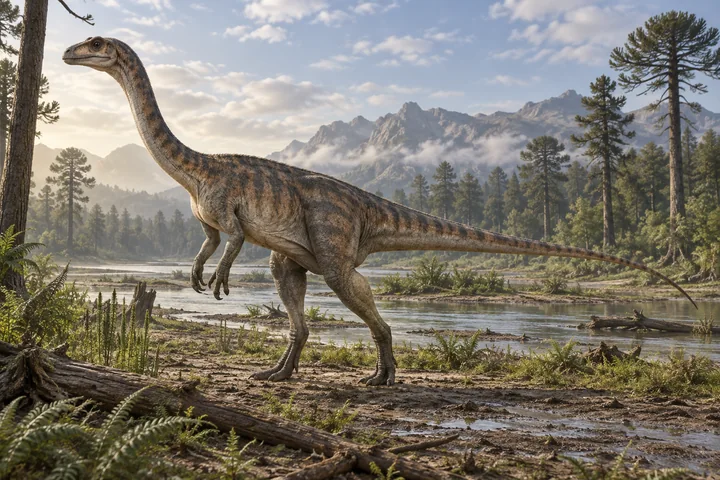
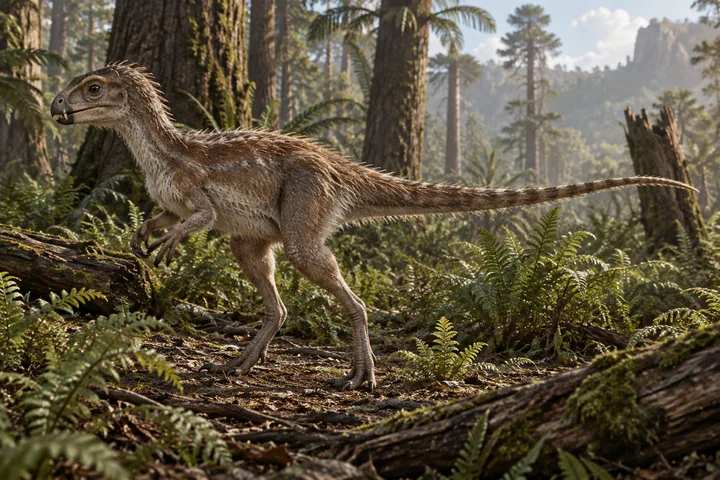
Lesothosaurus was a small, two-legged dinosaur from Early Jurassic southern Africa. A museum reference of about one metre gives a simple picture of its scale, but larger individuals are known. Size by itself cannot identify a fully grown adult. That matters when comparing fossils that may represent different stages of the same animal's growth. [D1] [D2]

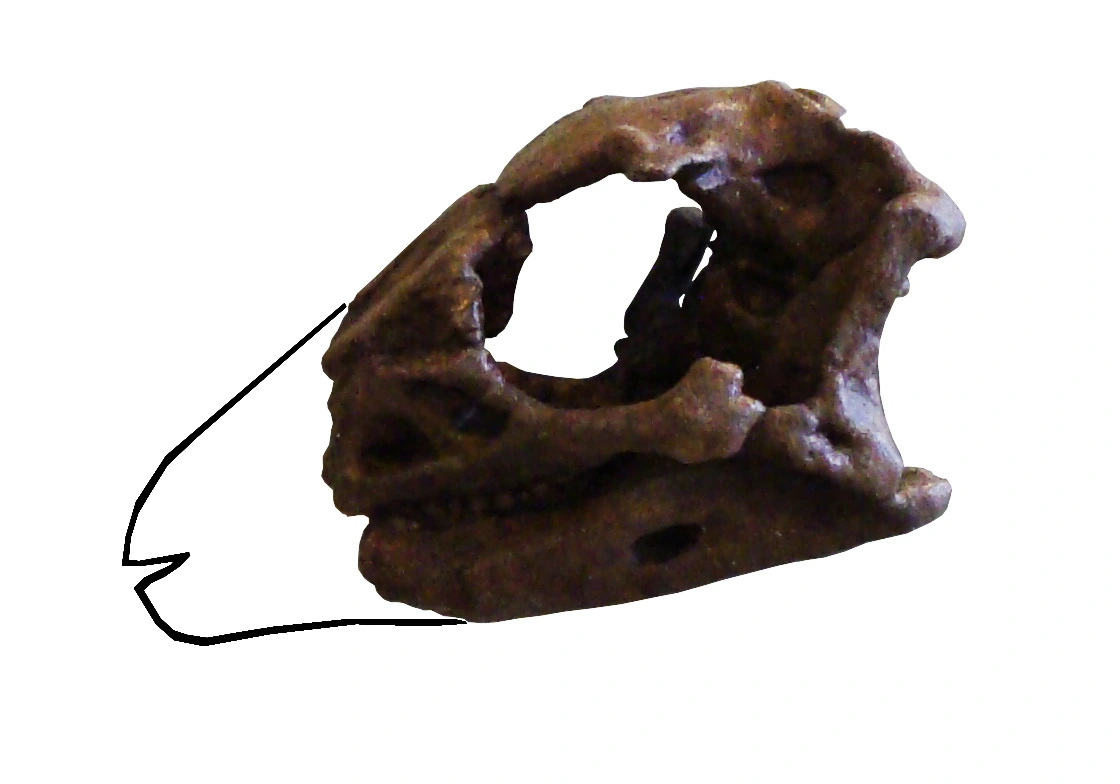
CT-based work reconstructs a small skull with large eye openings and toothed jaws. The fossils are incomplete or distorted, so a restored head combines preserved pieces with interpretation. A complete picture can make the anatomy easier to understand while still showing more than any one fossil actually retains. [D4]

Its teeth have also been tested using different dietary models. The models do not agree completely, and researchers favor a diet mainly of soft plant material with possible occasional animal food. This is an inference about feeding, not a preserved menu. Lesothosaurus shows how scientific uncertainty can be specific: the evidence can support a plant-dominated diet without proving that the animal never ate anything else. [D5]

PREHISTORIC ANIMAL DOSSIER

A life in profile.

The animal, the evidence, and the questions still open.

Diet and aggregation remain inferred.

Profile scope: Species — Lesothosaurus diagnosticus; growth stages require care.

Time
Early Jurassic
Fossil locations in this exhibit
Lesotho, South Africa
How to read the evidence

Source supported identifies a description documented by the cited source. Inferred marks a reconstruction or functional estimate. Debated marks competing interpretations. Not established means the sources reviewed for this dossier do not support a firm conclusion; it does not mean a behavior never occurred.

A size reference is an estimate, not a population range. Nesting evidence does not by itself establish courtship, mate choice, or lifelong pairing.

Body length

Inferred

About 1 m (museum reference); larger individuals known

The museum’s rounded reference has no life-stage basis. Growth research includes larger, older individuals still lacking proof of complete growth; one metre is not an adult maximum. [D1] [D2]
Body mass

Inferred

About 6.3 kg for NHMUK RU B17

Limb-circumference estimate; full maturity is not independently established. This is not a normal adult mass. [D6]

Diet and feeding

Inferred

Mainly plants; occasional omnivory possible

A comparative dental study classifies Lesothosaurus differently with its two models. The authors favor predominantly soft plant matter with possible occasional animal food; exact meals are not preserved. [D5]

Habitat and setting

Source supported

Upper Elliot Formation, southern Africa

Jaw material and geological discussion place the species in continental deposits of Lesotho and South Africa. Increasing aridity is regional context, not proof of one preferred microhabitat. [D3]

Movement

Inferred

Two-legged movement

The museum describes a small biped. This does not establish a maximum running speed or the posture of every growth stage. [D1]

Recognizable anatomy

Source supported

Small skull, large eye openings and toothed jaws

CT-based descriptions recover cranial anatomy from incomplete and distorted fossils. The assembled scientific image remains a display; missing structures and living soft tissues require reconstruction. [D4]

Reproduction & life together

Reproduction and nesting

Inferred

Possible reproductive maturity around 2–4 years

Growth slowing at these estimated ages is interpreted as possible reproductive maturity. It is not direct evidence of egg laying, and reviewed sources do not establish nests, incubation or parental feeding. [D2]

Mating and courtship

Not established

Not established here

The reviewed jaws, tooth mechanics, growth and taphonomy studies do not establish pairing, mating displays or sex-specific ornaments.

Social behavior

Inferred

Mixed-age aggregations proposed

A single-species bonebed and histology support a group containing different growth stages. The authors infer aggregation; duration, herd structure and social roles remain unestablished. [D2]

Dossier research & sources

Sources and inspection notes for the claims in this profile.

  1. LesothosaurusNatural History Museum, London · Accessed 2026-10-02Museum profile; rounded reference size, diet, identity and geographic occurrence. Life stage and individual basis of size values are not specified. · Inspected: page
  2. Osteohistology and taphonomy support social aggregation in the early ornithischian dinosaur Lesothosaurus diagnosticusPalaeontology / Wiley · Accessed 2026-10-02Original abstract; mixed growth stages, bonebed taphonomy, possible reproductive-maturity timing and continued growth in the oldest sampled individual. · Inspected: abstract
  3. Digital reconstruction of the mandible of an adult Lesothosaurus diagnosticus with insight into the tooth replacement process and dietPeerJ · Accessed 2026-10-02Indexed original full-text excerpts inspected; CT-based adult jaw, asynchronous tooth replacement, upper Elliot setting and discussion of proposed Stormbergia synonymy. Direct page access was blocked. · Inspected: excerpt
  4. Digital preparation and osteology of the skull of Lesothosaurus diagnosticus (Ornithischia: Dinosauria)PeerJ / PubMed Central · Accessed 2026-10-02Original article excerpts inspected; CT-based skull description, identification and limits of complete undistorted cranial material. · Inspected: excerpt
  5. Dental form and function in the early feeding diversification of dinosaursScience Advances / PubMed Central · Accessed 2026-10-02Original full text inspected; comparative tooth mechanics, diet-classification disagreement and inference of predominantly plant feeding with possible occasional omnivory. · Inspected: page
  6. Rates of Dinosaur Body Mass Evolution Indicate 170 Million Years of Sustained Ecological Innovation on the Avian Stem LineagePLOS Biology · Accessed 2026-10-02Original paper methods and downloaded Dataset S1 inspected; Full data and Mass estimates sheets identify specimen, maturity notes, limb measurements and calculated mass. Dataset retained locally for scope verification. · Inspected: page

THE STORY IN THE FOSSILS

A small dinosaur with larger questions.

Its teeth do not settle every dietary question. Shape-based and mechanical models disagree between herbivory and omnivory. This leaves a plausible plant-dominated diet while keeping occasional animal food as a possibility. [5]

CT scans of an adult lower jaw reveal how replacement teeth formed at different positions. Research also discusses whether larger fossils once named Stormbergia represent growth stages of Lesothosaurus rather than a distinct animal. [3]

A note on scale and time

The dossier identifies the scope of each reference estimate. A mount, an individual fossil and a species-wide adult range are different measurements. Comparison metrics remain unavailable where adult scope has not been established. Unknown does not mean zero.

Sources & editorial notes

Sources support the stated claims and scopes. Refer to the evidence notes for uncertainty.

  1. LesothosaurusNatural History Museum, London · Accessed 2026-10-02Museum profile; rounded reference size, diet, identity and geographic occurrence. Life stage and individual basis of size values are not specified. · Inspected: page
  2. Osteohistology and taphonomy support social aggregation in the early ornithischian dinosaur Lesothosaurus diagnosticusPalaeontology / Wiley · Accessed 2026-10-02Original abstract; mixed growth stages, bonebed taphonomy, possible reproductive-maturity timing and continued growth in the oldest sampled individual. · Inspected: abstract
  3. Digital reconstruction of the mandible of an adult Lesothosaurus diagnosticus with insight into the tooth replacement process and dietPeerJ · Accessed 2026-10-02Indexed original full-text excerpts inspected; CT-based adult jaw, asynchronous tooth replacement, upper Elliot setting and discussion of proposed Stormbergia synonymy. Direct page access was blocked. · Inspected: excerpt
  4. Digital preparation and osteology of the skull of Lesothosaurus diagnosticus (Ornithischia: Dinosauria)PeerJ / PubMed Central · Accessed 2026-10-02Original article excerpts inspected; CT-based skull description, identification and limits of complete undistorted cranial material. · Inspected: excerpt
  5. Dental form and function in the early feeding diversification of dinosaursScience Advances / PubMed Central · Accessed 2026-10-02Original full text inspected; comparative tooth mechanics, diet-classification disagreement and inference of predominantly plant feeding with possible occasional omnivory. · Inspected: page
  6. Rates of Dinosaur Body Mass Evolution Indicate 170 Million Years of Sustained Ecological Innovation on the Avian Stem LineagePLOS Biology · Accessed 2026-10-02Original paper methods and downloaded Dataset S1 inspected; Full data and Mass estimates sheets identify specimen, maturity notes, limb measurements and calculated mass. Dataset retained locally for scope verification. · Inspected: page

FOLLOW YOUR CURIOSITY

Who will you meet next?

KEEP EXPLORING

More from the collection