
Body length
Inferred2.46–8.09 m across modeled specimens
The 2026 study models thirty-seven referred fossils with revised proportions. These are not a mature species range; uncertain giant material is excluded. [D1]
EXHIBIT 211
Liopleurodon ferox
Marine reptile
Liopleurodon ferox was a large-headed pliosaur from Middle Jurassic European seas. Modern size models separate confidently identified fossils from giant composite reconstructions. [1]
TWO WAYS TO PICTURE THE PAST
Compare the evidence with the familiar movie image. The illustrations are not to a shared scale.
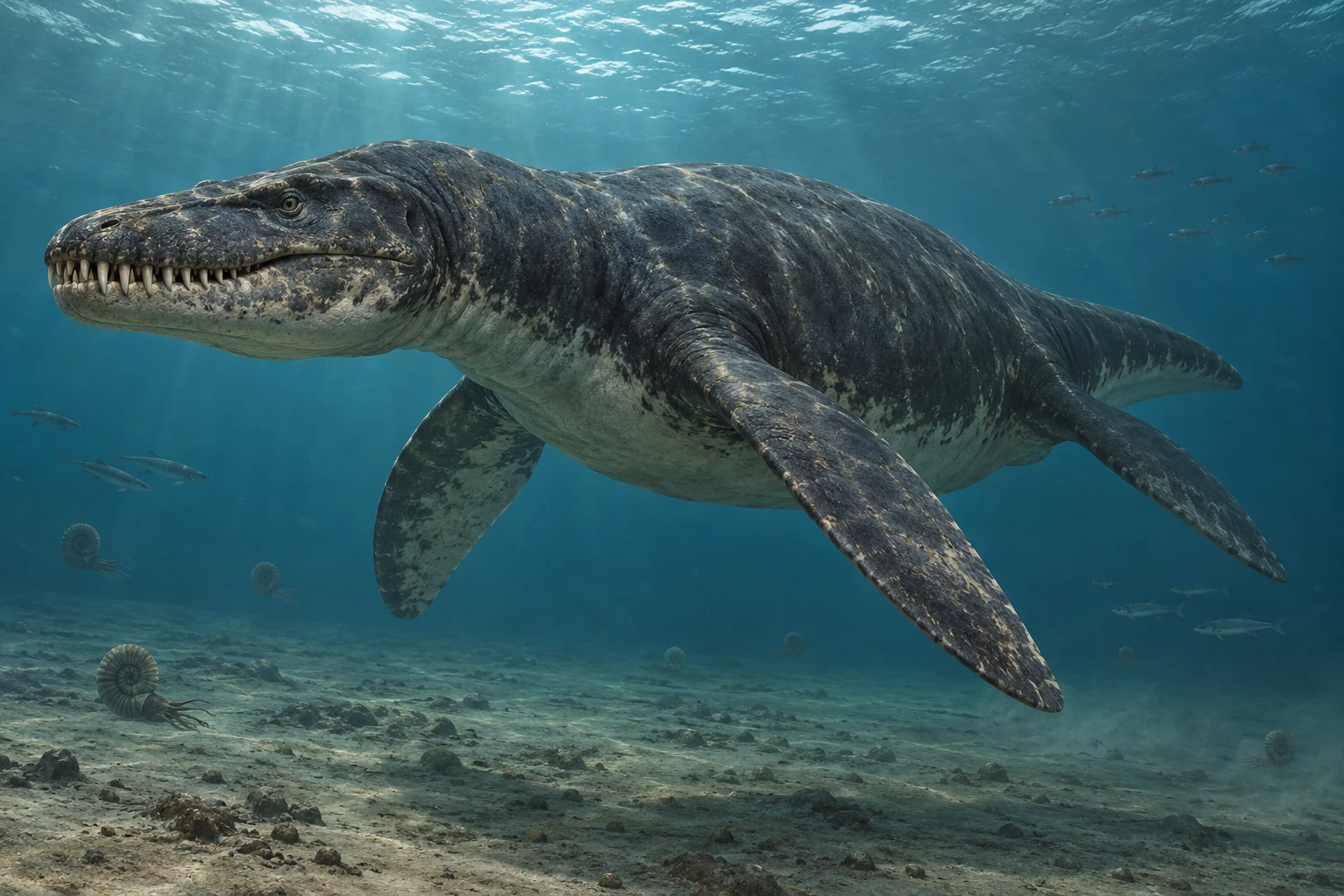
An illustrative reconstruction. Compare its anatomy with the evidence and limitations in the dossier. [2]
Source-informed reconstruction. Appearance evidence [2]. Original illustration; missing anatomy, coloration and scenery include interpretation.
Fossils constrain this life reconstruction. Missing anatomy, coloration and the environmental scene include interpretation; the dossier explains the evidence limits.
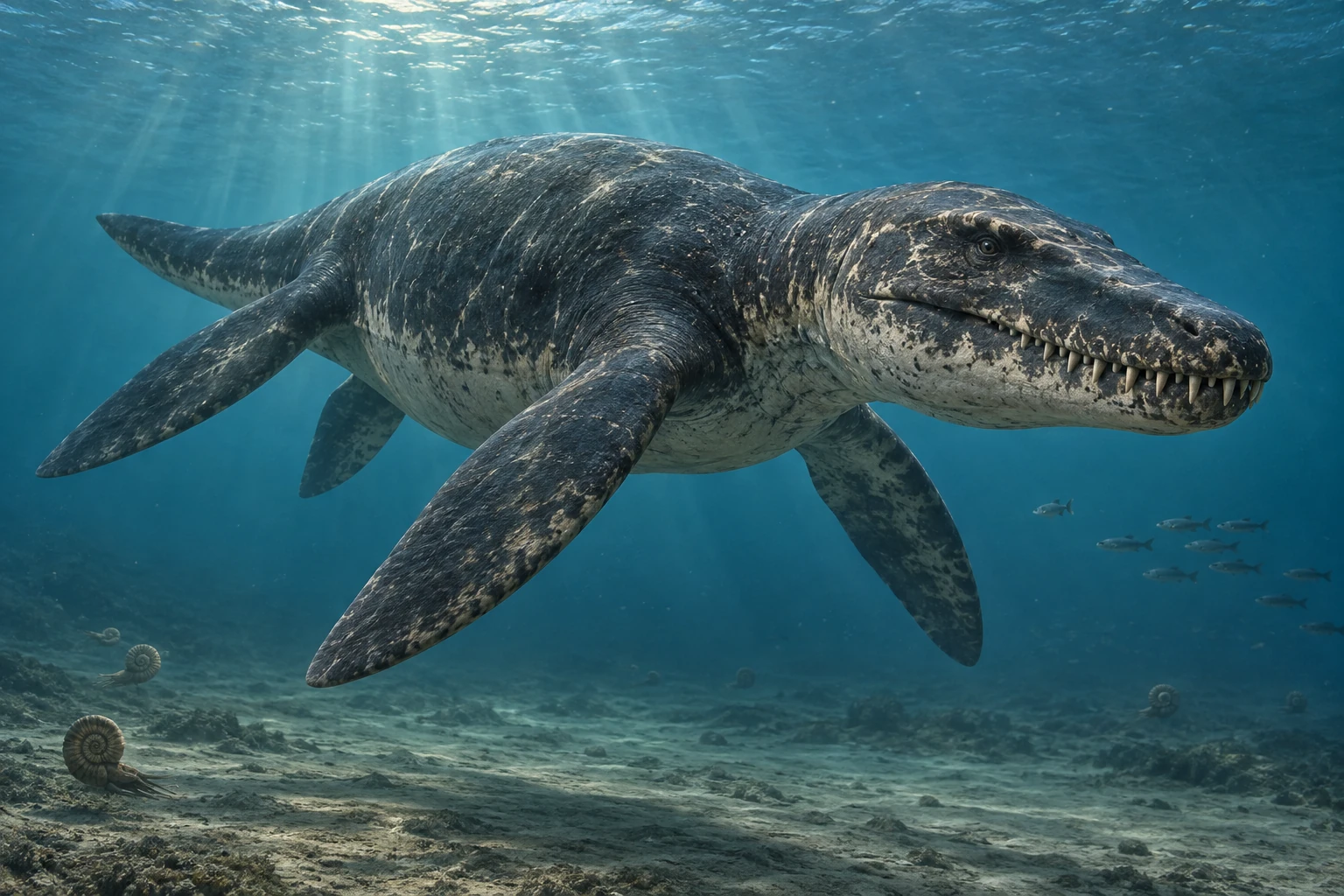
An illustrative reconstruction. Compare its anatomy with the evidence and limitations in the dossier. Lighting, coloration and scenery are artistic choices. This image does not document a fossil locality or behavior.
Original artwork · artistic interpretation.
Scientific view: source-informed reconstruction, credited paleoart or specimen-based imagery. Movie-style view: Original artistic interpretation. Reconstructions involve uncertainty.
MEET THE ANIMAL
Liopleurodon ferox was a pliosaur, one branch of the marine reptiles called plesiosaurs. It lived in Middle Jurassic European seas and had a large head suited to catching other animals. A 2026 study rebuilt its proportions from confidently identified fossils. The resulting lengths describe particular reconstructed specimens, rather than a guaranteed size range for all grown animals. [D1]
Another study examined a separate part of the braincase, the bones behind the skull that protected the brain. Holes through this bone carried nerves and blood vessels. That small piece helps scientists compare anatomy, even though it is not a complete animal. An older length estimate based on it should not become an unquestioned measurement of an entire skeleton. [D2]
Like other plesiosaurs, its four limbs formed paddles. Experimental models help test how both pairs might propel a swimmer, but they do not reveal a precise speed for this genus. [D4]
Fossil pregnancy in a different plesiosaur supports live birth for the wider group. Its extension to Liopleurodon remains a comparison, leaving this animal’s litter size and parenting uncertain. [D5]
PREHISTORIC ANIMAL DOSSIER
The animal, the evidence, and the questions still open.
A studied Oxford Clay braincase preserves joined bones that enclosed nerves and blood vessels behind the skull. A single fossil can reveal anatomy without preserving an entire animal. [D2]
Profile scope: Genus Liopleurodon, represented by L. ferox and confidently identified Callovian material. Other giant pliosaur bones and historical composite skeletons are excluded from its size evidence. [D1]
Source supported identifies a description documented by the cited source. Inferred marks a reconstruction or functional estimate. Debated marks competing interpretations. Not established means the sources reviewed for this dossier do not support a firm conclusion; it does not mean a behavior never occurred.
A size reference is an estimate, not a population range. Nesting evidence does not by itself establish courtship, mate choice, or lifelong pairing.
2.46–8.09 m across modeled specimens
The 2026 study models thirty-seven referred fossils with revised proportions. These are not a mature species range; uncertain giant material is excluded. [D1]
Not established here
The collection entry identifies a fossil rather than weighing a living animal. No reproducible adult mass estimate is adopted. [D3]
Macropredatory body plan
Large skull and dentition support feeding on animals. This functional interpretation is not a record of every prey species. [D6]
Callovian Oxford Clay and equivalents
Confidently referred L. ferox material comes from Middle Jurassic marine deposits in England and northwestern France. [D1]
Four-paddle swimming reconstructed
Flipper models support propulsion from both pairs, not a Liopleurodon swimming speed or exact stroke. [D4]
Large head, braincase canals and fused bones
CAMSM J27424 preserves exoccipital-opisthotic anatomy and openings for nerves and blood vessels. Its isolated condition limits whole-body restoration. [D2]
Live birth is a broader-group inference
A fetus within another Late Cretaceous plesiosaur supports live birth there, not Liopleurodon pregnancy, litter size or breeding age. [D5]
Not established here
The plesiosaur synthesis does not establish mating displays or sexual dimorphism for Liopleurodon. [D6]
Not established here
The synthesis leaves parental care and sociality unresolved; a large predatory skull does not demonstrate pack hunting. [D6]
Sources and inspection notes for the claims in this profile.
THE STORY IN THE FOSSILS
Nerves and blood vessels left passages through the braincase. Those openings give anatomical evidence even when the rest of an animal is missing. [2]
The revised model rejects a composite using different pliosaur taxa. Matching material matters before scaling the body. [1]
The dossier identifies the scope of each reference estimate. A mount, an individual fossil and a species-wide adult range are different measurements. Comparison metrics remain unavailable where adult scope has not been established. Unknown does not mean zero.
Sources support the stated claims and scopes. Refer to the evidence notes for uncertainty.
KEEP EXPLORING
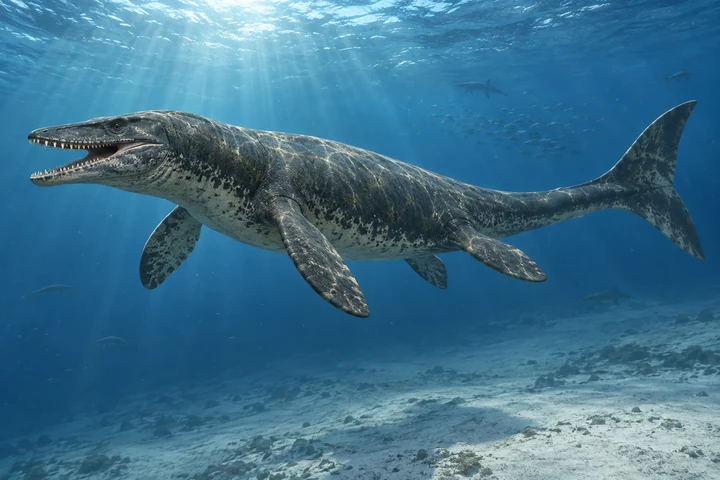
Mosasaurus hoffmanni
Marine reptile
Mosasaurus was a large marine lizard with four flippers, a long tail and toothed jaws. Its size is reconstructed from incomplete fossils.
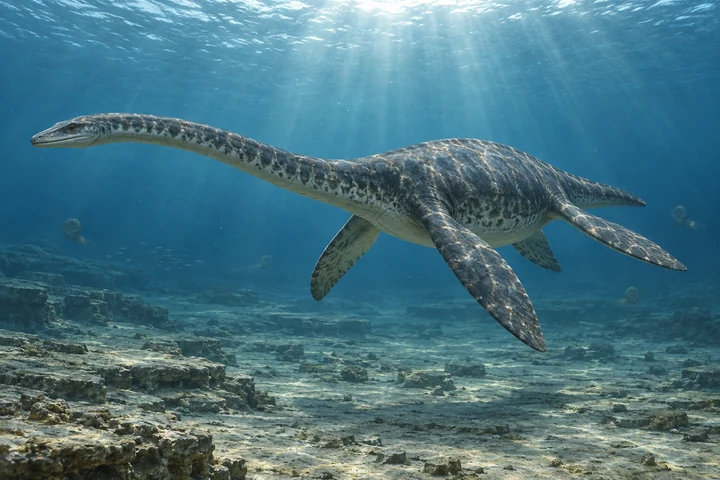
Plesiosaurus dolichodeirus
Marine reptile
Plesiosaurus was an Early Jurassic marine reptile with a small head, a long neck and four flippers. Mary Anning found a nearly complete skeleton.
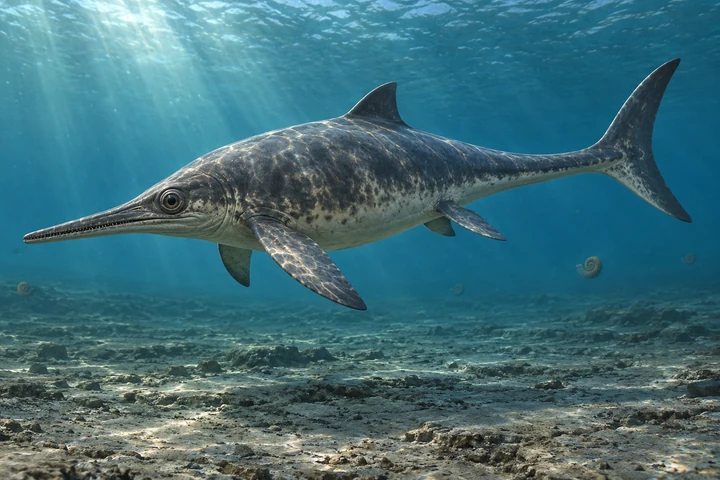
Ichthyosaurus somersetensis
Marine reptile
Ichthyosaurus was a streamlined marine reptile. A Somerset specimen of I. somersetensis preserves an embryo, providing direct evidence of live birth.