
Body length
InferredAbout 6 m (museum reference)
A rounded genus-profile reconstruction with no named individual or maturity assessment. It is not an adult maximum or a size range for all named species. [D1]
EXHIBIT 83
Lufengosaurus huenei
Lufengosaurus combines well-known adult skeletons with embryonic and hatchling evidence that tests hypotheses of dependence.
TWO WAYS TO PICTURE THE PAST
Compare the evidence with the familiar movie image. The illustrations are not to a shared scale.
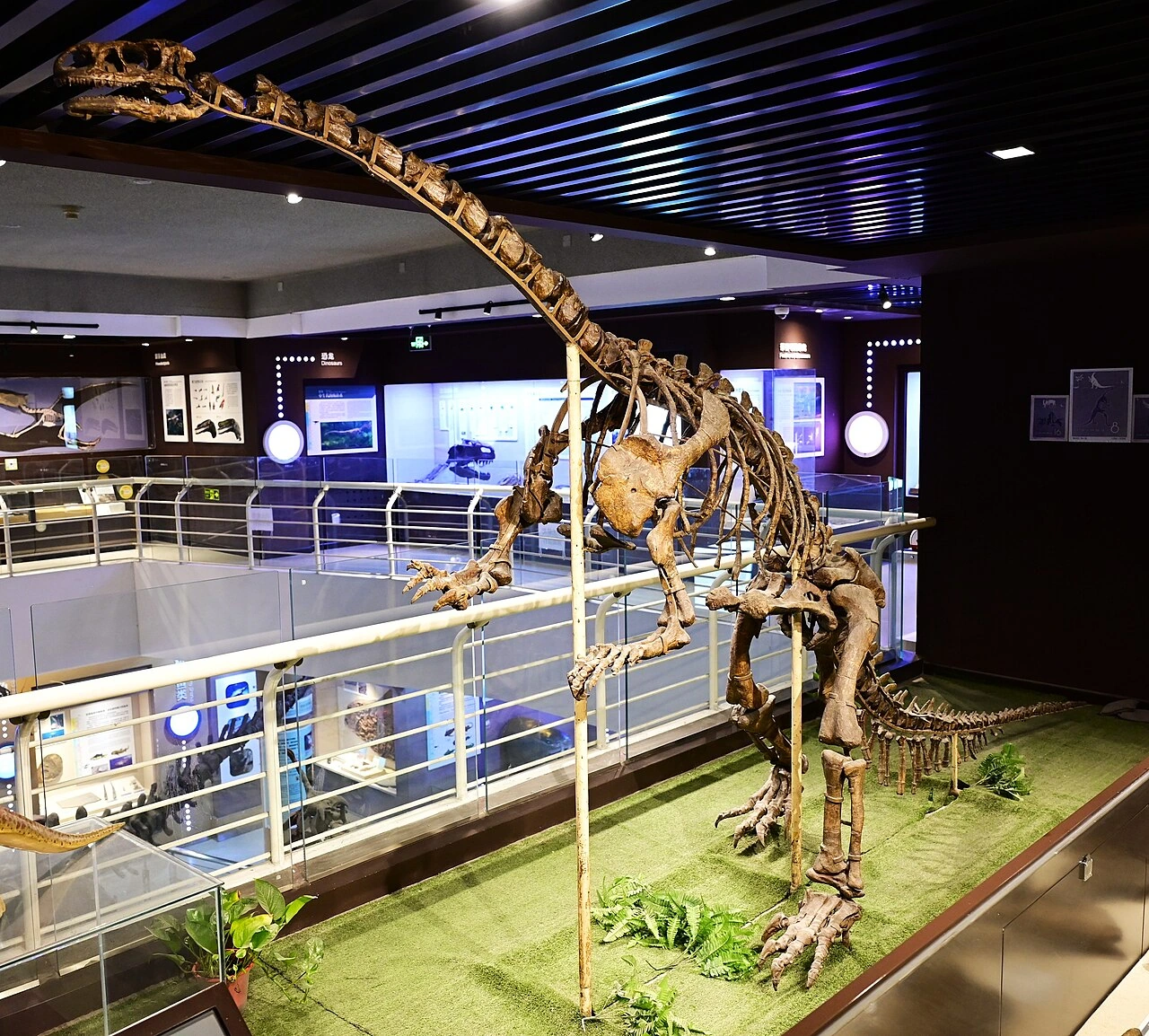
Lufengosaurus huenei holotype IVPP V15 at the Paleozoological Museum of China, photographed by Jonathan Chen. The mounted skeleton includes display positioning and reconstruction; this photograph does not establish living posture or coloration. [5]
Lufengosaurus huenei holotype.jpg · Jonathan Chen. CC BY 4.0. Commons-listed 1280px current preview resized proportionally for the thumbnail and converted to WebP; no anatomical edits. Same source license applies.
The photograph or figure shows the credited fossil material; displayed mounts and labels can include interpretation.
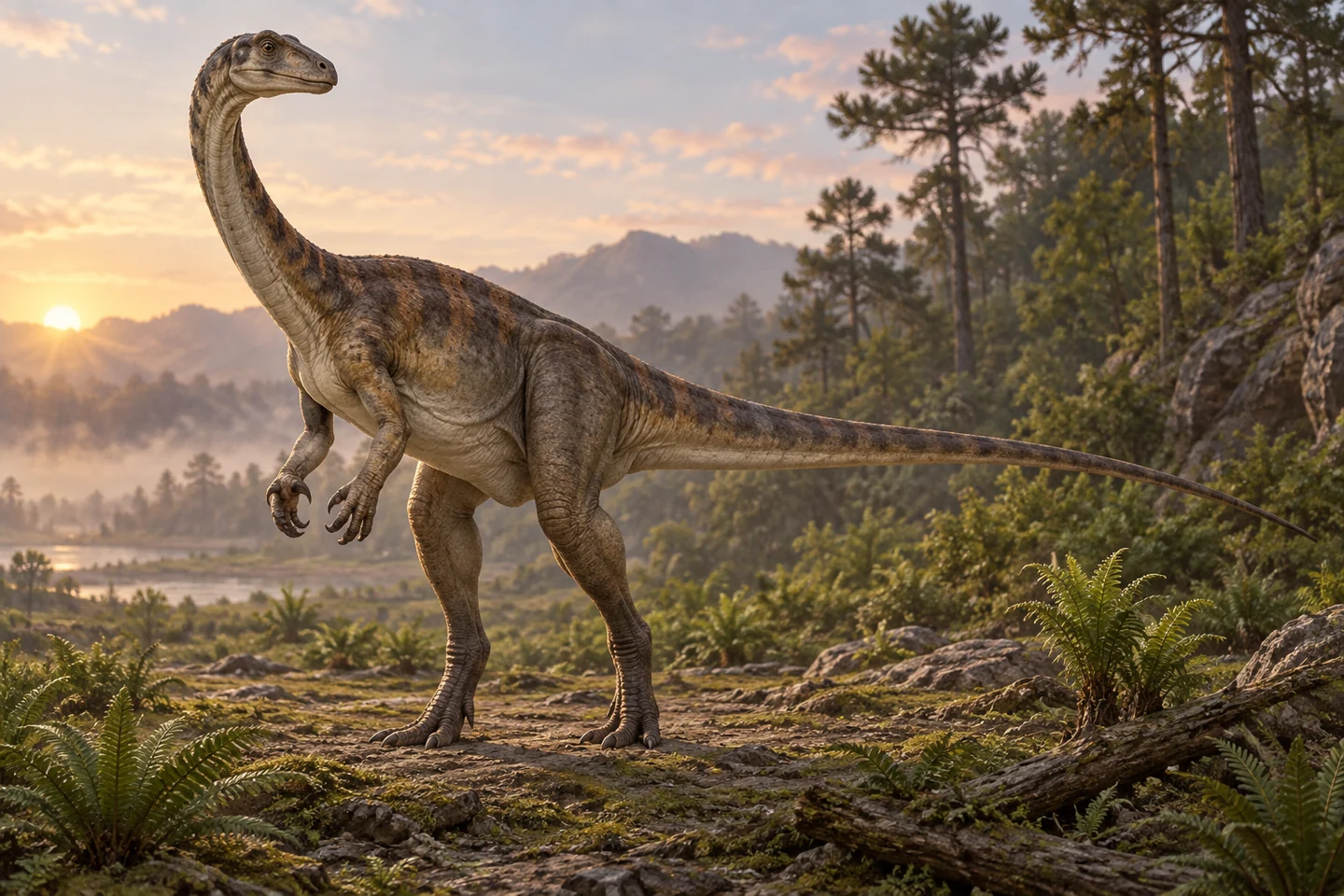
Original cinematic interpretation of Lufengosaurus huenei. Coloration, soft tissues and scenery are artistic choices; reconstructed proportions do not establish a measured individual. Lighting, coloration and scenery are artistic choices. This image does not document a fossil locality or behavior.
Original artwork · artistic interpretation.
Scientific view: source-informed reconstruction, credited paleoart or specimen-based imagery. Movie-style view: Original artistic interpretation. Reconstructions involve uncertainty.
MEET THE ANIMAL
Lufengosaurus was a mainly plant-eating dinosaur from Early Jurassic China. It belonged to the early sauropodomorphs, relatives of the later giant sauropods. Comparisons place it among animals with small heads, long necks, and hands suited to grasping rather than simply bearing weight. Adults are generally reconstructed relying mainly on their hind legs. [D1] [D5]
Embryonic fossils from the Lufeng region were assigned probably to Lufengosaurus. Their developing bones offer a rare glimpse of the earliest stages of growth. The word 'probably' matters: an uncertain identification should stay visible, even when the fossils would otherwise make an attractive story about a familiar dinosaur. [D2]
A study of early-life limb tissues compared the fossils with those of pigeons and chickens. It proposed that the young were dependent and may have received food from parents. Tissue structure can test readiness for independent movement, but it does not preserve a feeding act. The small fossil sample cannot tell us which parent helped, how the nest was organized, or how every Lufengosaurus hatchling developed. [D3]
PREHISTORIC ANIMAL DOSSIER
The animal, the evidence, and the questions still open.
Early-life fossils inform growth and a parental-feeding hypothesis rather than directly recording behavior.
Profile scope: Species focus — Lufengosaurus huenei; assignments of embryonic material remain separately qualified.
Source supported identifies a description documented by the cited source. Inferred marks a reconstruction or functional estimate. Debated marks competing interpretations. Not established means the sources reviewed for this dossier do not support a firm conclusion; it does not mean a behavior never occurred.
A size reference is an estimate, not a population range. Nesting evidence does not by itself establish courtship, mate choice, or lifelong pairing.
About 6 m (museum reference)
A rounded genus-profile reconstruction with no named individual or maturity assessment. It is not an adult maximum or a size range for all named species. [D1]
About 1,190 kg for a 6.2 m reconstruction
Seebacher’s polynomial-volume model identifies L. huenei but does not name a fossil individual or establish full maturity. This reconstruction estimate is not a species average or adult maximum. [D6]
Predominantly plant-eating
The museum classifies the genus as herbivorous. This does not identify a preserved meal, exclusive food types or feeding habits of the earliest life stages. [D1]
Early Jurassic Lufeng Basin, Yunnan
The taxonomic reassessment places adult and immature remains in the Lufeng Basin of southwest China. Occurrence and burial setting do not define one exclusive preferred habitat. [D4]
Adults probably primarily bipedal
Institutional synthesis places Lufengosaurus among early sauropodomorphs with grasping rather than weight-bearing adult hands. This is comparative-group inference, not a measured gait or proof of hatchling posture. [D5]
Early sauropodomorph body plan
The institutional synthesis includes Lufengosaurus in a group with long necks, small heads and grasping hands. This comparative-group description does not establish identical adult and hatchling proportions. [D5]
Embryonic/hatchling evidence; dependence proposed
The 2013 embryos were assigned probably to Lufengosaurus. A 2024 study compares early limb tissues with pigeons and chickens and proposes hatchling dependence and parental feeding. Its small sample and indirect proxies do not reveal feeding acts, parental sex, nest organization or incubation time. [D2] [D3]
Not established here
The inspected embryology, early-life and taxonomic studies do not demonstrate mate choice, pairing or courtship rituals.
Not established here
Associated young remains in the reviewed sources do not establish a herd, lasting family group or the social organization of adults.
Sources and inspection notes for the claims in this profile.
THE STORY IN THE FOSSILS
Early-life limb tissues can test whether a hatchling was ready to move and feed independently. The 2024 study uses bird comparisons to argue for dependence. That supports a hypothesis of parental feeding; it does not preserve the feeding itself. [3]
Immature fossils once named Gyposaurus sinensis were reassessed against Lufengosaurus huenei. This proposed species synonymy helps avoid counting a growing animal twice without treating every species ever called Gyposaurus as Lufengosaurus. [4]
The dossier identifies the scope of each reference estimate. A mount, an individual fossil and a species-wide adult range are different measurements. Comparison metrics remain unavailable where adult scope has not been established. Unknown does not mean zero.
Sources support the stated claims and scopes. Refer to the evidence notes for uncertainty.
KEEP EXPLORING
Mussaurus patagonicus
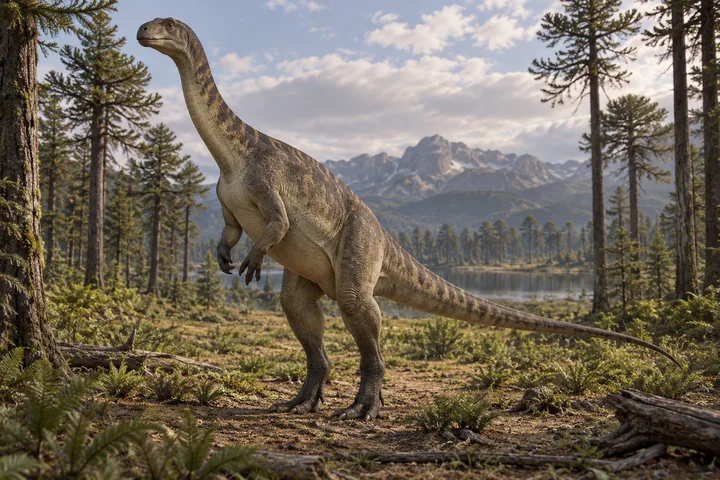
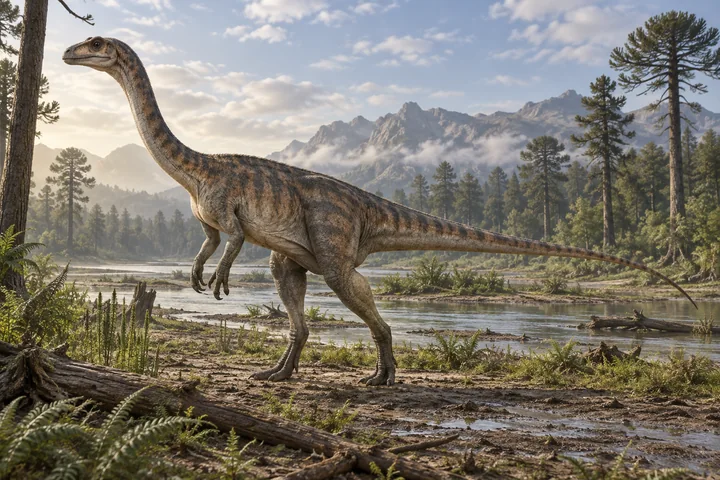
Mussaurus grew from tiny hatchlings into large sauropodomorphs. Eggs and clustered skeletons from Patagonia provide unusually rich evidence for nesting and age-related social organization.
Massospondylus carinatus
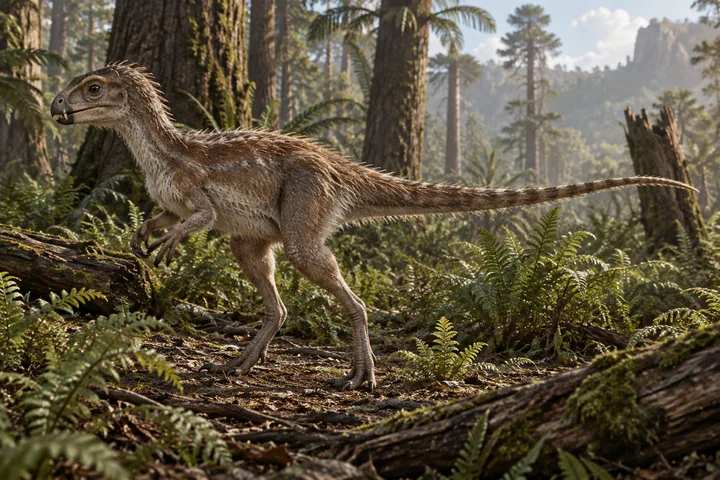
Massospondylus was a southern African sauropodomorph with a long neck and a prominent thumb claw. Preserved eggs, embryos and nesting grounds illuminate reproduction while young-animal posture remains debated.
Heterodontosaurus tucki
Heterodontosaurus was a small southern African ornithischian with contrasting tooth types. Its tusk-like teeth, chewing adaptations and unusual chest anatomy open different windows onto its biology.