
Body length
InferredMuseum reference estimate:13 m.
An illustrative reference size, not a measured complete individual or species range. [D3]
EXHIBIT 275
Mapusaurus roseae
Dinosaur
A large Argentine meat-eating dinosaur known from a concentration of fossils belonging to several individuals. [3]
TWO WAYS TO PICTURE THE PAST
Compare the evidence with the familiar movie image. The illustrations are not to a shared scale.
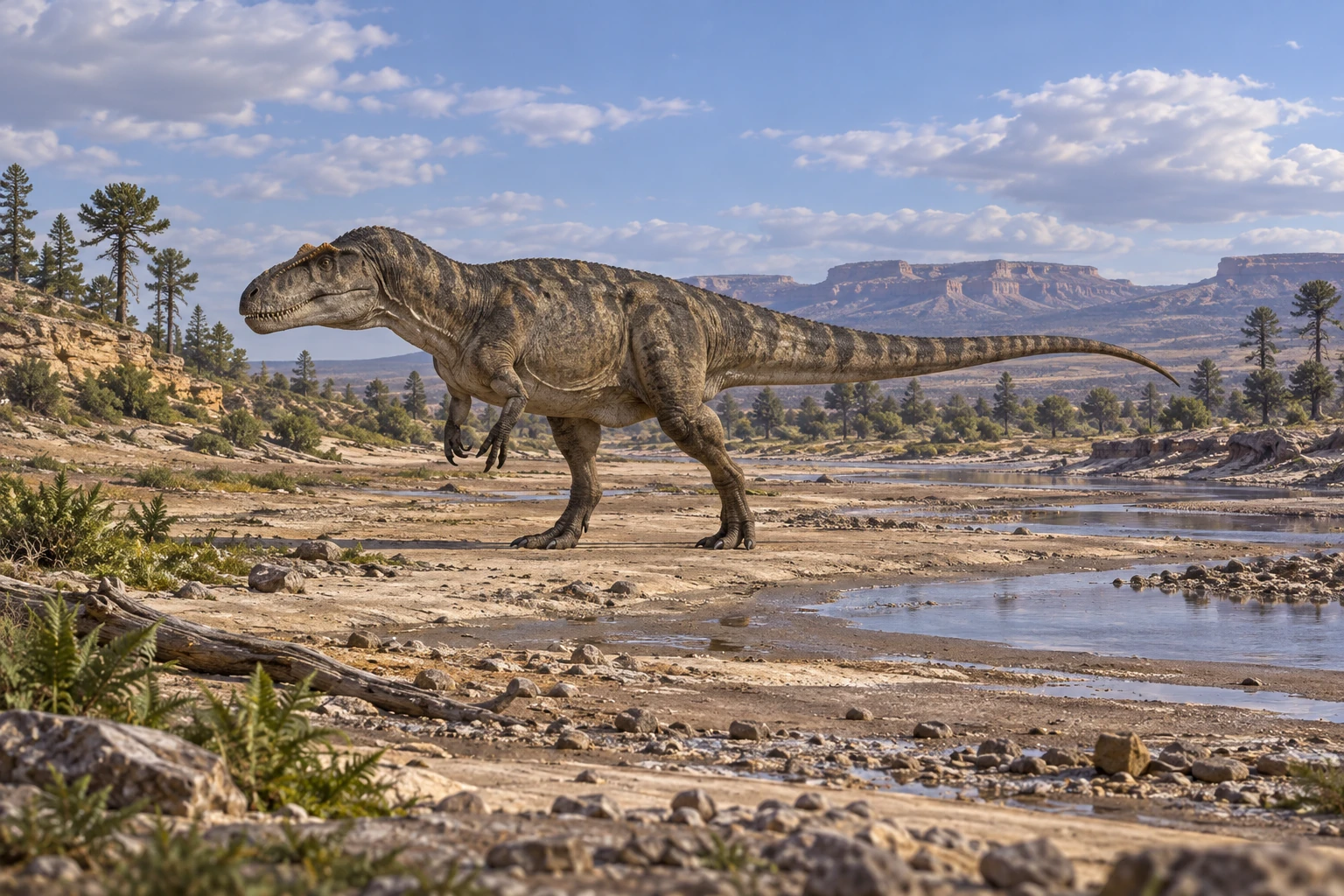
An illustrative reconstruction. Compare its anatomy with the evidence and limitations in the dossier. [1]
Source-informed reconstruction. Appearance evidence [1]. Original illustration; missing anatomy, coloration and scenery include interpretation.
Fossils constrain this life reconstruction. Missing anatomy, coloration and the environmental scene include interpretation; the dossier explains the evidence limits.
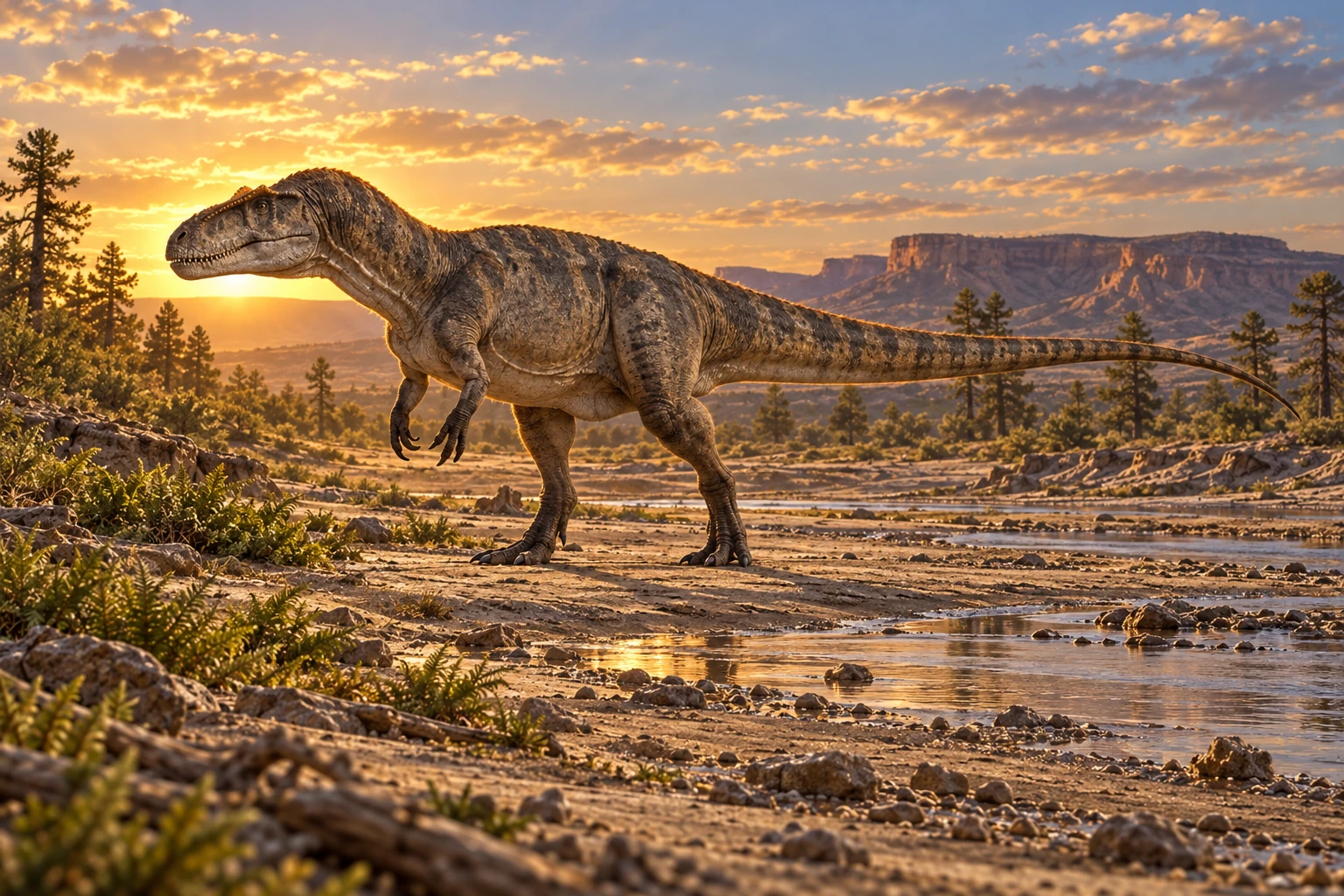
An illustrative reconstruction. Compare its anatomy with the evidence and limitations in the dossier. Lighting, coloration and scenery are artistic choices. This image does not document a fossil locality or behavior.
Original artwork · artistic interpretation.
Scientific view: source-informed reconstruction, credited paleoart or specimen-based imagery. Movie-style view: Original artistic interpretation. Reconstructions involve uncertainty.
MEET THE ANIMAL
Mapusaurus was a large meat-eating dinosaur from what is now Argentina. The Natural History Museum lists a reference length of about 13 meters. That figure gives a sense of scale, but it is not a measurement of one complete fossil or a rule for every adult. Its fossils belong to the carcharodontosaurids, a group of large predatory dinosaurs. [D3]
Its deep, narrow skull and blade-like teeth are useful identifying features. The original description compared its bones with those of Giganotosaurus and found differences that supported a separate genus. The quarry contained bones from several animals at different growth stages. This raises interesting questions about grouping, yet fossils can also accumulate over time. A bonebed alone cannot demonstrate a coordinated hunting pack. [D1]
A later study looked closely for damage and disease. Researchers found abnormalities consistent with injuries and infections among the examined bones. These traces tell us something about challenges the animals survived, but they cannot replay the incidents. A damaged bone might have several possible causes. Keeping those possibilities open is part of learning from fossil evidence. [D2]
PREHISTORIC ANIMAL DOSSIER
The animal, the evidence, and the questions still open.
Bone abnormalities provide evidence of injuries and disease, without identifying the events that caused them. [D2]
Profile scope: This exhibit concerns Mapusaurus roseae from the Huincul Formation, excluding Giganotosaurus. [D1]
Source supported identifies a description documented by the cited source. Inferred marks a reconstruction or functional estimate. Debated marks competing interpretations. Not established means the sources reviewed for this dossier do not support a firm conclusion; it does not mean a behavior never occurred.
A size reference is an estimate, not a population range. Nesting evidence does not by itself establish courtship, mate choice, or lifelong pairing.
Museum reference estimate:13 m.
An illustrative reference size, not a measured complete individual or species range. [D3]
Not established here
No adopted quantitative body-mass model was established in the reviewed sources. [D2]
Carnivorous dinosaur.
Predatory classification does not identify preferred prey or cooperative hunting. [D3]
Seasonal stream deposits in a relatively dry landscape.
The original paper interprets an ephemeral channel; burial setting is not an exclusive habitat preference. [D1]
Bipedal terrestrial movement.
Hindlimb anatomy supports two-legged locomotion; running speed is unresolved. [D1]
Deep, narrow skull and blade-like teeth.
The lacrimal ornament is low and flattened; complete soft tissues are reconstructed. [D1]
Not established here
No assigned eggs or nest established in the inspected bonebed studies. [D2]
Not established here
Injury evidence does not establish mating contests or courtship rituals. [D2]
Possible grouping remains debated.
Several growth stages occur together, but accumulated carcasses remain an alternative; coordinated hunting is unproven. [D1]
Sources and inspection notes for the claims in this profile.
THE STORY IN THE FOSSILS
The name-bearing fossil is a nasal bone; numerous additional elements supply its broader anatomy. Several individuals must remain distinct when building a composite reconstruction. [1]
Researchers examined 176 bones for abnormalities. Pathology can reveal a living animal’s difficulties while leaving the cause of a particular injury uncertain. [2]
The dossier identifies the scope of each reference estimate. A mount, an individual fossil and a species-wide adult range are different measurements. Comparison metrics remain unavailable where adult scope has not been established. Unknown does not mean zero.
Sources support the stated claims and scopes. Refer to the evidence notes for uncertainty.
KEEP EXPLORING
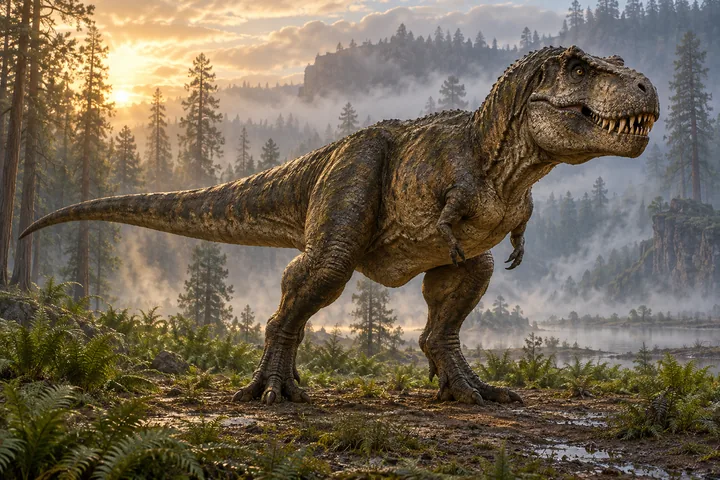
Tyrannosaurus rex
Tyrannosaurus rex was a large meat-eating dinosaur from the final part of the Cretaceous in western North America. Fossil teeth, bite marks and skeletons reveal a powerful animal whose behaviour still invites questions.
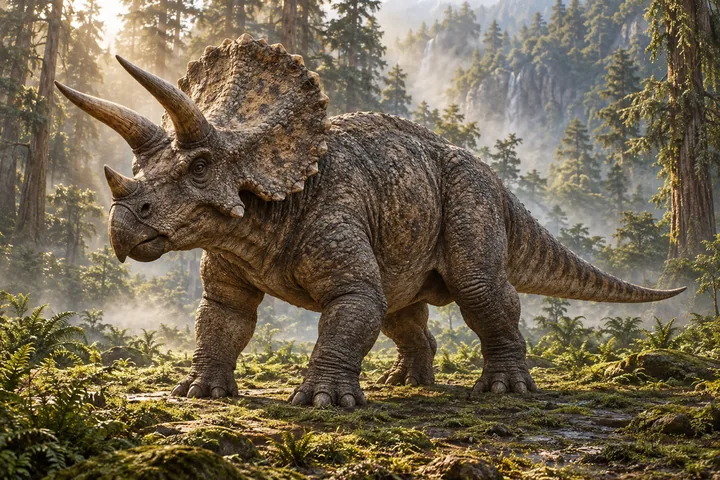
Triceratops horridus
Triceratops horridus was a horned dinosaur of the Late Cretaceous. Skin impressions attributed to this species reveal scales, while skulls and their positions in rock layers help researchers distinguish it from the later Triceratops prorsus.
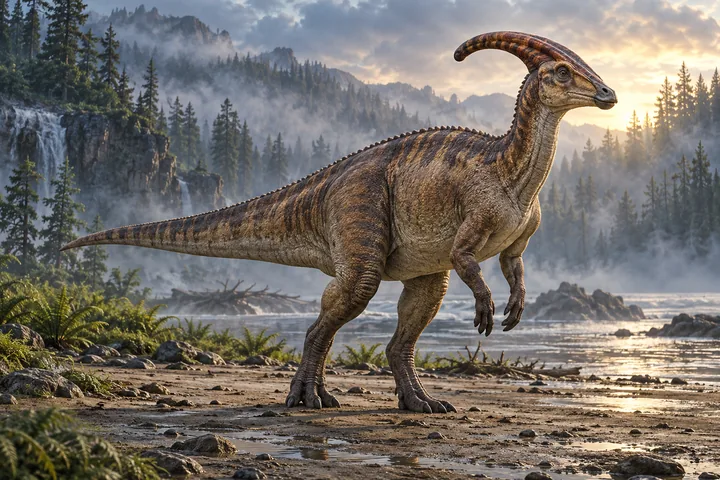
Parasaurolophus walkeri
Parasaurolophus walkeri was a crested duck-billed dinosaur from Late Cretaceous Alberta. Its famous Royal Ontario Museum skeleton preserves both an elongated tubular crest and healed injuries.