
Length
InferredAbout 6.8 m (museum reference)
NHM gives a rounded reference without identifying specimen, life stage or method. It is not a confirmed maximum; giant disputed referral material is excluded from this profile. [D1] [D3]
EXHIBIT 75
Pentaceratops sternbergii
Pentaceratops was a horned plant eater from Late Cretaceous New Mexico. Its name counts the prominent cheek projections alongside the nasal and brow horns, while disputed giant material requires separate treatment.
TWO WAYS TO PICTURE THE PAST
Compare the evidence with the familiar movie image. The illustrations are not to a shared scale.
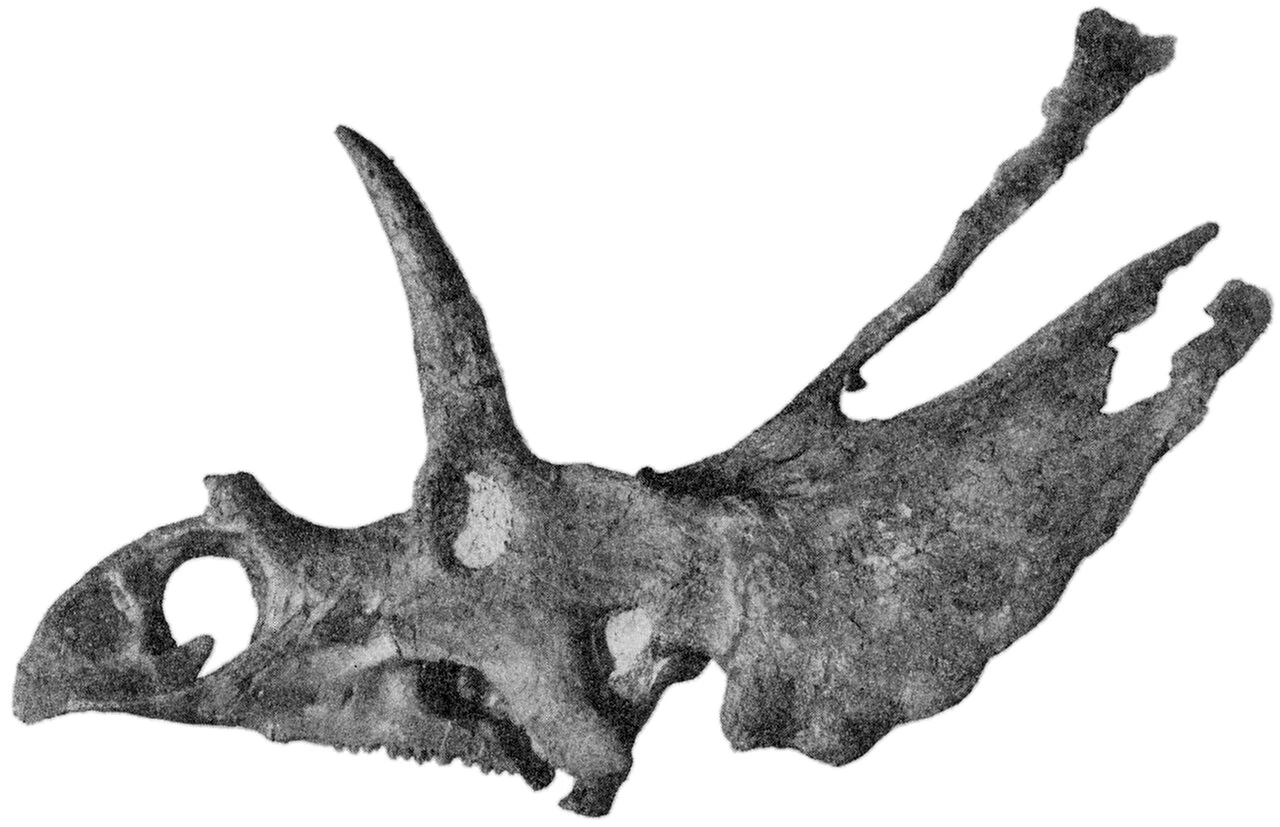
Pentaceratops sternbergii holotype skull, AMNH 6325, from the 1923 description. This is distinct from the disputed giant specimen assigned to Titanoceratops by some researchers. An archival skull photograph does not establish living color or soft tissues. [2]
Pentaceratops sternbergii holotype AMNH6325 · Henry Fairfield Osborn and Charles H. Sternberg; digital restoration by M0tty. Public domain. Commons-listed 1280 px preview of the 2016 noise-cleaned revision converted to WebP; smaller responsive copy resized. No further crop, color or anatomical changes.
The photograph or figure shows the credited fossil material; displayed mounts and labels can include interpretation.
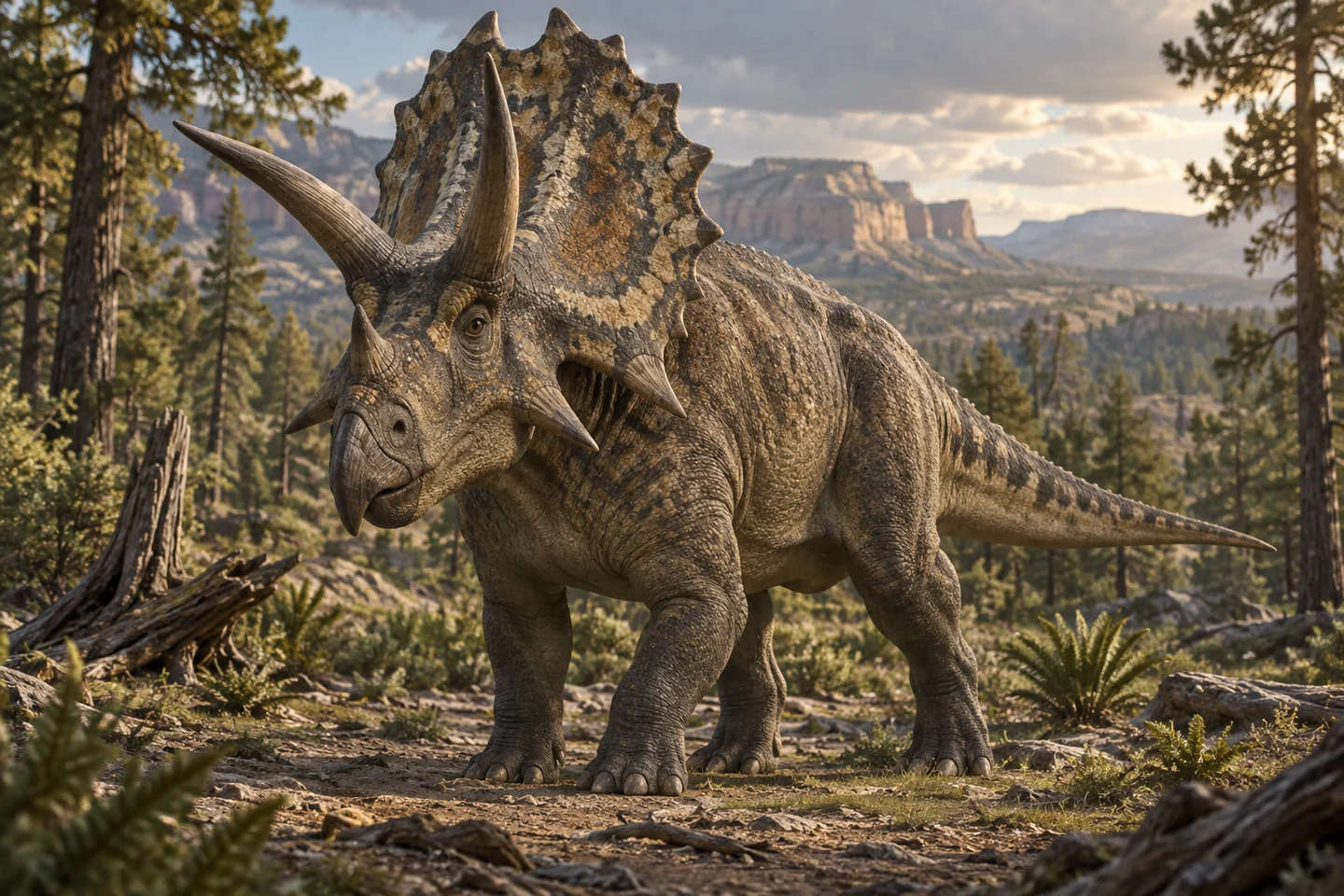
Original cinematic interpretation of Pentaceratops. Anatomy, soft tissues and colors are reconstructed choices. Lighting, coloration and scenery are artistic choices. This image does not document a fossil locality or behavior.
Original artwork · artistic interpretation.
Scientific view: source-informed reconstruction, credited paleoart or specimen-based imagery. Movie-style view: Original artistic interpretation. Reconstructions involve uncertainty.
MEET THE ANIMAL
Pentaceratops sternbergii was a plant-eating horned dinosaur from Late Cretaceous New Mexico. A museum reference of about 6.8 metres gives an approximate picture of scale without identifying a complete measured adult. Its recognizable head is also a reminder that a genus profile must depend on securely identified fossils rather than every historical referral. [D1]
Its five-horned name counts one horn over the nose, two over the eyes, and two projections on the cheeks. The New Mexico museum's life-size entrance sculpture makes all five visible. That display helps explain the naming and head arrangement, while its living colors and pose remain artistic choices rather than preserved observations. [S1]
Ideas about horned dinosaur display and mate competition have been discussed across ceratopsians. Those wider-group hypotheses do not demonstrate a Pentaceratops mating ritual or a confirmed purpose for every projection. Its head anatomy can be described more securely than the social behavior imagined around it. A distinctive silhouette therefore provides a useful starting point without supplying a complete account of daily life. [D4]
PREHISTORIC ANIMAL DOSSIER
The animal, the evidence, and the questions still open.
Pentaceratops carried an elaborate horned skull and long frill. Fossil identity matters when estimating its size: a famous giant skeleton historically referred to this dinosaur has been proposed as a different genus.
Profile scope: Species: Pentaceratops sternbergii, spelled sternbergi in some sources. Excludes giant OMNH 10165 size claims because that specimen was reassigned to Titanoceratops in a published taxonomic hypothesis.
Source supported identifies a description documented by the cited source. Inferred marks a reconstruction or functional estimate. Debated marks competing interpretations. Not established means the sources reviewed for this dossier do not support a firm conclusion; it does not mean a behavior never occurred.
A size reference is an estimate, not a population range. Nesting evidence does not by itself establish courtship, mate choice, or lifelong pairing.
About 6.8 m (museum reference)
NHM gives a rounded reference without identifying specimen, life stage or method. It is not a confirmed maximum; giant disputed referral material is excluded from this profile. [D1] [D3]
Not established here
No adequately scoped species mass was established in this review. The 6.5-tonne Titanoceratops estimate is not imported as Pentaceratops mass. [D3]
Plant eater
NHM identifies herbivory; specific plants and seasonal feeding patterns are not established by the reviewed profile. [D1]
Late Cretaceous New Mexico
The original description records the discovery near Tsaya in the Fruitland Beds. This is fossil provenance, not proof of preference for a particular habitat. [D2]
Four-legged movement inferred
Four-legged movement follows ceratopsid anatomy, a broader-group inference. The reviewed study does not establish Pentaceratops speed or a species-specific gait. [D5]
Nasal, brow and cheek horns
The original description counts one nasal horn, two brow horns and two lateral cheek projections. Those cheek structures explain the five-horned name. [D2]
Not established here
The reviewed sources do not establish Pentaceratops nest construction, incubation or parental care.
Display proposed for ceratopsians
AMNH discusses horns and frills as possible signals or mate-competition structures across ceratopsians. This broader-group hypothesis does not demonstrate a Pentaceratops courtship ritual or mating system. [D4]
Not established here
Broad statements about ceratopsian herds do not establish Pentaceratops group size, social organization or cooperative defense.
Sources and inspection notes for the claims in this profile.
THE STORY IN THE FOSSILS
Henry Fairfield Osborn described Pentaceratops sternbergii in 1923 from New Mexico discoveries. The skull's nasal and brow horns were joined by projecting cheek structures, giving the animal its five-horned name. [2]
One exceptionally large skeleton once called Pentaceratops became the basis of the proposed genus Titanoceratops in 2011. This exhibit keeps that taxonomic hypothesis visible and avoids presenting the disputed animal's giant measurements as a secure Pentaceratops species maximum. [3]
The dossier identifies the scope of each reference estimate. A mount, an individual fossil and a species-wide adult range are different measurements. Comparison metrics remain unavailable where adult scope has not been established. Unknown does not mean zero.
Sources support the stated claims and scopes. Refer to the evidence notes for uncertainty.
KEEP EXPLORING
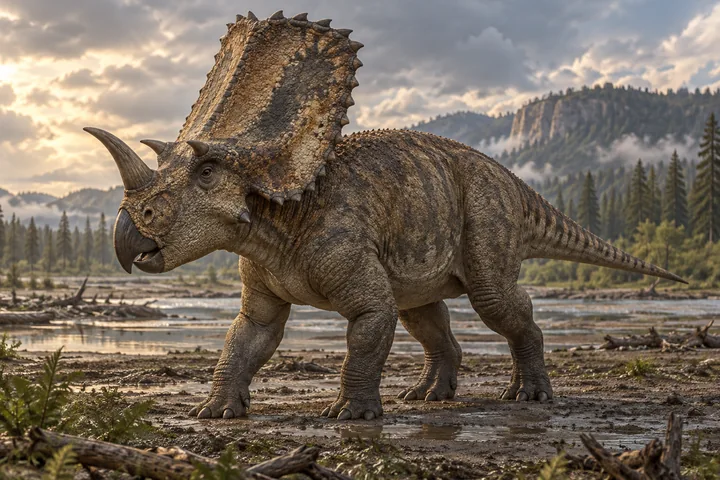
Chasmosaurus
Chasmosaurus was a horned plant eater from Late Cretaceous Canada. A rare juvenile skeleton reveals that its frill changed in shape as well as relative size during growth.
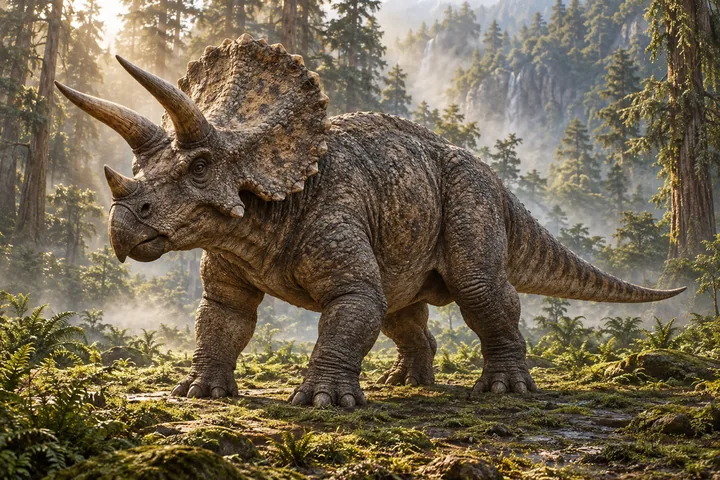
Triceratops horridus
Triceratops horridus was a horned dinosaur of the Late Cretaceous. Skin impressions attributed to this species reveal scales, while skulls and their positions in rock layers help researchers distinguish it from the later Triceratops prorsus.
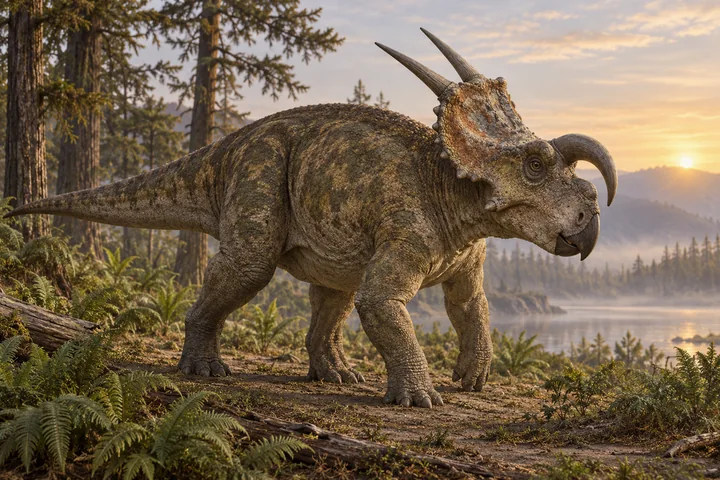
Einiosaurus procurvicornis
Einiosaurus was a Montana horned plant-eater with a distinctive nasal horn curving forward and downward.