Length
InferredAbout 5 m (museum reference)
NHM gives a rounded genus reference without a specimen, method or maturity. Separately, the described juvenile skeleton was 1.5 m; that is a growth-stage observation. [D1] [D2]
TWO WAYS TO PICTURE THE PAST
Compare the evidence with the familiar movie image. The illustrations are not to a shared scale.
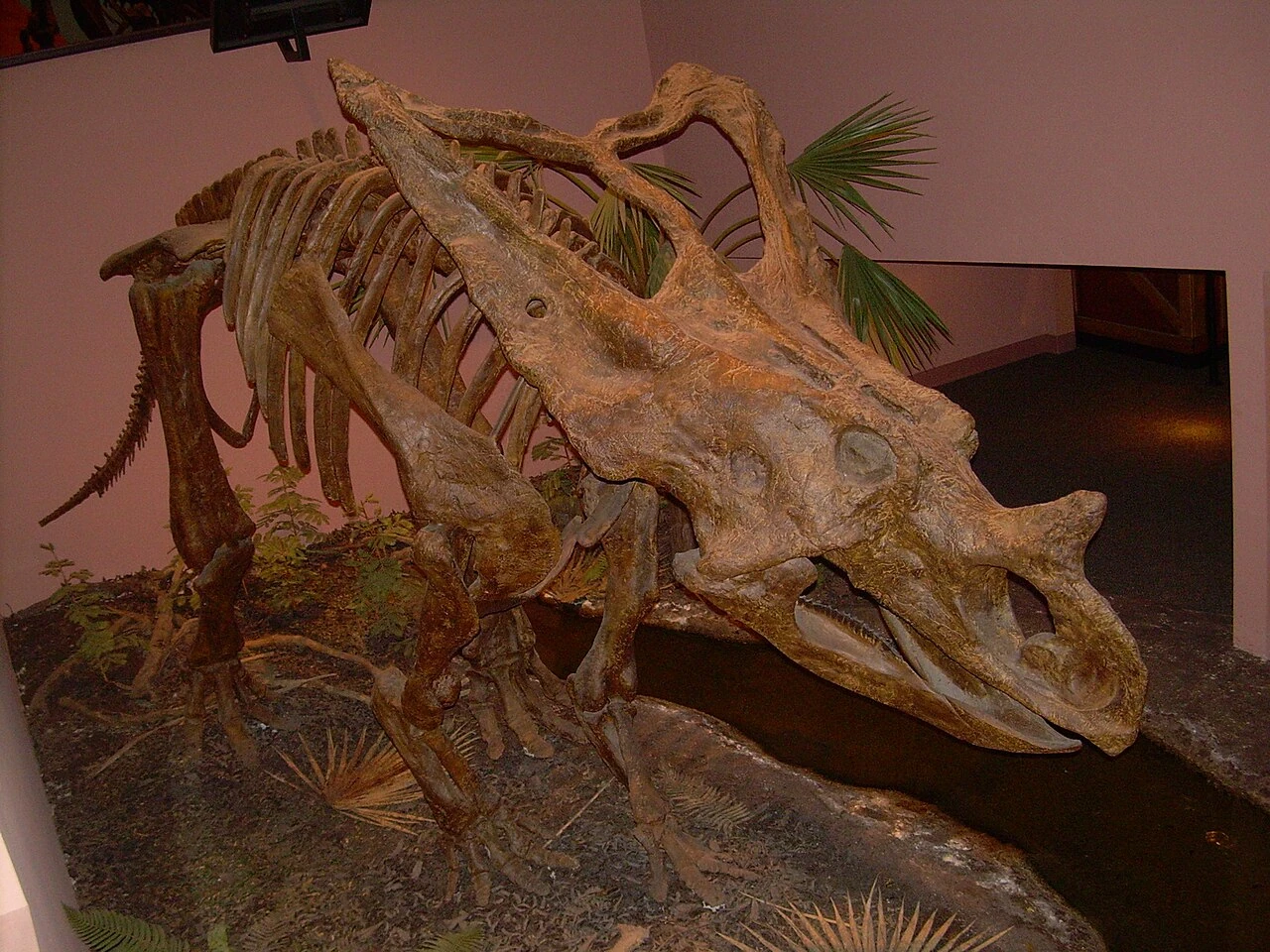
Chasmosaurus fossil-cast skeleton at the North American Museum of Ancient Life. The photograph is identified at genus level; posture and missing skeletal parts are reconstructed. The mount does not establish living color or soft tissues. [3]
Chasmosaurus skeleton · Ninjatacoshell. CC BY-SA 3.0. Commons-listed 1280 px preview converted to WebP; smaller responsive copy resized. No crop or color changes; these copies remain CC BY-SA 3.0.
The photograph or figure shows the credited fossil material; displayed mounts and labels can include interpretation.
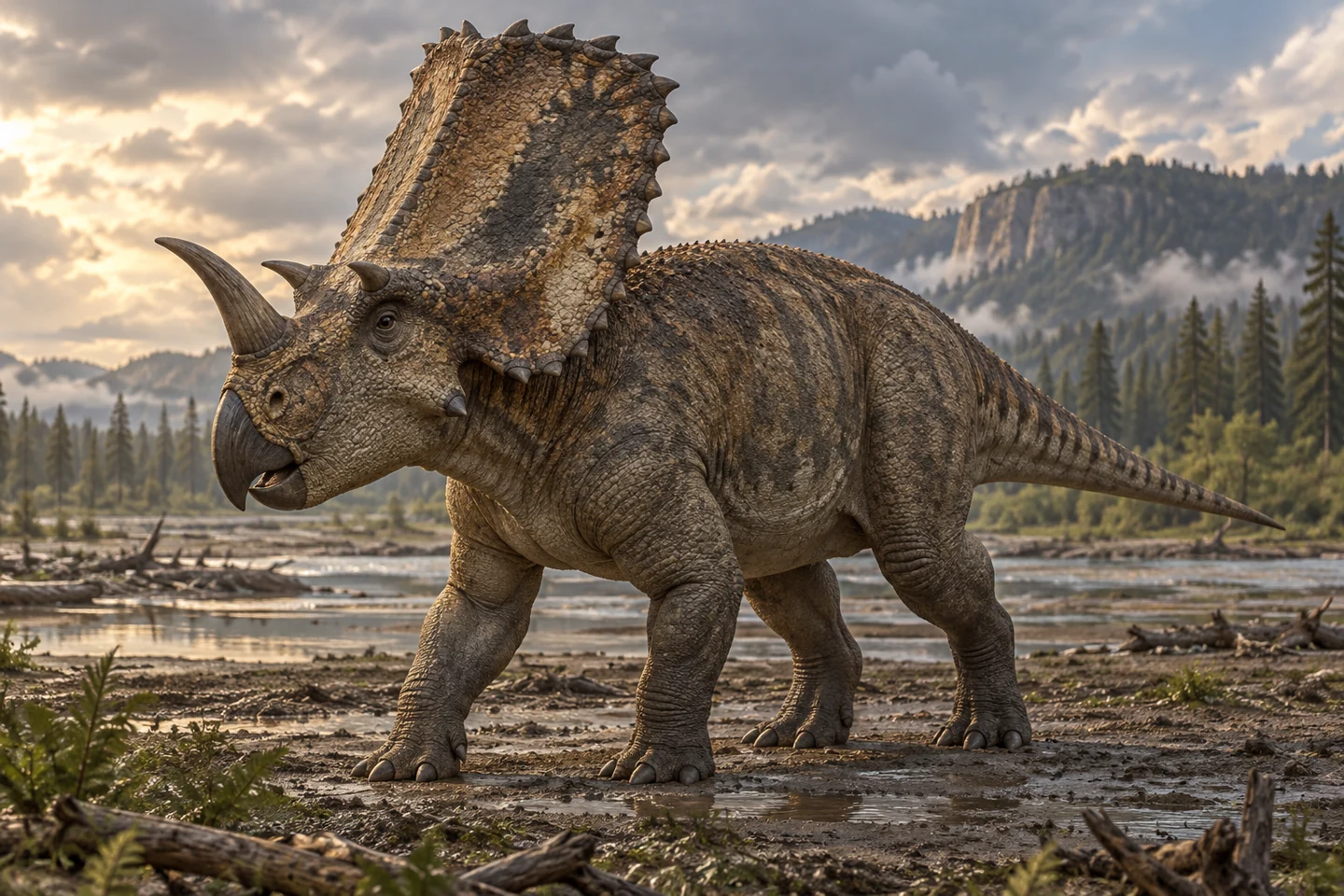
Original cinematic interpretation of Chasmosaurus. Anatomy, soft tissues and colors are reconstructed choices. Lighting, coloration and scenery are artistic choices. This image does not document a fossil locality or behavior.
Original artwork · artistic interpretation.
Scientific view: source-informed reconstruction, credited paleoart or specimen-based imagery. Movie-style view: Original artistic interpretation. Reconstructions involve uncertainty.
MEET THE ANIMAL
Chasmosaurus was a plant-eating horned dinosaur from Late Cretaceous Canada. Its beak gathered vegetation and a large neck frill shaped its head. It walked on four legs, but a museum size reference cannot describe every individual or growth stage. [D1]
A rare young skeleton from Alberta's Dinosaur Park Formation was described at about 1.5 metres long. Its bones were articulated, meaning they remained together in their connected order. This individual preserves an informative growth stage rather than a standard adult body or a complete account of parental care. [D2]
The youngster's frill was proportionately shorter than an adult's and narrowed toward the back. Adults had a different outline, so growing up involved changing shape instead of merely enlarging a miniature adult. Comparing such individuals helps separate developmental differences from other explanations for variation between skulls. [D3]
Names must also follow particular specimens. A 2026 study placed the former Chasmosaurus russelli type in Cryptarcus, a separate genus. That change does not automatically reassign every historical Chasmosaurus fossil. Keeping the juvenile's published identity separate preserves what its growth evidence actually shows. [D5]
PREHISTORIC ANIMAL DOSSIER
The animal, the evidence, and the questions still open.
A Chasmosaurus juvenile shows how its elongated frill changed during growth. [D3]
Profile scope: Chasmosaurus at genus level. The former C. russelli type CMNFV8800 was assigned to Cryptarcus in 2026 and is excluded. Juvenile evidence retains the genus assignment reported in 2016; no new species referral is asserted. [D2] [D5]
Source supported identifies a description documented by the cited source. Inferred marks a reconstruction or functional estimate. Debated marks competing interpretations. Not established means the sources reviewed for this dossier do not support a firm conclusion; it does not mean a behavior never occurred.
A size reference is an estimate, not a population range. Nesting evidence does not by itself establish courtship, mate choice, or lifelong pairing.
About 5 m (museum reference)
NHM gives a rounded genus reference without a specimen, method or maturity. Separately, the described juvenile skeleton was 1.5 m; that is a growth-stage observation. [D1] [D2]
About 2,500 kg (museum reference)
This rounded genus estimate lacks specimen, method and maturity; it is neither the juvenile's weight nor a population average. [D1]
Plant eater with a cropping beak
NHM identifies herbivory and a beak; preferred plants remain unresolved. [D1]
Late Cretaceous Alberta
The juvenile was collected from the Dinosaur Park Formation in Dinosaur Provincial Park. Its locality establishes provenance rather than a demonstrated preferred habitat. [D2]
Four-legged walking
NHM describes quadrupedal movement; speed and gait details remain unresolved. [D1]
A frill that changed during growth
The juvenile frill was proportionately shorter and narrowed toward its rear. Adults had a different posterior shape, showing more than simple enlargement. [D3]
Not established here
A juvenile skeleton supplies growth evidence, but does not establish nest structure, incubation or parental care.
Frill display proposed
One paper proposed sexual selection for frill ornament, but its version 1 has peer review marked not approved. This remains an unconfirmed proposal and establishes no mating ritual. [D4]
Not established here
The reviewed specimens and profiles do not establish Chasmosaurus herd structure or cooperative care.
Sources and inspection notes for the claims in this profile.
THE STORY IN THE FOSSILS
Chasmosaurus was a plant-eating horned dinosaur with a long neck frill. NHM places its Canadian fossils in the Late Cretaceous, approximately 76–74 million years ago. Rounded museum size references provide an introduction, rather than a complete range for every species and life stage. [1]
An articulated juvenile skeleton from Alberta, described in 2016, measures 1.5 m long. Its frill differed from the adult outline, offering a rare view of growth. Finding a young animal preserves a life stage, but does not on its own reveal how its parents behaved. [2] [3]
The dossier identifies the scope of each reference estimate. A mount, an individual fossil and a species-wide adult range are different measurements. Comparison metrics remain unavailable where adult scope has not been established. Unknown does not mean zero.
Sources support the stated claims and scopes. Refer to the evidence notes for uncertainty.
KEEP EXPLORING
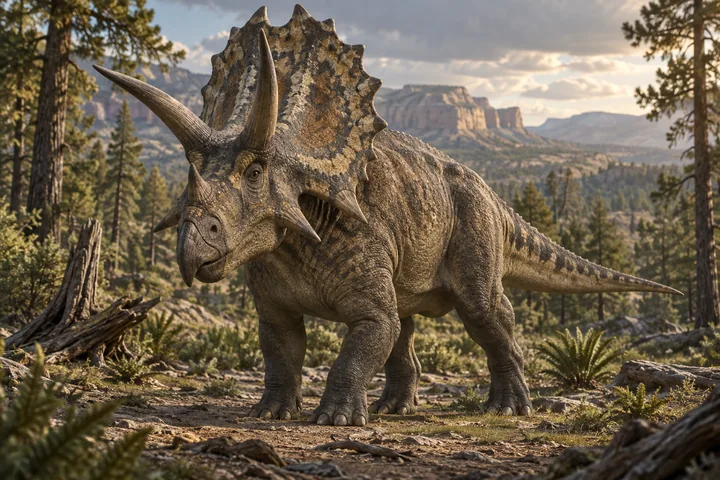
Pentaceratops sternbergii
Pentaceratops was a horned plant eater from Late Cretaceous New Mexico. Its name counts the prominent cheek projections alongside the nasal and brow horns, while disputed giant material requires separate treatment.
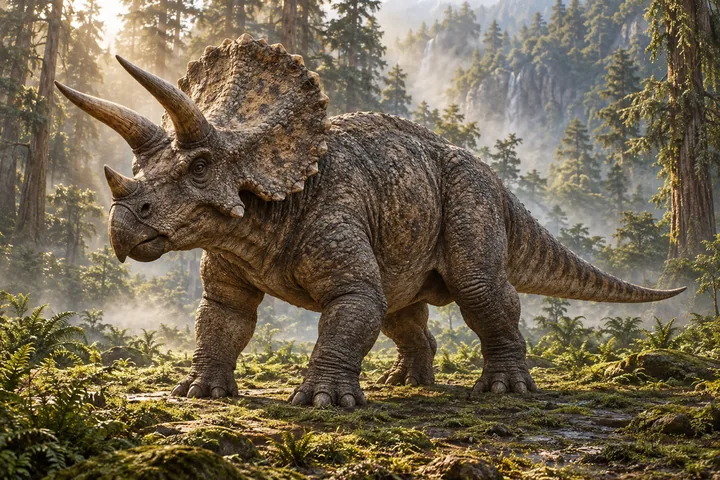
Triceratops horridus
Triceratops horridus was a horned dinosaur of the Late Cretaceous. Skin impressions attributed to this species reveal scales, while skulls and their positions in rock layers help researchers distinguish it from the later Triceratops prorsus.
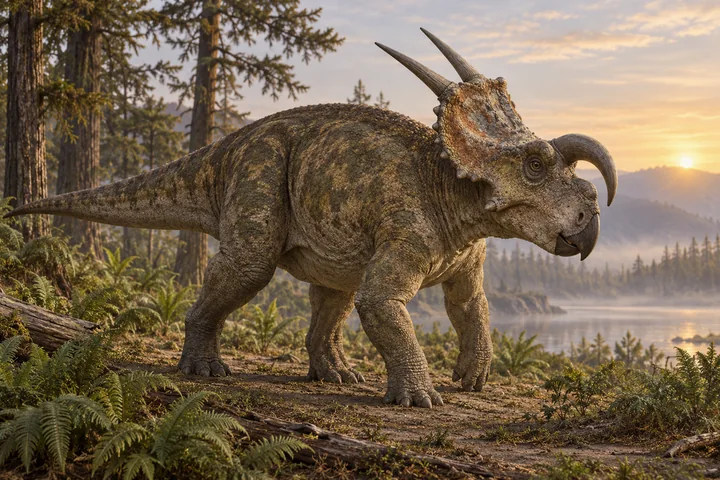
Einiosaurus procurvicornis
Einiosaurus was a Montana horned plant-eater with a distinctive nasal horn curving forward and downward.