
Length
InferredAbout 5 m (museum reference)
The museum gives a rounded educational length, without a specimen-specific method or maturity assessment. This is not an adult population range. [D1]
EXHIBIT 92
Polacanthus foxii
Polacanthus was an armored plant-eater from England, recognized especially by the bony shield covering its hips.
TWO WAYS TO PICTURE THE PAST
Compare the evidence with the familiar movie image. The illustrations are not to a shared scale.
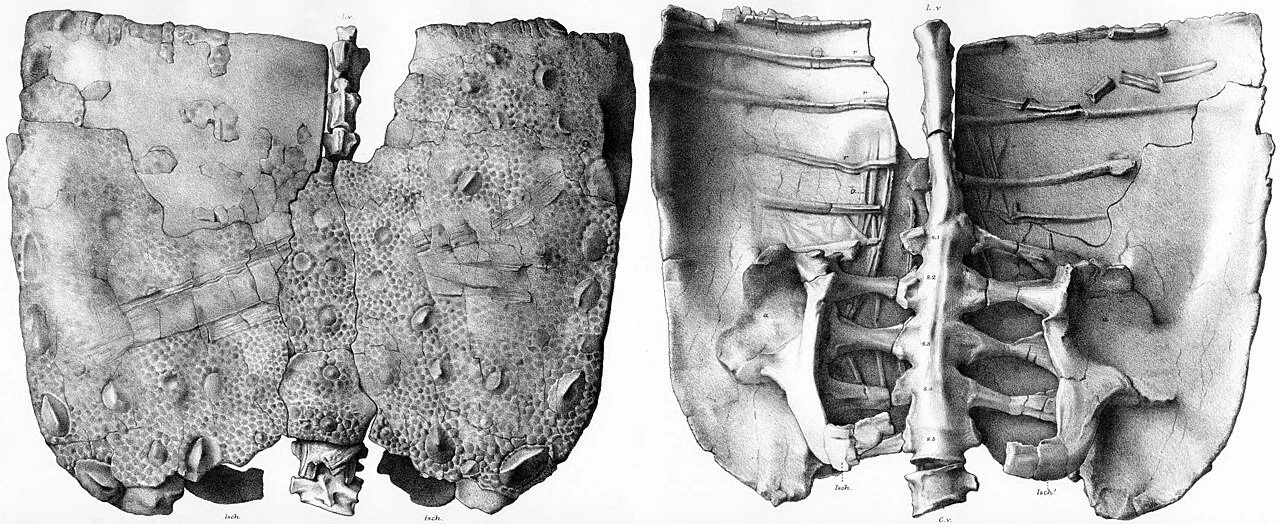
Historical fossil plate of the Polacanthus foxii type’s pelvic shield, illustrated by Gertrude Mary Woodward. These are dorsal and ventral fossil views, not a complete life restoration; shading does not indicate living skin color. [2]
Polacanthus armour · Gertrude Mary Woodward (G. M. Woodward). Public domain. Commons-listed 1280 px preview converted to WebP; smaller responsive copy proportionally resized. Artwork preserved.
The photograph or figure shows the credited fossil material; displayed mounts and labels can include interpretation.
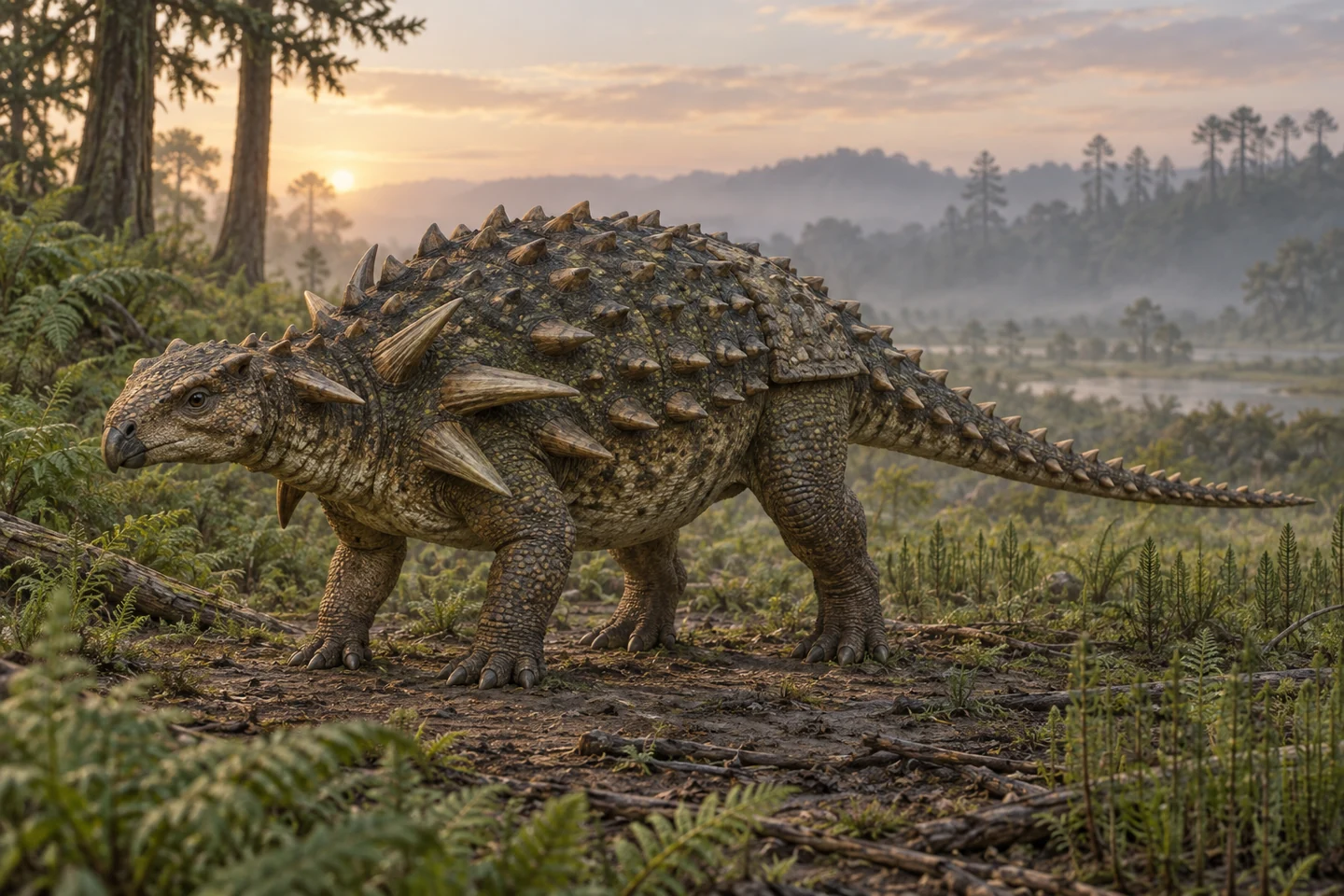
Original cinematic interpretation of Polacanthus foxii. Coloration, soft tissues and scenery are artistic choices; reconstructed proportions do not establish a measured individual. The head and forelimbs use comparative reconstruction. Lighting, coloration and scenery are artistic choices. This image does not document a fossil locality or behavior.
Original artwork · artistic interpretation.
Scientific view: source-informed reconstruction, credited paleoart or specimen-based imagery. Movie-style view: Original artistic interpretation. Reconstructions involve uncertainty.
MEET THE ANIMAL
Polacanthus was a plant-eating armored dinosaur from Early Cretaceous England. Its fossils are associated with the Isle of Wight. A rounded museum reference of about five metres helps introduce its scale, but does not establish a measured adult range. Identifying exactly which fossils belong to it is an important part of understanding this dinosaur. [D1]
New work on Isle of Wight armored dinosaurs has shown that remains historically called Polacanthus need reevaluation. The naming of Vectipelta reinforced that point: sharing a general armored body plan or an island locality is not enough to make two fossils the same dinosaur. Anatomical comparisons are needed before adding an occurrence to a species' record. [D4]
An earlier study discussed armor and possible differences between animals, including proposed sexual variation in referred material. Later reassessment makes those referrals uncertain, so the old interpretations cannot safely become a portrait of male and female Polacanthus. This is a case where checking identity changes the biological questions we can answer. An interesting suggestion in a historical paper is not the same as confirmed behavior or a securely identified body difference. [D3]
PREHISTORIC ANIMAL DOSSIER
The animal, the evidence, and the questions still open.
Its missing head and forelimbs make complete life reconstructions partly comparative.
Profile scope: Species: P. foxii. The modern reassessment restricts confident identification to the incomplete type skeleton, NHMUK PV R175.
Source supported identifies a description documented by the cited source. Inferred marks a reconstruction or functional estimate. Debated marks competing interpretations. Not established means the sources reviewed for this dossier do not support a firm conclusion; it does not mean a behavior never occurred.
A size reference is an estimate, not a population range. Nesting evidence does not by itself establish courtship, mate choice, or lifelong pairing.
About 5 m (museum reference)
The museum gives a rounded educational length, without a specimen-specific method or maturity assessment. This is not an adult population range. [D1]
Not established here
No independently verified body-mass calculation was established in this review.
Plant-eater
The museum identifies herbivory. Its missing type skull prevents a detailed species-specific feeding reconstruction. [D1] [D2]
Isle of Wight; Wessex Formation
The confidently identified type is from Early Cretaceous Wessex strata. Previously referred mainland and Spanish material does not securely extend its range. [D2]
Four-legged walking inferred
Preserved hindlimbs and comparison with other ankylosaurs support quadrupedal reconstruction; the type lacks its forelimbs. [D2]
Fused bony shield over the hips
The type preserves pelvic armor and separate spines. Its complete skull and exact arrangement of every spine remain unresolved. [D2]
Not established here
Focused review established no securely attributed eggs, nests or parental-care evidence.
Not established here
Earlier sexual-variation suggestions used material whose referral was later rejected; they do not securely establish P. foxii mating behavior. [D3]
Not established here
The incomplete type does not establish herd living or associations with particular other dinosaur species.
Sources and inspection notes for the claims in this profile.
THE STORY IN THE FOSSILS
The pelvic shield is a strong fossil anchor for Polacanthus. Its head and forelimbs are absent from the type, so a complete animal necessarily includes comparison with other armored dinosaurs. [2]
Rechecking historical identifications matters: not every Isle of Wight ankylosaur belongs to Polacanthus. Vectipelta’s discovery reinforces the need to compare anatomy before assigning fragmentary fossils. [4]
The dossier identifies the scope of each reference estimate. A mount, an individual fossil and a species-wide adult range are different measurements. Comparison metrics remain unavailable where adult scope has not been established. Unknown does not mean zero.
Sources support the stated claims and scopes. Refer to the evidence notes for uncertainty.
KEEP EXPLORING
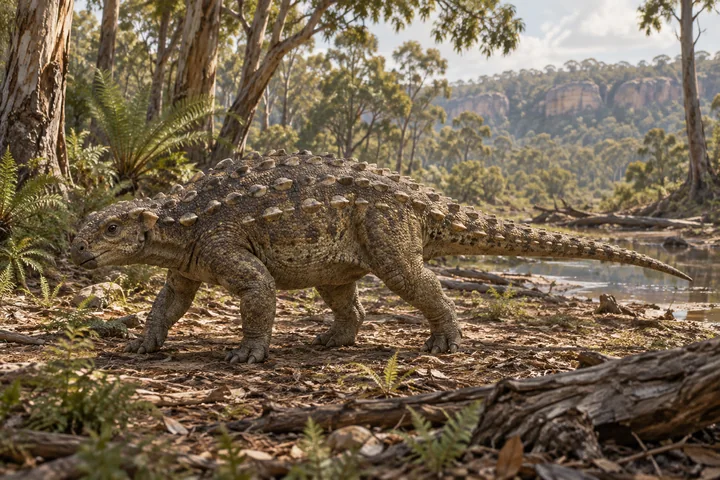
Minmi paravertebra
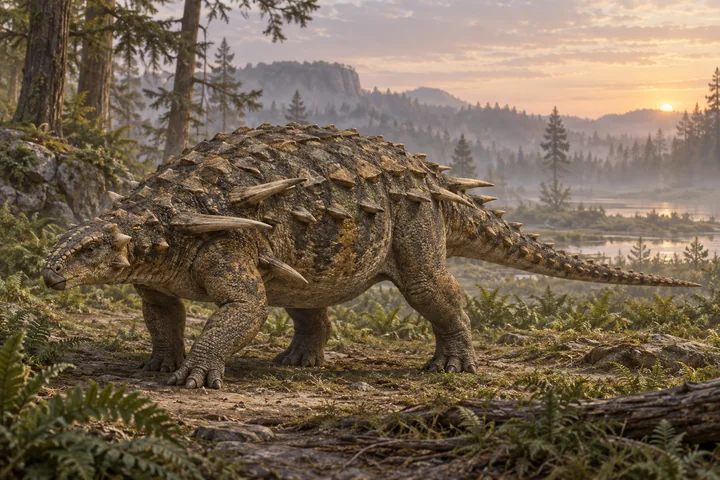
Minmi is an Australian ankylosaur known from incomplete type material. The more complete skeleton renamed Kunbarrasaurus belongs in a separate profile.
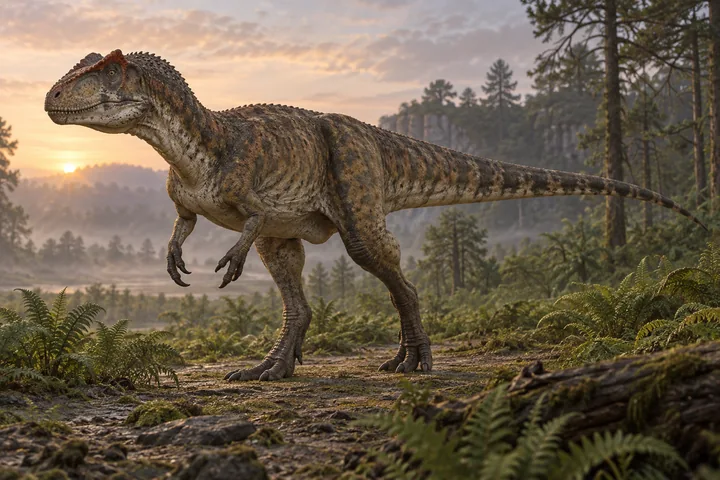
Neovenator salerii
Neovenator's fossil snout contains a complex network of canals.