
Body length
InferredAbout 7.4 m (museum reference)
Rounded body reconstruction with no stated individual or maturity assessment; not a proven adult maximum. [D1]
EXHIBIT 100
Neovenator salerii
Neovenator's fossil snout contains a complex network of canals. [3]
TWO WAYS TO PICTURE THE PAST
Compare the evidence with the familiar movie image. The illustrations are not to a shared scale.
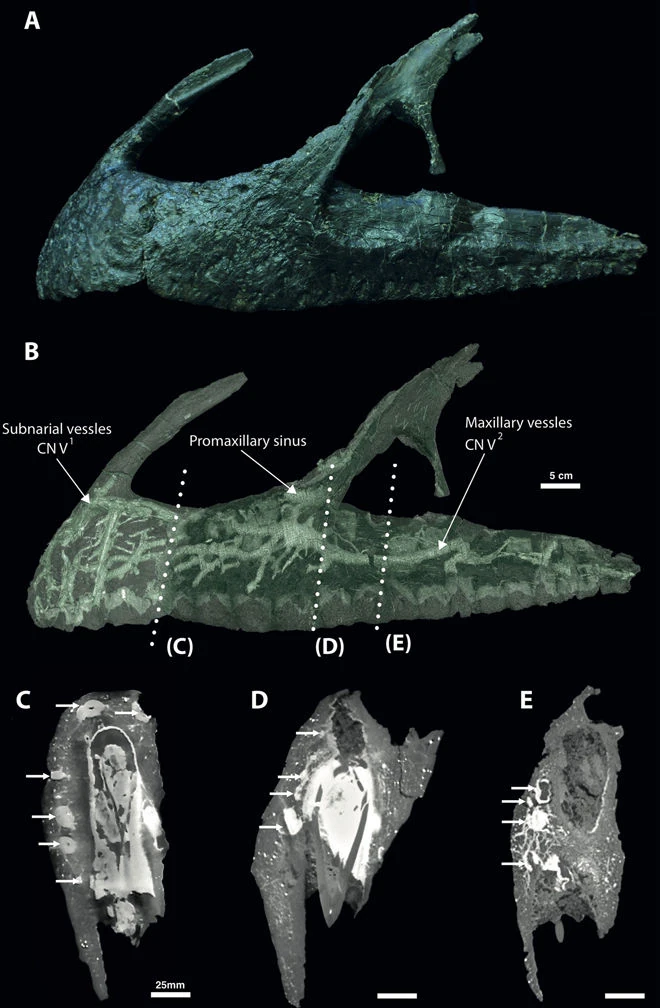
Neovenator salerii holotype MIWG 6348 premaxilla and maxilla: specimen photograph, segmented neurovascular rendering and virtual CT sections from Barker and colleagues (2017), with the photograph credited to Roger Benson. Colored and transparent overlays visualize a reconstructed canal network; they are not preserved nerves or a skin reconstruction. [3]
Premaxilla and maxilla of Neovenator.jpg · Chris Tijani Barker, Darren Naish, Elis Newham, Orestis L. Katsamenis and Gareth Dyke; specimen photograph credited to Roger Benson. CC BY 4.0. Current Commons image converted to WebP and proportionally resized for the thumbnail; no cropping, mirroring, anatomical edits or compositing. Original scale bars and annotations retained where present. Same source license applies.
The photograph or figure shows the credited fossil material; displayed mounts and labels can include interpretation.
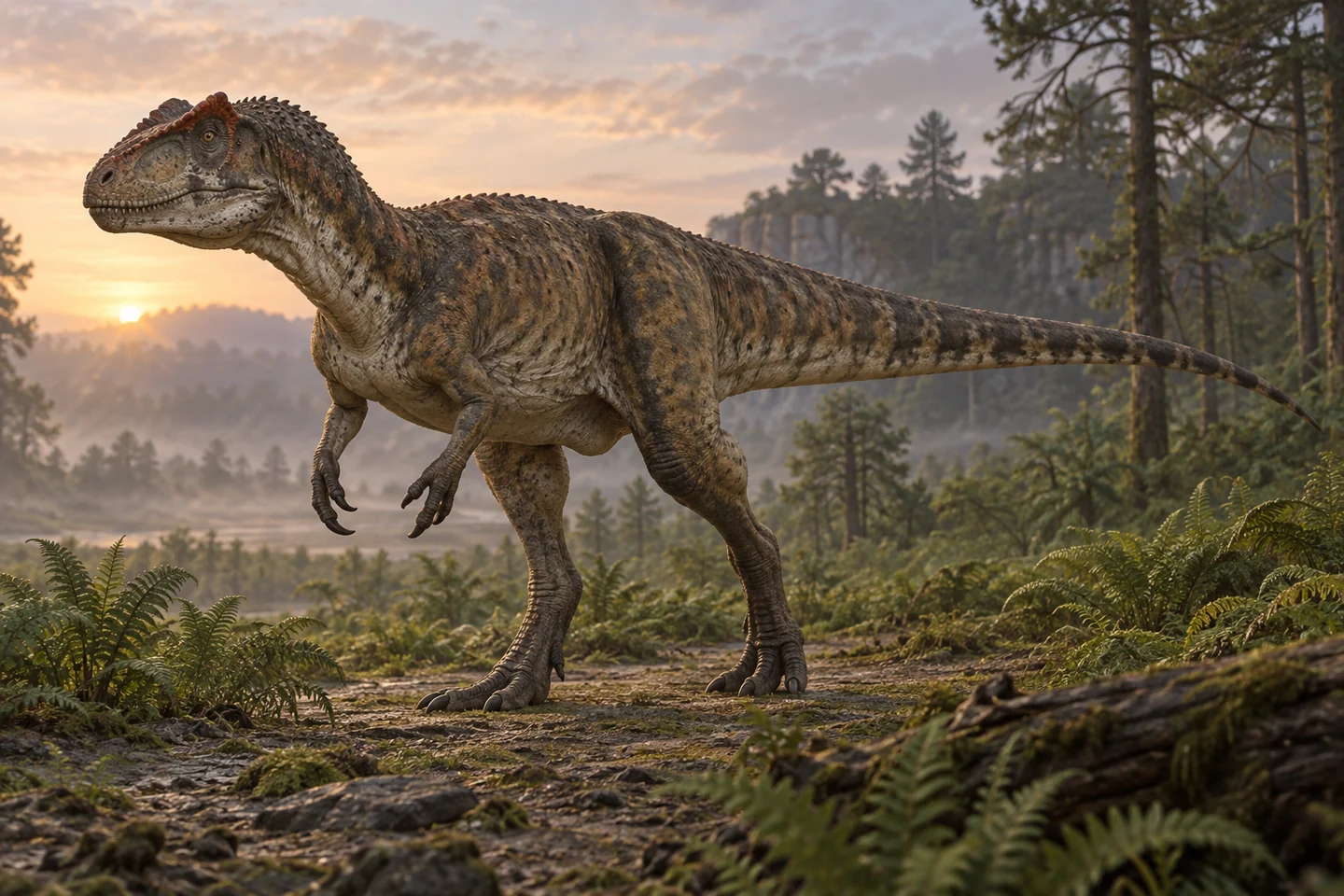
Original cinematic interpretation of Neovenator salerii. Colors, soft tissues, scenery and missing anatomy are reconstructed artistic choices; this is not a directly observed individual or behavior. Lighting, coloration and scenery are artistic choices. This image does not document a fossil locality or behavior.
Original artwork · artistic interpretation.
Scientific view: source-informed reconstruction, credited paleoart or specimen-based imagery. Movie-style view: Original artistic interpretation. Reconstructions involve uncertainty.
MEET THE ANIMAL
Neovenator was a meat-eating dinosaur from the Early Cretaceous Isle of Wight. A museum reference of about 7.4 metres gives a general sense of its scale, rather than a confirmed adult maximum. Its incomplete skeleton nevertheless preserves enough distinctive anatomy to identify an animal, instead of only a generic picture of a large predator. [D1]
A detailed skeletal description combines the original specimen with referred material to reconstruct roughly 70 percent of the skeleton. That percentage does not describe one complete individual. The bones support a two-legged reconstruction, but do not supply a measured running speed. Keeping the contributing specimens separate makes a restored display more informative and avoids confusing reconstruction with a single fossil discovery. [D2]
CT scans of the snout reveal branching canals inside its bones. Researchers interpret the network as evidence of a sensitive face and consider several possible uses. Ideas involving aquatic feeding or handling eggs are possibilities, not demonstrated habits. The canals preserve anatomy; they do not preserve sensations or record one exact task. Neovenator shows how studying the inside of a bone can raise new questions about a familiar body outline. [D3]
PREHISTORIC ANIMAL DOSSIER
The animal, the evidence, and the questions still open.
The canals support face-sensitivity interpretations; proposed nesting and aquatic uses remain hypotheses. [D3]
Profile scope: Species — Neovenator salerii. [D5]
Source supported identifies a description documented by the cited source. Inferred marks a reconstruction or functional estimate. Debated marks competing interpretations. Not established means the sources reviewed for this dossier do not support a firm conclusion; it does not mean a behavior never occurred.
A size reference is an estimate, not a population range. Nesting evidence does not by itself establish courtship, mate choice, or lifelong pairing.
About 7.4 m (museum reference)
Rounded body reconstruction with no stated individual or maturity assessment; not a proven adult maximum. [D1]
About 1,020 kg (limb-scaling model)
Measured-circumference estimate for BMNH R10001 and MIWG 6348, explicitly one individual split between institutions. Maturity is unestablished; not a species average. [D4]
Meat-eating theropod
The museum identifies carnivory. Specific prey, routine bone eating and aquatic feeding are not established by this designation. [D1]
Barremian Wessex Formation
Holotype and referred material document this species on the Isle of Wight in Early Cretaceous continental deposits. Depositional occurrence does not define one exclusive habitat. [D2]
Two-legged skeletal reconstruction
The osteological reconstruction supports hindlimb-based movement. Its approximately 70% skeletal coverage combines multiple specimens; no measured speed is supplied. [D2]
Extensive snout neurovascular canals
μCT documents a complex canal network in the holotype's premaxilla and maxilla. Interpreting nerves and tactile sensitivity requires anatomy-based inference; the scan does not directly preserve sensations. [D3]
Not established here
The snout study proposes egg manipulation or nest selection by archosaur analogy. It reports no assigned Neovenator clutch or observed nesting behavior, so care and incubation remain unestablished. [D3]
Not established here
Focused reproductive and display searches did not establish sex differences, mate choice or pairing. A sensitive face does not itself demonstrate a courtship ritual.
Not established here
Several known individuals do not demonstrate that they formed a living group. The reviewed material does not establish coordinated hunting or permanent packs.
Sources and inspection notes for the claims in this profile.
THE STORY IN THE FOSSILS
The jaw scan reveals branching canals inside preserved bone. Researchers interpret that network as evidence of a sensitive snout and explore several possible uses. Its anatomy still fits a terrestrial predator; possible aquatic feeding is not a demonstrated lifestyle. [3]
The British type-fossil record identifies MIWG 6348 as the holotype and links it to the original 1996 description. Keeping that identity explicit prevents a reconstructed composite skeleton from being mistaken for one complete fossil. [5]
The dossier identifies the scope of each reference estimate. A mount, an individual fossil and a species-wide adult range are different measurements. Comparison metrics remain unavailable where adult scope has not been established. Unknown does not mean zero.
Sources support the stated claims and scopes. Refer to the evidence notes for uncertainty.
KEEP EXPLORING
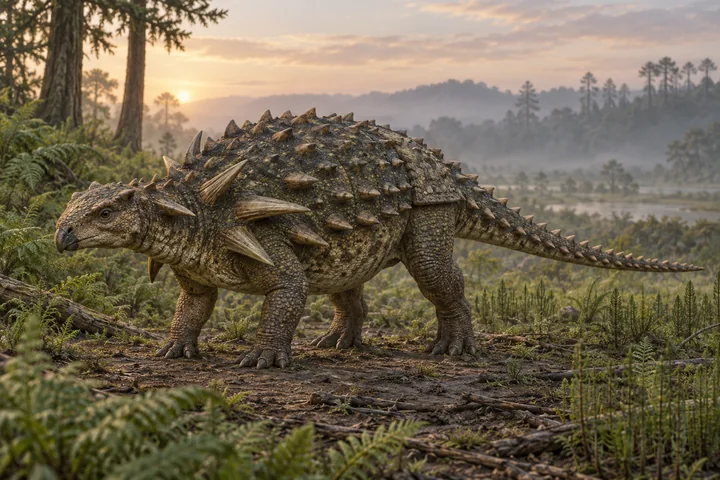
Polacanthus foxii
Polacanthus was an armored plant-eater from England, recognized especially by the bony shield covering its hips.
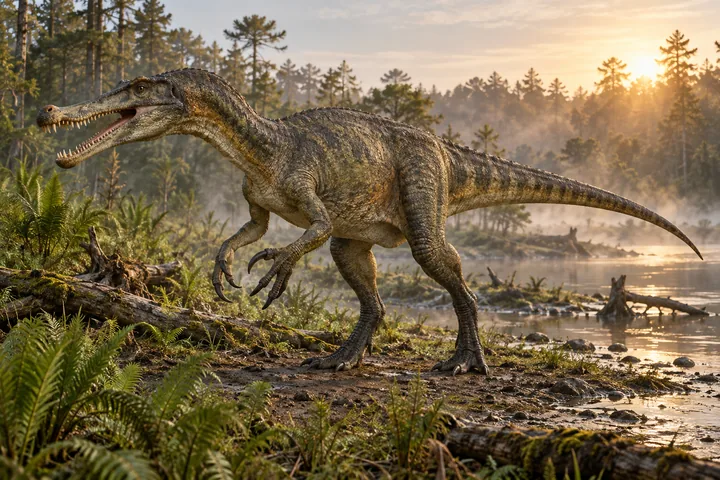
Baryonyx
Baryonyx had a crocodile-like snout and an enlarged hand claw. Its preserved last meal supports a carnivorous diet that included more than fish.
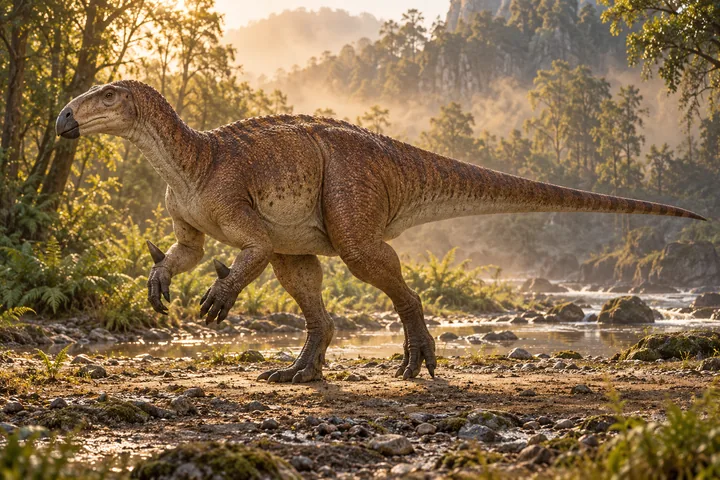
Iguanodon
Iguanodon was a large Early Cretaceous ornithopod with a beak, chewing teeth and prominent thumb spikes. Revisions of old fossils have narrowed a genus that once gathered many different dinosaurs.