
Length
InferredAbout 10 m (museum reference)
A rounded museum reference, not a measured population range; the page does not specify the specimen, method or growth stage. [D1]
EXHIBIT 45
Iguanodon
A large thumb spike on a plant-eating hand.
TWO WAYS TO PICTURE THE PAST
Compare the evidence with the familiar movie image. The illustrations are not to a shared scale.

The artist identifies this reconstruction as Iguanodon bernissartensis. This view illustrates one form within the genus, rather than every species or individual. Fossil-informed anatomy: Robust beaked ornithopod with chewing cheek teeth and thumb spikes; body held forward rather than in a kangaroo-like upright pose. Source crop selects the quadrupedal animal from an original two-pose image. Colours and soft-tissue contours are reconstructed. [1] [2]
Iguanodon bernissartensis (Davide Bonadonna, cropped).png — Davide Bonadonna; cropped Commons version uploaded by SlvrHwk. CC BY 4.0. Remote source artwork displayed without additional cropping; Wikimedia supplies any display-size derivative.
Scientific picture served by Wikimedia · internet connection required.
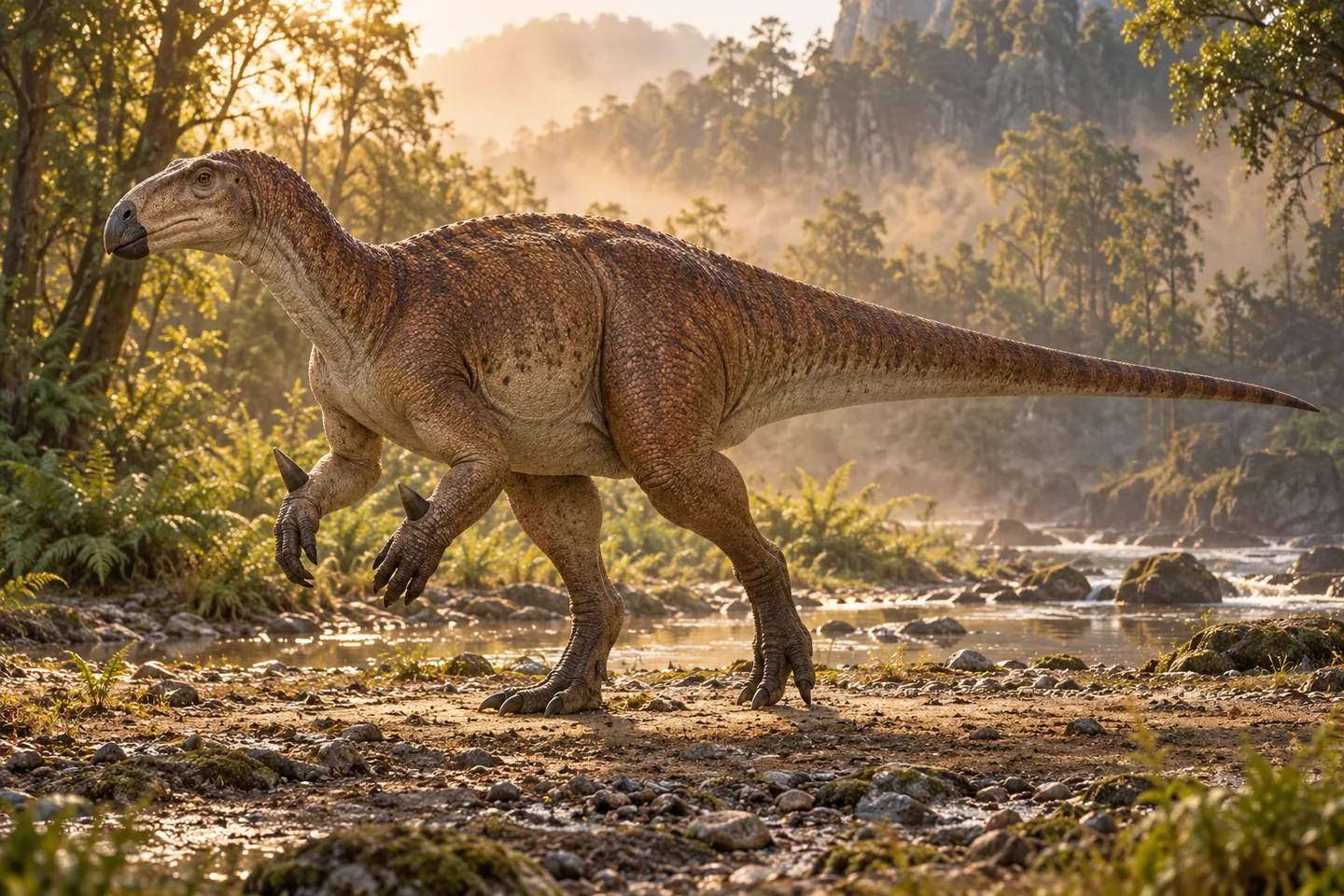
Cinematic robust Iguanodon with forward-held body, strong hindlimbs, substantial forelimbs, cropping beak and prominent thumb spikes; speculative skin colour, tail balancing the body. Dramatic lighting, surface detail and scenery are artistic choices. This is an original cinema-inspired picture, rather than a frame from a film or a documented fossil locality.
Original artwork · artistic interpretation.
Scientific view: credited paleoart interpreting fossil evidence, served online by Wikimedia. Movie-style view: Original artistic interpretation. Colors, soft tissues and settings involve reconstruction.
MEET THE ANIMAL
Iguanodon bernissartensis was a large plant eater from Early Cretaceous western Europe. An elongated snout ended in a toothless beak, while closely packed teeth farther back in the jaws formed chewing surfaces. Replacement rows supplied new teeth as older ones wore out. This arrangement explains how the animal could process vegetation without identifying every plant it ate. [S1]
Its hand carried an enlarged, spike-like thumb, interpreted as having a horny covering. Defense is one proposed use, rather than a fossilized demonstration of the spike striking an attacker. Movement also involves interpretation: the long tail could counterbalance the front of the body during two-legged activity, while the forelimbs could support walking. The museum account keeps aspects of posture debated. [S1]
The Bernissart coal mine in Belgium yielded around thirty well-preserved skeletons after discoveries in 1878. These connected bones greatly improved understanding of Iguanodon anatomy. One skeleton became the species’ holotype, the name-bearing specimen against which other fossils are compared. The collection made a much clearer animal possible, but its assembly history should not be confused with a directly observed living pose. [S1]
PREHISTORIC ANIMAL DOSSIER
The animal, the evidence, and the questions still open.
Iguanodon combined a plant-cropping beak, cheek teeth and a prominent thumb spike. Historical use of the name included several other dinosaurs, so apparent genus-wide distributions require taxonomic review.
Profile scope: Genus: Iguanodon; excludes former species reassigned to Mantellisaurus and other genera.
Source supported identifies a description documented by the cited source. Inferred marks a reconstruction or functional estimate. Debated marks competing interpretations. Not established means the sources reviewed for this dossier do not support a firm conclusion; it does not mean a behavior never occurred.
A size reference is an estimate, not a population range. Nesting evidence does not by itself establish courtship, mate choice, or lifelong pairing.
About 10 m (museum reference)
A rounded museum reference, not a measured population range; the page does not specify the specimen, method or growth stage. [D1]
About 4,000 kg (museum reference)
A rounded museum reference, not a measured population range; the page does not specify the specimen, method or growth stage. [D1]
Plant eater with a beak and cheek teeth
The museum identifies herbivory from the feeding apparatus. Exact plant preferences are not established here. [D1]
Early Cretaceous western European fossil localities
The directory records Belgium and England. Older wider distributions include animals reassigned from Iguanodon, so they are not repeated here. [D1] [D2]
Mainly four-legged; bipedal movement also proposed
Museum accounts favor quadrupedal walking while retaining possible two-legged movement. The older upright, tail-dragging posture is not adopted. [D1] [D2]
Thumb spike, beak and chewing teeth
The spike is a distinct hand structure. Predator defence is a proposed function, rather than an observed encounter. [D1] [D2]
Not established here
The reviewed sources do not establish nest structure, incubation or parental care for Iguanodon.
Not established here
The reviewed sources do not establish a courtship sequence or mating system for Iguanodon.
Not established here
The reviewed sources do not establish usual group size or lasting social organization for Iguanodon.
Sources and inspection notes for the claims in this profile.
THE STORY IN THE FOSSILS
Iguanodon’s hand carried a conspicuous thumb spike, while a beak and cheek teeth suited plant feeding. The Natural History Museum treats predator defence as a likely use for the spike. Its locomotion is reconstructed from bones, with both two-legged and four-legged movement considered in the directory. [1]
The name once covered fossils spanning a wide range of places and geological ages. Re-examination divided some former species into other genera. In particular, Iguanodon atherfieldensis became Mantellisaurus atherfieldensis in 2007; the latter’s shorter forelimbs distinguish it from more heavily built Iguanodon relatives. [2]
We have not established a comparable adult total-length estimate for this taxon in this draft. Specimen measurements in the text describe those individuals. The cited dates are approximately 140–110 million years ago. Unknown does not mean zero.
Sources and evidence notes for this exhibit.
KEEP EXPLORING
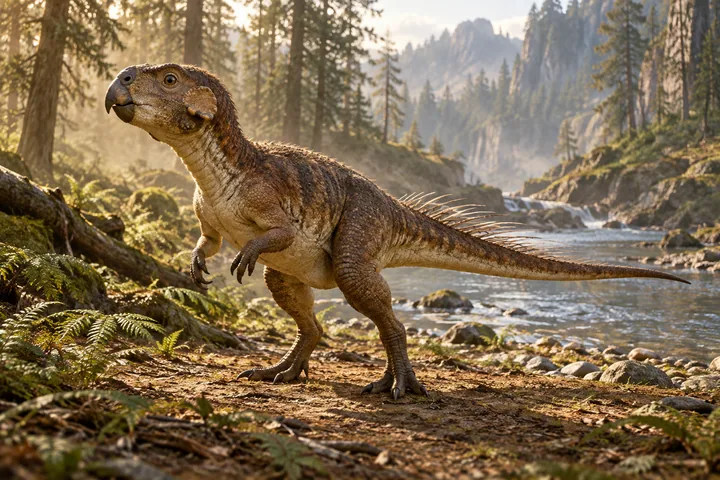
Psittacosaurus
A parrotlike beak, cheek projections and bristles on the tail.
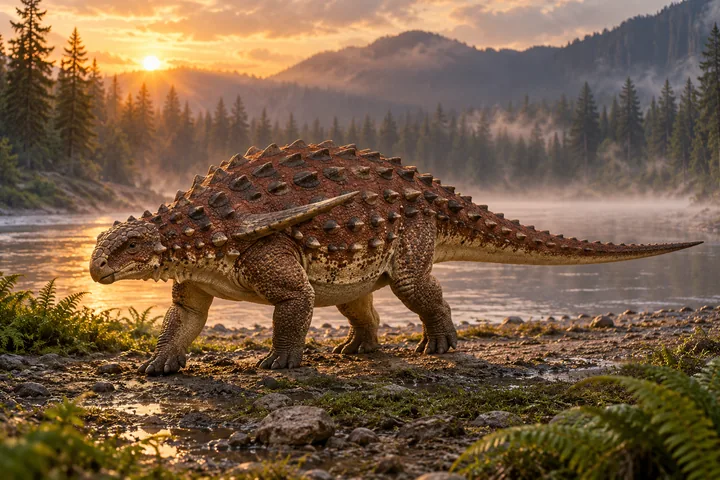
Borealopelta markmitchelli
Preserved skin, armour and a fern-rich last meal.
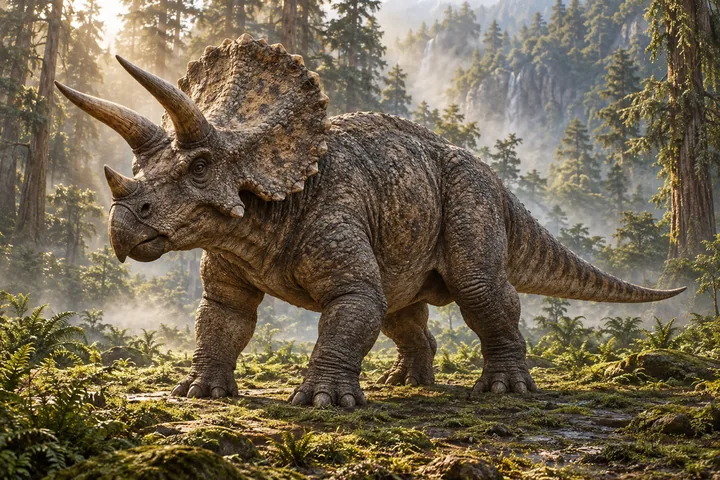
Triceratops horridus
Three horns, a broad frill, and a plant-eater beneath the formidable silhouette.