EXPLORE PREHISTORY 220 prehistoric animal profiles · Scientific & movie-style image galleries

EXHIBIT 127

Rajasaurus

Rajasaurus narmadensis

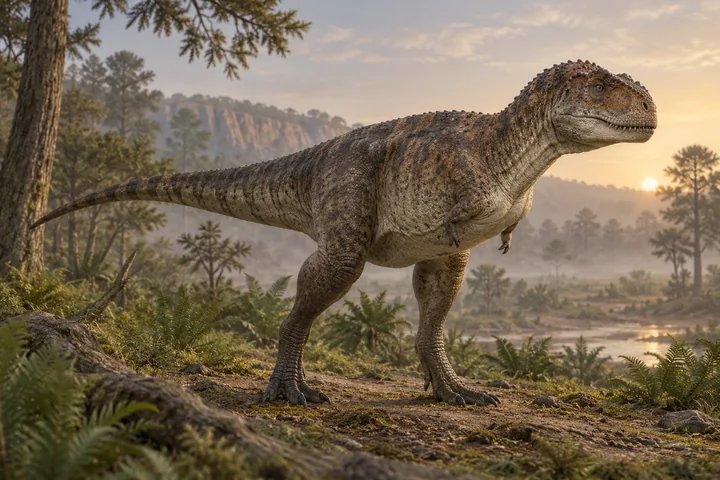
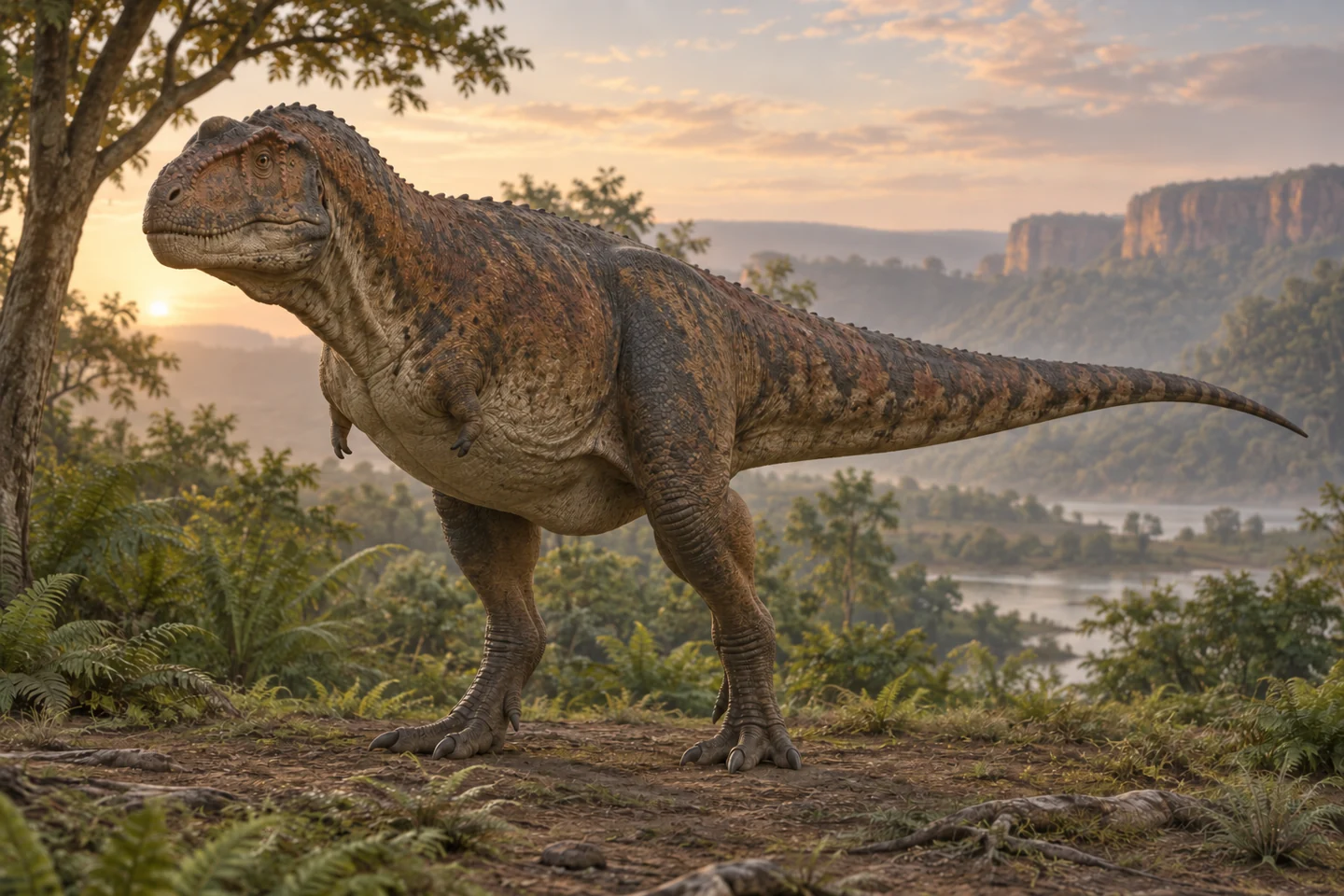
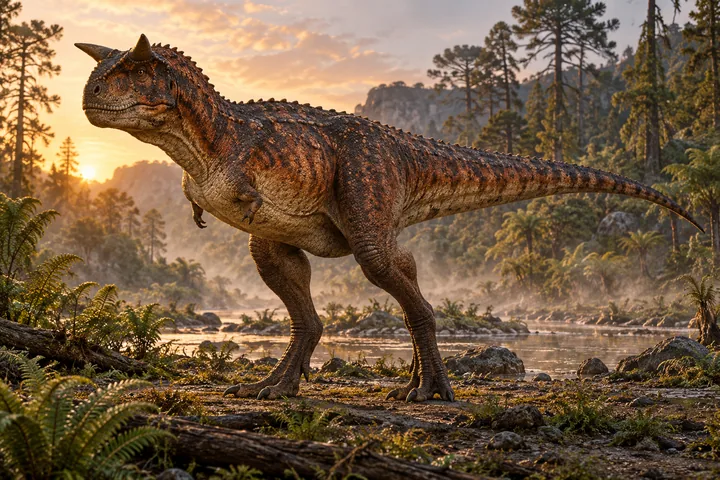
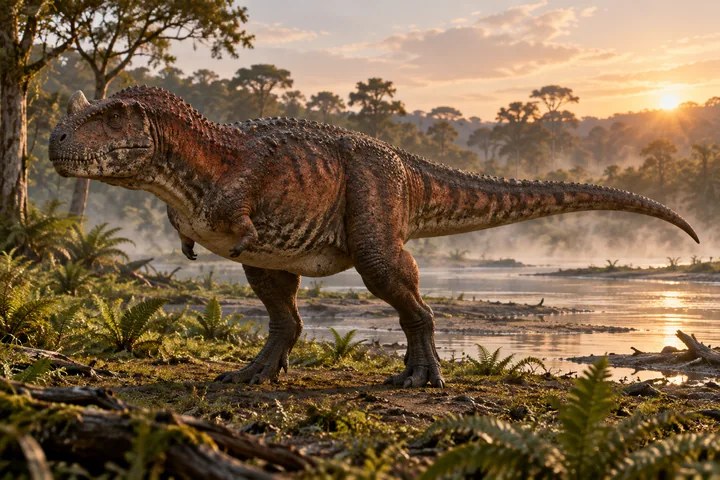
Rajasaurus was a meat-eating abelisaurid from India with a single short horn on its skull roof. [4]

Evidence profile
PERIODLate Cretaceous[1]
DIETCarnivoreEvidence and uncertainty in the dossier
TOTAL LENGTHSee the dossierEstimate scope matters
FOSSILS FOUNDIndia[1]
CompareRead the dossierView the sources

MEET THE ANIMAL

Meet Rajasaurus

Rajasaurus was a meat-eating dinosaur from Late Cretaceous India, recognized by a single horn on the skull roof. Its purpose remains uncertain. Display and head-butting have been discussed as possibilities, but the horn's existence does not demonstrate either behavior. A reconstruction can show a striking feature without recovering the social reasons for it. [D4]

A size study combined estimates from skull, backbone, and limb measurements to reconstruct the original animal at about 6.6 metres. The variation around that model reflects disagreement among methods, not a measured range of living adults. Its incomplete skeleton and unspecified maturity limit the claim. The result is best read as a reconstruction of particular material rather than a species maximum. [D3]

Older Indian dinosaur names may overlap with Rajasaurus, but a revision retained separate analyses because the material was missing or fragmentary. A possible synonym is not a settled decision that two names identify one animal. Before combining biological claims, researchers need evidence that the fossils belong to the same dinosaur. Keeping uncertain identities separate makes the comparisons more dependable. [D2]

PREHISTORIC ANIMAL DOSSIER

A life in profile.

The animal, the evidence, and the questions still open.

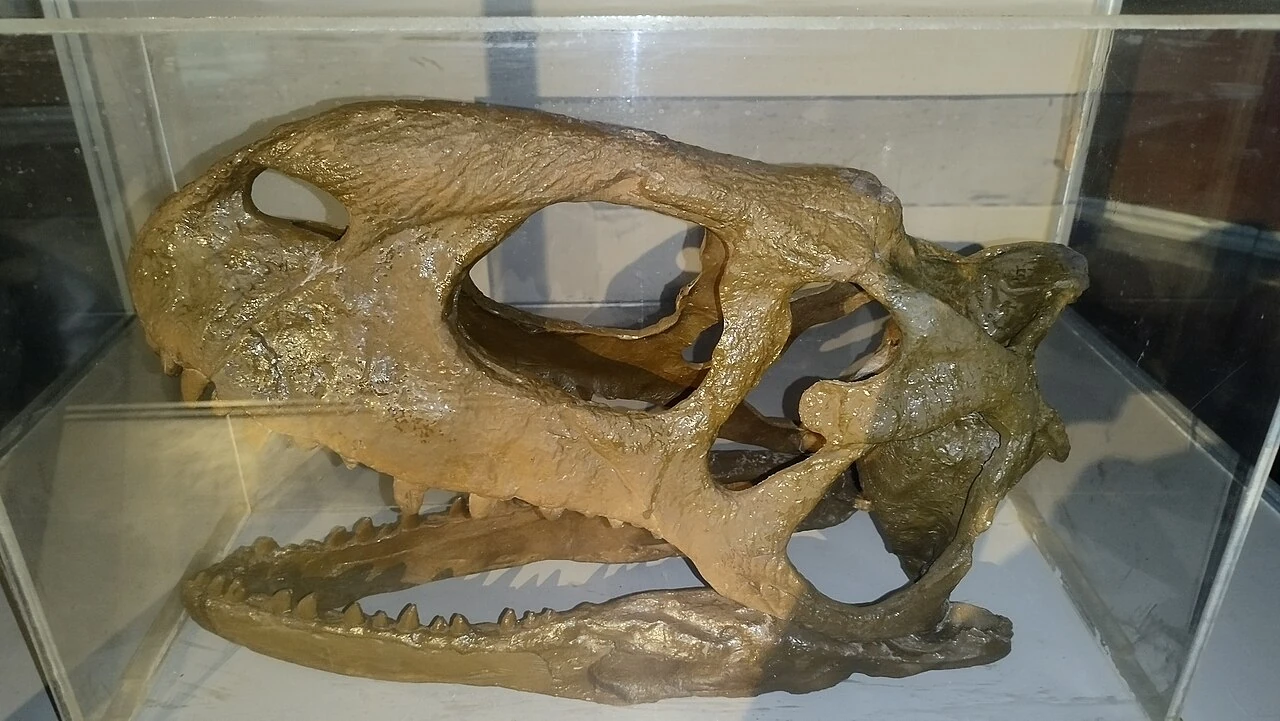
A partial skull and robust postcranial skeleton distinguish the type. The complete head, forelimbs and living appearance require comparative reconstruction. [D1]

Profile scope: Genus profile centered on Rajasaurus narmadensis type GSI 21141/1–33. Possible overlap with Indosaurus and Lametasaurus remains unresolved and those genera are reserved. [D2]

Time
Late Cretaceous
Fossil locations in this exhibit
India
How to read the evidence

Source supported identifies a description documented by the cited source. Inferred marks a reconstruction or functional estimate. Debated marks competing interpretations. Not established means the sources reviewed for this dossier do not support a firm conclusion; it does not mean a behavior never occurred.

A size reference is an estimate, not a population range. Nesting evidence does not by itself establish courtship, mate choice, or lifelong pairing.

Body length

Inferred

About 6.6 m; holotype allometric model

Grillo and Delcourt combine cranial, vertebral and limb regressions for GSI 21141: 6.57 ±0.37 m model dispersion. This does not establish an adult species range; individual maturity is unspecified. [D3]
Body mass

Not established

Not established here

An eggshell study assumes roughly 800 kg with factor-two uncertainty, citing Benson and personal communication. No transparent specimen-specific calculation or maturity scope was obtained; the length regression does not independently validate weight. [D5]

Diet

Inferred

Animal foods; prey selection unresolved

The museum identifies carnivory and discusses hunting or scavenging as possibilities. Reviewed evidence does not identify a regular prey species, exclusive scavenging or a quantitative bite force. [D4]

Habitat & fossil setting

Source supported

Maastrichtian Lameta deposits near Rahioli

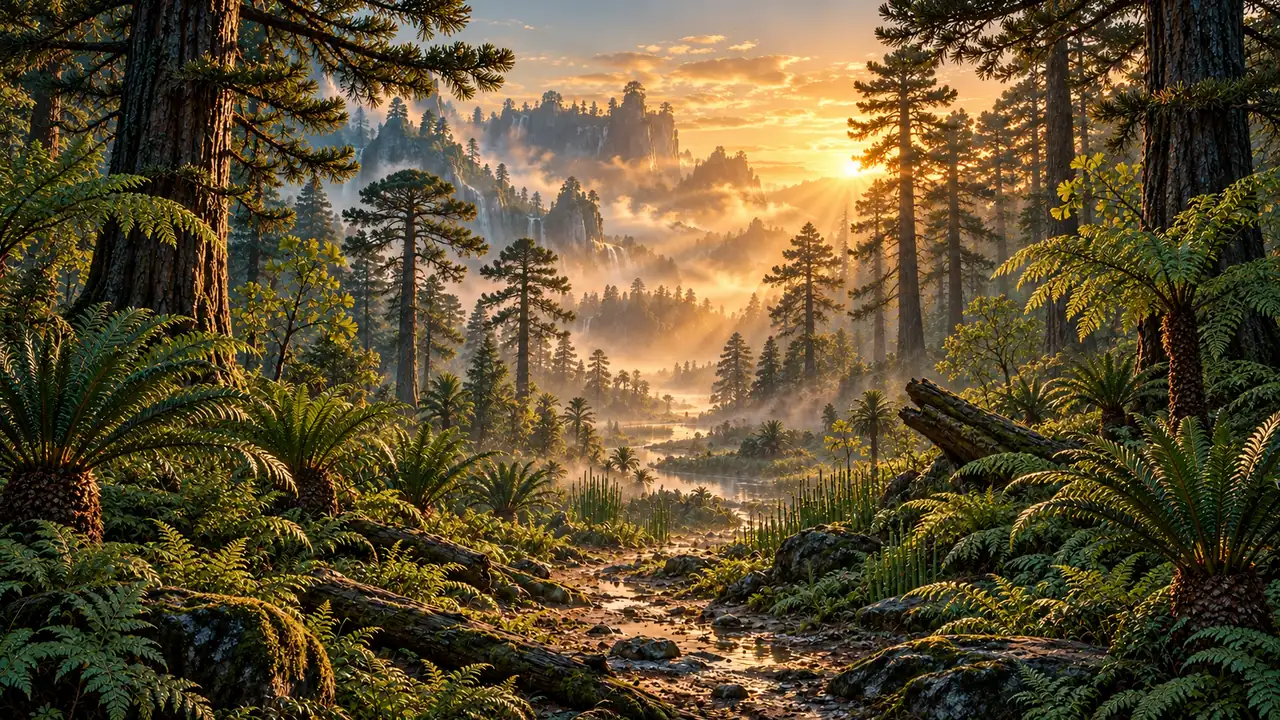
The type was recovered at Temple Hill near Rahioli, Gujarat. It occurred among scattered sauropod bones with evidence of sorting or transport; proximity does not prove a feeding event. [D1]

Movement

Inferred

Bipedal comparative reconstruction

Its preserved hindlimb material supports the conventional abelisaurid biped. Very short arms are reconstructed from relatives; no genus-specific running speed or complete forelimb anatomy is established. [D4]

Distinctive anatomy

Source supported

Single median horn and robust skeleton

The skull roof preserves a short nasofrontal horn and elongated upper temporal openings. The type’s robust pelvic and limb material is incomplete; a museum skull replica fills substantial gaps. [D1]

Reproduction & life together

Reproduction & nesting

Not established

Not established here

An eggshell study tentatively assigns an abelisaurid producer to Rajasaurus through geological association, without an embryo or hatchling identifying it. This does not securely establish a genus-specific nest or parental-care behavior. [D5]

Courtship & mating

Not established

Not established here

Display or head-butting are horn hypotheses. A 2026 abelisaurid comparison favors sexual-selection explanations at group level; it does not establish Rajasaurus rituals, mate choice or sex-specific horn shapes. [D4] [D6]

Social behavior

Not established

Not established here

The type’s associated elements were interpreted as one individual. Reviewed sources do not establish pack hunting, persistent groups or solitary behavior from this partial skeleton. [D1]

Dossier research & sources

Sources and inspection notes for the claims in this profile.

  1. A new abelisaurid (Dinosauria, Theropoda) from the Lameta Formation (Cretaceous, Maastrichtian) of IndiaContributions from the Museum of Paleontology, University of Michigan; Wilson and colleagues (2003), author-hosted paper · Accessed 2026-10-02Type association and quarry map, partial braincase/vertebral/limb inventory, nasofrontal horn, Maastrichtian Rahioli and contrasting older braincases. · Inspected: excerpt
  2. The Phylogeny of Ceratosauria (Dinosauria: Theropoda)Journal of Systematic Palaeontology; Carrano & Sampson (2008), Smithsonian-hosted paper · Accessed 2026-10-02Inspected original PDF excerpts p195/p208: possible Indosaurus–Lametasaurus–Rajasaurus synonymy explicitly unresolved; missing, fragmentary older material. · Inspected: excerpt
  3. Allometry and body length of abelisauroid theropods: Pycnonemosaurus nevesi is the new kingCretaceous Research; Grillo & Delcourt (2017), repost of the published primary paper · Accessed 2026-10-02Inspected original methods and Table7 p81 in full-text repost: GSI 21141 total model 6.57 ±0.37 m; cranial/vertebral/limb estimate dispersion, not population range. · Inspected: excerpt
  4. RajasaurusNatural History Museum, London · Accessed 2026-10-02Current page downloaded and inspected after extractor failure: 6.6 m reference, carnivory, single horn and comparative reduced-arm reconstruction. · Inspected: page
  5. Variable thermoregulation of Late Cretaceous dinosaurs inferred by clumped isotope analysis of fossilized eggshell carbonatesHeliyon; Laskar and colleagues (2020) · Accessed 2026-10-02Indexed original §4.1 and Figure 7 inspected: tentative association-based eggshell attribution and 800 kg assumption, citing Benson and personal communication, without a disclosed specimen model. · Inspected: excerpt
  6. Beyond species recognition hypothesis: evolutionary trends in Abelisauridae cranial ornamentationPaleobiology; Seculi Pereyra, Soto & Perez (2026) · Accessed 2026-10-02Original methods, results and discussion inspected: group-level comparative support for sexual-selection hypotheses; explicit sexual-dimorphism tests have not been conducted for Abelisauridae. · Inspected: page

THE STORY IN THE FOSSILS

Meet Rajasaurus.

The horn is well supported; its purpose is less certain. The museum discusses display or head-butting while clearly acknowledging that its function is unknown. [4]

The 2008 revision identified possible overlap with older Indian genera but retained separate analyses pending evidence. Reserving those names prevents the catalog from counting an unresolved overlap twice. [2]

A note on scale and time

The dossier identifies the scope of each reference estimate. A mount, an individual fossil and a species-wide adult range are different measurements. Comparison metrics remain unavailable where adult scope has not been established. Unknown does not mean zero.

Sources & editorial notes

Sources support the stated claims and scopes. Refer to the evidence notes for uncertainty.

  1. A new abelisaurid (Dinosauria, Theropoda) from the Lameta Formation (Cretaceous, Maastrichtian) of IndiaContributions from the Museum of Paleontology, University of Michigan; Wilson and colleagues (2003), author-hosted paper · Accessed 2026-10-02Type association and quarry map, partial braincase/vertebral/limb inventory, nasofrontal horn, Maastrichtian Rahioli and contrasting older braincases. · Inspected: excerpt
  2. The Phylogeny of Ceratosauria (Dinosauria: Theropoda)Journal of Systematic Palaeontology; Carrano & Sampson (2008), Smithsonian-hosted paper · Accessed 2026-10-02Inspected original PDF excerpts p195/p208: possible Indosaurus–Lametasaurus–Rajasaurus synonymy explicitly unresolved; missing, fragmentary older material. · Inspected: excerpt
  3. Allometry and body length of abelisauroid theropods: Pycnonemosaurus nevesi is the new kingCretaceous Research; Grillo & Delcourt (2017), repost of the published primary paper · Accessed 2026-10-02Inspected original methods and Table7 p81 in full-text repost: GSI 21141 total model 6.57 ±0.37 m; cranial/vertebral/limb estimate dispersion, not population range. · Inspected: excerpt
  4. RajasaurusNatural History Museum, London · Accessed 2026-10-02Current page downloaded and inspected after extractor failure: 6.6 m reference, carnivory, single horn and comparative reduced-arm reconstruction. · Inspected: page
  5. Variable thermoregulation of Late Cretaceous dinosaurs inferred by clumped isotope analysis of fossilized eggshell carbonatesHeliyon; Laskar and colleagues (2020) · Accessed 2026-10-02Indexed original §4.1 and Figure 7 inspected: tentative association-based eggshell attribution and 800 kg assumption, citing Benson and personal communication, without a disclosed specimen model. · Inspected: excerpt
  6. Beyond species recognition hypothesis: evolutionary trends in Abelisauridae cranial ornamentationPaleobiology; Seculi Pereyra, Soto & Perez (2026) · Accessed 2026-10-02Original methods, results and discussion inspected: group-level comparative support for sexual-selection hypotheses; explicit sexual-dimorphism tests have not been conducted for Abelisauridae. · Inspected: page

FOLLOW YOUR CURIOSITY

Who will you meet next?

KEEP EXPLORING

More from the collection