
Body length
InferredAbout 8 m (museum reference)
Parts of the legs and tail are missing and are reconstructed using relatives. This reference is not a direct whole-body measurement or verified adult maximum. [D1]
EXHIBIT 12
Carnotaurus
Carnotaurus paired two head horns with extraordinarily reduced forelimbs.
TWO WAYS TO PICTURE THE PAST
Compare the evidence with the familiar movie image. The illustrations are not to a shared scale.

The artist identifies this reconstruction as Carnotaurus sastrei. This view illustrates one form within the genus, rather than every species or individual. Fossil-informed anatomy: Short narrow skull, paired horns, very small arms and mixed small and larger conical scales. Skin layout reflects fossil evidence; coloration remains speculative. [1] [2]
Carnotaurus Reconstruction (2022).png — Fred Wierum. CC BY-SA 4.0. Remote source artwork displayed without additional cropping; Wikimedia supplies any display-size derivative.
Scientific picture served by Wikimedia · internet connection required.
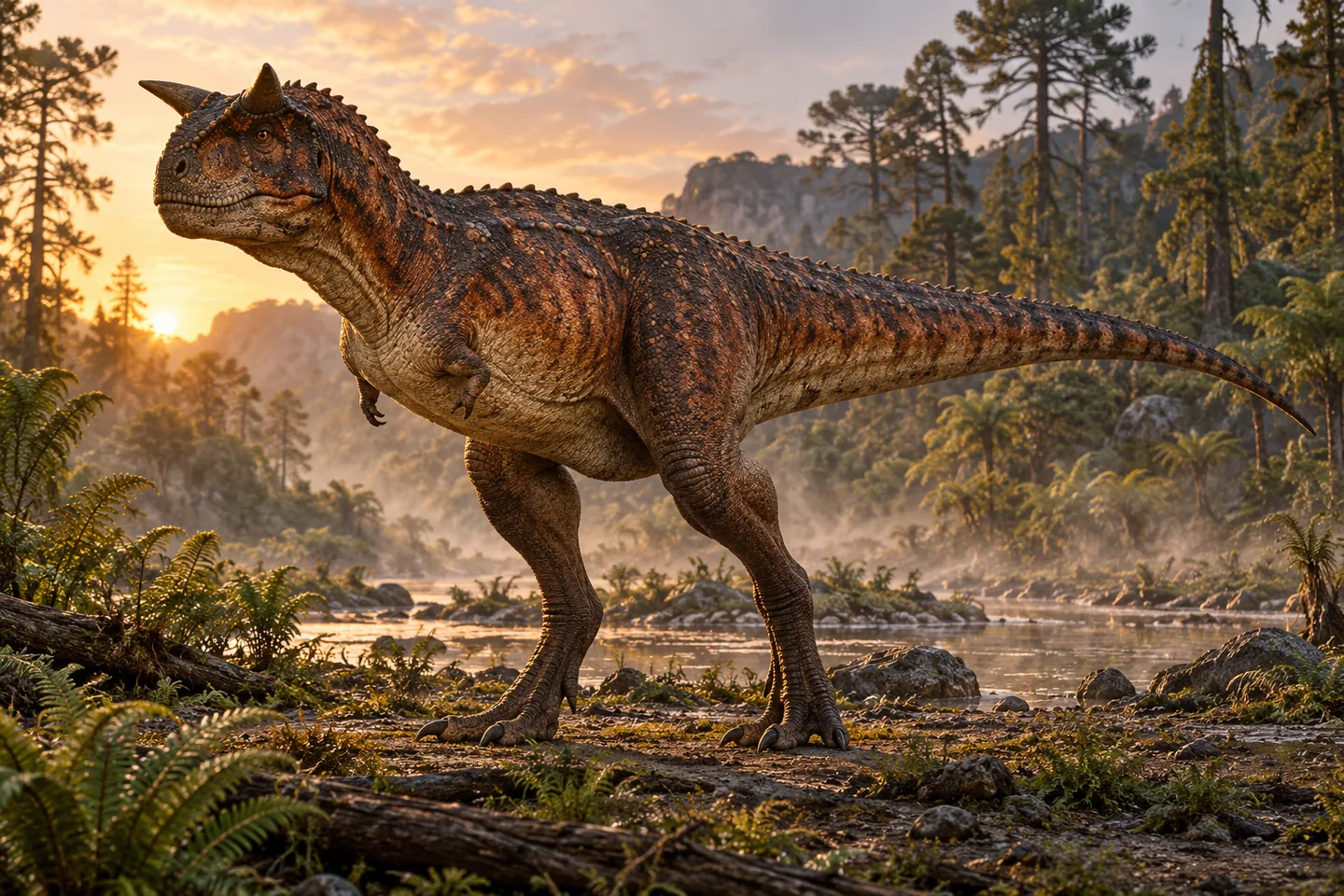
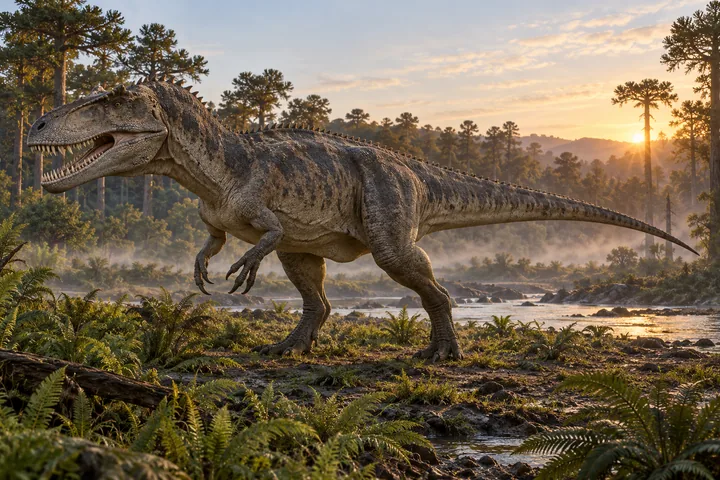
Cinematic Carnotaurus with paired brow horns, a short deep head and tiny forelimbs; irregular large scales accent its skin, with artistic color. Dramatic lighting, surface detail and scenery are artistic choices. This is an original cinema-inspired picture, rather than a frame from a film or a documented fossil locality.
Original artwork · artistic interpretation.
Scientific view: credited paleoart interpreting fossil evidence, served online by Wikimedia. Movie-style view: Original artistic interpretation. Colors, soft tissues and settings involve reconstruction.
MEET THE ANIMAL
Carnotaurus was a Late Cretaceous meat eater from Patagonia in Argentina. Paired horns above its eyes, a short, deep skull and extremely small arms give it a distinctive appearance. It belonged to the abelisaur family of predatory dinosaurs. Its particularly blunt head helps distinguish this animal even from relatives that also had short skulls and reduced forelimbs. [S1]
Preserved skin from the shoulder, trunk and tail shows large scales surrounded by smaller ones. A study found that the larger scales varied in arrangement, rather than forming simple, regular rows. These impressions reveal the covering in preserved areas. They do not establish the original color or make every part of a restored body equally certain. [D2]
The original skeleton is substantial, but much of the tail and the lower legs are missing. Restoring the whole animal therefore requires comparisons and interpretation. Researchers have proposed functions for the horns, including interactions between animals, but a horn's shape does not record a mating ritual. Carnotaurus offers an unusually vivid combination of skeletal anatomy and skin evidence while leaving questions about its daily behavior and reproduction unresolved here. [S1]
PREHISTORIC ANIMAL DOSSIER
The animal, the evidence, and the questions still open.
Carnotaurus had paired brow horns, very small arms and a short skull. Preserved C. sastrei skin includes large feature scales surrounded by smaller scales, providing direct evidence of part of its body covering.
Profile scope: Genus — Carnotaurus; skeletal and skin evidence concerns C. sastrei
Source supported identifies a description documented by the cited source. Inferred marks a reconstruction or functional estimate. Debated marks competing interpretations. Not established means the sources reviewed for this dossier do not support a firm conclusion; it does not mean a behavior never occurred.
A size reference is an estimate, not a population range. Nesting evidence does not by itself establish courtship, mate choice, or lifelong pairing.
About 8 m (museum reference)
Parts of the legs and tail are missing and are reconstructed using relatives. This reference is not a direct whole-body measurement or verified adult maximum. [D1]
Not established here
A mass estimate with a reviewed reconstruction method is not established in the inspected sources.
Meat eater
The skull and teeth identify a carnivore. Their shape alone does not establish a precise prey list or killing technique. [D1]
Late Cretaceous Patagonia; coastal deposits
The museum relates the Argentine fossil setting to estuary and tidal-flat deposits. Burial context does not establish an exclusive habitat preference. [D1]
Two-legged terrestrial movement
The museum describes a bipedal animal. Missing limb and tail parts add uncertainty to detailed movement reconstructions. [D1]
Brow horns, tiny arms and scaled skin
Skin from the shoulder, trunk and tail preserves large feature scales among smaller scales. The study finds variable, rather than orderly row-based, arrangements. [D1] [D2]
Not established here
Reviewed sources do not establish Carnotaurus eggs, nest arrangement or parental care.
Horn display proposed
Mate attraction is one proposed function of the horns, alongside other interpretations. No mating ritual or sex-specific horn difference is established here. [D1]
Not established here
Reviewed sources do not establish Carnotaurus group size or coordinated hunting.
Sources and inspection notes for the claims in this profile.
THE STORY IN THE FOSSILS
Carnotaurus belongs to Abelisauridae, a group of southern carnivorous dinosaurs that also includes Majungasaurus. Its two horns, abbreviated snout and greatly reduced arms make a distinctive silhouette. The horns have inspired hypotheses involving display or combat, but their actual function is unknown. [1]
A 2021 study describes preserved skin from the shoulder, trunk and tail, with possible neck skin as well. Large conical scales are scattered among smaller scales rather than arranged in orderly rows. The smaller scale shapes differ between sampled body regions. [2]
We have not established a comparable adult total-length estimate for this taxon in this draft. Specimen measurements in the text describe those individuals. The cited dates are approximately 71–69 million years ago. Published genus-level educational dating; not a specimen age. Unknown does not mean zero.
Sources and evidence notes for this exhibit.
KEEP EXPLORING
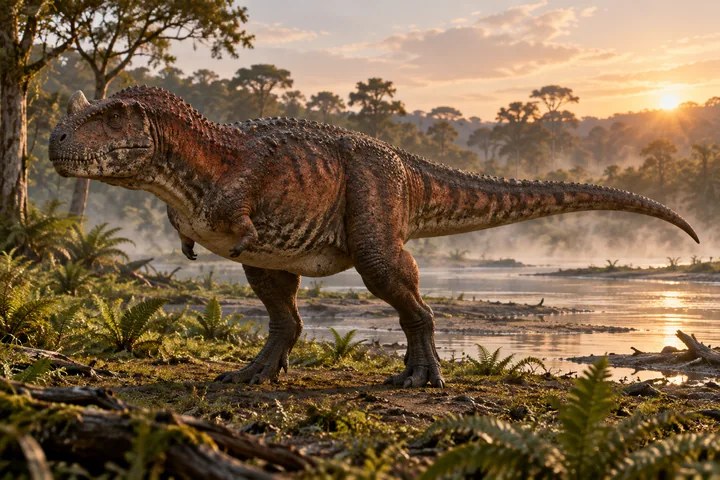
Majungasaurus crenatissimus
Majungasaurus left feeding marks on bones of both sauropods and its own species.
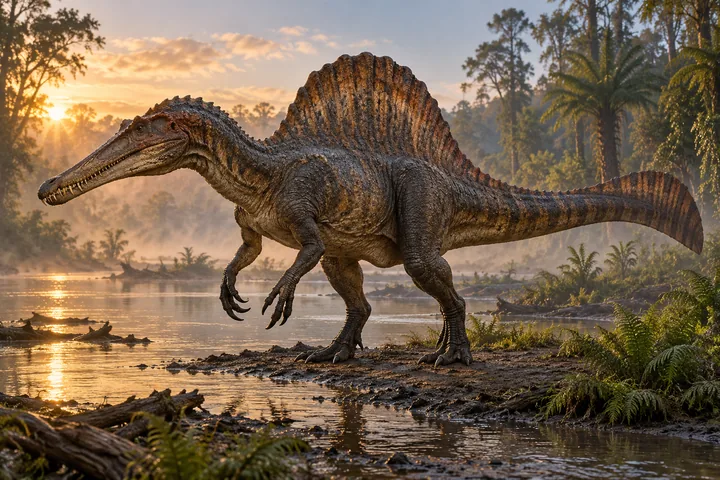
Spinosaurus
Spinosaurus had short hind limbs and a broad, paddle-shaped tail.
Giganotosaurus
Giganotosaurus carried long, serrated teeth shaped for slicing flesh.