EXPLORE PREHISTORY 220 prehistoric animal profiles · Scientific & movie-style image galleries

EXHIBIT 09

Giganotosaurus

Giganotosaurus

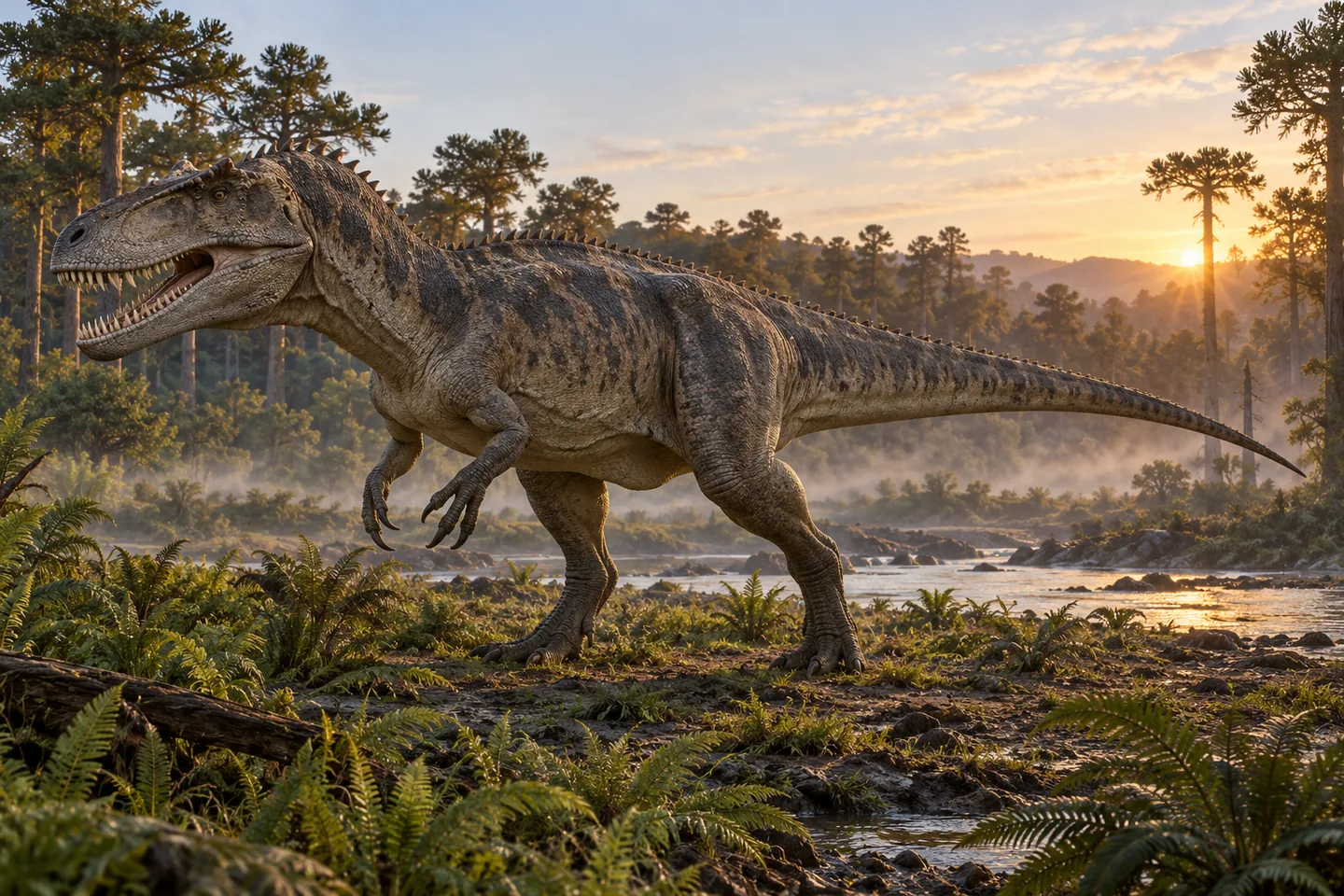
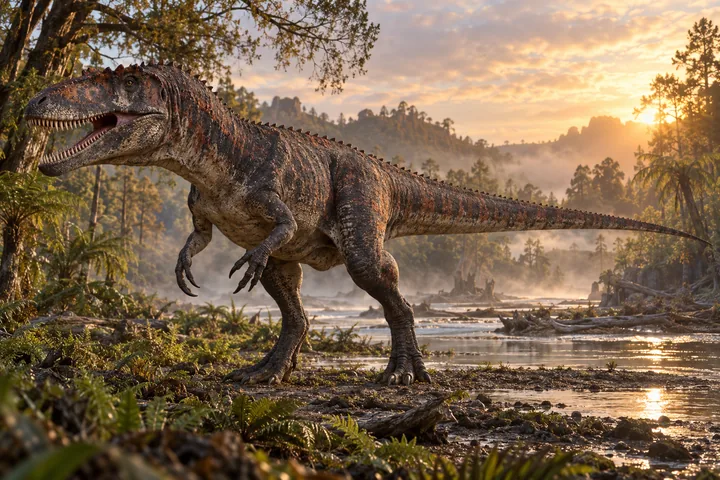
Giganotosaurus carried long, serrated teeth shaped for slicing flesh.

Evidence profile
PERIODLate Cretaceous[1]
DIETCarnivoreInferred from related anatomy [1]
TOTAL LENGTHNot established hereComparable estimate unavailable
FOSSILS FOUNDArgentina[1]
CompareRead the dossierView the sources

MEET THE ANIMAL

Meet Giganotosaurus

Giganotosaurus was a giant meat-eating dinosaur from Cretaceous Patagonia in Argentina. Its original description identified an imposing predator from an incomplete skeleton. Estimates of overall length and body weight therefore involve rebuilding missing parts, rather than measuring a complete living animal. [D1]

One especially informative part is its braincase, the bony region enclosing the brain. A study of Giganotosaurus carolinii described features that distinguish it from other dinosaurs, along with features useful for comparing relatives. These include the shape of the back of the skull and air spaces within one of its bones. Small anatomical details can matter greatly, even in an animal famous for its enormous overall size. [S1]

The comparisons linked Giganotosaurus closely with the North African predator Carcharodontosaurus. Researchers used this relationship to discuss connections between continents during the Cretaceous. That is a hypothesis about evolutionary and geographic history, rather than a claim that the known individual crossed an ocean. A preserved braincase can inform identification and relationships, but it does not show pack hunting, a courtship display or how parents cared for young. Those behaviors remain unresolved in the reviewed evidence. [S1]

Overview sources
  1. The braincase of Giganotosaurus carolinii (Dinosauria: Theropoda) from the Upper Cretaceous of ArgentinaSociety of Vertebrate Paleontology; RERO repository · Accessed 2026-10-04Inspected: abstract

PREHISTORIC ANIMAL DOSSIER

A life in profile.

The animal, the evidence, and the questions still open.

Giganotosaurus is a giant Patagonian carnivore known from incomplete skeletal material. The original G. carolinii description emphasized a relatively low skull and robust vertebrae and hindlimbs.

Profile scope: Genus — Giganotosaurus; size reconstruction concerns G. carolinii

Time
Late Cretaceous
Fossil locations in this exhibit
Argentina
How to read the evidence

Source supported identifies a description documented by the cited source. Inferred marks a reconstruction or functional estimate. Debated marks competing interpretations. Not established means the sources reviewed for this dossier do not support a firm conclusion; it does not mean a behavior never occurred.

A size reference is an estimate, not a population range. Nesting evidence does not by itself establish courtship, mate choice, or lifelong pairing.

Body length

Inferred

About 12.5 m (original reconstruction)

The 1995 description estimated this total length from incomplete G. carolinii material. It is a historical reconstruction, not a measured complete skeleton or established adult maximum. [D1]

Body mass

Inferred

About 6–8 tonnes (original estimate)

The original abstract gives this reconstruction interval. Its detailed method was not reviewed here, and the interval is not a current population range. [D1]

Diet and feeding

Source supported

Meat eater

Blade-like serrated teeth support carnivory. Proposals about hunting giant sauropods are less secure than the dietary classification. [D2]

Habitat and setting

Source supported

Cretaceous Patagonia, Argentina

The original description places its fossils in Patagonia. This geographic occurrence does not establish a preferred local environment. [D1] [D2]

Movement

Source supported

Two-legged terrestrial movement

The museum describes bipedal movement. A precise running speed is not established in these sources. [D2]

Distinctive anatomy

Source supported

Low skull and robust hindlimbs

The original description identifies a relatively low skull, reduced shoulder girdle and robust vertebrae and hindlimbs. [D1]

Reproduction & life together

Reproduction and nesting

Not established

Not established here

Reviewed sources do not establish a Giganotosaurus clutch size, nest arrangement or parental care.

Mating and courtship

Not established

Not established here

Reviewed sources do not establish Giganotosaurus displays, mating posture or courtship sequence.

Social behaviour

Debated

Pack hunting proposed, evidence disputed

The museum discusses pack-hunting suggestions and opposing interpretations. Large prey size alone does not establish coordinated hunting. [D2]

Dossier research & sources

Sources and inspection notes for the claims in this profile.

  1. A new giant carnivorous dinosaur from the Cretaceous of PatagoniaNature; Coria and Salgado (1995) · Accessed 2026-10-02Inspected original abstract: G. carolinii anatomy and initial length/mass reconstruction · Inspected: abstract
  2. GiganotosaurusNatural History Museum, London · Accessed 2026-10-02Genus carnivory, movement, Argentine occurrence and pack-hunting hypotheses · Inspected: page

THE STORY IN THE FOSSILS

Meet Giganotosaurus.

Fossil hunter Rubén Carolini discovered the first Giganotosaurus in Patagonia in 1993. Coria and Salgado named Giganotosaurus carolinii two years later. The genus name refers to its southern location, while the species name honors the finder of the original bones. [1]

The Natural History Museum describes an approximately thirteen-metre animal but stresses that parts of the skeleton remain unknown. Its large jaws and slicing teeth indicate a carnivorous role. Suggestions of cooperative attacks on giant sauropods are hypotheses, rather than established behavior. [1]

A note on scale and time

We have not established a comparable adult total-length estimate for this taxon in this draft. Specimen measurements in the text describe those individuals. The cited dates are approximately 100–95 million years ago. Published genus-level educational dating; not a specimen age. Unknown does not mean zero.

Sources & editorial notes

Sources and evidence notes for this exhibit.

  1. Giganotosaurus — Dino DirectoryNatural History Museum, London · Accessed 2026-10-02Dino facts; incomplete remains and size comparison; discovery; diet; taxonomic details, lines 67–130. Directory mass conflicts with its lighter-build comparison and is not adopted.

FOLLOW YOUR CURIOSITY

Who will you meet next?

KEEP EXPLORING

More from the collection