
Body length
InferredAbout 12.5 m (museum reference)
The museum provides a rounded reconstructed length. It does not identify the specimen or verify its maturity in this profile. [D1]
EXHIBIT 10
Carcharodontosaurus
Carcharodontosaurus was named for teeth resembling those of sharks.
TWO WAYS TO PICTURE THE PAST
Compare the evidence with the familiar movie image. The illustrations are not to a shared scale.

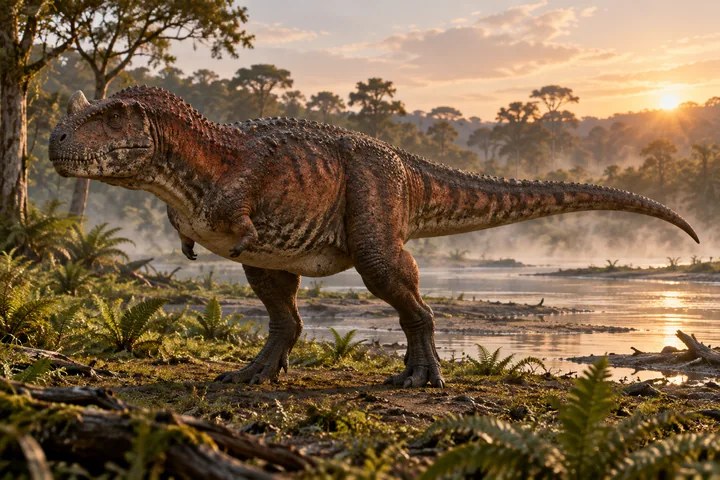
The artist identifies this reconstruction as Carcharodontosaurus saharicus. This view illustrates one form within the genus, rather than every species or individual. Fossil-informed anatomy: Large bipedal theropod with an elongated skull and prominent shark-like cutting teeth. Incomplete skeleton requires proportions inferred from relatives; coloration is speculative. [1]
Carcharodontosaurus.png — Fred Wierum. CC BY-SA 4.0. Remote source artwork displayed without additional cropping; Wikimedia supplies any display-size derivative.
Scientific picture served by Wikimedia · internet connection required.
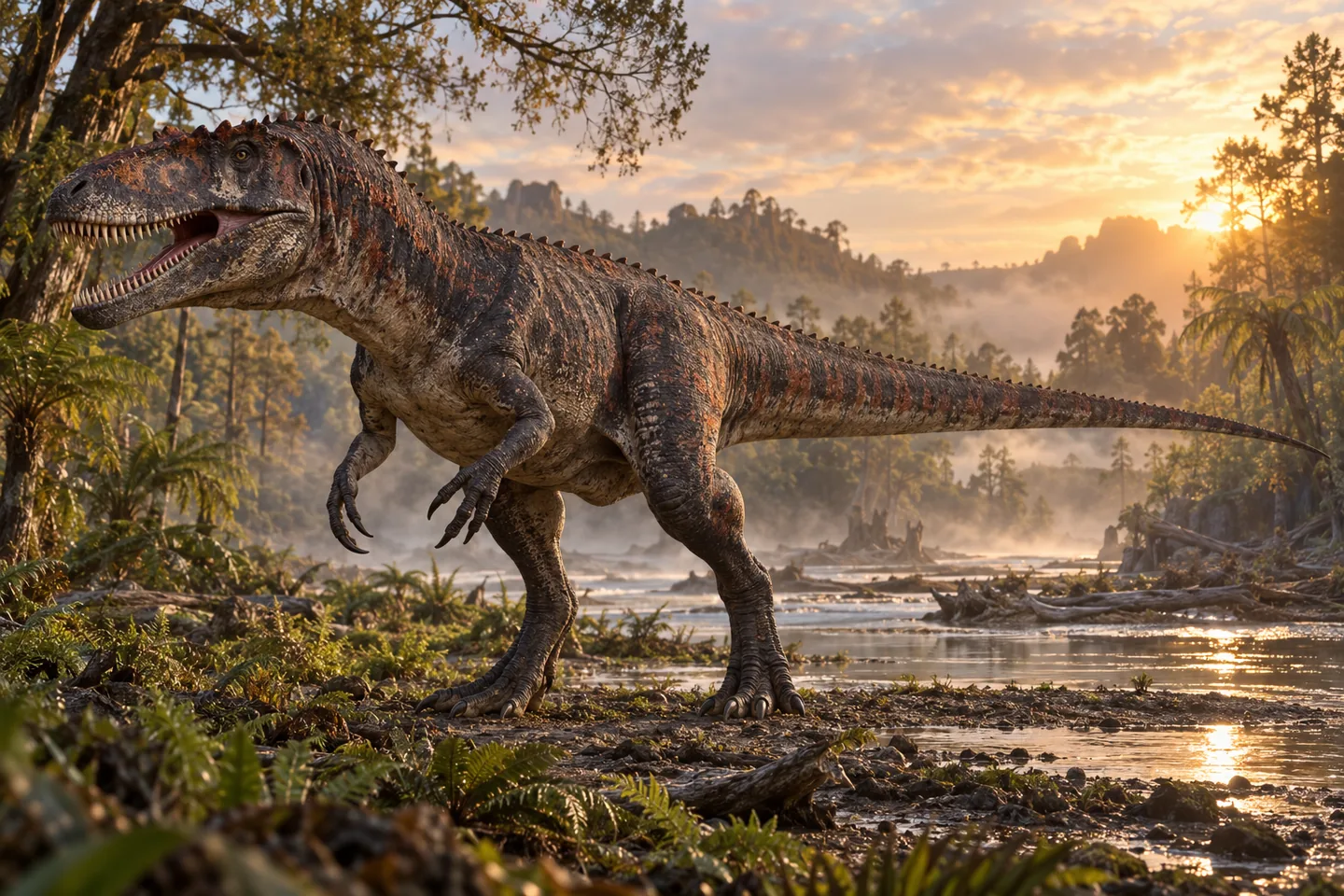
Cinematic Carcharodontosaurus with a large elongated head and flesh-cutting teeth; color, texture and display details remain artistic. Dramatic lighting, surface detail and scenery are artistic choices. This is an original cinema-inspired picture, rather than a frame from a film or a documented fossil locality.
Original artwork · artistic interpretation.
Scientific view: credited paleoart interpreting fossil evidence, served online by Wikimedia. Movie-style view: Original artistic interpretation. Colors, soft tissues and settings involve reconstruction.
MEET THE ANIMAL
Carcharodontosaurus was a large North African meat eater of the Late Cretaceous. Its knife-like teeth had serrated cutting edges, supporting a diet of flesh. It belonged to a wider family of predatory dinosaurs with members known from other continents. That relationship allows comparisons, but the fossils of each animal still need to be considered separately. [S1]
Its geography needs care. Original teeth from Algeria and a reference skull from Morocco support those occurrences. An Egyptian skeleton long assigned to Carcharodontosaurus was reassigned to Tameryraptor in a 2025 study. The Egyptian animal's surroundings therefore should not be treated as direct evidence for this genus. [D2]
Its impressive size makes attacks on enormous prey easy to imagine. The museum discussion includes proposed hunting scenarios, but possibilities should stay separate from observations. Cutting teeth support meat eating more directly than they establish pack hunting or a precise prey preference. The reviewed material also leaves parenting and courtship unresolved. The known teeth, geographic evidence and changing identification of specimens provide firmer support than a dramatic imagined encounter. [S1]
PREHISTORIC ANIMAL DOSSIER
The animal, the evidence, and the questions still open.
Carcharodontosaurus was a large North African carnivore with long, serrated teeth. Its fossil profile establishes distinctive skull anatomy more directly than prey-selection tactics or reproductive behaviour.
Profile scope: Genus: Carcharodontosaurus; Egyptian Bahariya material historically referred here was reassigned to Tameryraptor in 2025.
Source supported identifies a description documented by the cited source. Inferred marks a reconstruction or functional estimate. Debated marks competing interpretations. Not established means the sources reviewed for this dossier do not support a firm conclusion; it does not mean a behavior never occurred.
A size reference is an estimate, not a population range. Nesting evidence does not by itself establish courtship, mate choice, or lifelong pairing.
About 12.5 m (museum reference)
The museum provides a rounded reconstructed length. It does not identify the specimen or verify its maturity in this profile. [D1]
Not established here
A taxon-specific mass estimate with a reviewed method is not established in the inspected source.
Meat eater
Long serrated teeth support carnivory. Specific prey choices and killing techniques remain anatomical interpretations. [D1]
North Africa: Algeria and Morocco
The Moroccan reference skull and original Algerian teeth establish North African occurrence. The historically referred Bahariya skeleton was reassigned to Tameryraptor in 2025; its Egyptian setting is not used as habitat evidence here. [D2]
Probably two-legged terrestrial movement
Its theropod skeletal reconstruction supports bipedal movement. The reviewed profile does not provide a taxon-specific gait or speed analysis. [D1]
Large skull and shark-like serrated teeth
The teeth's shape gives the genus its name. Skull-length estimates depend on reconstruction of incomplete material. [D1]
Not established here
Reviewed sources do not establish Carcharodontosaurus eggs, clutch size or parental care.
Not established here
Reviewed sources do not establish Carcharodontosaurus mating displays or mating posture.
Not established here
Reviewed sources do not establish Carcharodontosaurus group size or coordinated hunting.
Sources and inspection notes for the claims in this profile.
THE STORY IN THE FOSSILS
Carcharodontosaurus is known from North African material, including Algerian teeth and the Moroccan skull used as the reference specimen of C. saharicus. A 2025 reassessment assigned the historically referred Egyptian Bahariya skeleton to the separate genus Tameryraptor. Its Egyptian setting is therefore not treated as direct Carcharodontosaurus habitat evidence here. [1] [2]
The skull is reconstructed at roughly 1.6 metres long, illustrating the animal’s extraordinary scale. Its relatively fragile teeth were suited to tearing flesh rather than crushing bone. Carcharodontosaurus and the South American Giganotosaurus belong to the same family, Carcharodontosauridae, despite their different locations. [1]
We have not established a comparable adult total-length estimate for this taxon in this draft. Specimen measurements in the text describe those individuals. The cited dates are approximately 99–94 million years ago. Published genus-level educational dating; not a specimen age. Unknown does not mean zero.
Sources and evidence notes for this exhibit.
KEEP EXPLORING
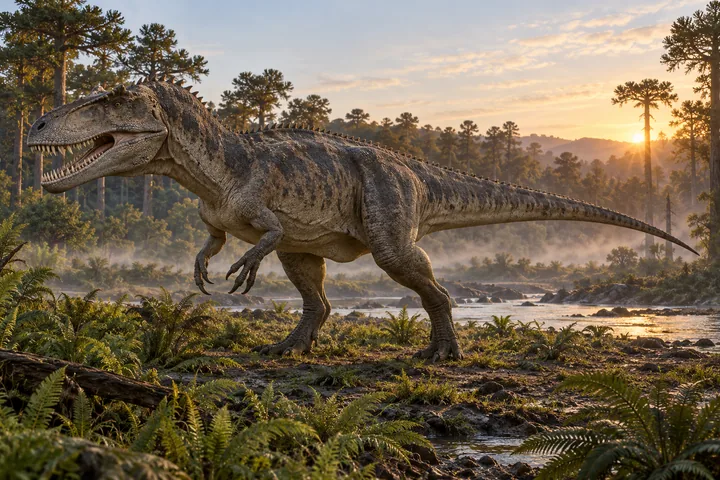
Giganotosaurus
Giganotosaurus carried long, serrated teeth shaped for slicing flesh.
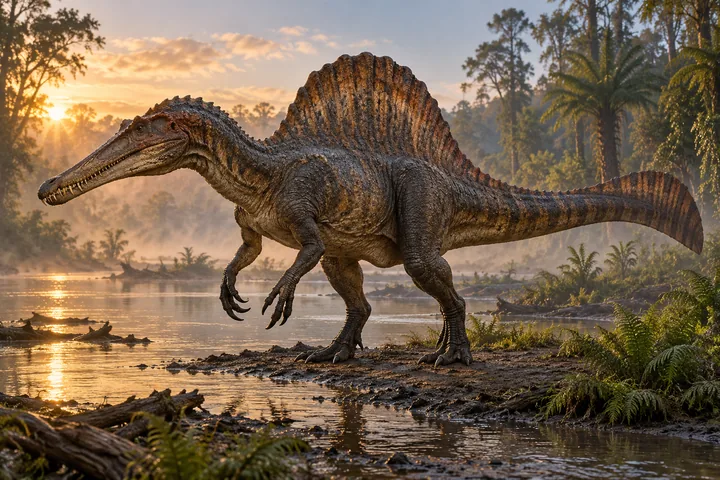
Spinosaurus
Spinosaurus had short hind limbs and a broad, paddle-shaped tail.
Majungasaurus crenatissimus
Majungasaurus left feeding marks on bones of both sauropods and its own species.