
Size reference
Source supported9.5–10.5 mm body-length reference
Published comparison for known S. axelrodi material; not a genus-wide population range. [D2]
EXHIBIT 263
Santanmantis
Prehistoric insect
Santanmantis was a small Cretaceous mantis with a short thorax and wings extending well beyond its abdomen. [2]
TWO WAYS TO PICTURE THE PAST
Compare the evidence with the familiar movie image. The illustrations are not to a shared scale.
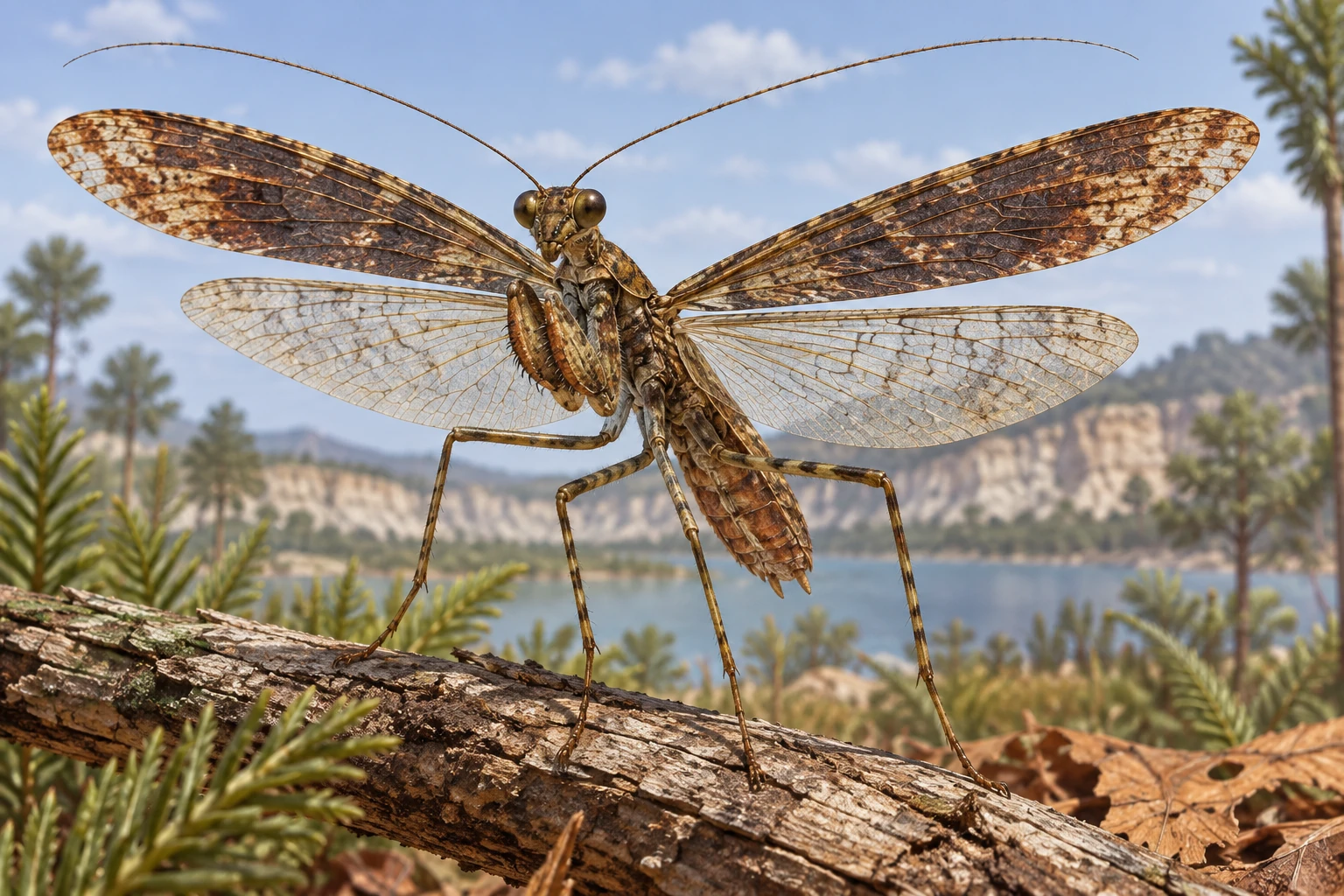
An illustrative reconstruction. Compare its anatomy with the evidence and limitations in the dossier. [1]
Source-informed reconstruction. Appearance evidence [1]. Original illustration; missing anatomy, coloration and scenery include interpretation.
Fossils constrain this life reconstruction. Missing anatomy, coloration and the environmental scene include interpretation; the dossier explains the evidence limits.
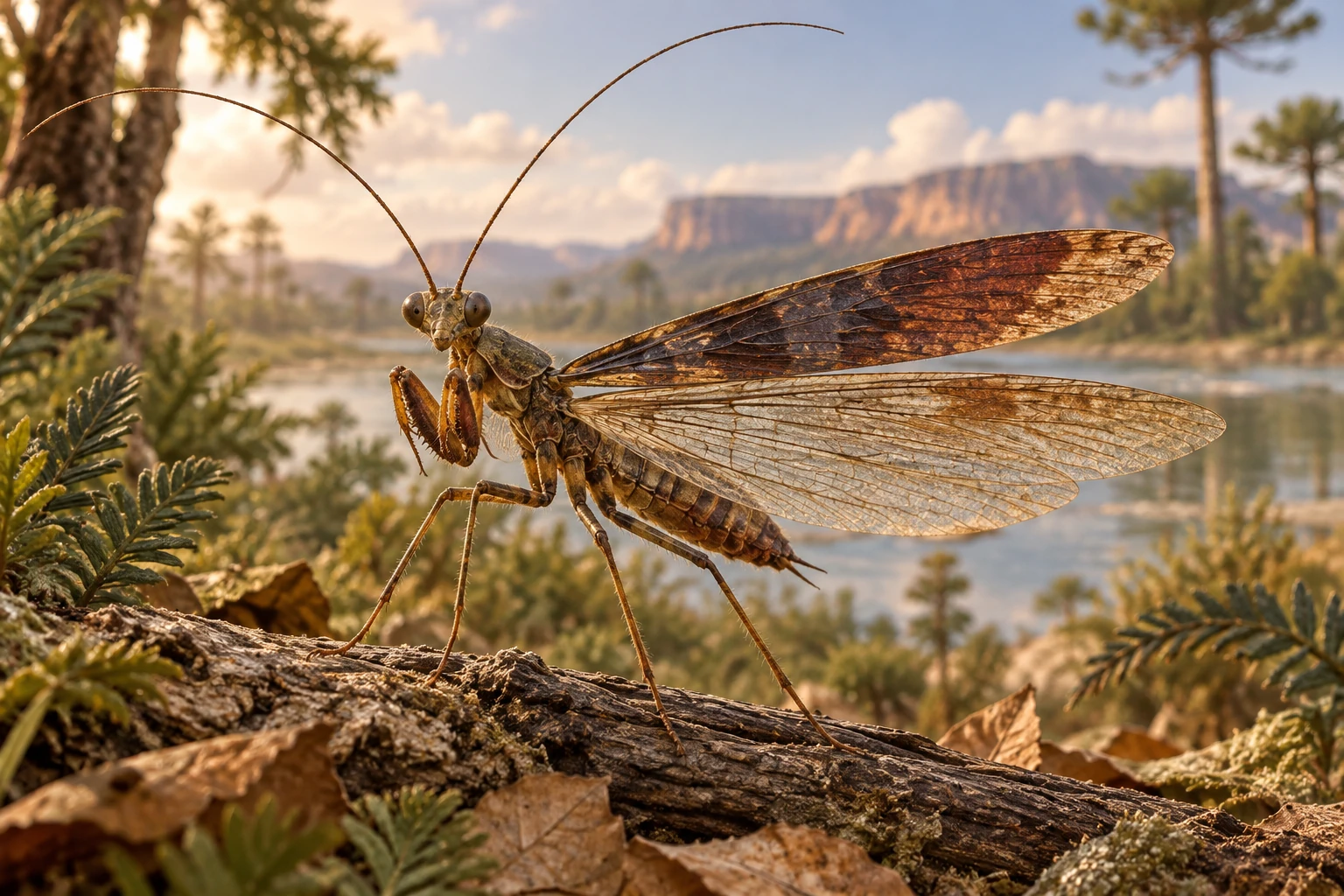
An illustrative reconstruction. Compare its anatomy with the evidence and limitations in the dossier. Lighting, coloration and scenery are artistic choices. This image does not document a fossil locality or behavior.
Original artwork · artistic interpretation.
Scientific view: source-informed reconstruction, credited paleoart or specimen-based imagery. Movie-style view: Original artistic interpretation. Reconstructions involve uncertainty.
MEET THE ANIMAL
Santanmantis was a small mantis from Early Cretaceous Brazil. A published comparison gives body lengths of 9.5 to 10.5 millimeters for known material. Its body was compact, with a short thorax and abdomen, while its wings continued far past the abdomen’s end. This differs from the familiar outline of many living mantises with a long, narrow section behind the head. Slender middle and rear legs supported walking. [D2]
The original description recognized spined, grasping forelegs that suggest a predatory insect. Scientists also examined mineralized material inside a swollen crop, part of its digestive tract. They hoped to identify a meal, but found no recognizable plant or animal fragments. The evidence therefore supports predation through anatomy without identifying exactly what that fossil individual had eaten. A protruding egg-laying structure preserves reproductive anatomy, but does not reveal an egg case or mating ritual. [D1]
A later debate asked whether the middle legs also helped capture prey. The published response challenged assumptions about broken spines, rigidity and their function. This distinction matters: a plausible drawing cannot turn an uncertain anatomical interpretation into a recorded behavior. The reconstruction keeps ordinary slender middle legs and focuses on the better-supported short body, long wings and grasping front pair. [D4]
PREHISTORIC ANIMAL DOSSIER
The animal, the evidence, and the questions still open.
Grasping forelegs support predation. A proposed additional predatory role for the middle legs remains disputed. [D4]
Profile scope: Genus — Santanmantis; S. axelrodi adults from Brazil’s Crato Formation, including holotype AMNH1957, anchor this exhibit. [D1]
Source supported identifies a description documented by the cited source. Inferred marks a reconstruction or functional estimate. Debated marks competing interpretations. Not established means the sources reviewed for this dossier do not support a firm conclusion; it does not mean a behavior never occurred.
A size reference is an estimate, not a population range. Nesting evidence does not by itself establish courtship, mate choice, or lifelong pairing.
9.5–10.5 mm body-length reference
Published comparison for known S. axelrodi material; not a genus-wide population range. [D2]
Not established here
The reviewed original treatment supplies no body-mass estimate. [D1]
Predatory feeding inferred
Grasping forelegs support predation, but investigated crop contents yielded no identifiable biological fragments. [D1]
Terrestrial habitat inferred
Adults occur in Crato lake-burial deposits; the reviewed material does not identify an exact living perch. [D2]
Walking and flight inferred
Slender walking legs and developed wings support these capabilities; movement speeds are unestablished. [D2]
Short thorax; unusually long wings
The pronotum is wider than long; spined grasping forelegs differ from slender middle and hind legs. [D1]
Reproductive anatomy documented
A protruding ovipositor is described; attributed egg cases, nests and juvenile development remain unestablished here. [D1]
Not established here
The response warns against inferring behaviors from disputed structures; no courtship sequence is established. [D4]
Not established here
The reviewed behavioral debate does not establish colonies, cooperation or group hunting. [D4]
Sources and inspection notes for the claims in this profile.
THE STORY IN THE FOSSILS
Hörnig and colleagues proposed that middle-leg spines assisted predation. This is an interpretation of fossil structures, not an observed hunting event. [3]
Brannoch and Svenson questioned the assumptions about rigid spines and warned that form alone could not settle the proposed behavior. [4]
The dossier identifies the scope of each reference estimate. A mount, an individual fossil and a species-wide adult range are different measurements. Comparison metrics remain unavailable where adult scope has not been established. Unknown does not mean zero.
Sources support the stated claims and scopes. Refer to the evidence notes for uncertainty.
KEEP EXPLORING
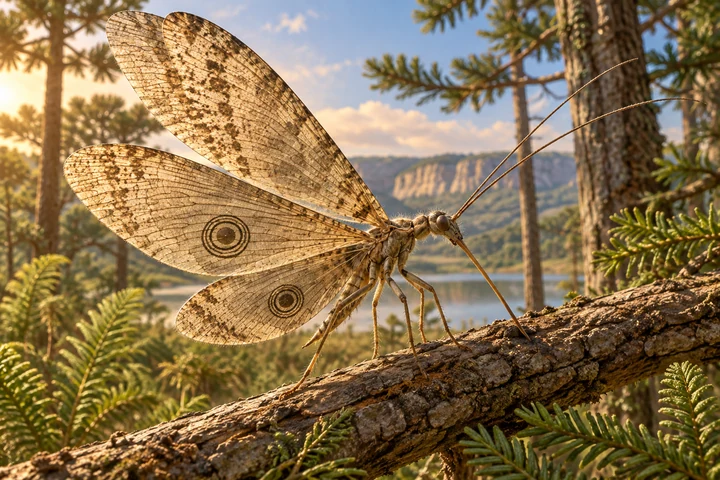
Makarkinia
Prehistoric insect
Makarkinia was a large Cretaceous lacewing known from distinctive fossil wings, including ringed hindwing eyespots.
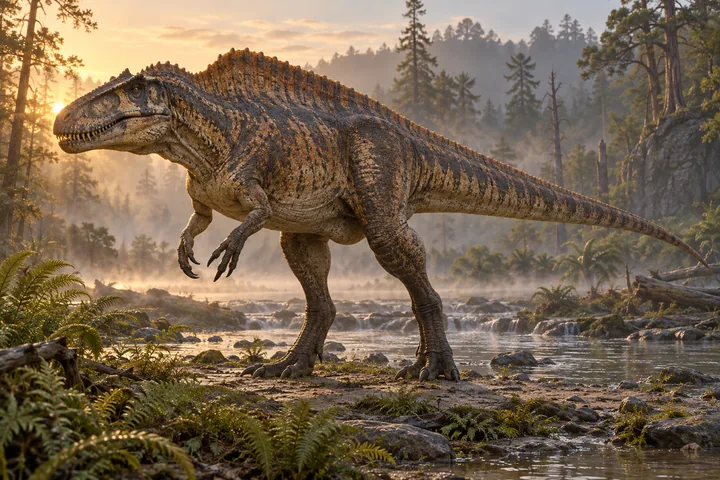
Acrocanthosaurus
This Early Cretaceous carnivore is known from North American fossils. Its high vertebral spines give it a distinctive raised back profile.
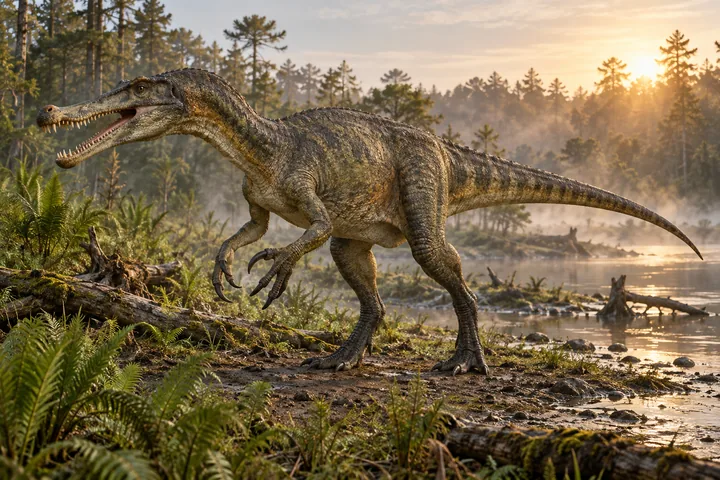
Baryonyx
Baryonyx had a crocodile-like snout and an enlarged hand claw. Its preserved last meal supports a carnivorous diet that included more than fish.