
Body length
Source supported23.7 cm of preserved juvenile skeleton
Measured from the premaxilla tip to the last preserved ninth tail vertebra; the remaining tail is absent. This is not complete body length or an adult estimate. [D1]
EXHIBIT 123
Scipionyx samniticus
Scipionyx is a tiny juvenile preserving exceptional internal tissues. [2]
TWO WAYS TO PICTURE THE PAST
Compare the evidence with the familiar movie image. The illustrations are not to a shared scale.
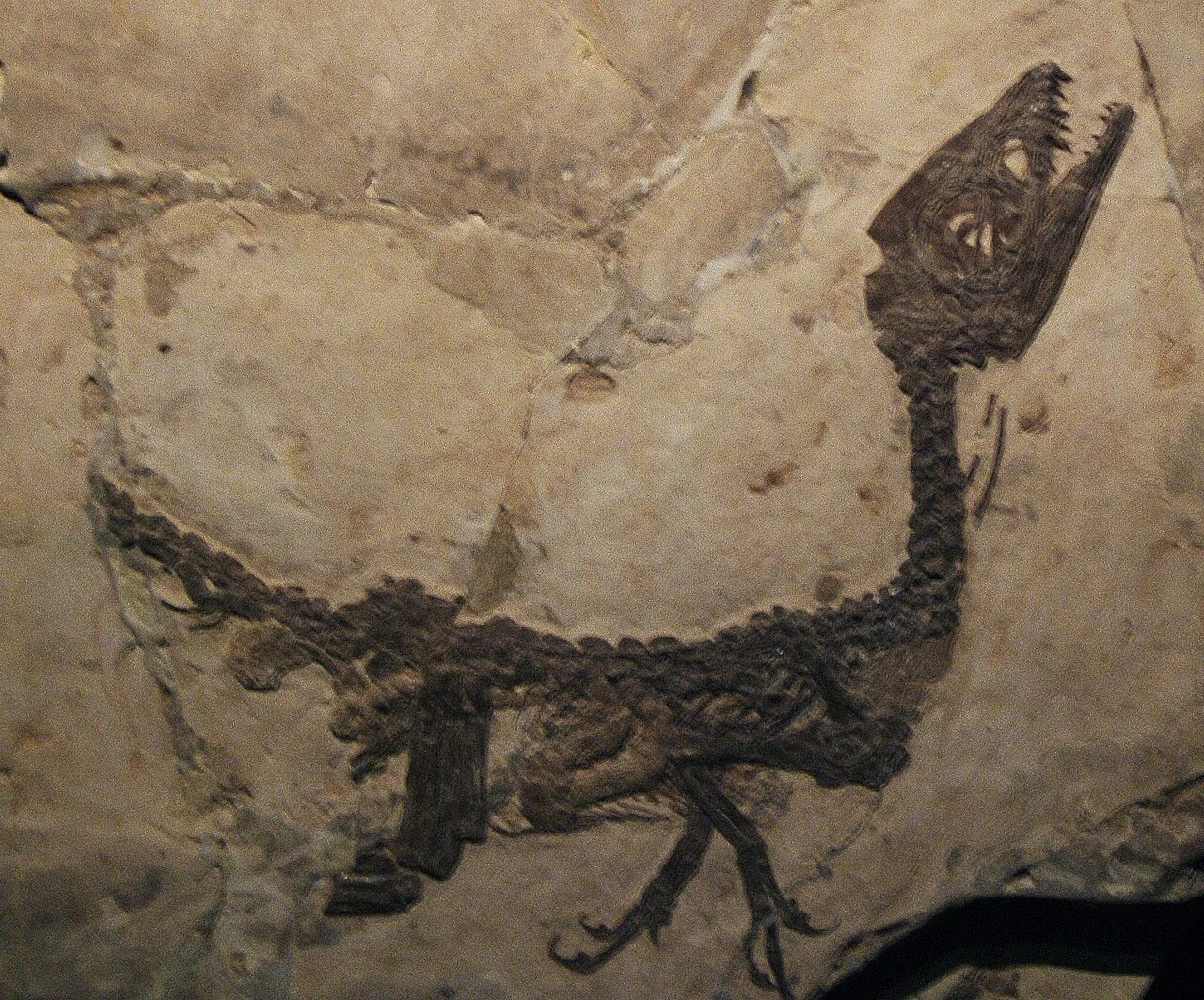
Display of the Scipionyx samniticus juvenile known as Ciro at Museo Civico di Storia Naturale di Milano, photographed by Mogi. The Commons record does not establish original versus cast for the display. The tail is incomplete; the image cannot establish adult size, skin covering or a family-specific adult silhouette. [2]
Scipionyx samniticus Ciro.JPG · Mogi. Public domain. Current Commons image converted to WebP and proportionally resized; no cropping, mirroring, anatomical edits or compositing. Original annotations retained. The source license applies to these versions.
The photograph or figure shows the credited fossil material; displayed mounts and labels can include interpretation.
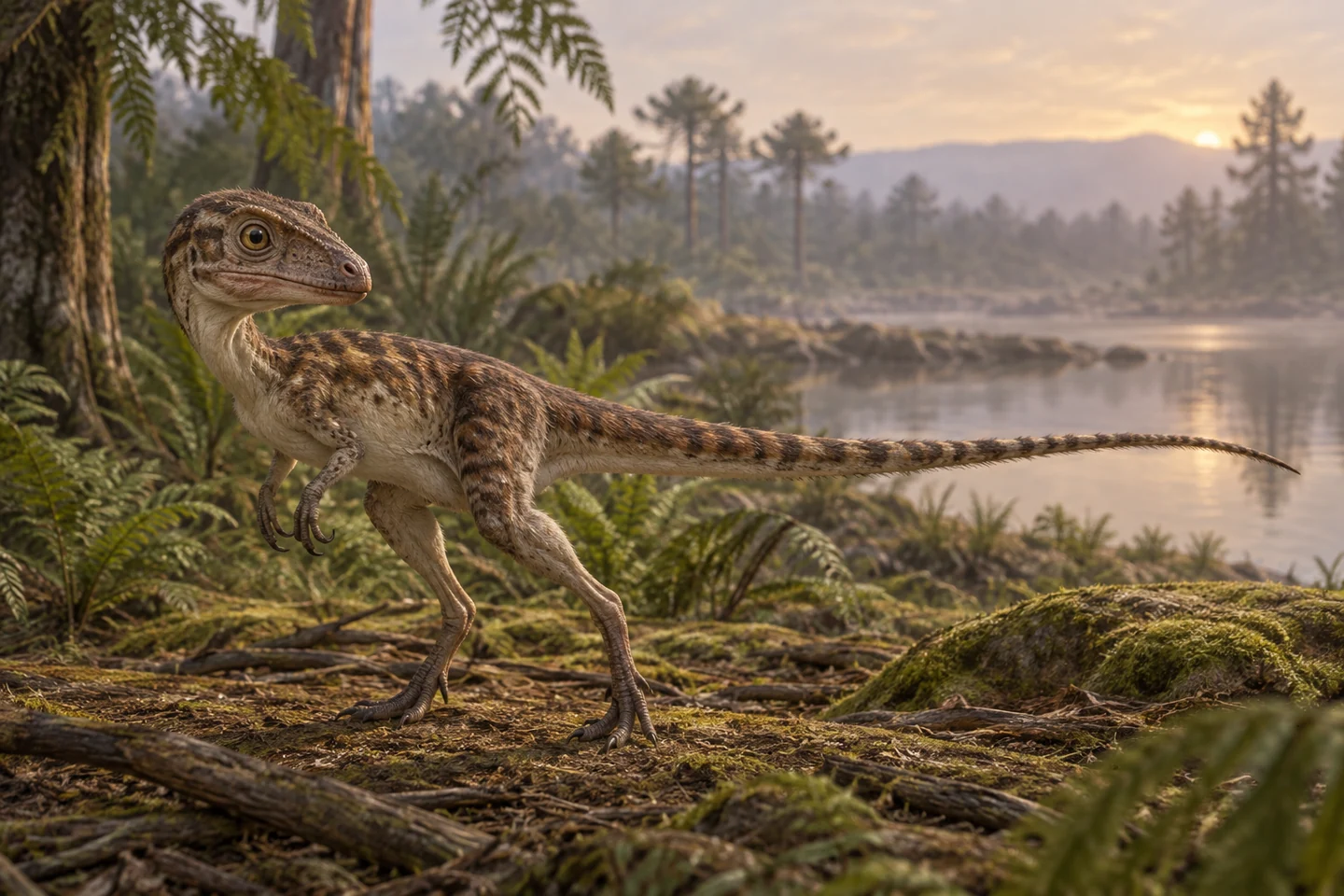
Original cinematic interpretation of Scipionyx samniticus — juvenile interpretation. Colors, soft tissues, scenery and missing anatomy are reconstructed artistic choices; this is not a directly observed individual or behavior. This is a juvenile interpretation; adult size, complete tail and body covering are not directly established by the type. The type preserves no skin or plumage and lacks the complete tail; covering and restored tail are illustrative. Lighting, coloration and scenery are artistic choices. This image does not document a fossil locality or behavior.
Original artwork · artistic interpretation.
Scientific view: source-informed reconstruction, credited paleoart or specimen-based imagery. Movie-style view: Original artistic interpretation. Reconstructions involve uncertainty.
MEET THE ANIMAL
Scipionyx is remarkable for preserved tissues inside a very small juvenile dinosaur. Microscopic work identifies muscle cells, blood vessels, and parts of the intestine. Not every reconstructed internal organ is equally complete or directly preserved, so the tissue discoveries should be distinguished from an artist's finished internal outline. [D2]
The original specimen came from Pietraroja in Italy. Its preserved skeleton measures 23.7 centimetres from the front of the upper jaw to the last surviving tail vertebra. The rest of the tail is missing; that measurement is not a complete body length. [D1]
Fish and land-reptile remains reported in its gut provide evidence of meals eaten by one young animal. They do not establish the usual diet of every adult. A tiny juvenile can therefore offer unusually direct feeding evidence while leaving the mature animal's size and food preferences uncertain. [D3]
Its position in the dinosaur family tree also remains open to differing analyses. Young animals can retain features that complicate comparisons, and later studies have produced different placements. The evidence does not justify simply borrowing an adult size or family-specific lifestyle from one favored classification. [D4]
PREHISTORIC ANIMAL DOSSIER
The animal, the evidence, and the questions still open.
Soft-tissue preservation offers an internal anatomical record. Its family placement is contested, and juvenile proportions cannot be scaled into a verified adult profile. [D2] [D3]
Profile scope: Genus — Scipionyx; only the juvenile S. samniticus type is profiled, with adult size unknown. [D1]
Source supported identifies a description documented by the cited source. Inferred marks a reconstruction or functional estimate. Debated marks competing interpretations. Not established means the sources reviewed for this dossier do not support a firm conclusion; it does not mean a behavior never occurred.
A size reference is an estimate, not a population range. Nesting evidence does not by itself establish courtship, mate choice, or lifelong pairing.
23.7 cm of preserved juvenile skeleton
Measured from the premaxilla tip to the last preserved ninth tail vertebra; the remaining tail is absent. This is not complete body length or an adult estimate. [D1]
About 0.22 kg (juvenile limb model)
Juvenile type; femoral circumference was estimated from bone diameter. This model gives no adult mass. [D5]
Fish and terrestrial reptiles in the gut record
The 2024 study summarizes prey remains reported in the 2011 work. These are meals of one juvenile, not species-wide feeding frequency or proof of the same adult diet. [D3]
Pietraroja lagoonal burial setting, Italy
The original account places the terrestrial juvenile in Albian lagoonal deposits. Shallow-lagoon burial does not demonstrate an aquatic lifestyle. [D1]
Juvenile bipedal reconstruction
The articulated theropod skeleton supports a two-legged restoration. It does not establish adult posture, a measured speed or swimming behavior. [D1]
Preserved internal tissues
Microscopic investigation identifies muscle cells, blood vessels and intestinal structures. Not every reconstructed internal organ is equally defined; preserved tissues differ from modeled outlines. [D2]
Not established here
The type has unfused elements and early dentition. Its juvenile life stage establishes neither nest structure, clutch size nor parental attendance. [D1]
Not established here
Focused searches did not establish a mating ritual, pairing system or sex-specific ornament. One tiny juvenile cannot reveal an adult display without additional evidence.
Not established here
Prey remains show ingestion by one juvenile, not who supplied the food. Focused social searches did not establish family grouping or coordinated hunting. [D3]
Sources and inspection notes for the claims in this profile.
THE STORY IN THE FOSSILS
The specimen’s significance comes from preservation inside the body. Muscle and intestinal structures can be studied microscopically, while a reconstructed organ outline should not be mistaken for an equally complete preserved organ. [2]
Juvenile characters complicate classification. A 2024 analysis proposed a spinosaurid position while earlier studies placed the specimen elsewhere; adult size and family-specific behavior are therefore left unresolved. [3]
The dossier identifies the scope of each reference estimate. A mount, an individual fossil and a species-wide adult range are different measurements. Comparison metrics remain unavailable where adult scope has not been established. Unknown does not mean zero.
Sources support the stated claims and scopes. Refer to the evidence notes for uncertainty.
KEEP EXPLORING
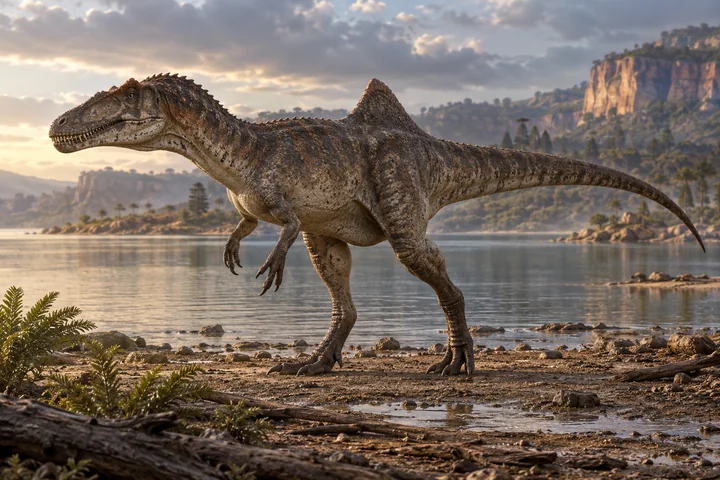
Concavenator corcovatus
Concavenator was a meat-eating theropod from Early Cretaceous Spain with a pointed back structure. Its possible forearm feather attachments remain disputed.
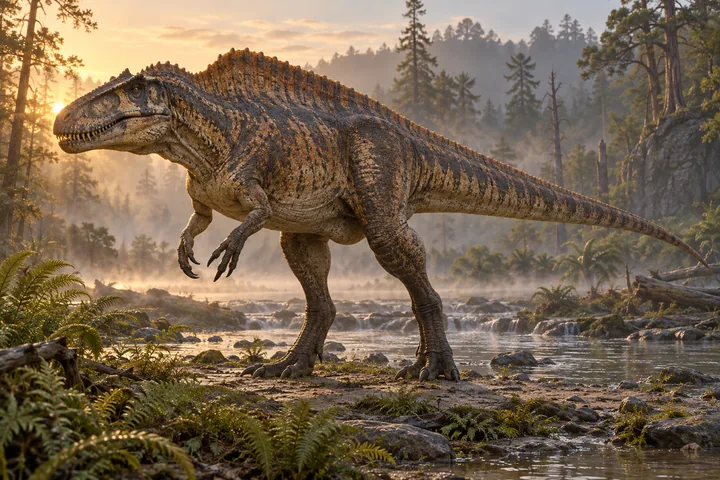
Acrocanthosaurus
This Early Cretaceous carnivore is known from North American fossils. Its high vertebral spines give it a distinctive raised back profile.
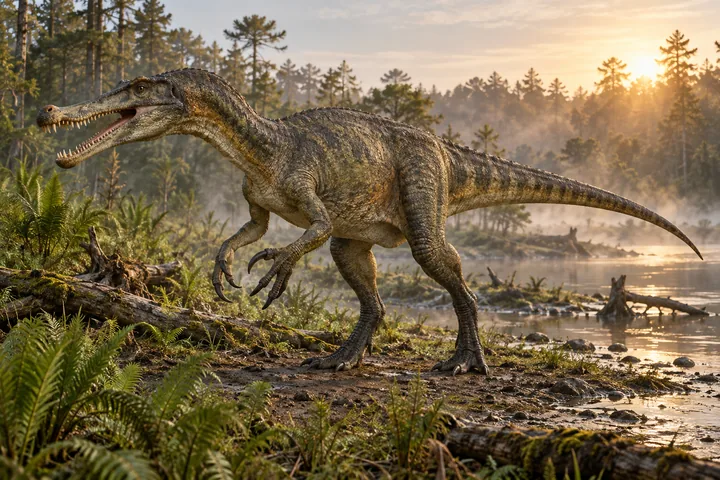
Baryonyx
Baryonyx had a crocodile-like snout and an enlarged hand claw. Its preserved last meal supports a carnivorous diet that included more than fish.