
Body length
InferredAbout 0.6 m (museum reference)
Educational body reference without specimen or maturity; not a secure adult maximum. [D3]
EXHIBIT 143
Shuvuuia deserti
Shuvuuia had short arms with an enlarged first finger beside two reduced digits. [2]
TWO WAYS TO PICTURE THE PAST
Compare the evidence with the familiar movie image. The illustrations are not to a shared scale.
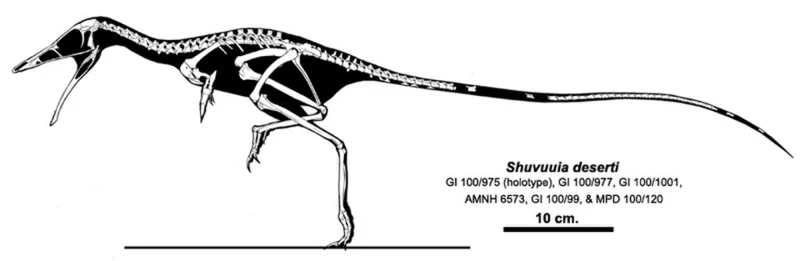
Shuvuuia deserti skeletal reconstruction by Jaime A. Headden. This 2009 diagram combines the listed type and referred specimens, with missing regions restored; it does not depict one complete individual. The outlined body and posture are a reconstruction, not preserved skin, confirmed plumage or a demonstrated adult size reference. [2]
Shuvuuia skeletal Headden.jpg · Jaime A. Headden (Qilong). CC BY-SA 3.0. Current Commons preview proportionally reduced back to the source’s nominal 800 px width, converted to WebP, then reduced for thumbnail use. No cropping, mirroring, anatomical edits or compositing; original annotations retained. Derivatives retain CC BY-SA 3.0.
Skeletal mounts and drawings may restore missing parts; the caption identifies the displayed material.
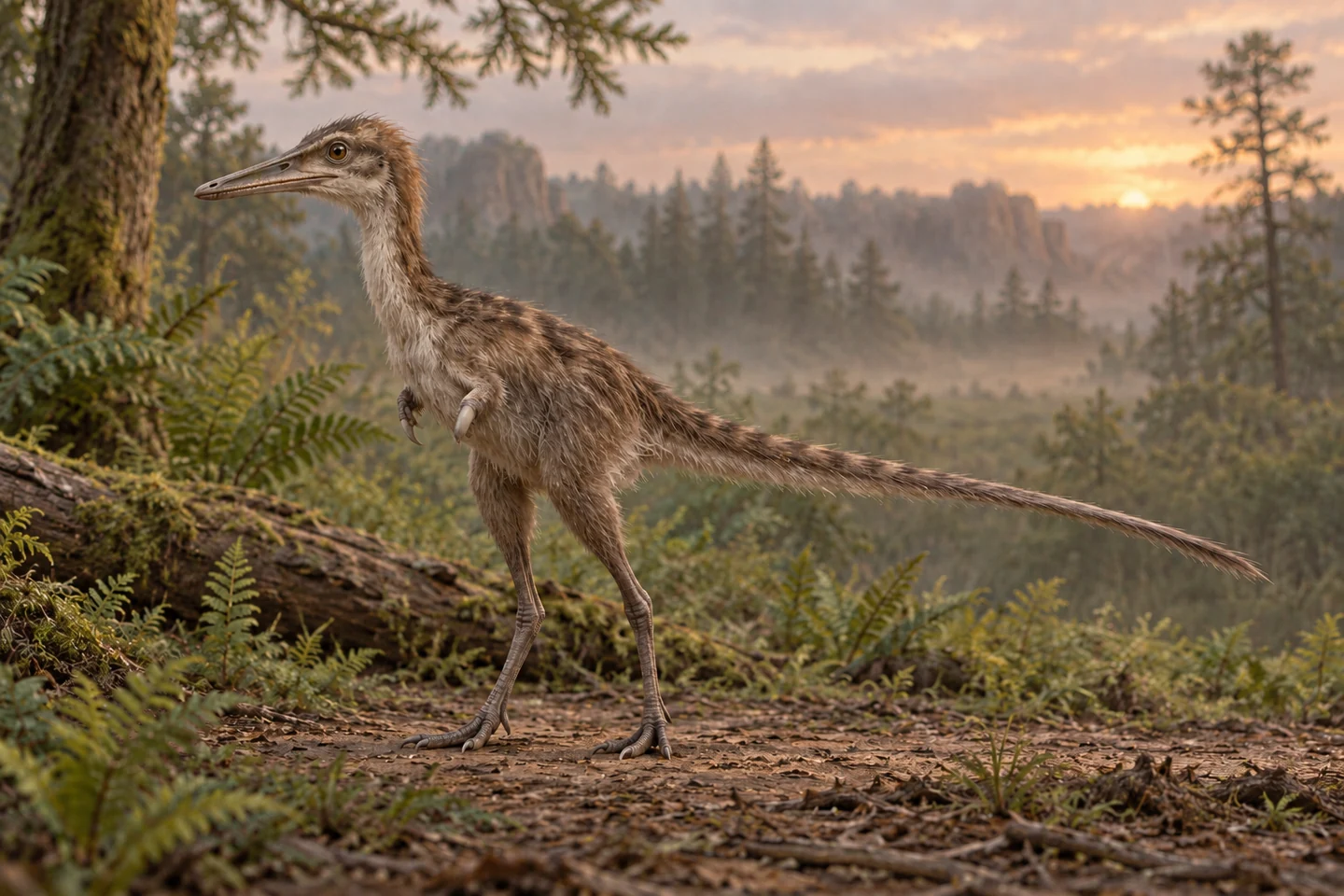
Original cinematic interpretation of Shuvuuia. Colors, soft tissues, scenery and missing anatomy are reconstructed artistic choices; this is not a directly observed individual or behavior. The dominant manual digit is accompanied by two tiny reduced fingers; covering, colors and complete living outline remain comparative, and no feeding or nocturnal behavior is illustrated. Lighting, coloration and scenery are artistic choices. This image does not document a fossil locality or behavior.
Original artwork · artistic interpretation.
Scientific view: source-informed reconstruction, credited paleoart or specimen-based imagery. Movie-style view: Original artistic interpretation. Reconstructions involve uncertainty.
MEET THE ANIMAL
Shuvuuia was a small Late Cretaceous dinosaur from Mongolia. The museum gives a general length reference of about 60 centimetres, without identifying the fossil's growth stage. Its small jaws have inspired suggestions that it ate insects or other small animals. These are interpretations of its anatomy, rather than a preserved menu showing exactly what it hunted. [D3]
A study of its sensory anatomy proposed that it could see well in dim light and had hearing comparable to a barn owl's. That made nighttime activity an interesting possibility. The proposal comes from comparing fossil structures with living animals, however; the bones do not record a nocturnal hunt or directly measure the living dinosaur's senses. [D5]
A later study challenged the claim of exceptional hearing, pointing to the way ear measurements are scaled and to missing soft tissues. This criticism does not independently settle the separate question of low-light vision. Shuvuuia's sensory profile is therefore still being tested. Its fossils show why a lively reconstruction can be useful while remaining more certain about the skeleton than about daily behavior. [D6]
PREHISTORIC ANIMAL DOSSIER
The animal, the evidence, and the questions still open.
Its hearing and feather chemistry illustrate how fossil interpretations can change after reanalysis. [D6] [D7]
Profile scope: Genus — Shuvuuia; S. deserti, with specimen-specific evidence kept separate. [D1] [D2]
Source supported identifies a description documented by the cited source. Inferred marks a reconstruction or functional estimate. Debated marks competing interpretations. Not established means the sources reviewed for this dossier do not support a firm conclusion; it does not mean a behavior never occurred.
A size reference is an estimate, not a population range. Nesting evidence does not by itself establish courtship, mate choice, or lifelong pairing.
About 0.6 m (museum reference)
Educational body reference without specimen or maturity; not a secure adult maximum. [D3]
About 3.1 kg (compiled limb estimate)
IGM 100/975; 2023 table lists 3.05 kg and a two-year juvenile assessment. This is an individual model, not adult population mass. [D8]
Small animal prey inferred; specialization disputed
Insects are plausible prey. Specialized feeding on colonial insects is a contested broader-group hypothesis, not an observed Shuvuuia meal. [D3] [D8]
Campanian Djadokhta Formation
Ukhaa Tolgod and Tögrögiin Shiree, Mongolia; locality and horizon are tied to specified specimens in the 2002 description. [D2]
Two-legged terrestrial reconstruction
Long hindlimbs and short arms support bipedal reconstruction. A 2021 low-light interpretation is inferential, not observation of nocturnal hunting. [D2] [D5]
One enlarged hand digit beside two reduced digits
The immature referred specimen preserves the additional digits. Feather-like fibers were reported separately; 2018 analysis did not confirm original keratin. [D2] [D7]
Not established here
Histology and immature skeletal specimens document growth; they do not identify breeding age, eggs, nesting or parental care. [D2] [D4]
Not established here
Feather-like fibers do not preserve a mating display, sex-specific color or courtship sequence. [D7]
Not established here
The 2025 hearing critique cautions against inferring communication from isolated ear anatomy; reviewed fossils establish no social group. [D6]
Sources and inspection notes for the claims in this profile.
THE STORY IN THE FOSSILS
A 2021 sensory analysis proposed excellent low-light vision and unusual hearing. A 2025 critique challenged the auditory analogy through different scaling and soft-tissue limitations. [5] [6]
Reanalysis of the fossil-associated fibers found mineral preservation rather than confirmed original protein. Their identity and the living animal’s full covering remain separate questions. [7]
The dossier identifies the scope of each reference estimate. A mount, an individual fossil and a species-wide adult range are different measurements. Comparison metrics remain unavailable where adult scope has not been established. Unknown does not mean zero.
Sources support the stated claims and scopes. Refer to the evidence notes for uncertainty.
KEEP EXPLORING
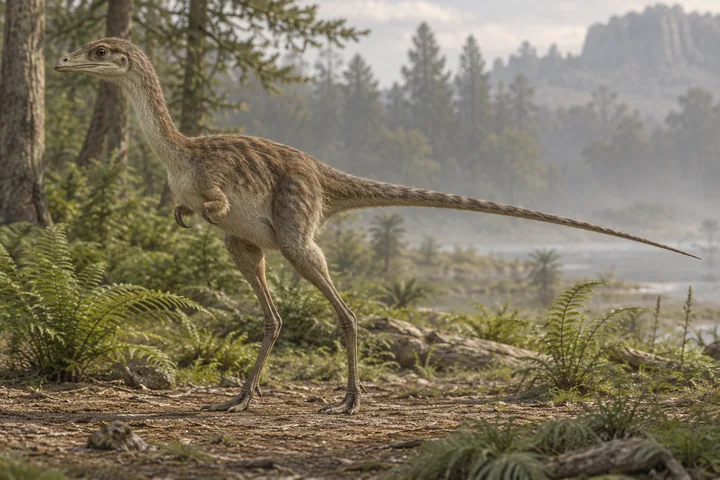
Mononykus olecranus
Mononykus combined very short, powerful forelimbs with a dominant manual claw and long, slender hindlimbs.
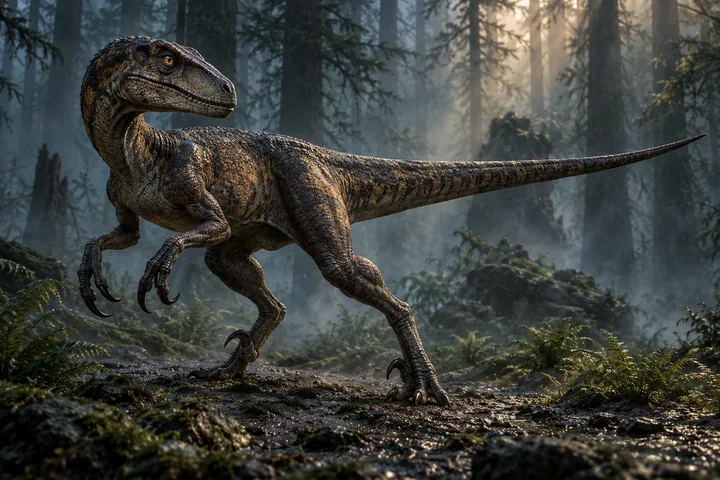
Velociraptor mongoliensis
Velociraptor mongoliensis was a lightly built meat-eater from Late Cretaceous Mongolia. Its long limbs, teeth and enlarged foot claws made it distinctive, while the Fighting Dinosaurs specimen records a remarkable interaction with a horned dinosaur.
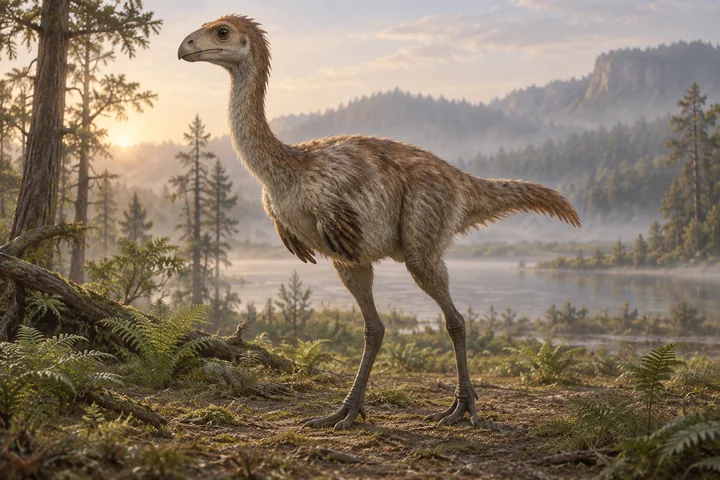
Avimimus portentosus
Avimimus has a compact head and an unusually informative bonebed.