
Body length
InferredAbout 1 m (museum reconstruction)
Educational whole-body reference; the type preserves only a fragmentary skull and proximal tail. Adult scope is not supplied. [D3] [D2]
EXHIBIT 182
Mononykus olecranus
Mononykus combined very short, powerful forelimbs with a dominant manual claw and long, slender hindlimbs. [2]
TWO WAYS TO PICTURE THE PAST
Compare the evidence with the familiar movie image. The illustrations are not to a shared scale.
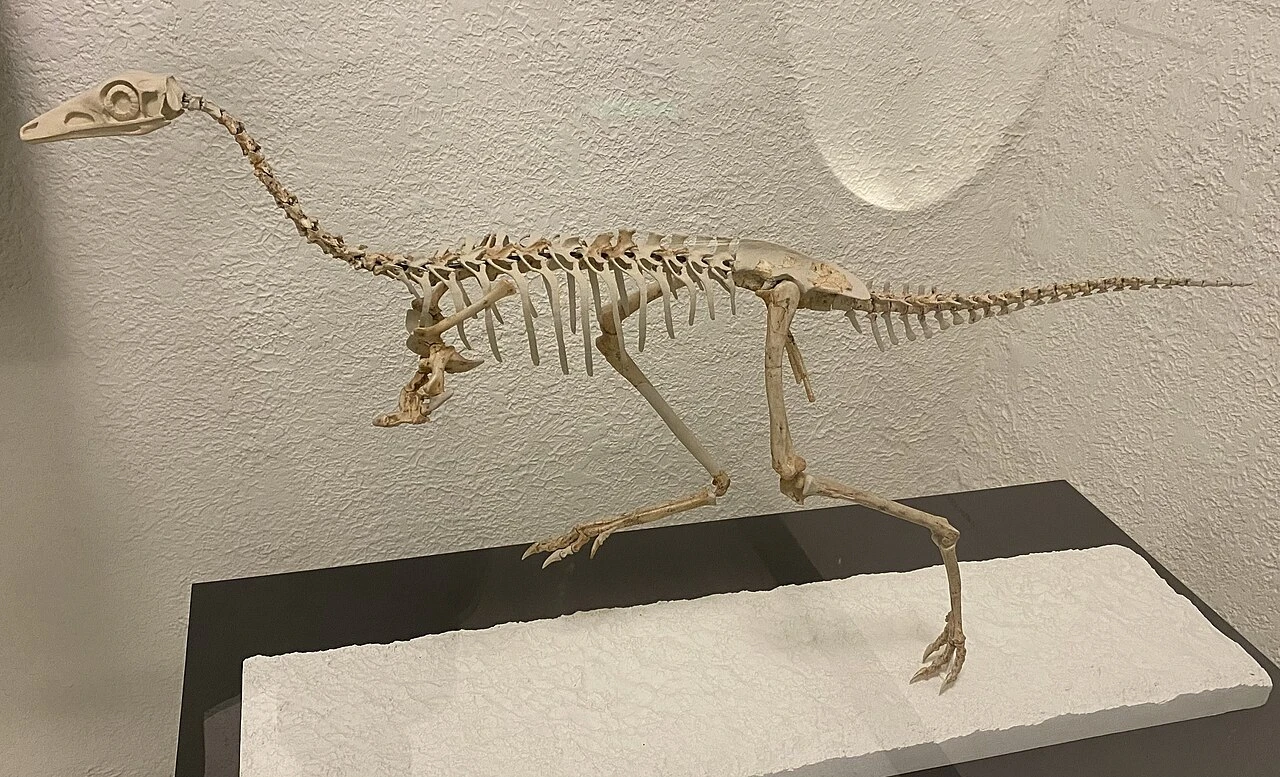
Mononykus skeletal restoration at the American Museum of Natural History, photographed by Ryan Schwark in 2024. The source supplies no specimen identifier or element-authenticity key. The type has only a fragmentary skull and proximal tail, so the complete head and long tail in this display include comparative restoration. The mount supplies no certified adult measurement or soft-tissue evidence. [2]
Mononykus at AMNH.jpg · Ryan Schwark. CC0 1.0. Current licensed Commons image converted to WebP and proportionally reduced for the thumbnail, without upsampling. No additional cropping, mirroring, anatomical edits or compositing. Existing source restoration and scale annotations retained. CC0 1.0 applies to these versions.
Skeletal mounts and drawings may restore missing parts; the caption identifies the displayed material.
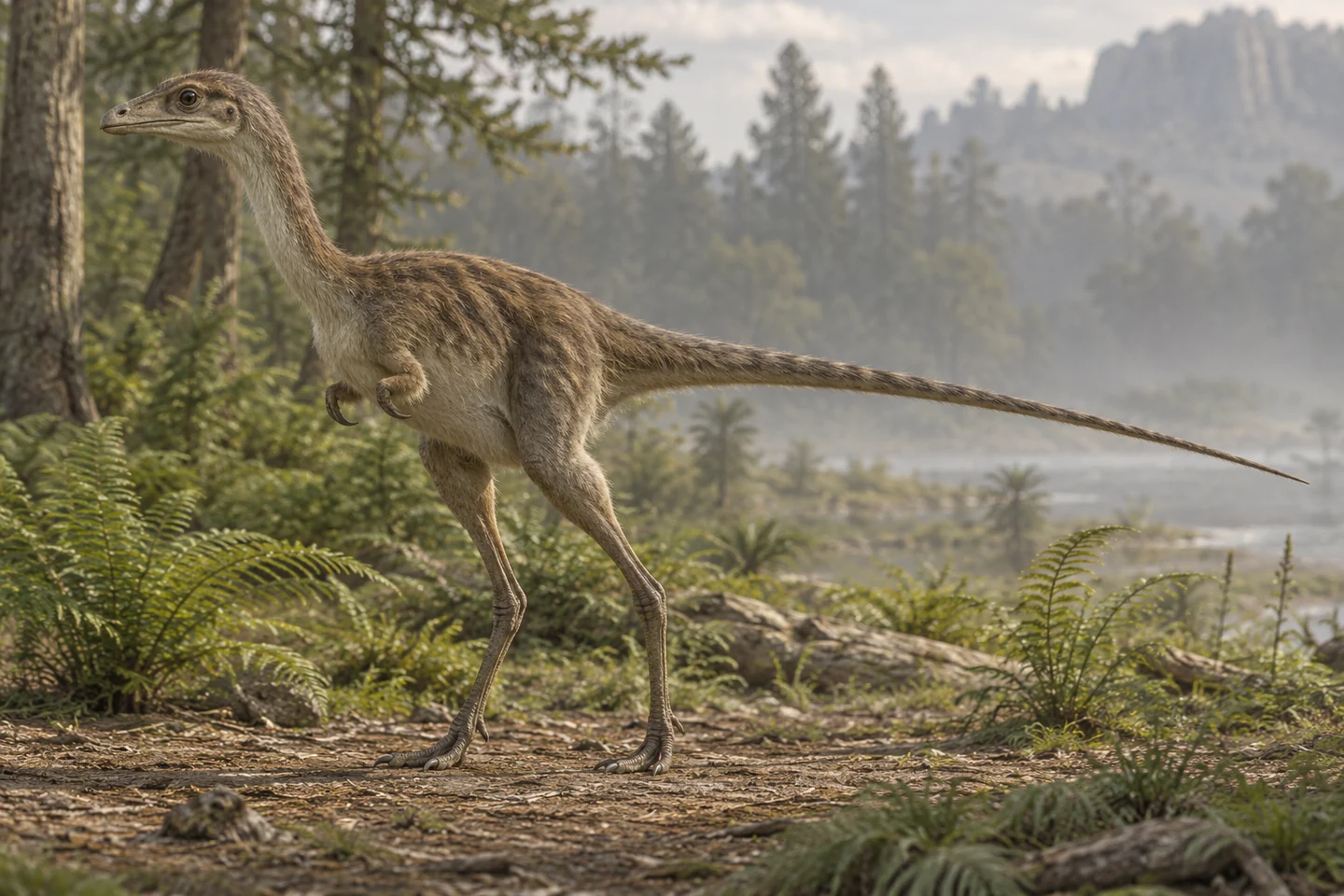
Original cinematic interpretation of Mononykus. The very short forelimbs and dominant manual claw follow the described fossil; vestigial side rays are not represented as large fingers. Much of the head, covering and posture is comparative. Lighting, colors and scenery are artistic choices; this image does not document directly observed behavior. Lighting, coloration and scenery are artistic choices. This image does not document a fossil locality or behavior.
Original artwork · artistic interpretation.
Scientific view: source-informed reconstruction, credited paleoart or specimen-based imagery. Movie-style view: Original artistic interpretation. Reconstructions involve uncertainty.
MEET THE ANIMAL
Mononykus had a striking contrast between long hind legs and extremely short arms. Each hand was dominated by one large, powerful claw. The best-known skeleton comes from Late Cretaceous Mongolia, although parts of the skull and tail are missing. Its tiny side-hand bones should not be confused with a complete set of ordinary, equally sized fingers. [D2]
What were those unusual arms for? Researchers have tested how its joints could move and proposed a hook-and-pull action for opening insect nests. This is a hypothesis based on anatomy, not a preserved meal. The models also depend on the cartilage and other soft tissues that fossils do not fully record, so there is room for uncertainty. [D4]
Another recent interpretation considers egg eating among related dinosaurs. That proposal should not become a claim that Mononykus certainly specialized in eggs. Different feeding ideas can fit some of the same unusual features. An animal's possible food also tells us nothing about the appearance of its own eggs, its nesting habits or whether it cared for its young. [D5]
PREHISTORIC ANIMAL DOSSIER
The animal, the evidence, and the questions still open.
Its unusual hands have prompted competing feeding hypotheses. Joint modelling establishes movement potential; direct meals, nesting and social behavior remain unverified. [D4] [D5]
Profile scope: Genus — Mononykus; M. olecranus type GIN 107/6. The proposed Nemegtonykus overlap is reserved, without merging its specimens or measurements. [D7]
Source supported identifies a description documented by the cited source. Inferred marks a reconstruction or functional estimate. Debated marks competing interpretations. Not established means the sources reviewed for this dossier do not support a firm conclusion; it does not mean a behavior never occurred.
A size reference is an estimate, not a population range. Nesting evidence does not by itself establish courtship, mate choice, or lifelong pairing.
About 1 m (museum reconstruction)
Educational whole-body reference; the type preserves only a fragmentary skull and proximal tail. Adult scope is not supplied. [D3] [D2]
About 4.7 kg (limb model)
GIN 107/6; measured femoral circumference, adulthood unestablished. [D6]
Insect-nest excavation or egg eating proposed
Functional studies favor different feeding interpretations. Neither interpretation supplies direct Mononykus gut contents or confirms a specialized diet. [D4] [D5]
Nemegt Formation, Bugin Tsav
Late Cretaceous Mongolia. The original type was recovered from predominantly fine-grained sediments; numerical formation age and microhabitat preference remain qualified. [D2]
Biped; powerful forelimb movements inferred
Long hindlimbs contrast with short arms. Revised joint tests permit both tucked and sprawling arm positions, subject to cartilage and soft-tissue uncertainty. [D4]
One dominant functional manual claw
The type has a robust main digit and vestigial lateral metacarpals. Their small facets suggest possible rudimentary phalanges; they are not preserved complete side fingers. [D2]
Not established here
A family-level egg-eating hypothesis concerns food, not eggs laid by Mononykus. No inspected genus-specific nest or parental association establishes reproduction. [D5]
Not established here
The movement study reconstructs possible arm positions, not a display sequence. It supplies no evidence for sex differences or mate choice. [D4]
Not established here
A mixed assemblage includes only tentatively referred cf. Mononykus. Association and uncertain referral do not establish cooperative hunting, flocking or family life. [D8]
Sources and inspection notes for the claims in this profile.
THE STORY IN THE FOSSILS
A shoulder restudy corrected earlier mobility estimates using casts of the same fossil. Possible joint motion helps test feeding ideas without recording an actual excavation. [4]
The newer egg-eating proposal offers an alternative functional explanation. Its distinctive wrist spikes belong to Manipulonyx, and cannot be added to Mononykus anatomy. [5]
The dossier identifies the scope of each reference estimate. A mount, an individual fossil and a species-wide adult range are different measurements. Comparison metrics remain unavailable where adult scope has not been established. Unknown does not mean zero.
Sources support the stated claims and scopes. Refer to the evidence notes for uncertainty.
KEEP EXPLORING
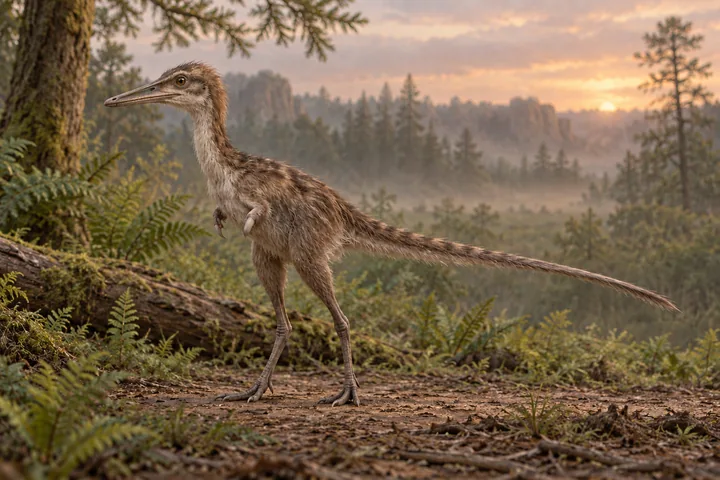
Shuvuuia deserti
Shuvuuia had short arms with an enlarged first finger beside two reduced digits.
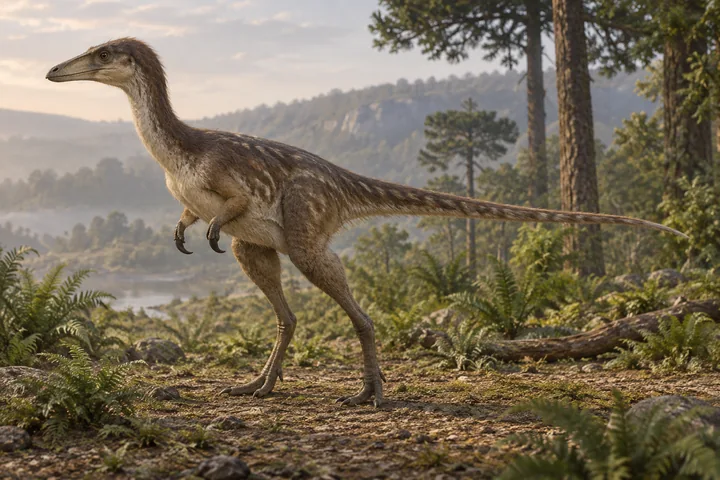
Patagonykus puertai
Patagonykus is a Patagonian alvarezsaurid with a stout manual claw, powerful short forelimbs and an incomplete skeleton.
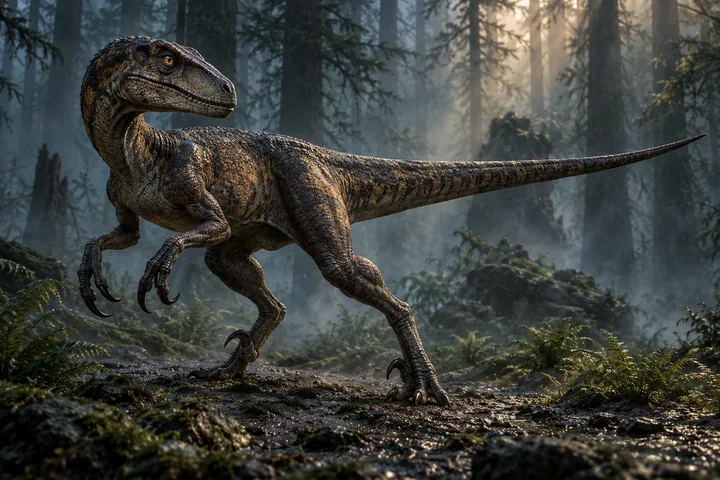
Velociraptor mongoliensis
Velociraptor mongoliensis was a lightly built meat-eater from Late Cretaceous Mongolia. Its long limbs, teeth and enlarged foot claws made it distinctive, while the Fighting Dinosaurs specimen records a remarkable interaction with a horned dinosaur.