
Body length
InferredAbout 3.29 m (regression reference)
Published Patagonykus model using Therrien–Henderson scaling. It restores a fragmentary animal; specimen maturity and a complete-body measurement were not independently recovered. [D4]
EXHIBIT 183
Patagonykus puertai
Patagonykus is a Patagonian alvarezsaurid with a stout manual claw, powerful short forelimbs and an incomplete skeleton. [1]
TWO WAYS TO PICTURE THE PAST
Compare the evidence with the familiar movie image. The illustrations are not to a shared scale.
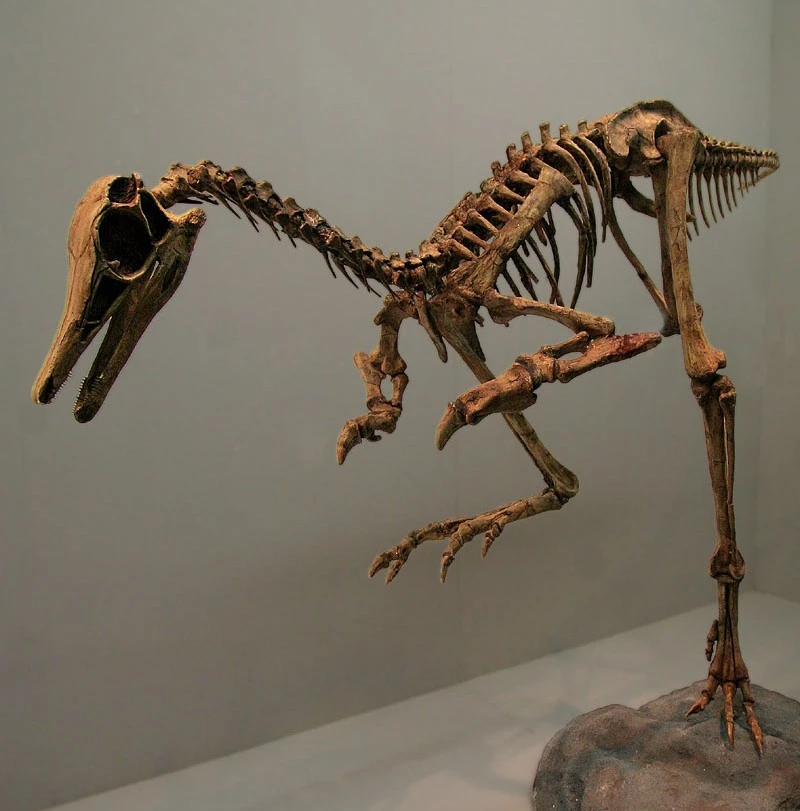
Patagonykus skeletal restoration photographed by Kabacchi in 2009; the licensed Flickr photograph is preserved on Commons. The known Patagonykus material lacks a skull, so the displayed complete head and much of the body are comparative restorations. The source supplies no fossil-versus-cast key or specimen number. This is not a complete original individual or a verified adult size reference. [1]
Patagonykus.jpg · Kabacchi. CC BY 2.0. Current licensed Commons image converted to WebP and proportionally reduced for the thumbnail, without upsampling. No additional cropping, mirroring, anatomical edits or compositing. Existing source restoration and scale annotations retained. CC BY 2.0 applies to these versions.
Skeletal mounts and drawings may restore missing parts; the caption identifies the displayed material.
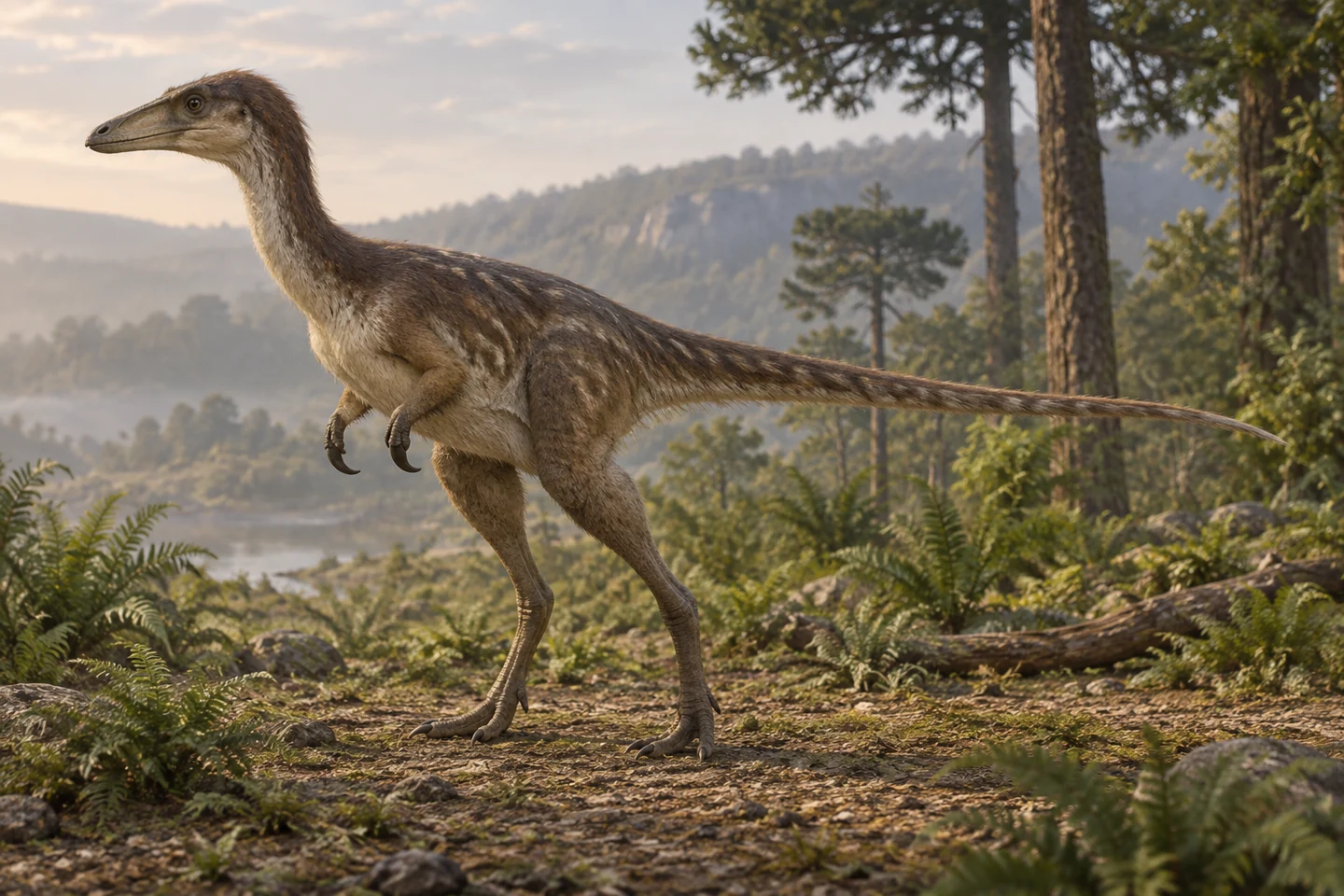
Original cinematic interpretation of Patagonykus. Fragmentary postcranial fossils guide the short robust forelimbs. The head, missing hand details, complete body and covering remain comparative restorations. Lighting, colors and scenery are artistic choices; this image does not document directly observed behavior. Lighting, coloration and scenery are artistic choices. This image does not document a fossil locality or behavior.
Original artwork · artistic interpretation.
Scientific view: source-informed reconstruction, credited paleoart or specimen-based imagery. Movie-style view: Original artistic interpretation. Reconstructions involve uncertainty.
MEET THE ANIMAL
Patagonykus belongs to a group of dinosaurs with unusually specialized arms and hands. Its fragmentary skeleton includes a stout main claw and a strongly developed projection at the elbow. These features help researchers recognize the animal and compare it with its relatives. The skull is missing, so a complete illustrated head is not something the fossils directly preserve. [D1]
Its diet is less certain than its impressive claw might suggest. Researchers have proposed animal feeding and insect eating for this broader group, using comparisons between skeletons. Direct intestinal evidence discussed in recent research belongs to Bannykus, a different dinosaur. A relative's preserved food cannot simply be treated as Patagonykus's own meal or proof of the same feeding specialization. [D5]
An additional finger fossil from Patagonia is more robust than the original specimen's. Its identification and rock-layer assignment remain qualified. That difference is interesting, but it cannot establish which individual was male or female, or how the animal changed as it grew. An isolated finger adds anatomical information without revealing a living social group. [D2]
PREHISTORIC ANIMAL DOSSIER
The animal, the evidence, and the questions still open.
The known material establishes specialized hand anatomy, while skull shape and most feeding behavior remain comparative. Regression-based size estimates are model references rather than adult species ranges. [D1] [D4]
Profile scope: Genus — Patagonykus; P. puertai type MCF-PVPH 37, with separately qualified referral of manual digit MCF-PVPH 102. [D2]
Source supported identifies a description documented by the cited source. Inferred marks a reconstruction or functional estimate. Debated marks competing interpretations. Not established means the sources reviewed for this dossier do not support a firm conclusion; it does not mean a behavior never occurred.
A size reference is an estimate, not a population range. Nesting evidence does not by itself establish courtship, mate choice, or lifelong pairing.
About 3.29 m (regression reference)
Published Patagonykus model using Therrien–Henderson scaling. It restores a fragmentary animal; specimen maturity and a complete-body measurement were not independently recovered. [D4]
About 58 kg (appendicular regression)
Published 58.17 kg Patagonykus reference using Christiansen–Fariña equations. It is neither a population range nor an independently verified adult maximum. [D4]
Animal feeding inferred; food unverified
Family-level carnivory and insectivory hypotheses rely on comparisons. Newly studied intestinal evidence belongs to Bannykus; it cannot establish Patagonykus prey or specialization. [D5]
Portezuelo Formation, Patagonia
Turonian–Coniacian Neuquén, Argentina. The additional manual digit has imprecise provenance, so its formation referral remains provisional. [D4] [D2]
Terrestrial biped inferred
Known hindlimb and vertebral anatomy support a two-legged reconstruction. No trackway or speed measurement documents how this individual moved. [D3]
Stout main claw and enlarged olecranon
A hook-like process on manual phalanx I-1 distinguishes the hand. The fragmentary skeleton does not preserve a skull or a complete living outline. [D1]
Not established here
Egg associations discussed for Bonapartenykus concern another genus. The inspected comparisons establish no Patagonykus eggs, nests or parent–young association. [D3]
Not established here
The referred manual digit is more robust than the type’s digit. Its qualified identification and limited sample cannot establish sex differences or mating behavior. [D2]
Not established here
An isolated, referred manual digit adds anatomy, not a group assemblage. Focused searches found no Patagonykus-specific evidence for cooperative or family behavior. [D2]
Sources and inspection notes for the claims in this profile.
THE STORY IN THE FOSSILS
A second specimen preserves just the articulated main digit. Its increased robustness is interesting variation, but cannot be confidently converted into an adult size, sex or courtship claim. [2]
Comparative research keeps Patagonykus and Bonapartenykus separate. Their shared alvarezsaurid anatomy does not let another genus’s eggs become Patagonykus reproductive evidence. [3]
The dossier identifies the scope of each reference estimate. A mount, an individual fossil and a species-wide adult range are different measurements. Comparison metrics remain unavailable where adult scope has not been established. Unknown does not mean zero.
Sources support the stated claims and scopes. Refer to the evidence notes for uncertainty.
KEEP EXPLORING
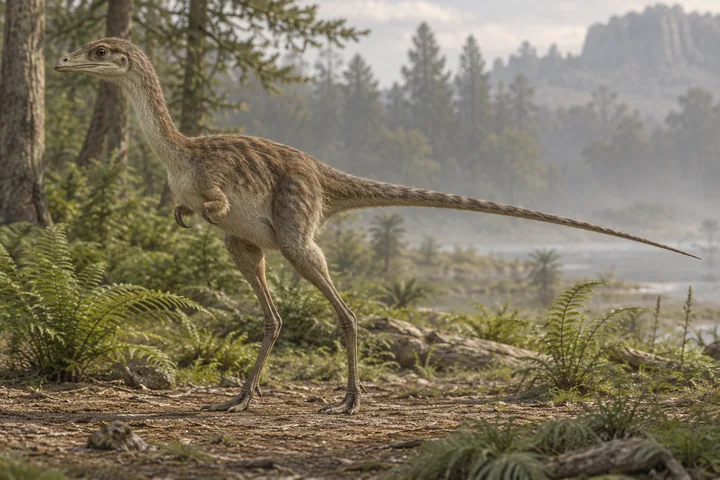
Mononykus olecranus
Mononykus combined very short, powerful forelimbs with a dominant manual claw and long, slender hindlimbs.
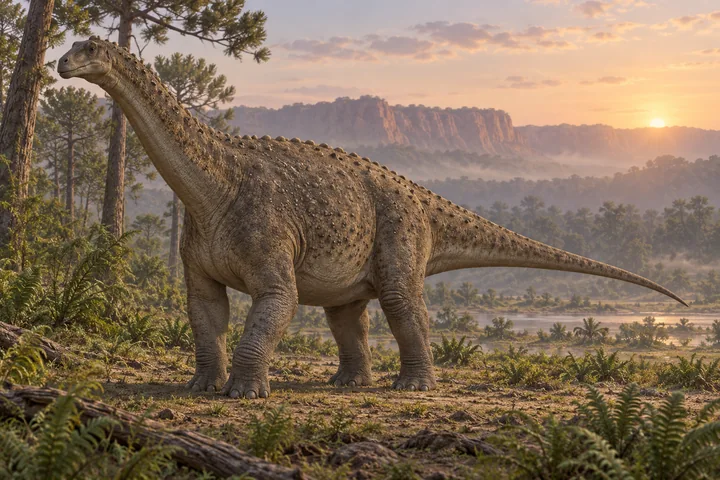
Saltasaurus loricatus
Saltasaurus was an Argentine titanosaur whose fossils preserve bony plates and tiny skin ossicles.
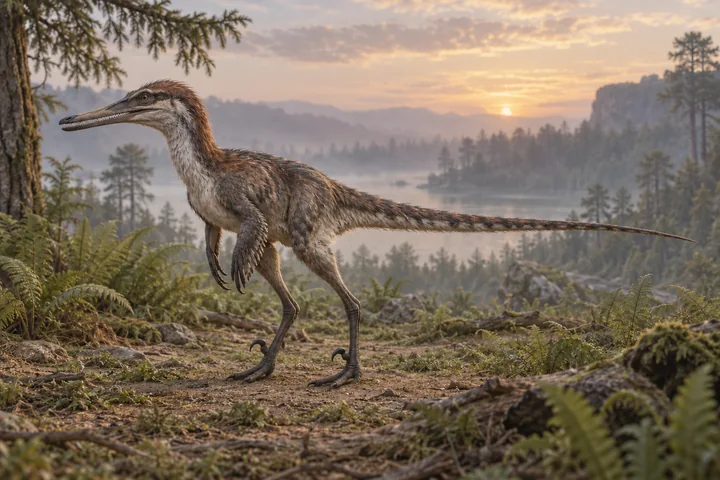
Buitreraptor gonzalezorum
Buitreraptor had a long, low snout and numerous tiny teeth.