
Body length
InferredApproximately 2.4 m reference length.
Museum genus-level estimate; no complete adult population range is supplied. [D4]
EXHIBIT 255
Stegoceras validum
Dinosaur
A small dome-headed dinosaur whose skull changed substantially during growth. [1]
TWO WAYS TO PICTURE THE PAST
Compare the evidence with the familiar movie image. The illustrations are not to a shared scale.
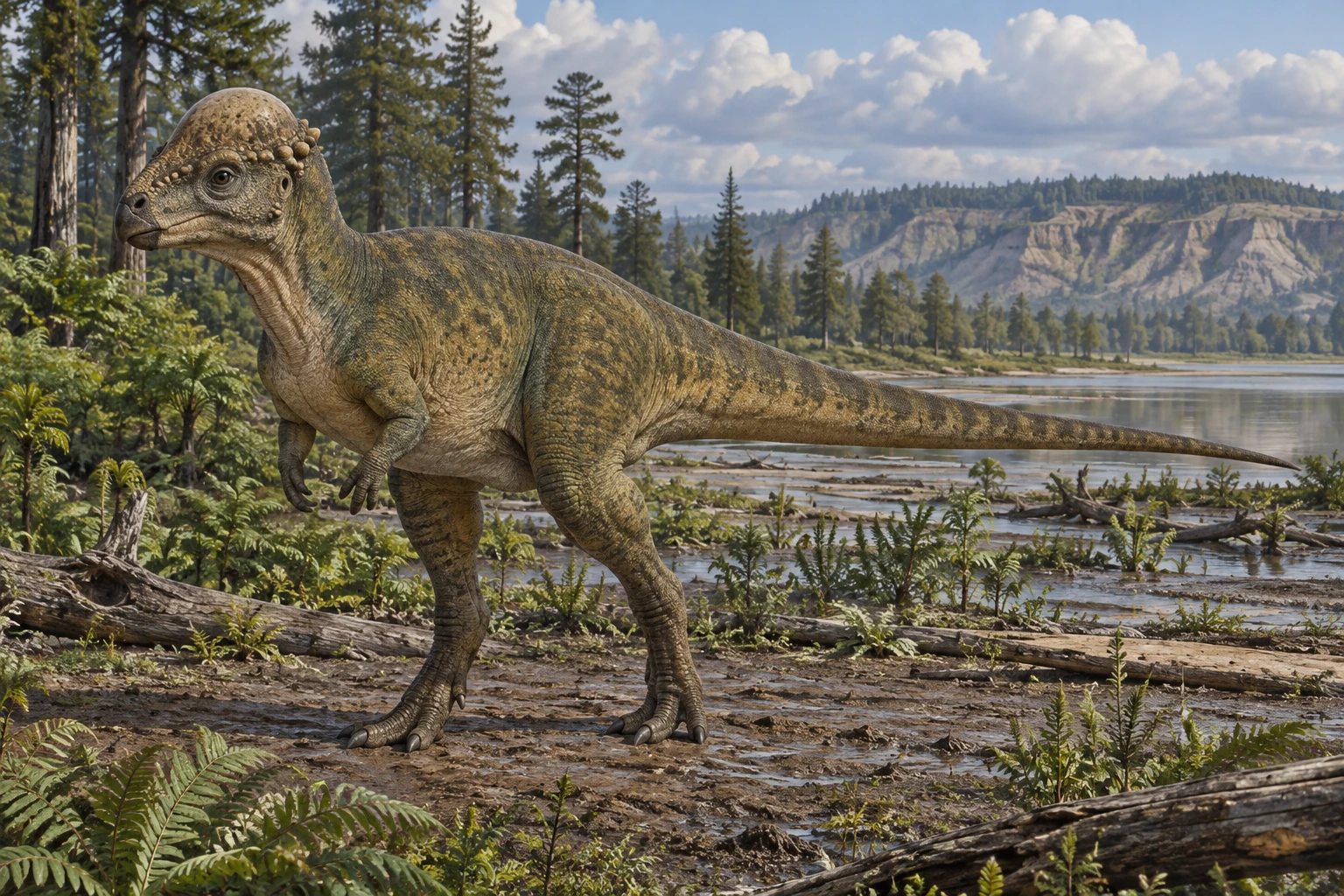
An illustrative reconstruction. Compare its anatomy with the evidence and limitations in the dossier. [1]
Source-informed reconstruction. Appearance evidence [1]. Original illustration; missing anatomy, coloration and scenery include interpretation.
Fossils constrain this life reconstruction. Missing anatomy, coloration and the environmental scene include interpretation; the dossier explains the evidence limits.
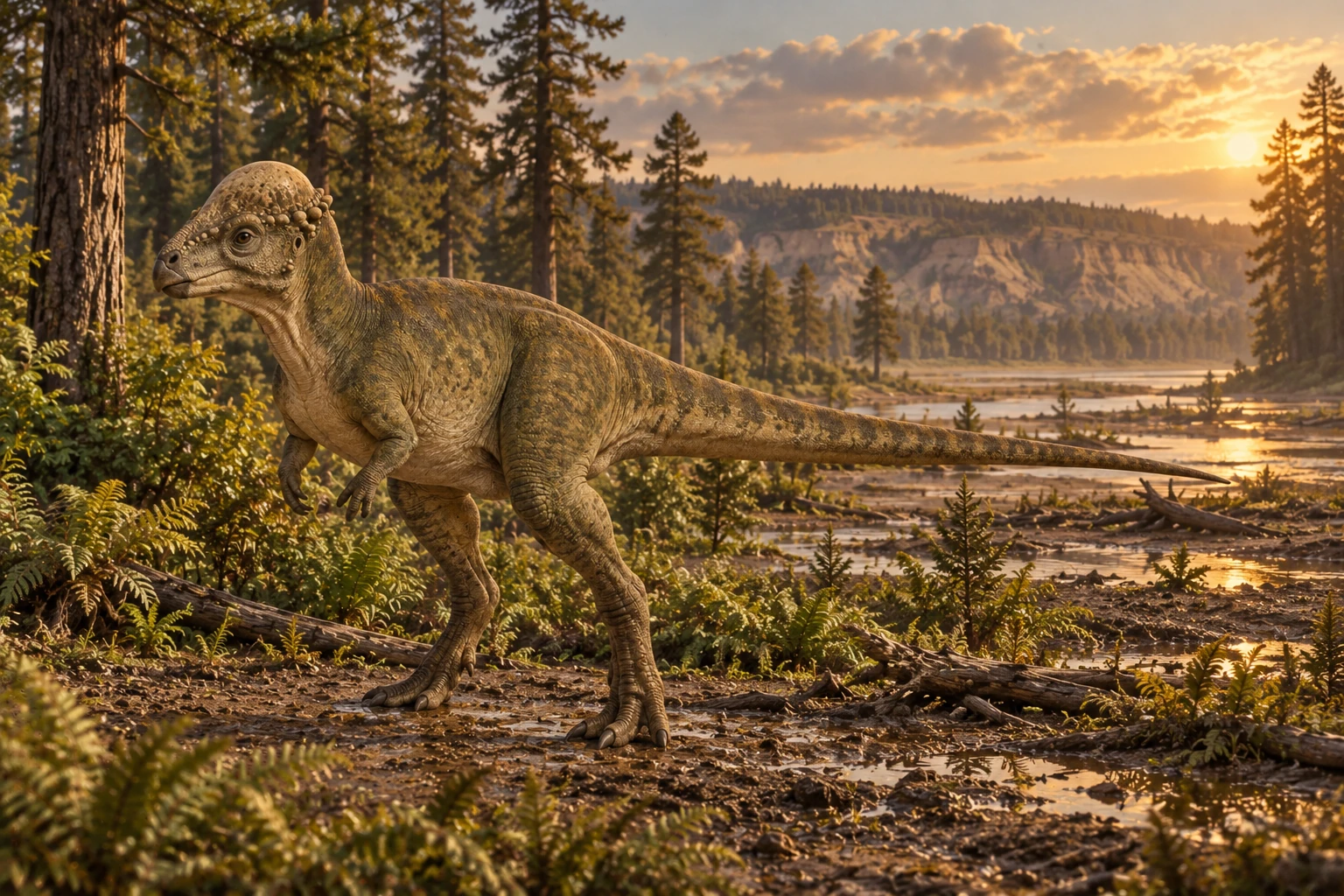
An illustrative reconstruction. Compare its anatomy with the evidence and limitations in the dossier. Lighting, coloration and scenery are artistic choices. This image does not document a fossil locality or behavior.
Original artwork · artistic interpretation.
Scientific view: source-informed reconstruction, credited paleoart or specimen-based imagery. Movie-style view: Original artistic interpretation. Reconstructions involve uncertainty.
MEET THE ANIMAL
Stegoceras was a small plant-eating dinosaur with a thick dome above its brain. The Natural History Museum gives a reference length of about 2.4 meters, but this is an estimate rather than a measurement of every adult. Its compact body and dome make it recognizable, although the appearance of its head could change greatly as it grew. [D4] [D3]
Young Stegoceras could have much flatter skulls. Scientists compared skull ornament and used CT scans to look inside the bones, connecting flatter specimens with more domed ones. This helped them recognize a growth series. Without that comparison, a young animal and an older one might look different enough to receive separate names. [D1]
The dome also raises questions about behavior. Mechanical models suggest that its head could withstand impacts, supporting a head-striking interpretation. That does not mean a fossil preserves an actual fight. We still cannot describe its courtship rituals or daily social groups with confidence. Researchers test what a body could do, then keep that conclusion separate from what the animal definitely did. [D2]
PREHISTORIC ANIMAL DOSSIER
The animal, the evidence, and the questions still open.
Modern skull comparisons reduce the apparent number of named Belly River pachycephalosaurs; maturity can resemble taxonomic difference. [D3]
Profile scope: The exhibit centers on Stegoceras validum from Alberta, excluding uncertain referrals and unrelated former Stegoceras species. [D3]
Source supported identifies a description documented by the cited source. Inferred marks a reconstruction or functional estimate. Debated marks competing interpretations. Not established means the sources reviewed for this dossier do not support a firm conclusion; it does not mean a behavior never occurred.
A size reference is an estimate, not a population range. Nesting evidence does not by itself establish courtship, mate choice, or lifelong pairing.
Approximately 2.4 m reference length.
Museum genus-level estimate; no complete adult population range is supplied. [D4]
Not established here
No dependable mass interval adopted. The reviewed skull-growth and taxonomic studies do not establish a species-wide adult body-mass range. [D1]
Plant eating inferred.
Museum classification is herbivorous; a 2026 muscle model suggests relatively low-fiber feeding, without identifying actual meals. [D5]
Belly River Group terrestrial environments in Alberta.
The reviewed fossils include Dinosaur Park and Oldman formations; fossil occurrence does not establish a single preferred microhabitat. [D3]
Bipedal ground movement.
Comparative reconstruction supports two-legged posture; the skull mechanics study does not establish gait speed. [D2]
Thick skull dome with peripheral ornament.
Young individuals could have much flatter skulls; growth must be considered before separating apparently different head forms. [D1]
Not established here
No assigned egg or nest established here. Reviewed skull studies and focused searches do not document Stegoceras validum reproductive remains. [D1]
Not established here
Mating rituals remain unknown. Display and sex-related dome variation are hypotheses; a crest or dome alone does not preserve courtship. [D5]
Head-striking is a supported mechanical interpretation.
Dome models indicate potential impact tolerance; this does not prove herd structure or an observed contest. [D2]
Sources and inspection notes for the claims in this profile.
THE STORY IN THE FOSSILS
CT scans reveal changes inside the skull as its dome enlarges. Linking those internal changes to recognizable skull ornament helps distinguish growth stages from separate species. [1]
The 2023 study investigated a heavily fused skull once called Gravitholus. Its revised comparisons illustrate why taxonomic names can change when new imaging makes previously hidden anatomy available. [3]
The dossier identifies the scope of each reference estimate. A mount, an individual fossil and a species-wide adult range are different measurements. Comparison metrics remain unavailable where adult scope has not been established. Unknown does not mean zero.
Sources support the stated claims and scopes. Refer to the evidence notes for uncertainty.
KEEP EXPLORING
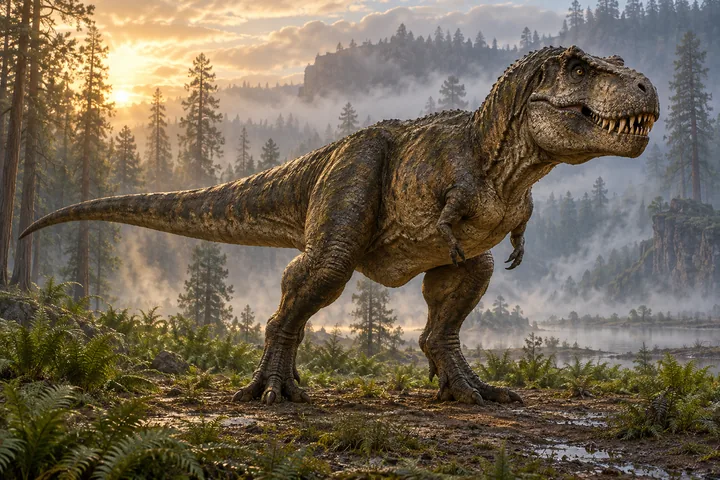
Tyrannosaurus rex
Tyrannosaurus rex was a large meat-eating dinosaur from the final part of the Cretaceous in western North America. Fossil teeth, bite marks and skeletons reveal a powerful animal whose behaviour still invites questions.
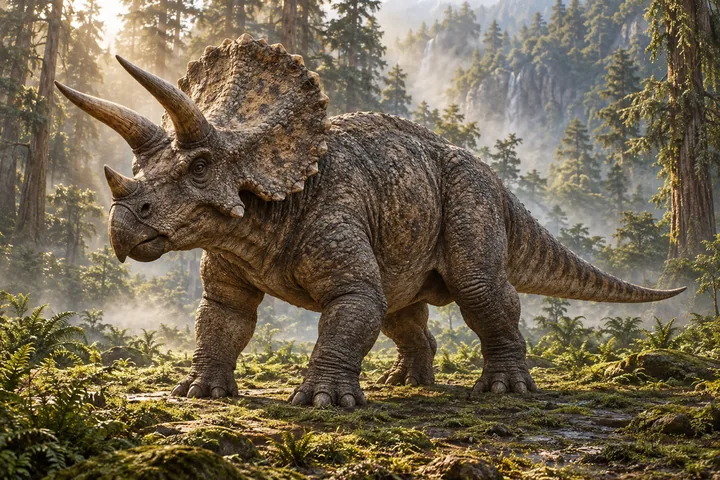
Triceratops horridus
Triceratops horridus was a horned dinosaur of the Late Cretaceous. Skin impressions attributed to this species reveal scales, while skulls and their positions in rock layers help researchers distinguish it from the later Triceratops prorsus.
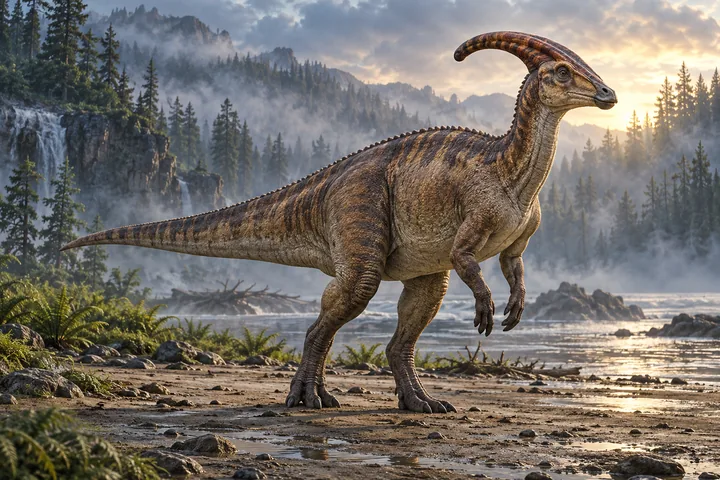
Parasaurolophus walkeri
Parasaurolophus walkeri was a crested duck-billed dinosaur from Late Cretaceous Alberta. Its famous Royal Ontario Museum skeleton preserves both an elongated tubular crest and healed injuries.