
Body length
InferredAbout 7 m; museum reference
No specimen, maturity assessment or measurement method accompanies this figure. It is not a measured adult maximum. [D1]
EXHIBIT 90
Tuojiangosaurus multispinus
Tuojiangosaurus was a Late Jurassic Chinese plant-eating stegosaur with varied bony plates along its body.
TWO WAYS TO PICTURE THE PAST
Compare the evidence with the familiar movie image. The illustrations are not to a shared scale.
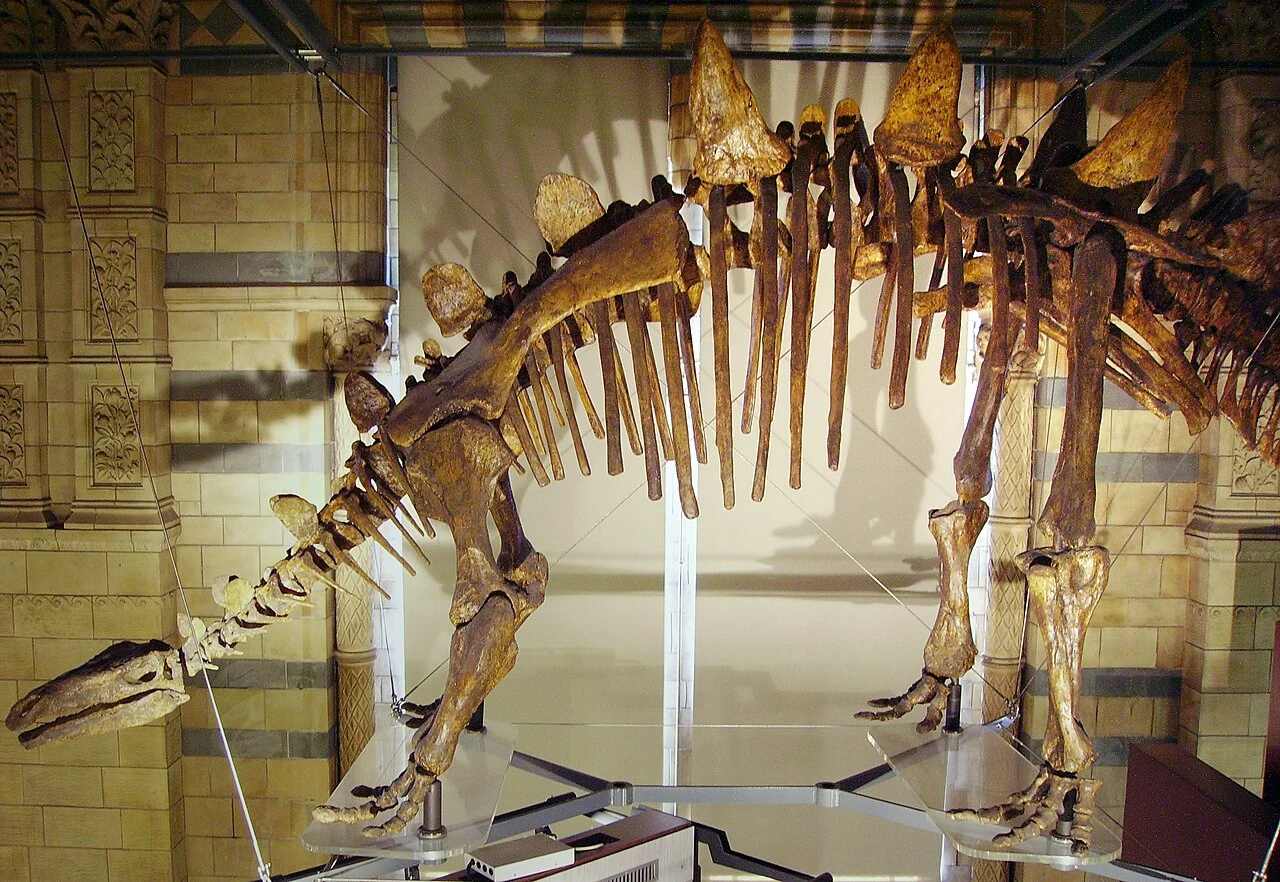
Photographed Tuojiangosaurus skeletal reconstruction at London’s Natural History Museum. Mounted casts and restored arrangements do not represent a single complete fossil; soft tissues and exact terminal armour remain interpretive. [2]
Tuojiangosaurus skeleton NHM2.jpg · Ballista (photograph); Firsfron (image editing). CC BY-SA 3.0. Resized proportionally and converted to WebP; no anatomical edits. Same source license applies.
Skeletal mounts and drawings may restore missing parts; the caption identifies the displayed material.
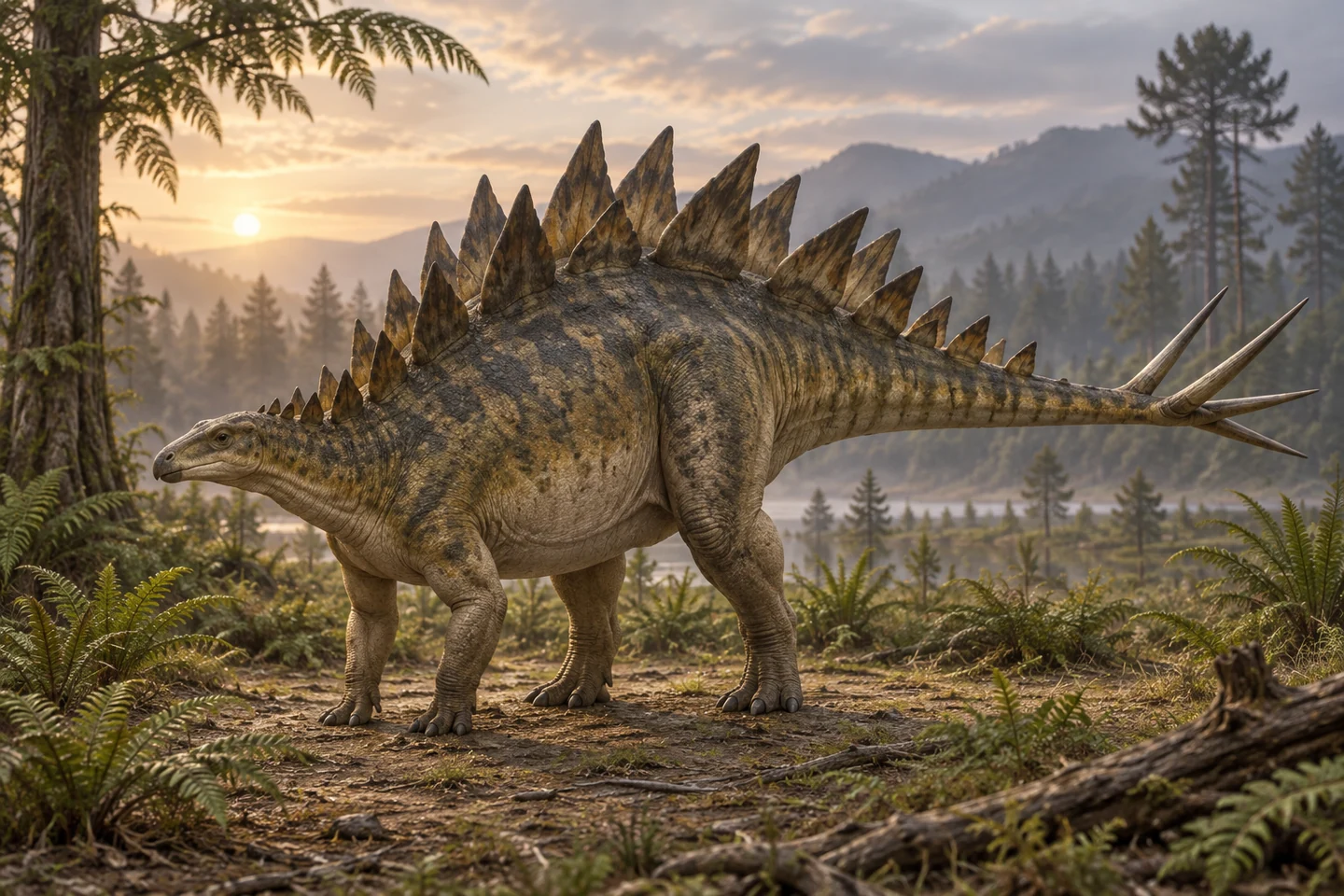
Original cinematic interpretation of Tuojiangosaurus multispinus. Coloration, soft tissues and scenery are artistic choices; reconstructed proportions do not establish a measured individual. Tail-spike arrangement is illustrative. Lighting, coloration and scenery are artistic choices. This image does not document a fossil locality or behavior.
Original artwork · artistic interpretation.
Scientific view: source-informed reconstruction, credited paleoart or specimen-based imagery. Movie-style view: Original artistic interpretation. Reconstructions involve uncertainty.
MEET THE ANIMAL
Tuojiangosaurus was a plant-eating stegosaur from Late Jurassic China. It is reconstructed as a four-legged animal, with a body outline that includes conspicuous bony armor. Museum references give an approximate idea of scale, but should not be confused with a complete measured adult or a range describing every individual. [D1]
Later researchers retained Tuojiangosaurus multispinus as a valid dinosaur while facing a practical difficulty: only limited original material could be relocated for reassessment. Comparing a historical description with the actual fossils is a crucial scientific check. A familiar name and reconstruction can remain useful even when researchers cannot reexamine every bone recorded in the first study. [D3]
Like other dinosaurs, Tuojiangosaurus is inferred to have laid eggs from evidence across the wider group. The reviewed evidence does not identify nests or clutches belonging to this genus. That distinction keeps a general biological inference separate from a species-specific story. A plausible reconstruction of a nest would therefore need to be presented as interpretation, rather than an actual discovery of its family life. [D5]
PREHISTORIC ANIMAL DOSSIER
The animal, the evidence, and the questions still open.
Preserved armour and reconstructed arrangements need to be distinguished.
Profile scope: Genus profile centered on Tuojiangosaurus multispinus; museum dimensions are references, not measured adult ranges.
Source supported identifies a description documented by the cited source. Inferred marks a reconstruction or functional estimate. Debated marks competing interpretations. Not established means the sources reviewed for this dossier do not support a firm conclusion; it does not mean a behavior never occurred.
A size reference is an estimate, not a population range. Nesting evidence does not by itself establish courtship, mate choice, or lifelong pairing.
About 7 m; museum reference
No specimen, maturity assessment or measurement method accompanies this figure. It is not a measured adult maximum. [D1]
About 1.5 tonnes; museum reference
The directory lists 1,500 kg without identifying an individual, life stage or model. Treat it as a reference, not a species interval. [D1]
Plant-eater
The museum identifies herbivory; particular preferred plants are not established. [D1]
Late Jurassic Upper Shaximiao, Sichuan
The described type and paratype come from Wujiaba near Zigong; the monograph places them near the formation’s base. [D2]
Four-legged terrestrial walker
The museum reconstructs a four-legged stance; reviewed evidence does not establish speed. [D1]
Varied plates; paired arrangement reconstructed
The monograph describes triangular and spine-like armour. Its terminal tail armour is missing; exact arrangements and spike counts include reconstruction. [D2]
Egg-laying inferred; nesting unresolved
Broader dinosaur egg evidence supports the inference. Reviewed sources do not identify Tuojiangosaurus clutches, nest structure or parental care. [D5]
Not established here
Plates alone cannot establish sex differences or a display sequence; focused searches and reviewed studies did not establish courtship.
Not established here
Two described specimens do not establish a herd. Focused searches and reviewed studies do not resolve stable social organization.
Sources and inspection notes for the claims in this profile.
THE STORY IN THE FOSSILS
Tuojiangosaurus preserves armour of several shapes. Researchers inferred opposed pairs using similar plates and associated bones, while the original description explicitly records missing armour at the tail’s end. [2]
Later reviews retained Tuojiangosaurus as a valid taxon, while noting that little type material could be relocated for reassessment. This limits what can be checked against the original descriptions. [4]
The dossier identifies the scope of each reference estimate. A mount, an individual fossil and a species-wide adult range are different measurements. Comparison metrics remain unavailable where adult scope has not been established. Unknown does not mean zero.
Sources support the stated claims and scopes. Refer to the evidence notes for uncertainty.
KEEP EXPLORING
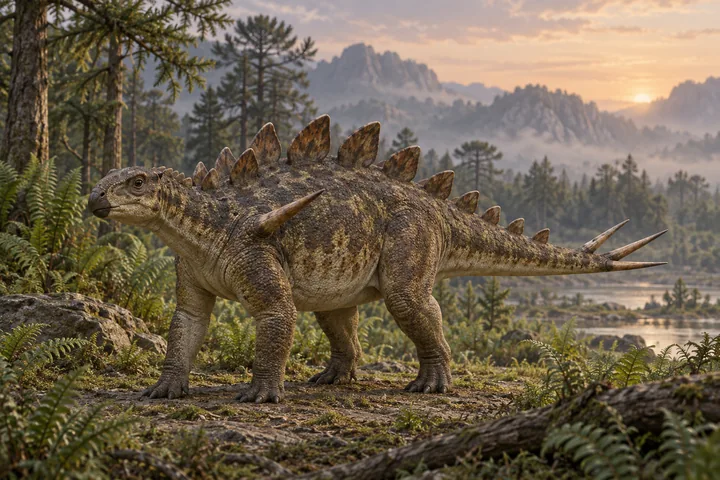
Huayangosaurus taibaii
Huayangosaurus was a small Chinese stegosaur with a relatively broad skull and teeth at the front of its upper jaw.
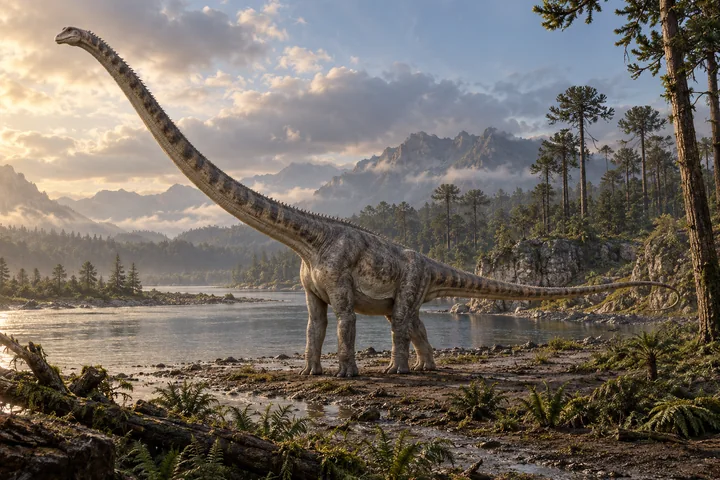
Mamenchisaurus
Mamenchisaurus includes long-necked Chinese sauropods. Differing species and recent research require revision of the traditional genus.
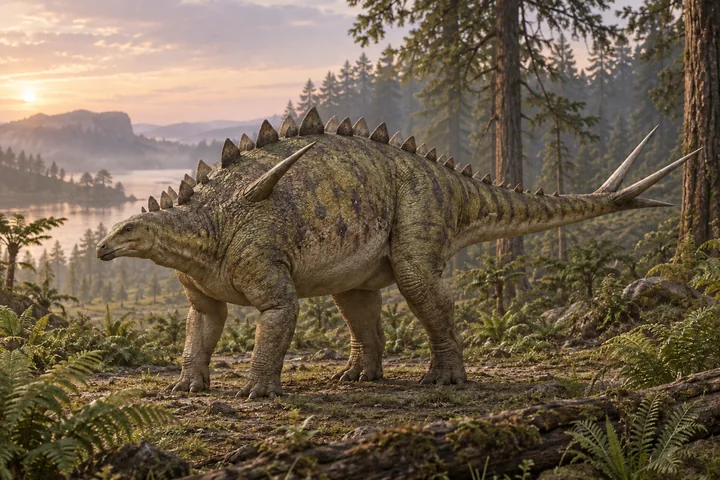
Dacentrurus armatus
Dacentrurus was a heavily built European stegosaur, combining bony armor with a substantial pelvis and limbs.