
Body length
InferredAbout 4.5 m; museum reference
The directory provides no specimen, maturity or method. Its reference is not a population interval and is not tied to the mass-model individual. [D1]
EXHIBIT 89
Huayangosaurus taibaii
Huayangosaurus was a small Chinese stegosaur with a relatively broad skull and teeth at the front of its upper jaw.
TWO WAYS TO PICTURE THE PAST
Compare the evidence with the familiar movie image. The illustrations are not to a shared scale.
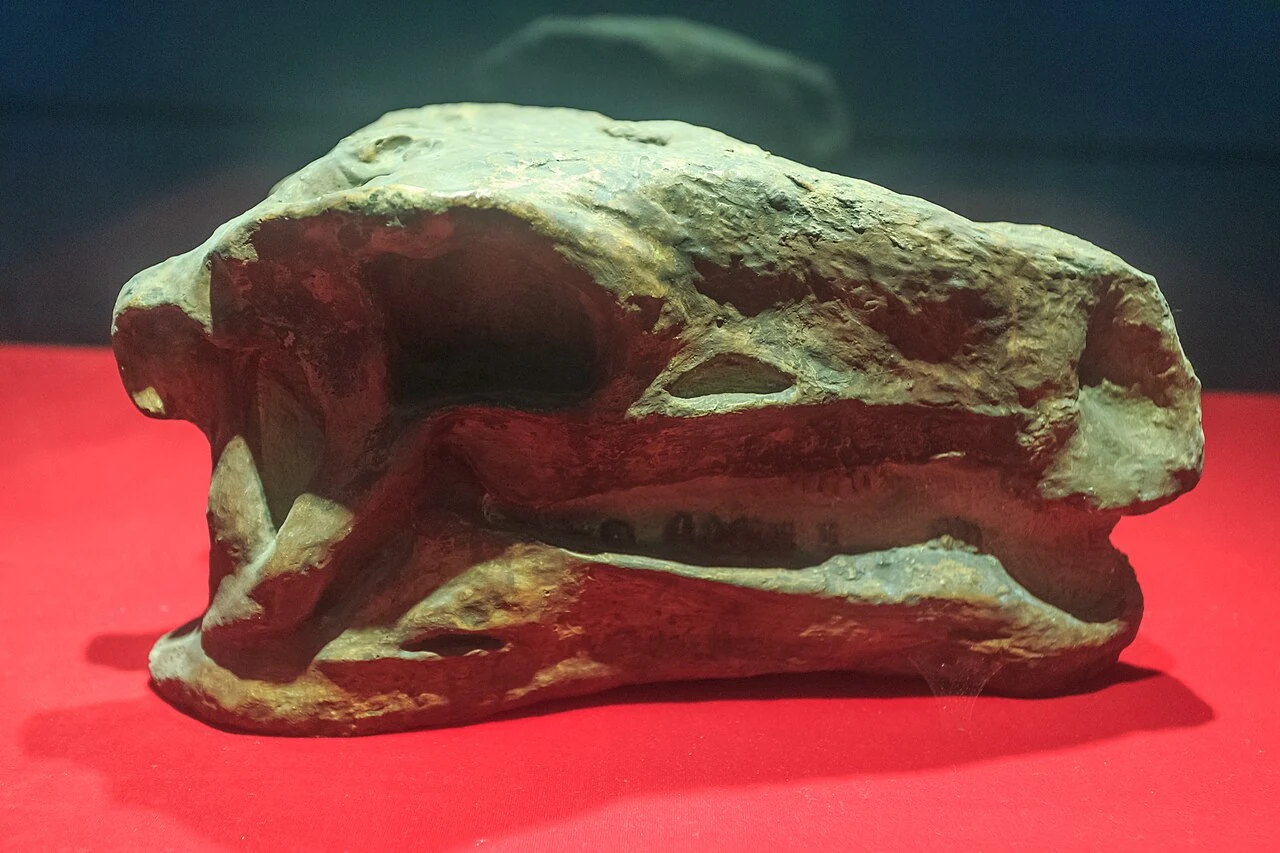
Photograph of a skull displayed as Huayangosaurus taibaii at Zigong Dinosaur Museum. The source does not identify a specimen number or separate restored areas; display colour is not evidence of living coloration. [2]
Zigong Dinosaur Museum Huayangosaurus skull.jpg · Zhangzhugang. CC BY 4.0. Resized proportionally and converted to WebP; no anatomical edits. Same source license applies.
The photograph or figure shows the credited fossil material; displayed mounts and labels can include interpretation.
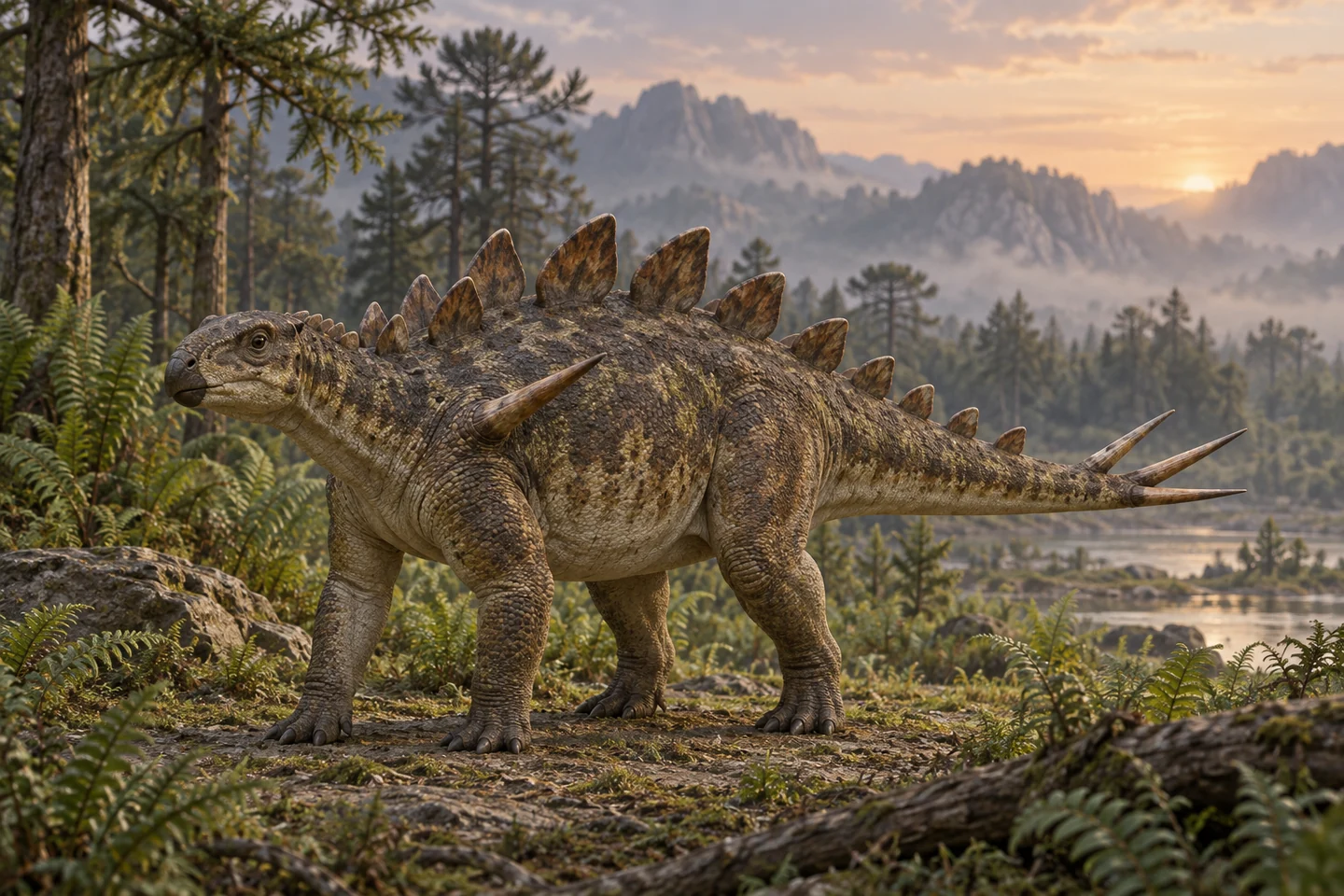
Original cinematic interpretation of Huayangosaurus taibaii. Coloration, soft tissues and scenery are artistic choices; reconstructed proportions do not establish a measured individual. Lighting, coloration and scenery are artistic choices. This image does not document a fossil locality or behavior.
Original artwork · artistic interpretation.
Scientific view: source-informed reconstruction, credited paleoart or specimen-based imagery. Movie-style view: Original artistic interpretation. Reconstructions involve uncertainty.
MEET THE ANIMAL
Huayangosaurus was a stegosaur from Jurassic China. A museum reference of about 4.5 metres gives a general picture of its size without identifying a measured adult maximum. Comparing it with other stegosaurs helps show that this dinosaur group did not begin with every feature familiar from its later members. Family resemblance does not mean identical anatomy. [D1]
A study of its body skeleton identified features retained from earlier relatives and interpreted it as an animal that needed to walk on four legs. The limbs therefore contribute evidence about movement, rather than just supporting a display mount. A four-legged reconstruction does not establish a running speed or show every movement the animal could perform. [D3]
The age of its regional rock record has been reconsidered. Museum accounts traditionally place these fossils in the Middle Jurassic, while mineral-grain research proposed a Late Jurassic interpretation for the deposits. Connecting a dinosaur to those ages requires geological comparison. This timing question differs from what its bones reveal about anatomy. [D6]
PREHISTORIC ANIMAL DOSSIER
The animal, the evidence, and the questions still open.
Its skull and limb skeleton retain features lost in later stegosaurs.
Profile scope: Genus profile centered on Huayangosaurus taibaii; museum length and specimen-model mass are separate references.
Source supported identifies a description documented by the cited source. Inferred marks a reconstruction or functional estimate. Debated marks competing interpretations. Not established means the sources reviewed for this dossier do not support a firm conclusion; it does not mean a behavior never occurred.
A size reference is an estimate, not a population range. Nesting evidence does not by itself establish courtship, mate choice, or lifelong pairing.
About 4.5 m; museum reference
The directory provides no specimen, maturity or method. Its reference is not a population interval and is not tied to the mass-model individual. [D1]
About 300 kg; model of ZDM T7001
Table 1 lists a 301.4 kg polynomial estimate using a 510 mm femur. Maturity is unspecified; this is one model, not a proven adult maximum. [D5]
Plant-eater
The museum identifies herbivory and front-jaw teeth; particular preferred plants are unresolved. [D2]
Dashanpu, Sichuan; chronology debated
Museum accounts use Middle Jurassic. A regional Lower Shaximiao zircon study argues for Oxfordian, Late Jurassic deposition; exact fossil ages require stratigraphic correlation. [D2] [D6]
Obligate quadruped
Postcranial anatomy was interpreted as requiring four-legged movement; no speed is established. [D3]
Broad skull; upper snout teeth; longer forelimbs
The museum contrasts its toothed front jaw and relatively long forelimbs with later stegosaurs. Body plates do not demonstrate their proposed functions. [D2]
Egg-laying inferred; nesting unresolved
Broader dinosaur egg evidence supports egg-laying. The reviewed sources do not identify Huayangosaurus clutches, nest structure or parental care. [D7]
Not established here
Plate color change has been suggested as a display hypothesis, but the museum account does not demonstrate mating behavior or sex differences. [D2]
Not established here
Focused searches and reviewed skeleton studies do not establish persistent groups, herd structure or cooperative behavior.
Sources and inspection notes for the claims in this profile.
THE STORY IN THE FOSSILS
Huayangosaurus retained teeth in the upper jaw’s front region and comparatively long forelimbs. These differences help show how stegosaur anatomy changed, without assigning an observed function to every plate. [2]
The type preserves a skull with incomplete body bones; later specimens fill important anatomical gaps. Keeping these specimens separate prevents a reconstructed skeleton from becoming a fictitious complete fossil individual. [4]
The dossier identifies the scope of each reference estimate. A mount, an individual fossil and a species-wide adult range are different measurements. Comparison metrics remain unavailable where adult scope has not been established. Unknown does not mean zero.
Sources support the stated claims and scopes. Refer to the evidence notes for uncertainty.
KEEP EXPLORING
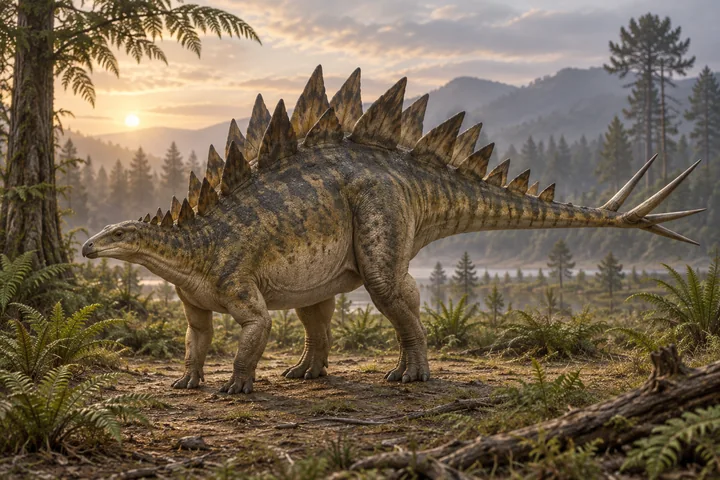
Tuojiangosaurus multispinus
Tuojiangosaurus was a Late Jurassic Chinese plant-eating stegosaur with varied bony plates along its body.
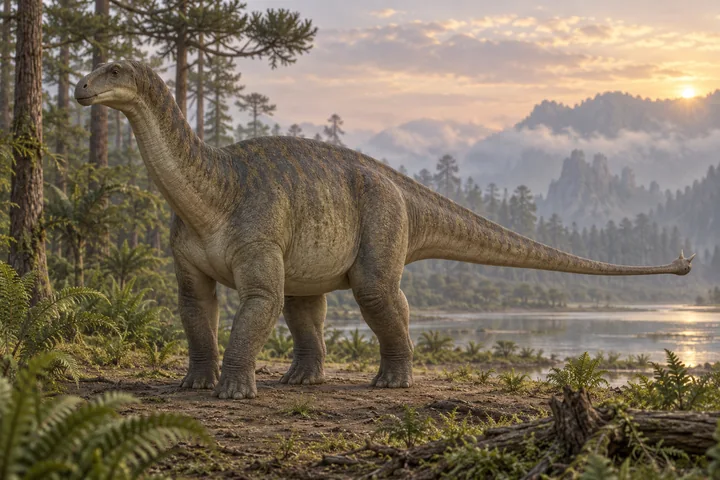
Shunosaurus lii
Shunosaurus was a Chinese plant-eater with a comparatively short neck, stout teeth and a small bony tail club.
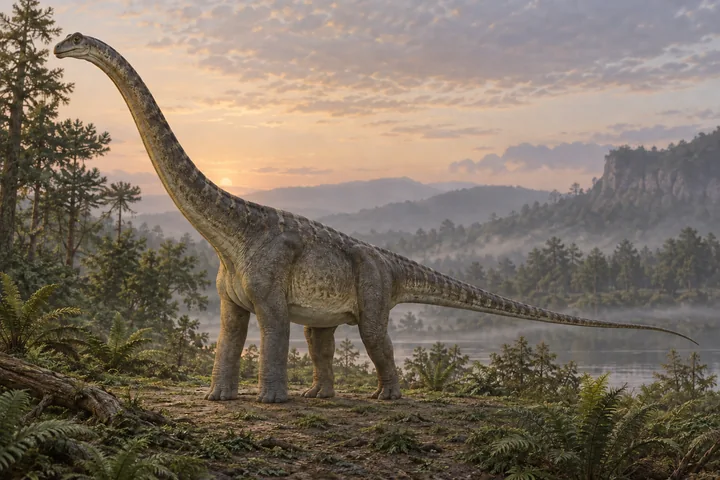
Omeisaurus junghsiensis
Omeisaurus is a Chinese sauropod genus represented by several named species whose fossils and size references must be kept separate.