
Length
InferredAbout 6 m (museum reference)
The museum gives a genus-level educational reconstruction, without a named individual, method or maturity assessment. It is not a measured adult range. [D1]
EXHIBIT 111
Dacentrurus armatus
Dacentrurus was a heavily built European stegosaur, combining bony armor with a substantial pelvis and limbs. [2]
TWO WAYS TO PICTURE THE PAST
Compare the evidence with the familiar movie image. The illustrations are not to a shared scale.
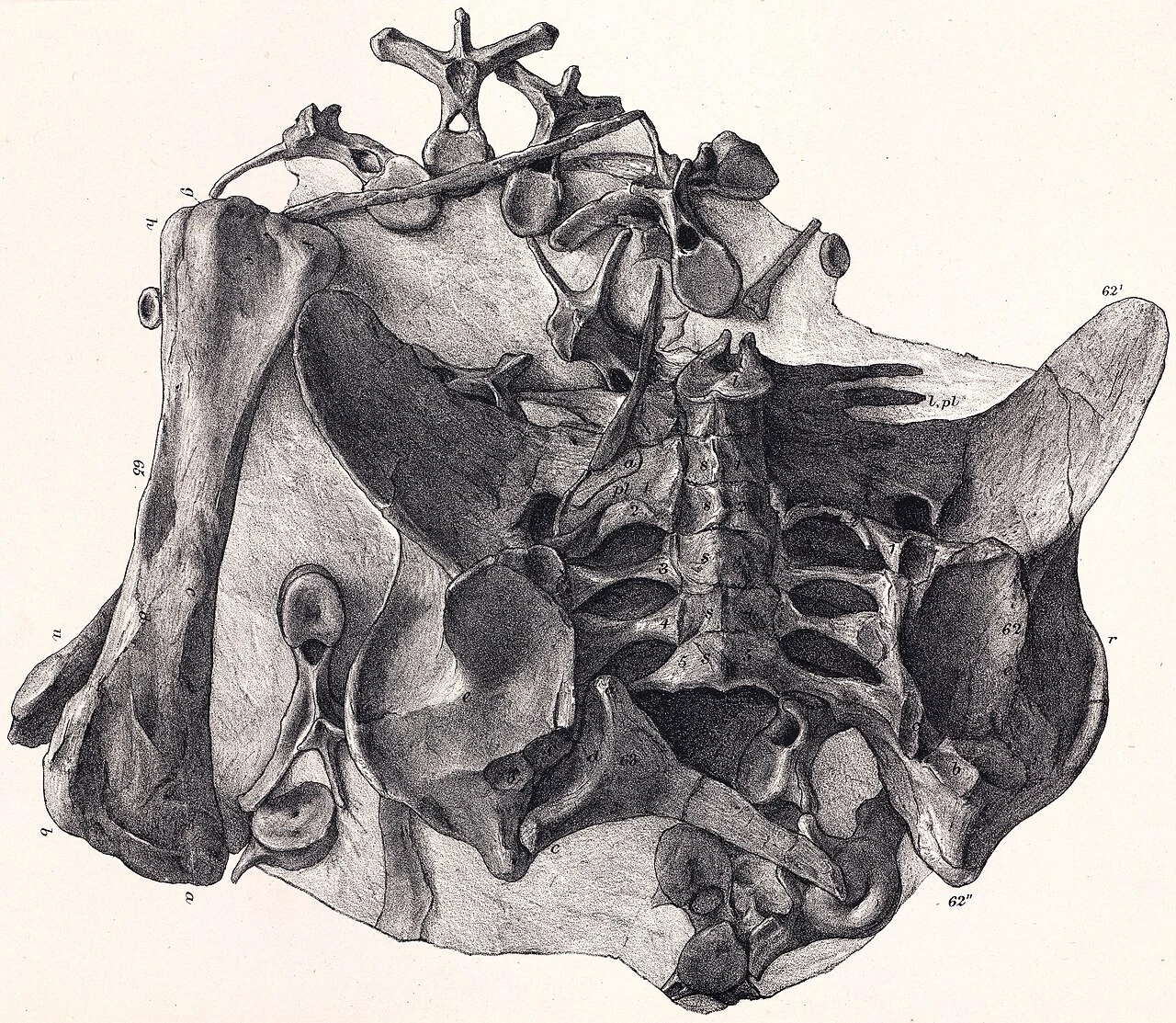
Lithograph of the incomplete D. armatus type specimen from Swindon. Fossil position is not a life posture and reveals no living colors or soft tissues. [2]
Dacentrurus holotype · C. L. Griesbach, in Richard Owen’s 1875 monograph. Public domain. Commons-listed 1280 px preview converted to WebP; smaller responsive copy proportionally resized. Original image preserved without anatomy alterations.
The photograph or figure shows the credited fossil material; displayed mounts and labels can include interpretation.
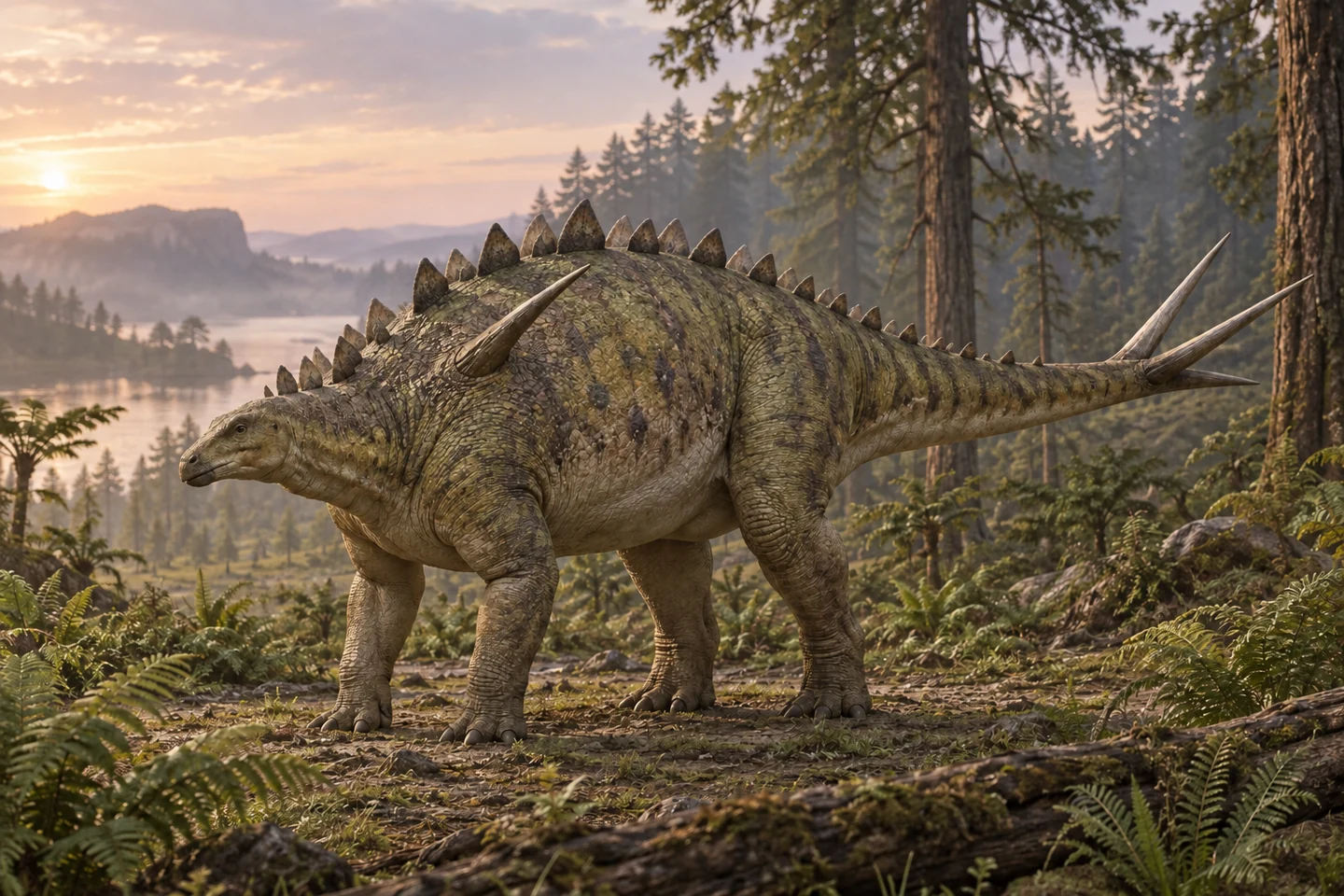
Original cinematic interpretation of Dacentrurus armatus. Colors, soft tissues, scenery and missing anatomy are reconstructed artistic choices; this is not a directly observed individual or behavior. The missing head and precise armor arrangements require comparative reconstruction. The complete armor sequence is uncertain; plate and spike arrangement uses comparative reconstruction. Lighting, coloration and scenery are artistic choices. This image does not document a fossil locality or behavior.
Original artwork · artistic interpretation.
Scientific view: source-informed reconstruction, credited paleoart or specimen-based imagery. Movie-style view: Original artistic interpretation. Reconstructions involve uncertainty.
MEET THE ANIMAL
Dacentrurus was a plant-eating stegosaur from Late Jurassic Europe. Its museum reference of about six metres gives a general sense of scale without naming a measured complete adult. The genus has a long research history, and its profile depends on carefully deciding which later discoveries can be compared with its original fossil material. [D1]
A proposed merger with the long-necked Miragaia remains contested. Research arguing that Miragaia is distinct identifies problems with that suggested synonymy. A synonym is another name interpreted as referring to the same animal. Because the disagreement is unresolved, Miragaia's distinctive neck and life-history claims should not automatically be transferred to Dacentrurus. [D4]
Spanish trackways called Deltapodus suggest that some stegosaurs traveled together. Tracks preserve movement more directly than a mounted skeleton, but identifying the exact genus that made them is difficult. They do not securely demonstrate Dacentrurus herds or one measured walking speed. Keeping the trackmaker uncertain lets the footprints inform stegosaur behavior without giving a named animal more detailed habits than the evidence supports. [D8]
PREHISTORIC ANIMAL DOSSIER
The animal, the evidence, and the questions still open.
Its incomplete skeletons leave the full armor arrangement uncertain. Recent cranial discoveries expand its anatomy, while disagreements over related genera still affect its reconstruction. [D3]
Profile scope: D. armatus, anchored by the Swindon type and recent Spanish referrals; disputed Miragaia material is kept separate. [D3] [D4]
Source supported identifies a description documented by the cited source. Inferred marks a reconstruction or functional estimate. Debated marks competing interpretations. Not established means the sources reviewed for this dossier do not support a firm conclusion; it does not mean a behavior never occurred.
A size reference is an estimate, not a population range. Nesting evidence does not by itself establish courtship, mate choice, or lifelong pairing.
About 6 m (museum reference)
The museum gives a genus-level educational reconstruction, without a named individual, method or maturity assessment. It is not a measured adult range. [D1]
About 7.4 tonnes (limb model)
Benson models type BMNH46013; its crushed femur required an estimated circumference. This uncertain individual reconstruction is not an adult population average. [D7]
Plant-eater
The museum identifies herbivory; particular food plants and a genus-specific feeding height are not established here. [D1]
Late Jurassic European land environments
Spanish referrals occur in Villar del Arzobispo coastal river deposits, including wetlands and floodplains. Burial environments do not establish an exclusive habitat preference. [D6]
Four-legged walking inferred
Its stegosaur limb plan supports quadrupedality. Trackways assigned only to stegosaurs cannot identify a Dacentrurus speed or gait directly. [D2]
Substantial pelvis and limbs; plates and spines
The type preserves a large pelvis and limb material; newly referred Spanish cranial remains add skull information. A complete, securely arranged armor series is lacking. [D2] [D3]
Not established here
Focused review found no securely assigned eggs, nests, incubation pattern or parental care for D. armatus. Miragaia growth results are not transferred to it.
Not established here
Plates and spines alone do not demonstrate sexual dimorphism, mate choice or a particular mating ritual. No such genus-specific evidence was established in this review.
Possible group travel; trackmaker uncertain
Spanish Deltapodus trackways suggest stegosaur grouping. A 2026 study proposes D. armatus as the likely maker; neither genus identity nor lasting herds are demonstrated. [D8] [D6]
Sources and inspection notes for the claims in this profile.
THE STORY IN THE FOSSILS
The Swindon fossil was originally named Omosaurus armatus. Because Omosaurus was already occupied, the animal acquired the name Dacentrurus. Its incomplete type remains the anchor for identifying later discoveries. [2]
Spanish finds now supply cranial evidence and several additional referrals. The proposed merger with long-necked Miragaia remains contested, so those fossils do not automatically establish the neck or life history of D. armatus. [3] [4] [5]
The dossier identifies the scope of each reference estimate. A mount, an individual fossil and a species-wide adult range are different measurements. Comparison metrics remain unavailable where adult scope has not been established. Unknown does not mean zero.
Sources support the stated claims and scopes. Refer to the evidence notes for uncertainty.
KEEP EXPLORING
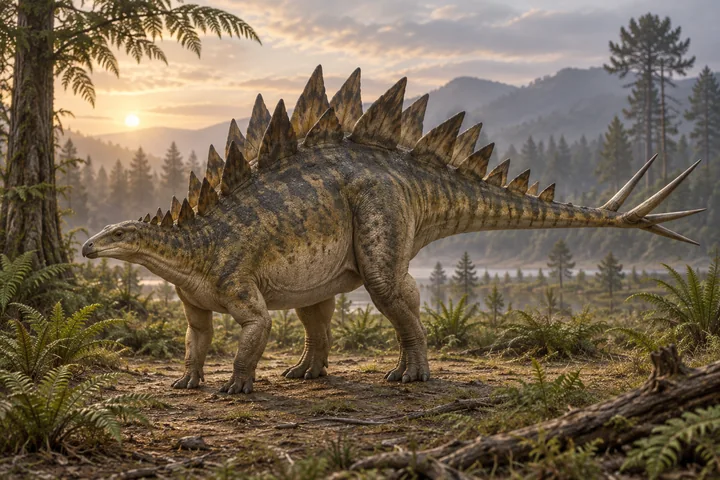
Tuojiangosaurus multispinus
Tuojiangosaurus was a Late Jurassic Chinese plant-eating stegosaur with varied bony plates along its body.
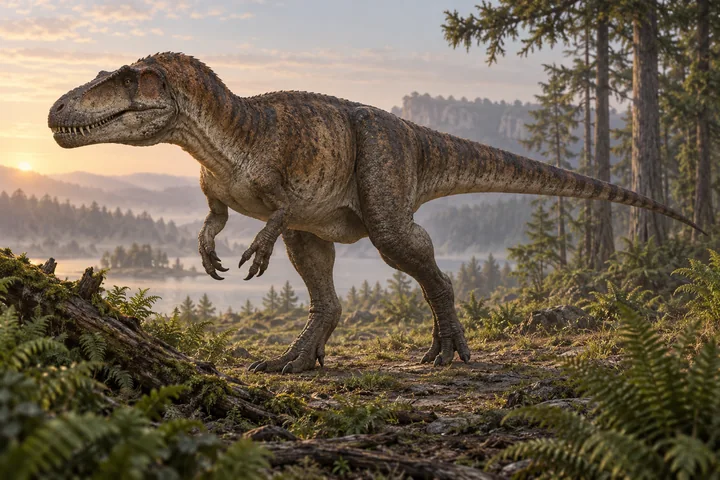
Torvosaurus tanneri
Torvosaurus combined powerful jaws with a rare embryonic record.
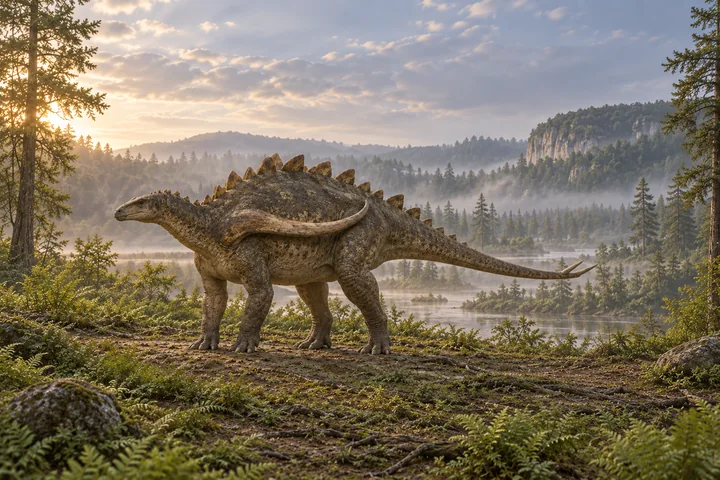
Gigantspinosaurus sichuanensis
Gigantspinosaurus was a stegosaur distinguished by enormous shoulder spines and preserved patches of patterned skin.