Length
InferredAbout 7 m; museum reference
UTEP’s 23-foot educational length has no species, specimen or method designation; it is not an independently established adult maximum. [D4]
EXHIBIT 195
Agujaceratops (genus)
Agujaceratops was a Texas horned dinosaur whose two named species require separate skull reconstructions. [2]
TWO WAYS TO PICTURE THE PAST
Compare the evidence with the familiar movie image. The illustrations are not to a shared scale.
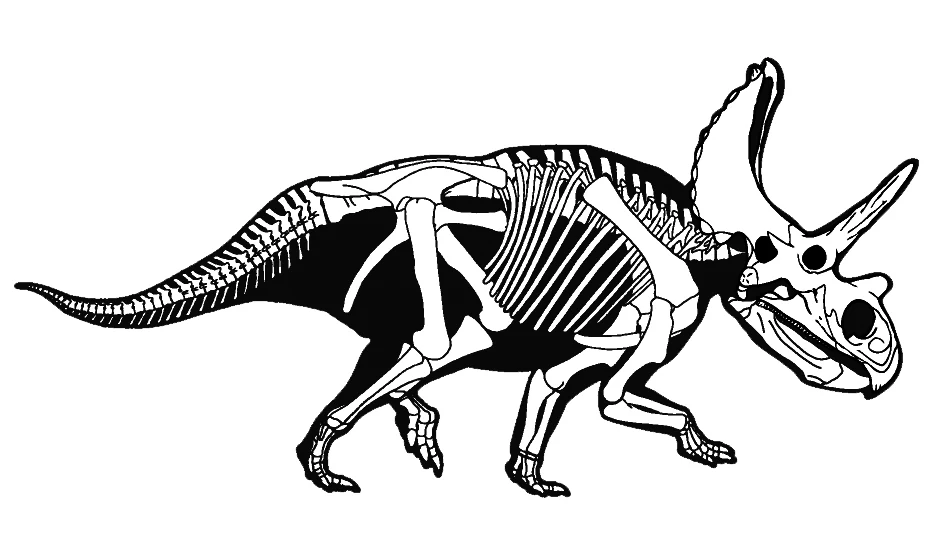
Historical genus-level skeletal restoration published before recognition of A. mavericus. It combines preserved and reconstructed anatomy and should not define a secure modern species portrait or measured individual. Living colors and soft tissues remain unknown. [2]
Agujaceratops.jpg · Scott D. Sampson, Mark A. Loewen, Andrew A. Farke, Eric M. Roberts, Catherine A. Forster, Joshua A. Smith and Alan L. Titus. CC BY 2.5. Proportional resizing and WebP conversion; no anatomy edits. Current Commons composition preserved.
Skeletal mounts and drawings may restore missing parts; the caption identifies the displayed material.
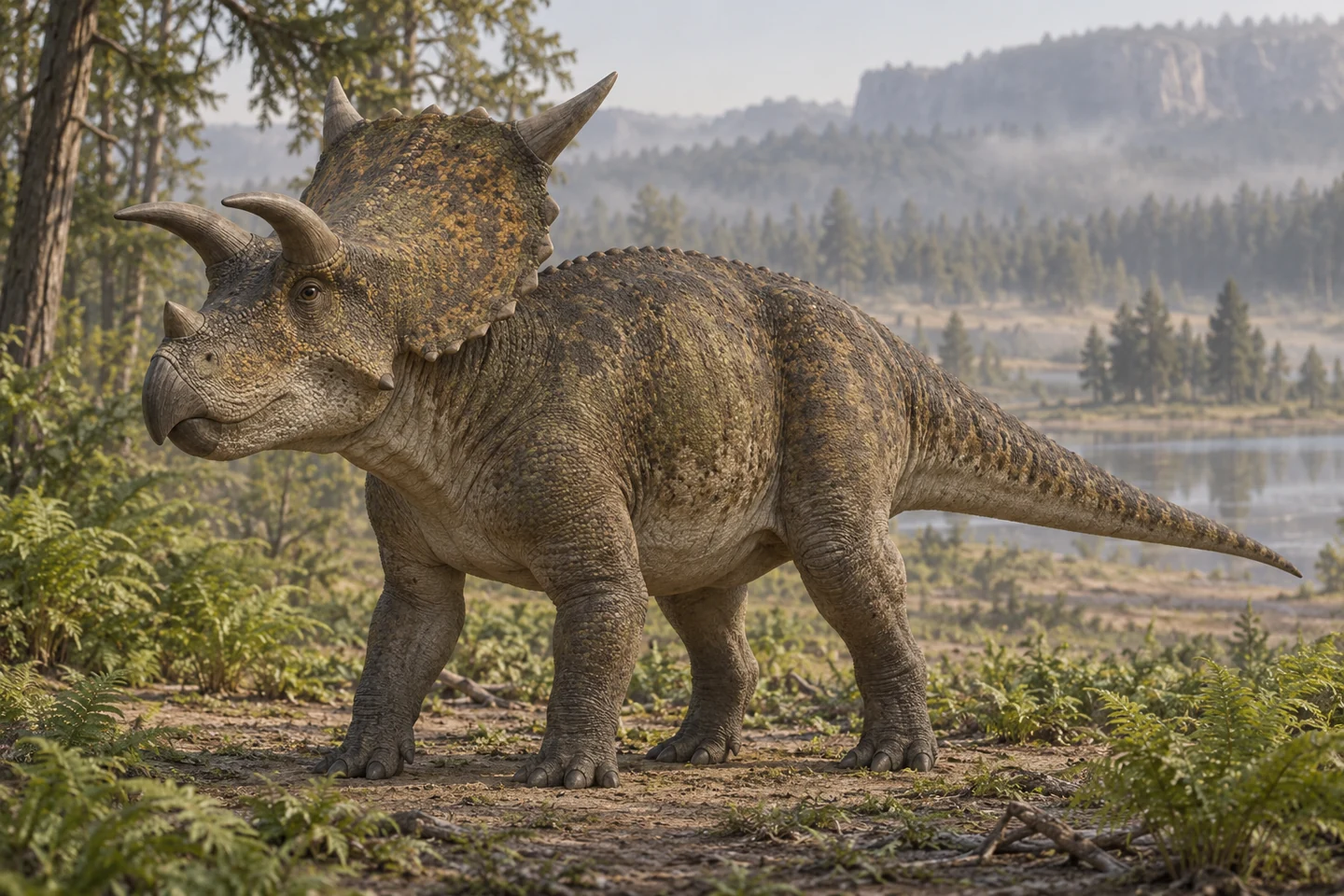
Original cinematic interpretation of Agujaceratops mariscalensis. Its broad frill includes the large posterolateral corner spikes described for this species. Thick brow horns have reconstructed curvature and sheaths; the complete skull later assigned to A. mavericus is not the guide. The body, colors and scenery are artistic and comparative choices, without a claim of observed behavior. Lighting, coloration and scenery are artistic choices. This image does not document a fossil locality or behavior.
Original artwork · artistic interpretation.
Scientific view: source-informed reconstruction, credited paleoart or specimen-based imagery. Movie-style view: Original artistic interpretation. Reconstructions involve uncertainty.
MEET THE ANIMAL
Agujaceratops is a horned dinosaur whose name reflects a revision of earlier classifications. Material originally described as a species of Chasmosaurus was given its own genus. A changed scientific name reflects a new interpretation of the same fossils. The bones themselves remain the starting point for understanding the animal. [D1]
The genus now includes two distinguished species, Agujaceratops mariscalensis and Agujaceratops mavericus. Their skull and frill features should not be blended into one supposedly exact portrait. The first species has prominent spikes at the rear corners of its frill. Researchers have also considered how differences among specimens might reflect species, growth or sex; those alternatives are not interchangeable conclusions. [D2]
An original fossil sample from Texas includes roughly ten to fifteen disarticulated individuals, ranging from juveniles to adults. Disarticulated means the bones were no longer all joined in their original positions. That sample provides useful growth evidence, but different ages found together do not automatically identify parents and offspring. It also cannot, on its own, reconstruct the behavior of a stable living herd. [D3]
PREHISTORIC ANIMAL DOSSIER
The animal, the evidence, and the questions still open.
New frill material revealed large corner spikes in A. mariscalensis. Species differences remain entangled with growth and individual variation. [D2]
Profile scope: Genus coverage separates A. mariscalensis and A. mavericus; cinematic anatomy concerns A. mariscalensis. [D2]
Source supported identifies a description documented by the cited source. Inferred marks a reconstruction or functional estimate. Debated marks competing interpretations. Not established means the sources reviewed for this dossier do not support a firm conclusion; it does not mean a behavior never occurred.
A size reference is an estimate, not a population range. Nesting evidence does not by itself establish courtship, mate choice, or lifelong pairing.
About 7 m; museum reference
UTEP’s 23-foot educational length has no species, specimen or method designation; it is not an independently established adult maximum. [D4]
About 2.62 t; OMNH 10081 model
Measured-limb-circumference estimate; dataset labels this individual mature and A. mariscalensis. Species referral predates the 2016 revision; comparison withheld. [D5]
Plant eater
Herbivory inferred from ceratopsid relationships; a specific menu or preserved meal is not established here. [D7]
Late Campanian; Big Bend, Texas
Upper Aguja Formation records the reviewed type and associated bonebed material. [D3]
Four-legged body plan
Ceratopsid posture inferred comparatively; genus-specific trackways, gait and speed are not established here. [D7]
Broad frill; large posterolateral spikes
New A. mariscalensis parietal material bears large horn-like corner processes. The genus’s two skull forms are not interchangeable. [D2]
Not established here
The original sample includes juvenile, subadult and fully adult individuals. This growth-series evidence does not establish breeding age, eggs, nests or parental care. [D3]
Not established here
Ceratopsian sexual-selection hypotheses are comparative. Ornament shape does not establish this genus’s mate choice, courtship sequence or sex-specific roles. [D6]
Bonebed association; living group uncertain
The original report describes 10–15 disarticulated individuals of multiple growth stages. Their accumulation alone does not establish a stable herd or family group. [D3]
Sources and inspection notes for the claims in this profile.
THE STORY IN THE FOSSILS
The 2006 revision separated Texas Chasmosaurus mariscalensis into Agujaceratops. This renaming does not move the other Chasmosaurus species into the Texas genus. [1]
The later revision named A. mavericus and left its juvenile assignment uncertain. Proposed age or sex explanations are alternatives, not identified male and female portraits. [2]
The dossier identifies the scope of each reference estimate. A mount, an individual fossil and a species-wide adult range are different measurements. Comparison metrics remain unavailable where adult scope has not been established. Unknown does not mean zero.
Sources support the stated claims and scopes. Refer to the evidence notes for uncertainty.
KEEP EXPLORING
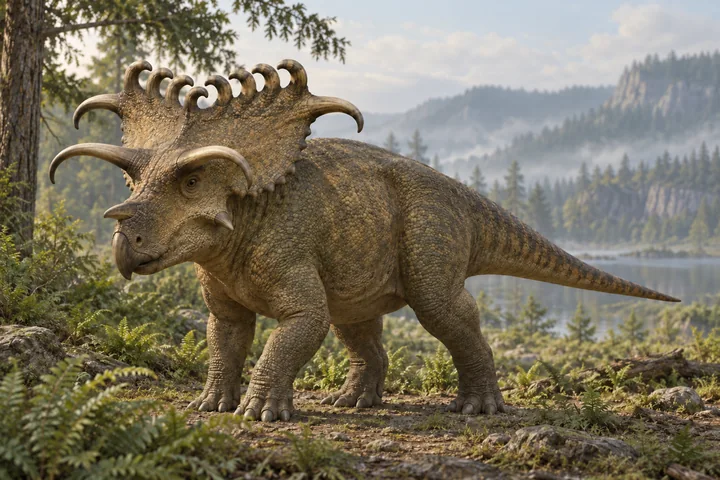
Kosmoceratops richardsoni
Kosmoceratops carried an unusually ornate head with fifteen horn-like features, including a curled frill margin.
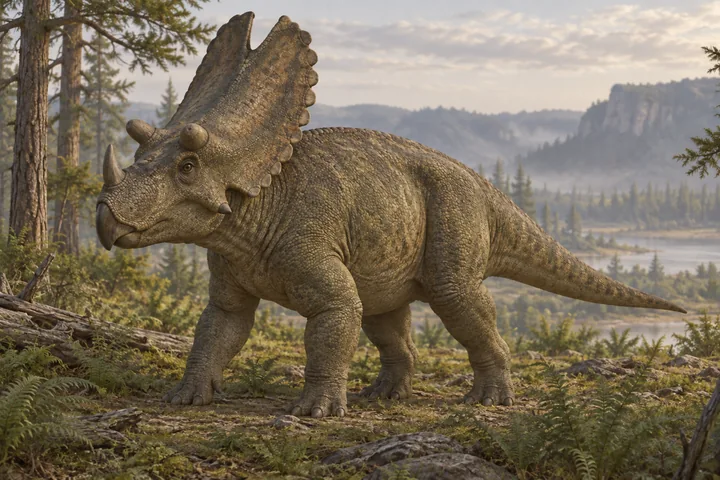
Utahceratops gettyi
Utahceratops combined an elongated frill with short, blunt brow horns that projected strongly sideways.
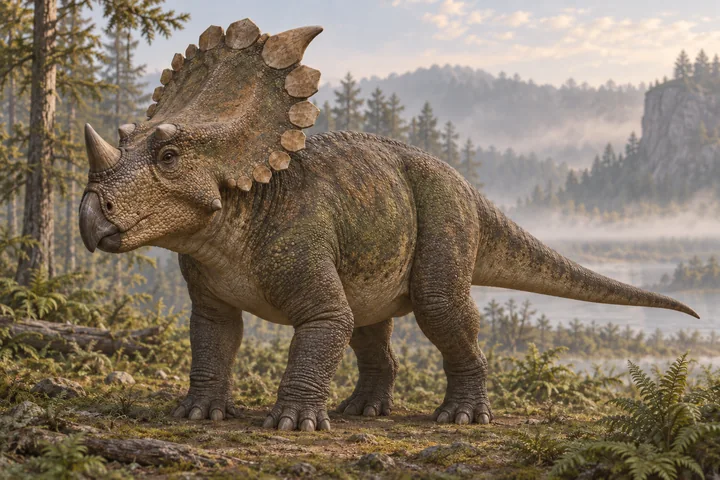
Regaliceratops peterhewsi
Regaliceratops had a crown-like frill and an unusual combination of a prominent nasal horn and reduced brow horns.