Size reference
Source supportedMale 9.1–9.3 mm; female 10.4–10.9 mm, excluding head
Measured adults in 2022; head lengths 2.0–2.2 mm are separately reported. [D2]
EXHIBIT 283
Manipulator
Prehistoric insect
Manipulator was a long-legged Cretaceous cockroach with exceptionally long mouthpart feelers; its diet remains debated. [2]
TWO WAYS TO PICTURE THE PAST
Compare the evidence with the familiar movie image. The illustrations are not to a shared scale.
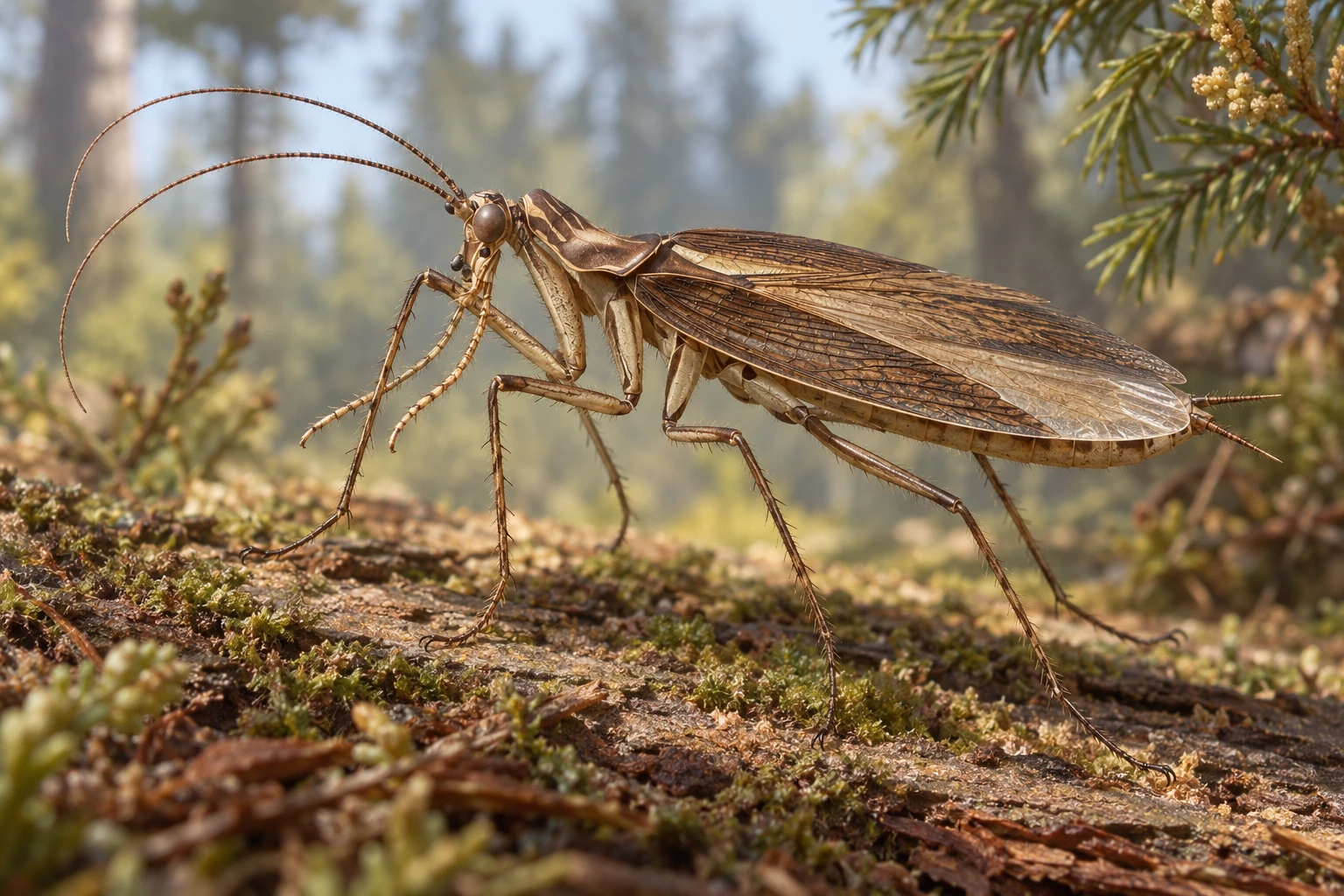
An illustrative reconstruction. Compare its anatomy with the evidence and limitations in the dossier. [1]
Source-informed reconstruction. Appearance evidence [1]. Original illustration; missing anatomy, coloration and scenery include interpretation.
Fossils constrain this life reconstruction. Missing anatomy, coloration and the environmental scene include interpretation; the dossier explains the evidence limits.
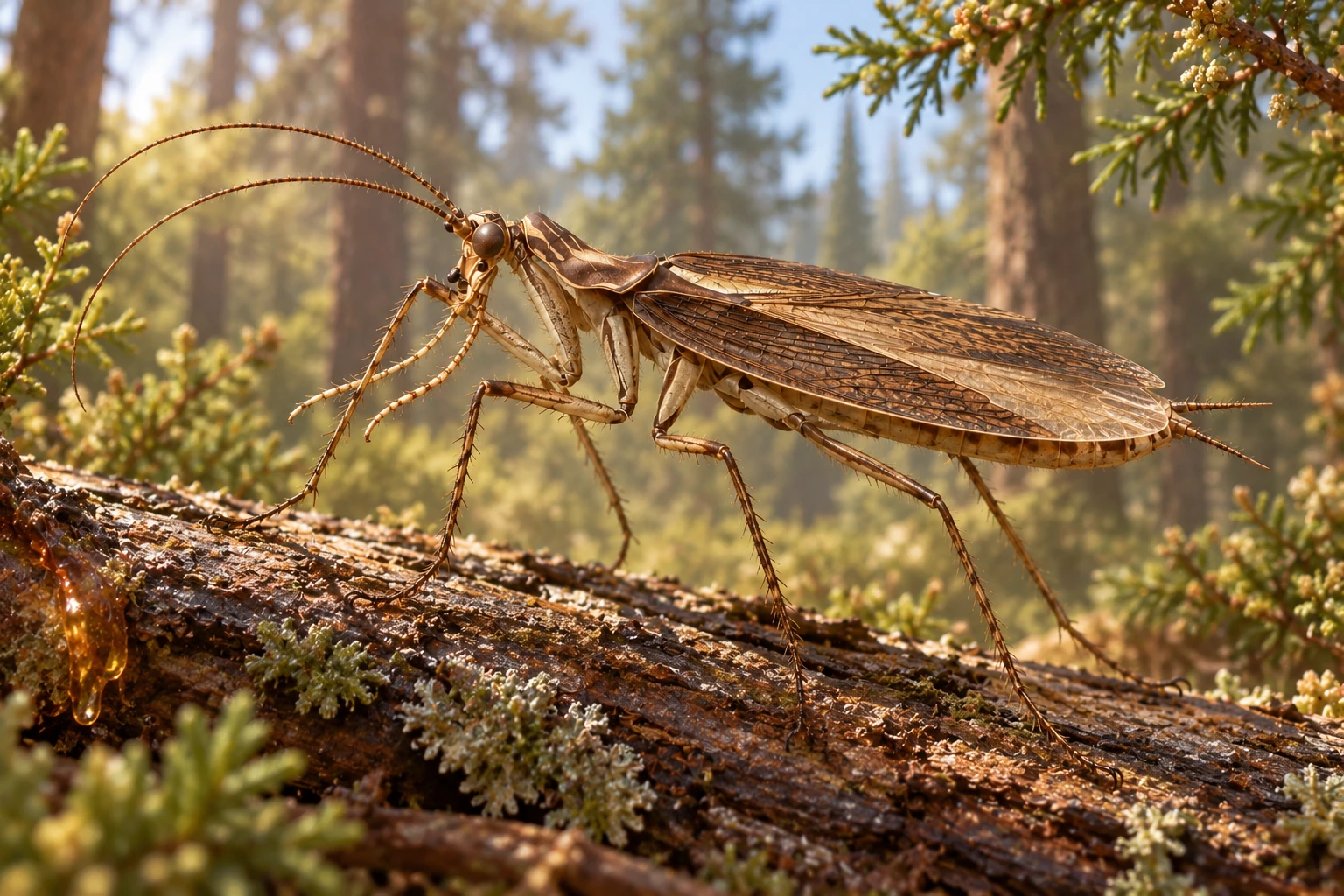
An illustrative reconstruction. Compare its anatomy with the evidence and limitations in the dossier. Lighting, coloration and scenery are artistic choices. This image does not document a fossil locality or behavior.
Original artwork · artistic interpretation.
Scientific view: source-informed reconstruction, credited paleoart or specimen-based imagery. Movie-style view: Original artistic interpretation. Reconstructions involve uncertainty.
MEET THE ANIMAL
Manipulator was a cockroach from a Cretaceous resin forest in what is now Myanmar. Its small body carried remarkably long legs, antennae and mouthpart feelers called palps. These feelers were not additional walking legs. The original description used a male trapped in amber and proposed that its unusual build belonged to a pursuit predator. That proposal was an interpretation, rather than a fossil hunting scene. [D1]
A later study examined more adults and challenged specialized predation. The authors suggested that long appendages could help the insect reach across twigs and inspect scattered flowers. They also discussed stealing food from spider webs as a less likely possibility. Without a directly identified meal, its menu remains debated. A similar insect named Manipulatoides was described separately, with different foreleg spines. [D2]
The old forest resin and the sediment where amber was buried describe different parts of the fossil story. Finding amber in nearshore rocks does not turn this cockroach into a swimming animal. Its exact living colors, courtship and group behavior are not established by the descriptions. [D1]
PREHISTORIC ANIMAL DOSSIER
The animal, the evidence, and the questions still open.
An early predatory interpretation was challenged by proposed flower feeding; neither hypothesis is a preserved meal. [D2]
Profile scope: Genus — Manipulator; M. modificaputis adults, including holotype SMNS Bu-116, with the 2022 redescription supplying updated anatomy. [D1]
Source supported identifies a description documented by the cited source. Inferred marks a reconstruction or functional estimate. Debated marks competing interpretations. Not established means the sources reviewed for this dossier do not support a firm conclusion; it does not mean a behavior never occurred.
A size reference is an estimate, not a population range. Nesting evidence does not by itself establish courtship, mate choice, or lifelong pairing.
Male 9.1–9.3 mm; female 10.4–10.9 mm, excluding head
Measured adults in 2022; head lengths 2.0–2.2 mm are separately reported. [D2]
Not established here
No mass estimate. [D1]
Flower feeding proposed; predation disputed
The 2022 authors question specialized hunting and discuss a less likely prey-stealing alternative. [D2]
Terrestrial resin forest
Resin forest and nearshore burial are distinguished. [D1]
Walking and flight inferred
Long legs and wings indicate mobility. [D1]
Elongate palps and saddle-shaped pronotum
Palps are mouthpart feelers; the pronotum is thorax. [D1]
Males, females and tentative nymphs
The 2022 study does not establish attributable eggs or a complete species growth series. [D2]
Not established here
Descriptions of male structures do not document mate choice or displays. [D1]
Not established here
Neither study establishes colonies or cooperative foraging. [D1]
Sources and inspection notes for the claims in this profile.
THE STORY IN THE FOSSILS
Long limbs supported an early pursuit-predator interpretation. [1]
Later analysis suggests elongation aided movement and food detection among twigs. [2]
The dossier identifies the scope of each reference estimate. A mount, an individual fossil and a species-wide adult range are different measurements. Comparison metrics remain unavailable where adult scope has not been established. Unknown does not mean zero.
Sources support the stated claims and scopes. Refer to the evidence notes for uncertainty.
KEEP EXPLORING
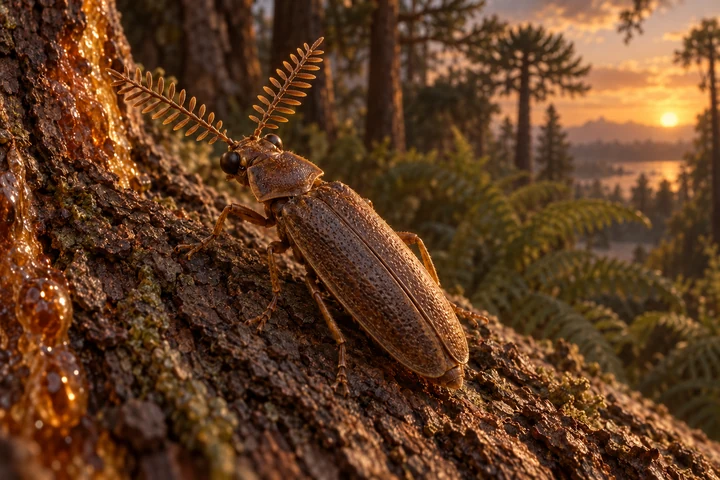
Cretophengodes
Prehistoric insect
Cretophengodes was a Cretaceous beetle whose preserved abdominal organ supports ancient light production.
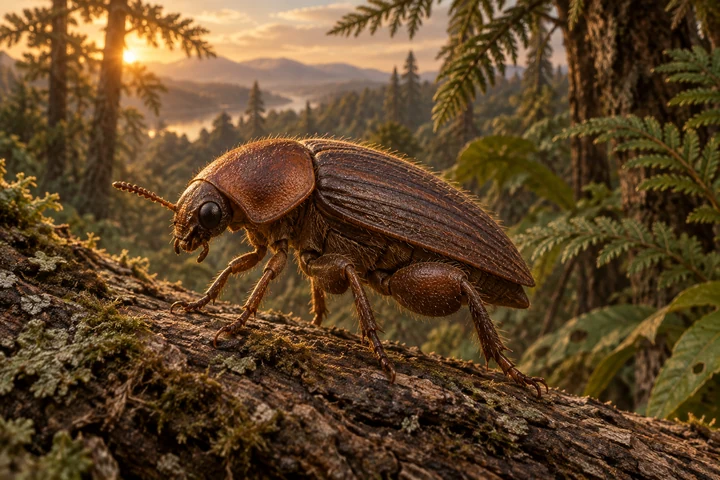
Angimordella
Prehistoric insect
Angimordella was a Cretaceous beetle preserved with pollen; its specialized pollinator role remains uncertain after reassessment.
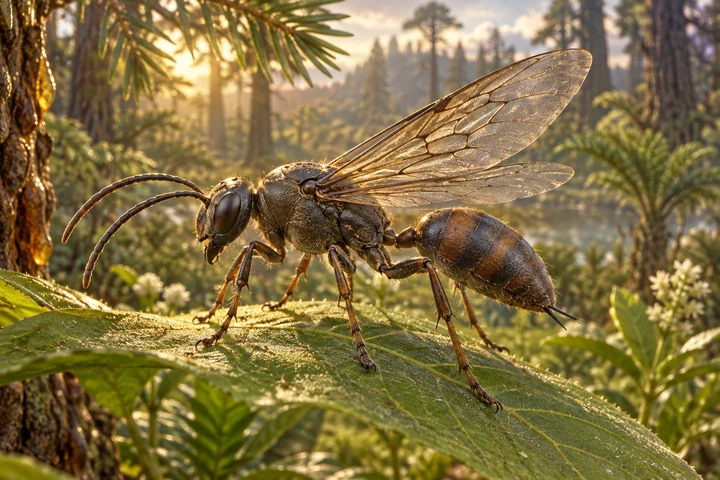
Prosphex
Prehistoric insect
Prosphex was a small Cretaceous stinging wasp preserved with flowering-plant pollen around its mouth.