
Body length
InferredAbout 2.5 m; museum reference
The directory gives this whole-body reference without linking it to one individual, developmental stage or method. It is not a verified mature maximum or a population range. [D5]
TWO WAYS TO PICTURE THE PAST
Compare the evidence with the familiar movie image. The illustrations are not to a shared scale.
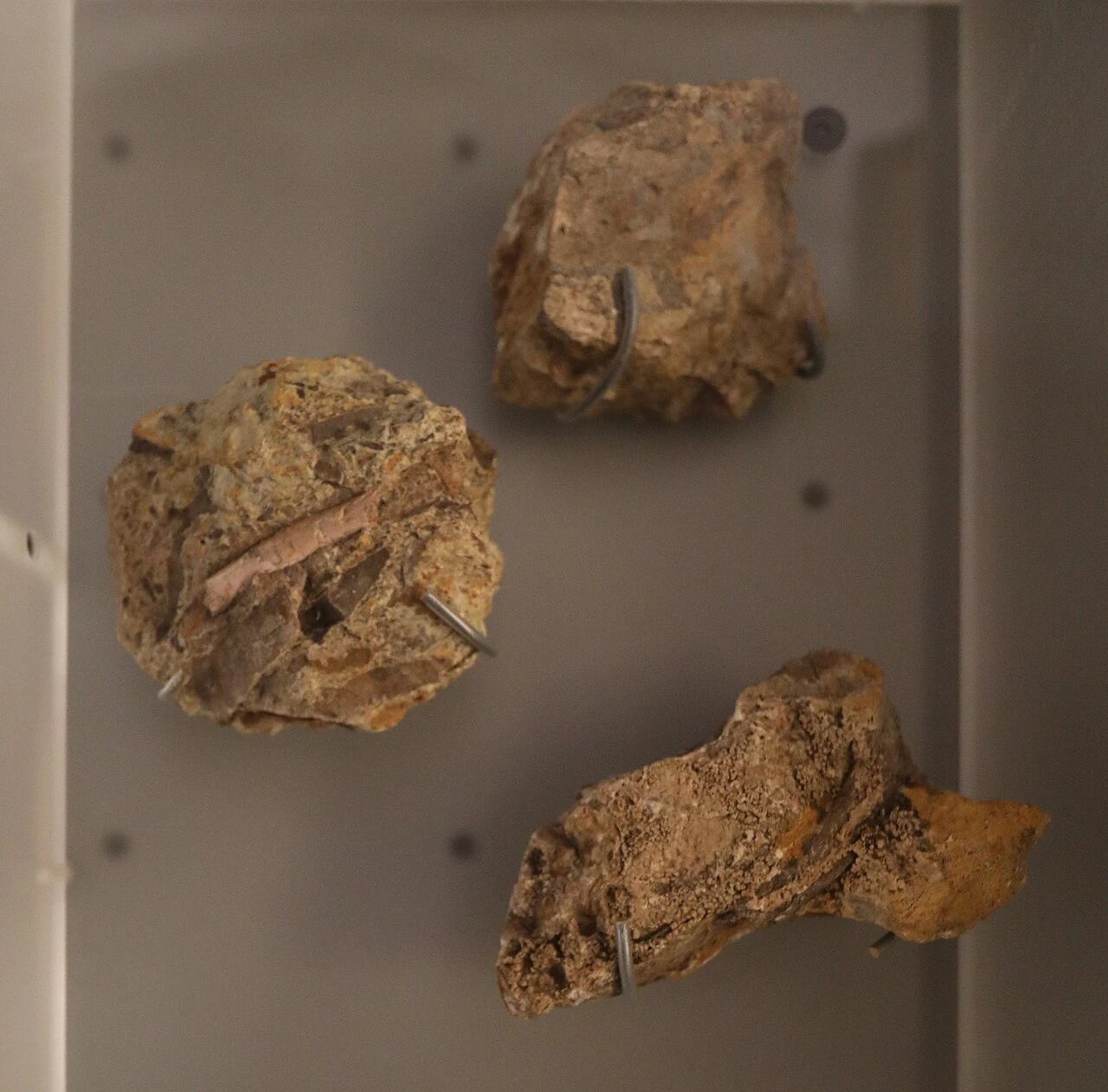
Displayed fossil blocks identified as Thecodontosaurus at M Shed, Bristol. The source photograph does not identify an inventory number, life stage or a single complete individual. [3]
Thecodontosaurus fossil blocks at M Shed · Geni. CC BY-SA 4.0. Resized proportionally and converted to WebP; no anatomical edits. Same source license applies.
The photograph or figure shows the credited fossil material; displayed mounts and labels can include interpretation.
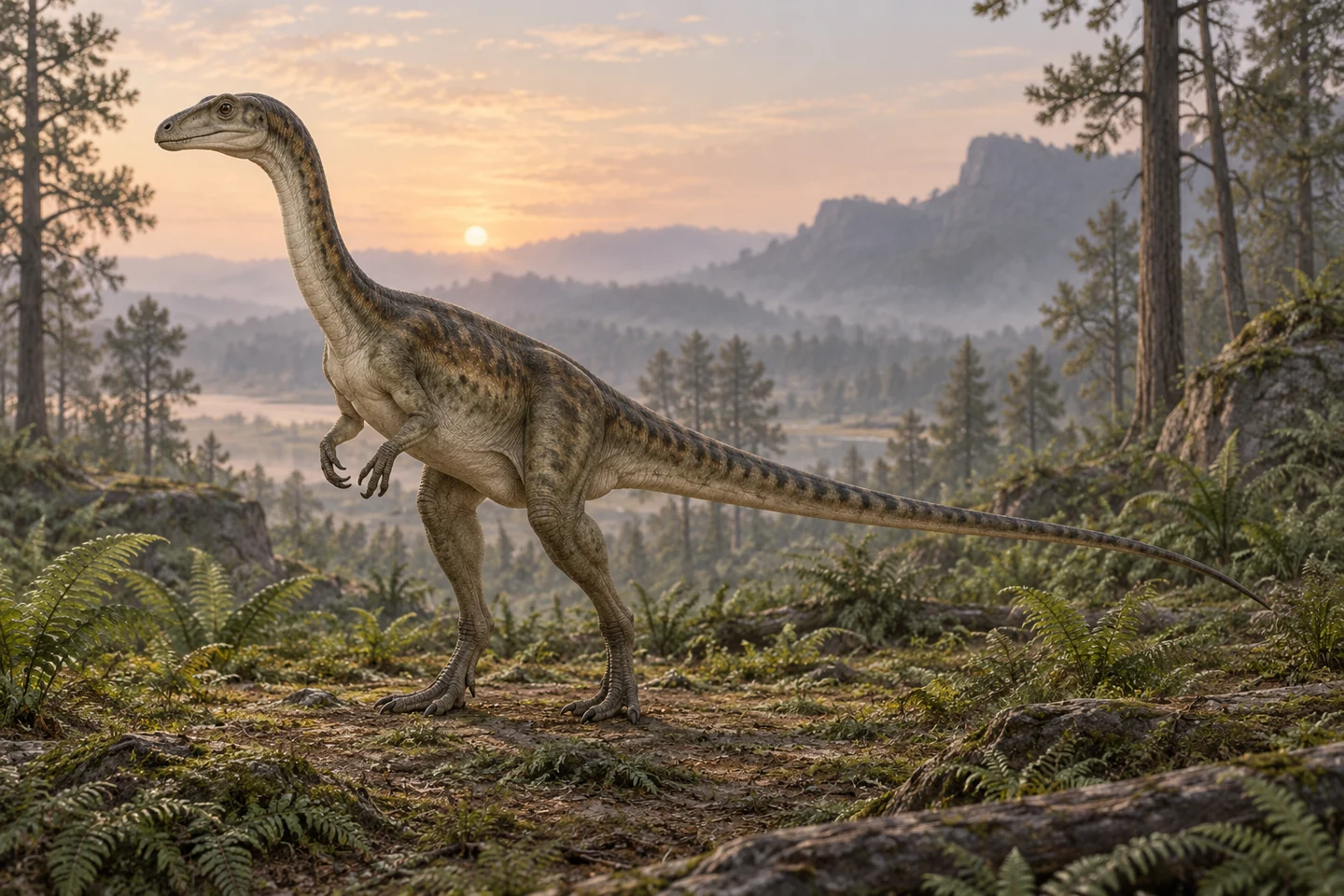
Original cinematic interpretation of the slender biped and partly supinated grasping hands. Exact pose, colors, soft tissues and setting are illustrative. Lighting, coloration and scenery are artistic choices. This image does not document a fossil locality or behavior.
Original artwork · artistic interpretation.
Scientific view: source-informed reconstruction, credited paleoart or specimen-based imagery. Movie-style view: Original artistic interpretation. Reconstructions involve uncertainty.
MEET THE ANIMAL
Thecodontosaurus was a small dinosaur from Late Triassic Britain, an early member of the wider group that includes sauropods. The museum gives a general length reference of about 2.5 metres and describes it as an omnivore. That reference is not linked to one individual or growth stage, so it should not be treated as a verified adult maximum. [D5]
A reconstruction of its limb muscles suggests an agile animal that moved on its hind legs and had mobile, grasping arms. Muscles themselves are missing, so researchers combine attachment marks on bones with comparisons to living relatives. The arms cannot simply be turned into the downward-facing, weight-bearing front legs of a giant sauropod; their structure needs its own explanation. [D3]
Its fossils have a complicated history. Material once called Agrosaurus was labeled as Australian, but an anatomical review assigned it to Thecodontosaurus antiquus. Australia is therefore not added to this animal's home map. Older suggestions that differently built bones represented males and females also remain hypotheses. Differences between fossils do not automatically identify their sex or show a mating display. [D1]
PREHISTORIC ANIMAL DOSSIER
The animal, the evidence, and the questions still open.
Numerous isolated bones permit detailed muscle reconstruction, but an articulated hand and a complete individual are lacking. Occasional animal feeding remains plausible. [D3] [D2]
Profile scope: Genus profile centered on Thecodontosaurus antiquus, including Durdham Down and Tytherington material. Pantydraco and Asylosaurus overlap proposals remain unresolved and those names are reserved. [D2]
Source supported identifies a description documented by the cited source. Inferred marks a reconstruction or functional estimate. Debated marks competing interpretations. Not established means the sources reviewed for this dossier do not support a firm conclusion; it does not mean a behavior never occurred.
A size reference is an estimate, not a population range. Nesting evidence does not by itself establish courtship, mate choice, or lifelong pairing.
About 2.5 m; museum reference
The directory gives this whole-body reference without linking it to one individual, developmental stage or method. It is not a verified mature maximum or a population range. [D5]
About 4.4 kg; published measurement reference
Table 4 applies a limb-circumference regression to a previously published measurement. The table does not identify its specimen or maturity; the underlying supplementary input was inaccessible here. This is not an adult estimate. [D4]
Mainly plants; occasional animal food plausible
Coarsely serrated spear-shaped teeth suggest predominant herbivory. The redescription allows occasional animal feeding rather than a fixed plant-only menu. [D2]
Rhaetian fissure fills of southwestern England
Tytherington fossils occur in limestone fissure fills representing Late Triassic island faunas. Depositional accumulation in a fissure does not establish that the animals lived together as a herd. [D2]
Agile bipedal reconstruction
Muscle attachment sites and comparison with living archosaurs support locomotion on the hindlimbs. Forearms were partly supinated; the reconstruction does not justify habitual palms-down quadrupedal walking. [D3]
Grasping forelimbs; limited air-space evidence
The muscle reconstruction suggests mobile grasping arms. A later CT study finds possible pneumaticity only in a posterior cervical neural arch; it does not establish fully air-filled bones throughout the skeleton. [D3] [D4]
Not established here
Focused searches and the inspected anatomical studies did not establish securely attributed eggs, nests, embryos, clutch size or parental care.
Not established here
The 2000 paper proposed sexual dimorphism for robust and gracile bones. That hypothesis does not independently identify males and females or demonstrate courtship; later referral uncertainties warrant caution. [D1] [D2]
Not established here
Disarticulated bones accumulate in fissures. They do not resolve stable groups, hierarchy or family relationships. [D2]
Sources and inspection notes for the claims in this profile.
THE STORY IN THE FOSSILS
A reconstruction of its muscles suggests an agile animal with mobile arms. The inference combines fossil attachment sites and living comparisons rather than preserving muscles themselves. [3]
Agrosaurus was historically mislabeled as Australian material. The anatomical review assigns that material to Thecodontosaurus antiquus, so Australia is not added to this profile’s occurrence map. [1]
The dossier identifies the scope of each reference estimate. A mount, an individual fossil and a species-wide adult range are different measurements. Comparison metrics remain unavailable where adult scope has not been established. Unknown does not mean zero.
Sources support the stated claims and scopes. Refer to the evidence notes for uncertainty.
KEEP EXPLORING
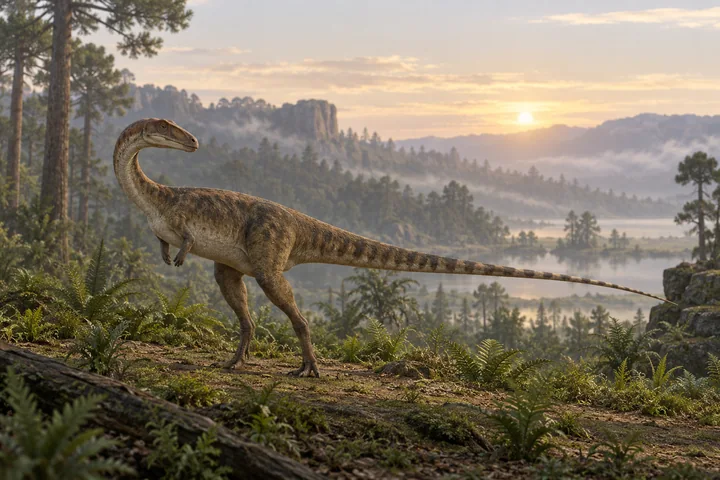
Saturnalia tupiniquim
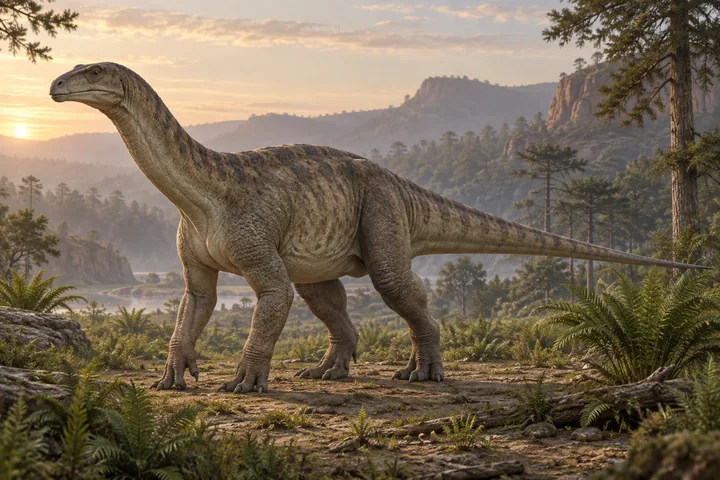
Saturnalia was a small Brazilian sauropodomorph, combining a lightly built skeleton with evidence consistent with mixed feeding.
Riojasaurus incertus
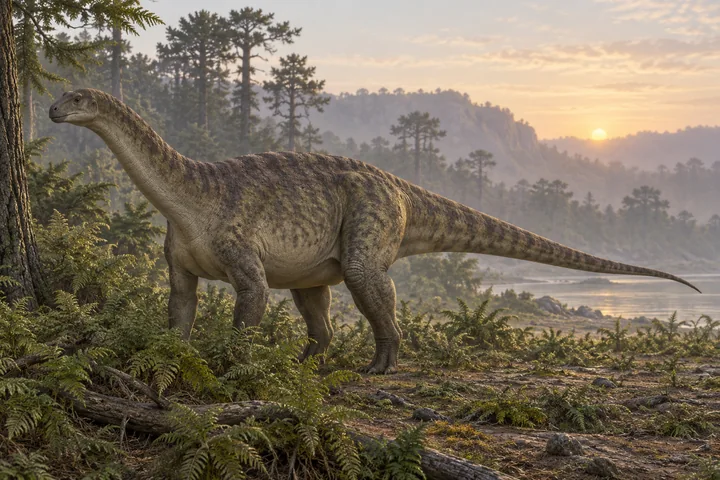
Riojasaurus was a robust sauropodomorph from Late Triassic Argentina. Its small skull and unusual teeth became known through a skeleton smaller than the headless type.
Melanorosaurus readi
Melanorosaurus is a Late Triassic South African sauropodomorph whose modern diagnosis rests on restricted, fragmentary type material.