EXPLORE PREHISTORY 220 prehistoric animal profiles · Scientific & movie-style image galleries

EXHIBIT 144

Saturnalia

Saturnalia tupiniquim

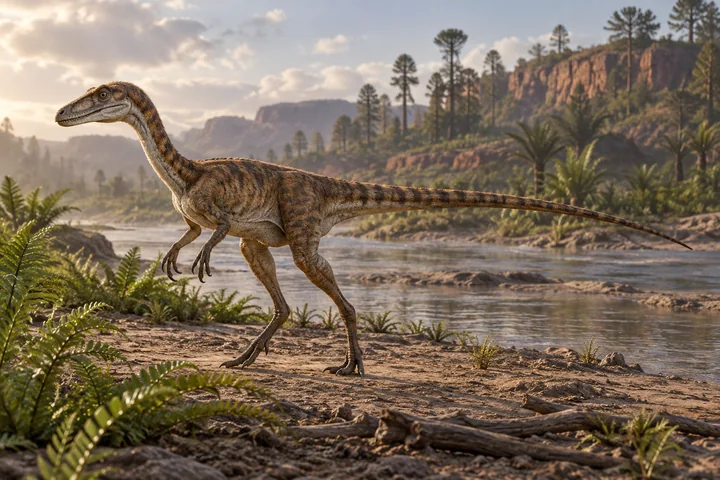
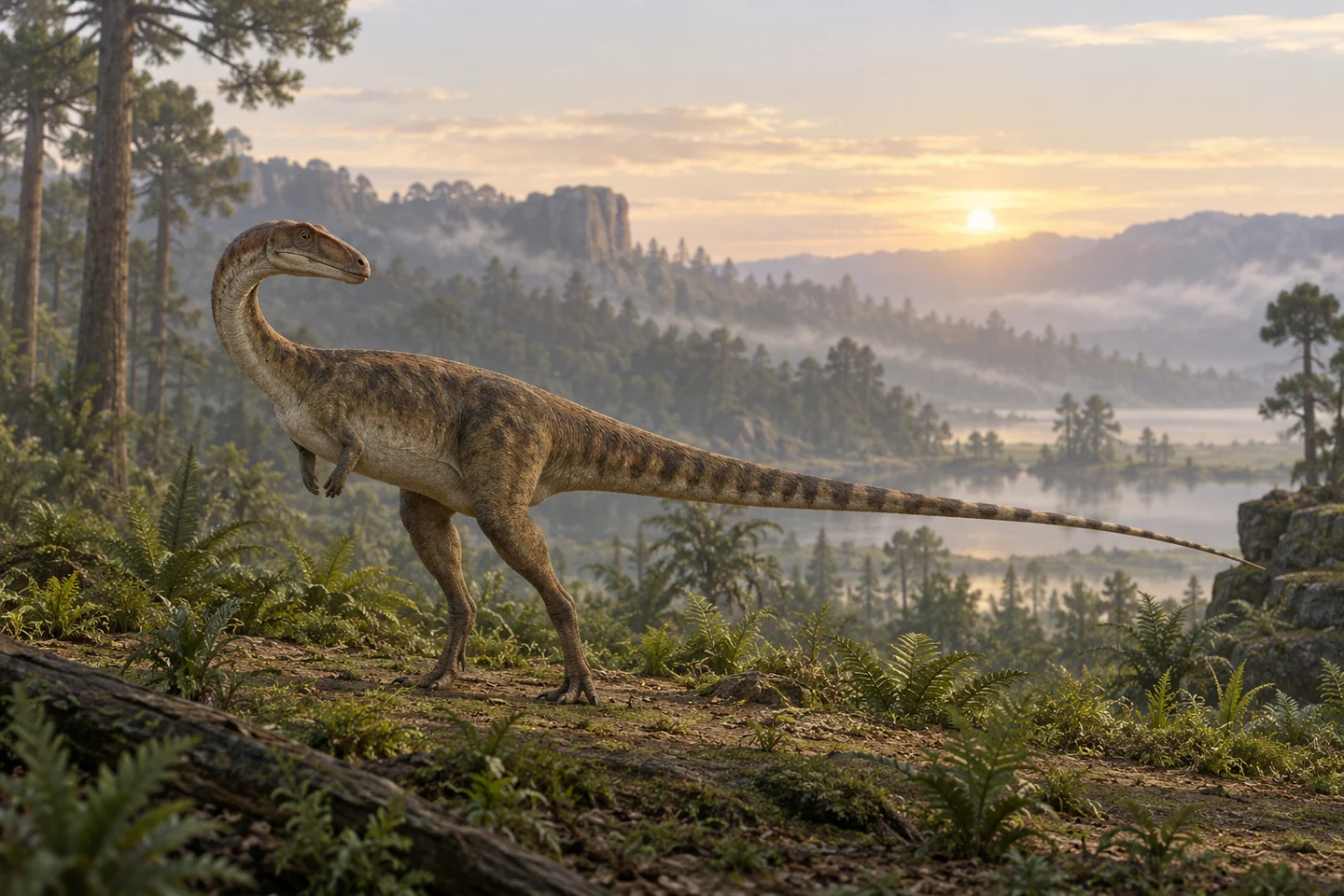
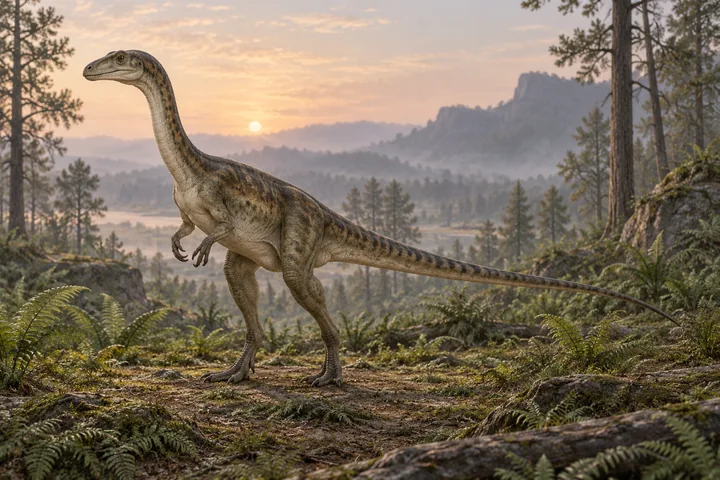
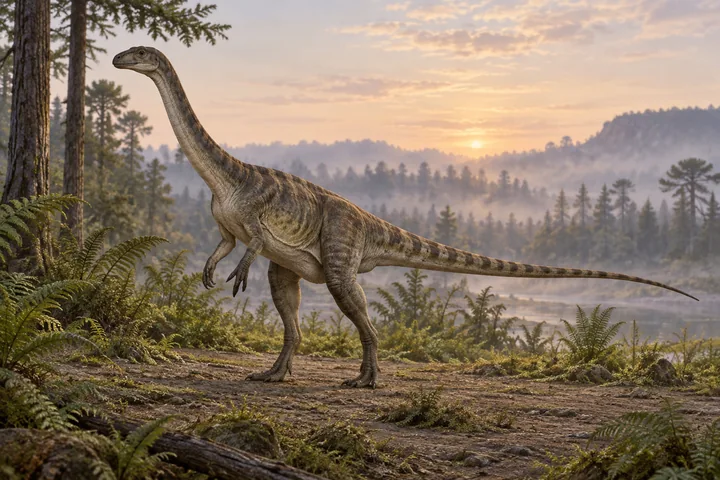
Saturnalia was a small Brazilian sauropodomorph, combining a lightly built skeleton with evidence consistent with mixed feeding. [3]

Evidence profile
PERIODLate Triassic[1]
DIETOmnivoreEvidence and uncertainty in the dossier
TOTAL LENGTHSee the dossierEstimate scope matters
FOSSILS FOUNDBrazil[1]
CompareRead the dossierView the sources

MEET THE ANIMAL

Meet Saturnalia

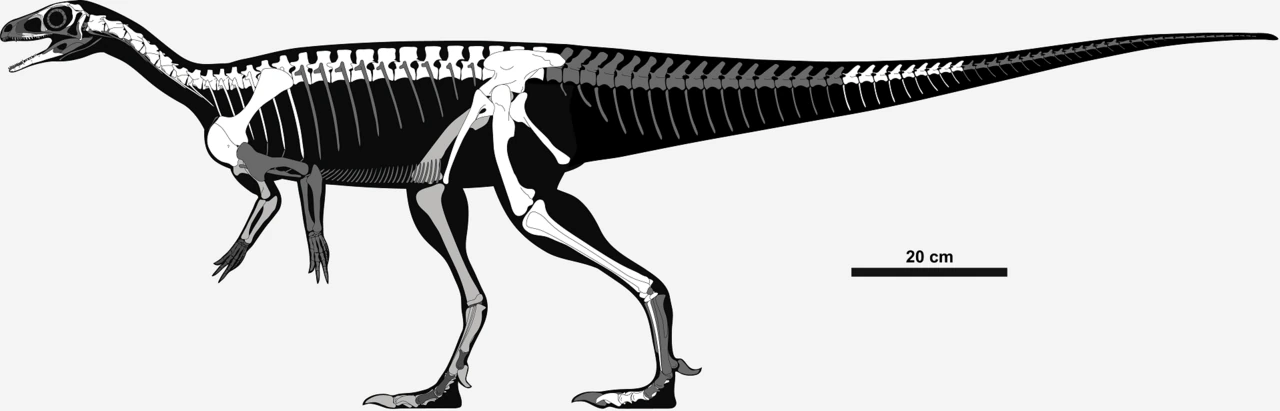
Saturnalia was an early dinosaur from Late Triassic southern Brazil. Its partial skeletons were found in red mudstones at Wald Sanga. The original description reconstructed one individual at about 1.5 metres long, filling in missing parts. That number refers to a particular reconstruction, not to a known largest adult or a measured range for every Saturnalia. [D1]

Its pelvis and hindlimbs suggest a lightly built animal that moved on two legs. Researchers use the shapes of joints and places where muscles attached to explore how the legs could move. The proposed motion was not restricted to a perfectly straight forward-and-back swing. This kind of analysis helps reconstruct movement without supplying a measured running speed. [D2]

Its teeth, head proportions and braincase support a mixed-feeding hypothesis that could include small prey. An omnivore is an animal capable of eating both plant and animal foods, but that label does not reveal the balance of each in Saturnalia's meals. The proposed feeding ability comes from anatomy; directly identified stomach contents are not part of this profile's evidence. [D3]

PREHISTORIC ANIMAL DOSSIER

A life in profile.

The animal, the evidence, and the questions still open.

New snout material refines a previously incomplete head reconstruction. Diet and habitual movement remain functional interpretations rather than observations of a living animal. [D4] [D3]

Profile scope: Genus profile centered on Saturnalia tupiniquim. Type MCP 3844-PV, cranial paratype MCP 3845-PV and newer skull UFSM 11660A are separate individuals. [D1] [D4]

Time
Late Triassic
Fossil locations in this exhibit
Brazil
How to read the evidence

Source supported identifies a description documented by the cited source. Inferred marks a reconstruction or functional estimate. Debated marks competing interpretations. Not established means the sources reviewed for this dossier do not support a firm conclusion; it does not mean a behavior never occurred.

A size reference is an estimate, not a population range. Nesting evidence does not by itself establish courtship, mate choice, or lifelong pairing.

Body length

Inferred

About 1.5 m; reconstructed type

The original description estimates MCP 3844-PV’s whole-body length. Missing anatomy is restored, including its originally unknown head; this is one fossil reference with unverified maturity, not an adult maximum. [D1]
Body mass

Inferred

About 10.6 kg; limb-based model

Benson’s model uses MCP 3844-PV limb measurements and an estimated humeral circumference. Maturity and an adult population range are unestablished. [D5]

Diet

Inferred

Mixed feeding; small prey plausible

Cranial proportions, teeth and braincase anatomy support an omnivory hypothesis that includes small-prey capture. They do not identify stomach contents, specific prey or the proportion of plants eaten. [D3]

Habitat & fossil setting

Source supported

Carnian southern Brazil

The original individuals come from red mudstones at Wald Sanga, in the Santa Maria Formation of Rio Grande do Sul. A historically compared Zimbabwean proximal femoral fragment is not treated as a secure genus occurrence here. [D1]

Movement

Inferred

Bipedal reconstruction with distinctive hindlimb motion

Pelvic and hindlimb anatomy supports a lightly built two-legged animal. The study reconstructs some movement outside a strictly fore-and-aft plane; speed and a single habitual posture are not measured. [D2]

Distinctive anatomy

Source supported

A better-known head with numerous maxillary teeth

UFSM 11660A preserves newly informative snout material and at least 19 maxillary tooth positions. Earlier head restorations relied on incomplete jaws; the new evidence should not be transferred into a measured head for the type. [D4]

Reproduction & life together

Reproduction & nesting

Not established

Not established here

Focused searches found no securely assigned eggs, nests, embryos or parental-care evidence. The reviewed skeletal specimens do not establish clutch size, incubation or reproductive maturity.

Courtship & mating

Not established

Not established here

The cranial study considers individual and developmental variation. It does not identify sexes or demonstrate displays, mate choice, vocalizations or courtship rituals. [D4]

Social behavior

Not established

Not established here

The original three partial individuals share a fossil locality. Their occurrence does not establish a persistent herd, family group or synchronized behavior. [D1]

Dossier research & sources

Sources and inspection notes for the claims in this profile.

  1. A sauropodomorph dinosaur from the Upper Triassic (Carnian) of southern BrazilComptes Rendus de l’Académie des Sciences; Langer and colleagues (1999), author-hosted published paper · Accessed 2026-10-02Original seven-page description: type and paratypes, approximately 1.5 m type reconstruction, skeletal proportions and Wald Sanga locality. · Inspected: excerpt
  2. The pelvic and hind limb anatomy of the stem-sauropodomorph Saturnalia tupiniquim (Late Triassic, Brazil)PaleoBios; Langer (2003), author-hosted published paper · Accessed 2026-10-02Indexed original text inspected: hindlimb anatomy, muscle attachments and partly non-parasagittal motion; local download failed. · Inspected: excerpt
  3. Skull remains of the dinosaur Saturnalia tupiniquim (Late Triassic, Brazil): With comments on the early evolution of sauropodomorph feeding behaviourPLOS ONE; Bronzati and colleagues (2019) · Accessed 2026-10-02Original full text obtained through Europe PMC XML; cranial paratype MCP 3845-PV and proposed omnivory/small-prey feeding. · Inspected: page
  4. New specimens of Saturnalia tupiniquim (Dinosauria: Sauropodomorpha): insights into intraspecific variation, rostral anatomy, and skull sizeZoological Journal of the Linnean Society; Damke and colleagues (2024) · Accessed 2026-10-02Original publisher/indexed author-PDF text inspected for new rostral material UFSM 11660A, dentition and variation; full local PDF not obtained. · Inspected: excerpt
  5. Rates of Dinosaur Body Mass Evolution Indicate 170 Million Years of Sustained Ecological Innovation in the Avian Stem LineagePLOS Biology; Benson and colleagues (2014) · Accessed 2026-10-02Original supporting XLS inspected: MCP 3844-PV limb inputs and 10.6468 kg model; no verified mature flag for this individual. · Inspected: excerpt

THE STORY IN THE FOSSILS

Meet Saturnalia.

Saturnalia’s new snout material changes how its head can be reconstructed. A silhouette based on the earliest partial jaws is a historical interpretation, not a complete skull recovered with the type. [4]

Its feeding profile combines cranial evidence with a functional hypothesis. “Omnivore” describes the proposed capability, while the actual balance of plants and animal food remains unknown. [3]

A note on scale and time

The dossier identifies the scope of each reference estimate. A mount, an individual fossil and a species-wide adult range are different measurements. Comparison metrics remain unavailable where adult scope has not been established. Unknown does not mean zero.

Sources & editorial notes

Sources support the stated claims and scopes. Refer to the evidence notes for uncertainty.

  1. A sauropodomorph dinosaur from the Upper Triassic (Carnian) of southern BrazilComptes Rendus de l’Académie des Sciences; Langer and colleagues (1999), author-hosted published paper · Accessed 2026-10-02Original seven-page description: type and paratypes, approximately 1.5 m type reconstruction, skeletal proportions and Wald Sanga locality. · Inspected: excerpt
  2. The pelvic and hind limb anatomy of the stem-sauropodomorph Saturnalia tupiniquim (Late Triassic, Brazil)PaleoBios; Langer (2003), author-hosted published paper · Accessed 2026-10-02Indexed original text inspected: hindlimb anatomy, muscle attachments and partly non-parasagittal motion; local download failed. · Inspected: excerpt
  3. Skull remains of the dinosaur Saturnalia tupiniquim (Late Triassic, Brazil): With comments on the early evolution of sauropodomorph feeding behaviourPLOS ONE; Bronzati and colleagues (2019) · Accessed 2026-10-02Original full text obtained through Europe PMC XML; cranial paratype MCP 3845-PV and proposed omnivory/small-prey feeding. · Inspected: page
  4. New specimens of Saturnalia tupiniquim (Dinosauria: Sauropodomorpha): insights into intraspecific variation, rostral anatomy, and skull sizeZoological Journal of the Linnean Society; Damke and colleagues (2024) · Accessed 2026-10-02Original publisher/indexed author-PDF text inspected for new rostral material UFSM 11660A, dentition and variation; full local PDF not obtained. · Inspected: excerpt
  5. Rates of Dinosaur Body Mass Evolution Indicate 170 Million Years of Sustained Ecological Innovation in the Avian Stem LineagePLOS Biology; Benson and colleagues (2014) · Accessed 2026-10-02Original supporting XLS inspected: MCP 3844-PV limb inputs and 10.6468 kg model; no verified mature flag for this individual. · Inspected: excerpt

FOLLOW YOUR CURIOSITY

Who will you meet next?

KEEP EXPLORING

More from the collection