
Body length
InferredAbout 5.2 m; museum reference
The current directory does not identify an individual or life stage. A separate historical mass model uses a 10 m outline; these references are not endpoints of an adult species range. [D6] [D7]
EXHIBIT 109
Riojasaurus incertus
Riojasaurus was a robust sauropodomorph from Late Triassic Argentina. Its small skull and unusual teeth became known through a skeleton smaller than the headless type. [1]
TWO WAYS TO PICTURE THE PAST
Compare the evidence with the familiar movie image. The illustrations are not to a shared scale.
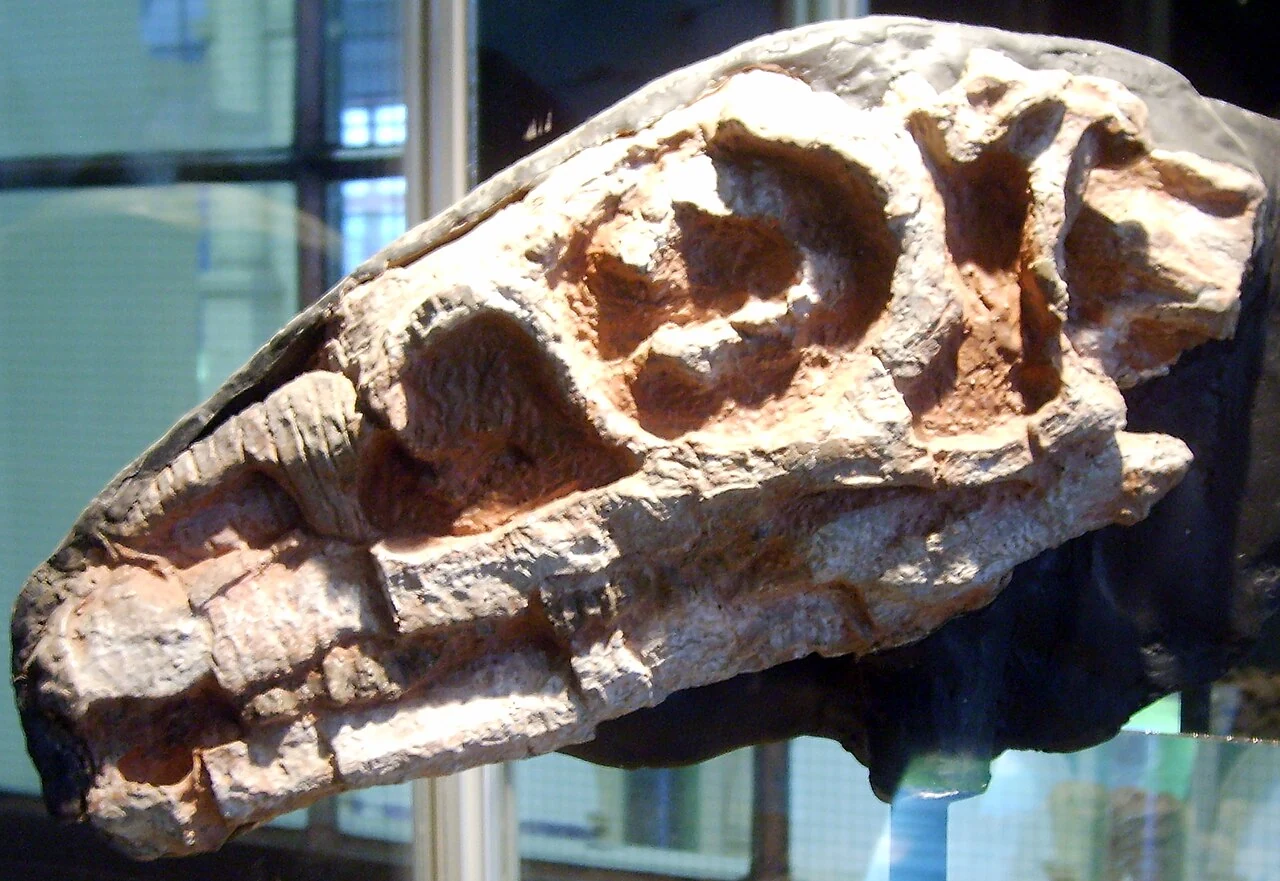
Riojasaurus skull cast in Copenhagen. The cast illustrates cranial form; the source file gives no individual inventory or maturity and is not a measured whole-body specimen. [1]
Riojasaurus skull · FunkMonk. CC BY 3.0. Resized proportionally and converted to WebP; no anatomical edits. Same source license applies.
Skeletal mounts and drawings may restore missing parts; the caption identifies the displayed material.
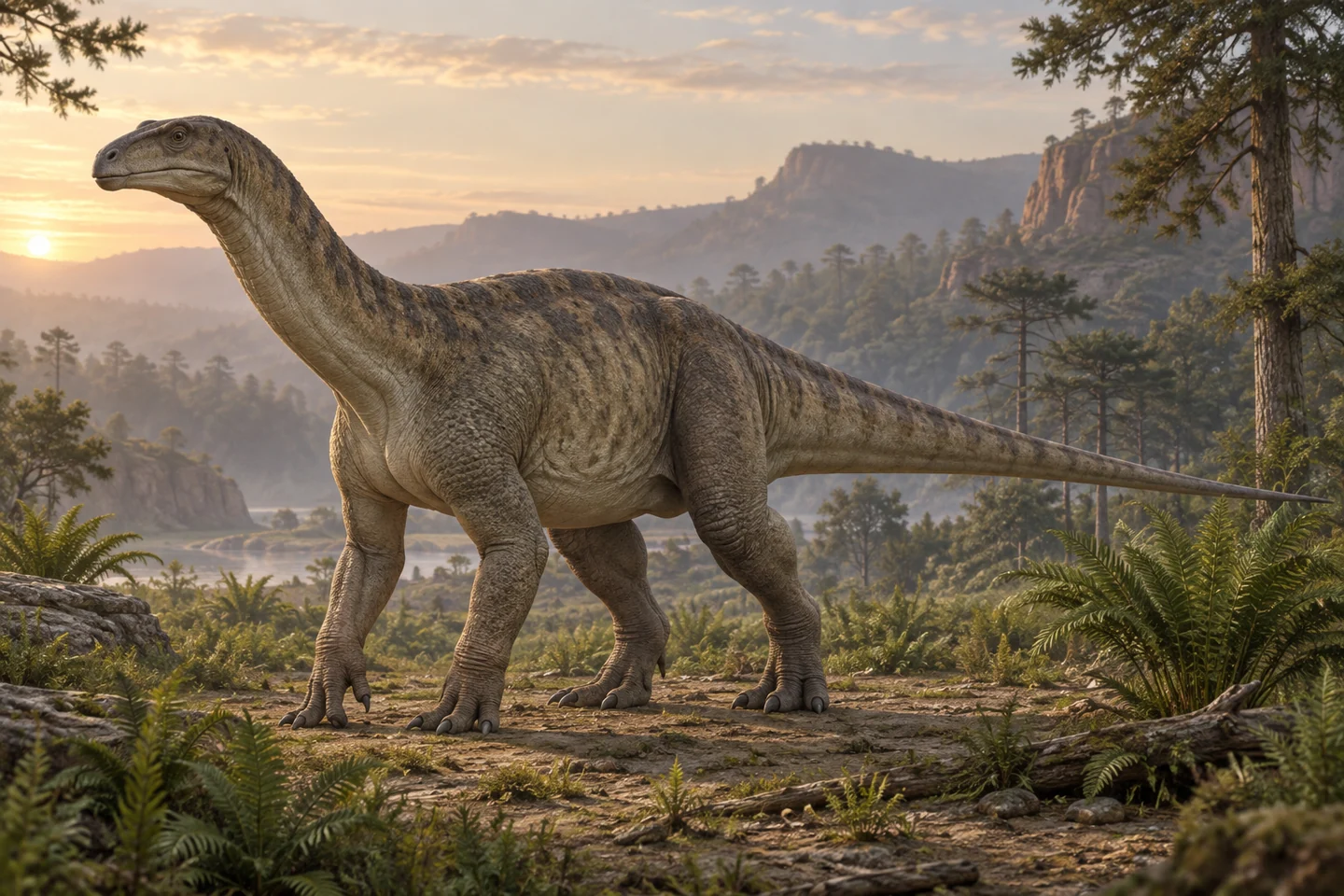
Original cinematic interpretation of Riojasaurus incertus. Colors, soft tissues, scenery and missing anatomy are reconstructed artistic choices; this is not a directly observed individual or behavior. Posture and hand stance remain comparative interpretations. Lighting, coloration and scenery are artistic choices. This image does not document a fossil locality or behavior.
Original artwork · artistic interpretation.
Scientific view: source-informed reconstruction, credited paleoart or specimen-based imagery. Movie-style view: Original artistic interpretation. Reconstructions involve uncertainty.
MEET THE ANIMAL
Riojasaurus was a Late Triassic dinosaur from Argentina. Its museum profile allows a plant-based diet or omnivory, meaning food from both plants and animals. That uncertainty should stay visible rather than becoming a precise menu. A rounded length reference of 5.2 metres also lacks a named individual or growth stage, so it is not an adult maximum. [D6]
How it usually moved is debated. Limb analysis in a thesis favors a four-legged interpretation while leaving some two-legged movement possible. A later scientific synthesis describes Riojasaurus as bipedal, meaning two-legged. These differing reconstructions cannot supply one measured gait sequence. Comparing limb proportions can test movement ideas, but it does not preserve the animal walking. [D4] [D5]
Historical naming adds another layer. An inspected systematic comparison includes Strenusaurus within Riojasaurus rather than treating it as another genus. A fossil profile is therefore built from both anatomy and identity: before comparing bodies or behavior, researchers must be clear about which dinosaur the names refer to. [D2]
PREHISTORIC ANIMAL DOSSIER
The animal, the evidence, and the questions still open.
The first described skull belongs to referred ULR 56, substantially smaller than the type. Research interpretations disagree about how consistently this animal walked on four legs. [D1] [D4] [D5]
Profile scope: Genus profile centered on Riojasaurus incertus, including the reviewed synonym Strenusaurus. Different reconstruction references are not treated as an adult species range. [D2]
Source supported identifies a description documented by the cited source. Inferred marks a reconstruction or functional estimate. Debated marks competing interpretations. Not established means the sources reviewed for this dossier do not support a firm conclusion; it does not mean a behavior never occurred.
A size reference is an estimate, not a population range. Nesting evidence does not by itself establish courtship, mate choice, or lifelong pairing.
About 5.2 m; museum reference
The current directory does not identify an individual or life stage. A separate historical mass model uses a 10 m outline; these references are not endpoints of an adult species range. [D6] [D7]
About 3.0 tonnes; historical outline model
Seebacher’s Table 2 integrates a reconstructed 10 m body outline with width and density assumptions. No specimen or maturity is specified; this does not match the museum’s 5.2 m reference. [D7]
Plants likely; omnivory unresolved
The museum allows herbivory or omnivory. Skull material has mostly conical teeth with minute denticles, rather than a simple leaf-shaped tooth pattern; the reviewed evidence does not establish a detailed menu. [D6] [D1]
Los Colorados Formation, La Rioja
The described Argentinian material is Late Triassic. The reviewed skull study establishes locality and geological unit, but does not resolve individual habitat preferences or a detailed seasonal climate. [D1]
Bipedal versus quadrupedal habits debated
Traditional anatomy and Fechner’s limb analysis favor quadrupedal interpretations while allowing bipedality. Maidment and Barrett instead describe it as bipedal. A habitual gait cannot be settled from these differing interpretations alone. [D4] [D5]
Robust build with a small, unusual-toothed head
The type lacks a skull. ULR 56 supplies a roughly 25 cm skull and conical teeth, but is about 35 percent smaller than the type; its proportions cannot be silently transferred to every individual. [D1]
Not established here
Reviewed genus-specific sources do not establish assigned eggs, nesting grounds, incubation behavior or parental care. Other early sauropodomorph nesting discoveries remain broader comparisons.
Not established here
Focused searches and reviewed anatomical studies do not establish calls, display behavior, mate choice or sex-specific traits.
Not established here
Young and adult skeletons are represented in collections, but their number alone does not establish stable herds, age-segregated groups or family relationships. [D6]
Sources and inspection notes for the claims in this profile.
THE STORY IN THE FOSSILS
The headless type and the first skull-bearing skeleton are different individuals. Keeping their sizes separate allows the skull discovery to illuminate anatomy without turning a composite restoration into a measured fossil animal. [1]
Strenusaurus appears within Riojasaurus in the inspected systematic comparison. Reserving that historical name prevents the same animal from becoming another catalog entry. [2]
The dossier identifies the scope of each reference estimate. A mount, an individual fossil and a species-wide adult range are different measurements. Comparison metrics remain unavailable where adult scope has not been established. Unknown does not mean zero.
Sources support the stated claims and scopes. Refer to the evidence notes for uncertainty.
KEEP EXPLORING
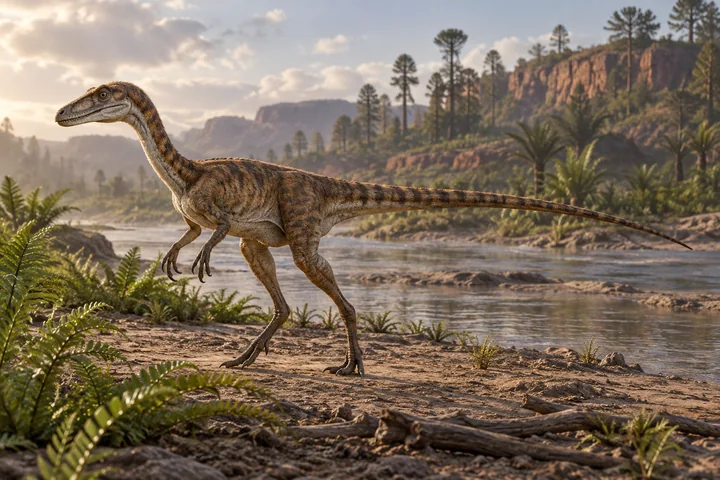
Eoraptor lunensis
Eoraptor was a small, early dinosaur from Argentina's Ischigualasto Formation. Its mixed dental features have produced competing feeding interpretations, and later studies place it near the origin of sauropodomorphs.
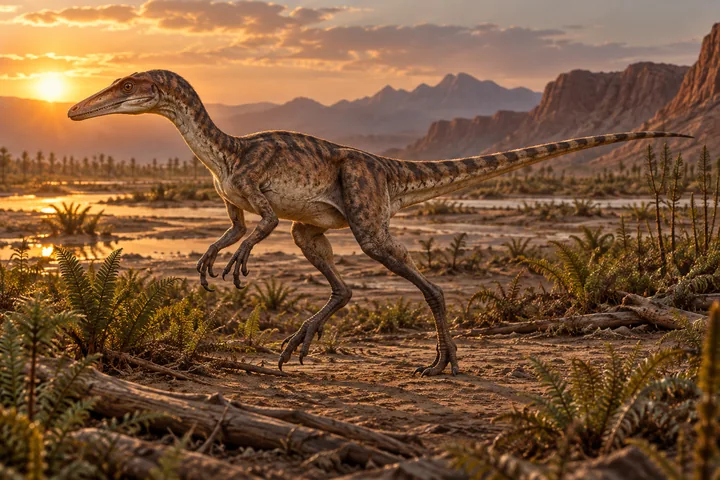
Eodromaeus murphi
Eodromaeus was a small predatory dinosaur from Argentina's Ischigualasto Formation. Curved teeth and grasping hands distinguish it from contemporary dinosaurs with different feeding adaptations.
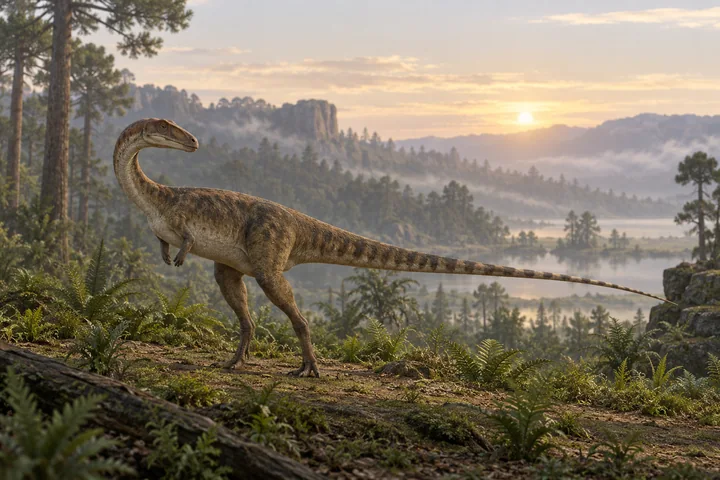
Saturnalia tupiniquim
Saturnalia was a small Brazilian sauropodomorph, combining a lightly built skeleton with evidence consistent with mixed feeding.