
Body length
InferredAbout 1.2 m (exhibit reference)
A rounded reconstruction length listed by the discoverer's exhibit. Maturity is not specified, so it is excluded from adult comparison data. [D3]
EXHIBIT 60
Eodromaeus murphi
Eodromaeus was a small predatory dinosaur from Argentina's Ischigualasto Formation. Curved teeth and grasping hands distinguish it from contemporary dinosaurs with different feeding adaptations.
TWO WAYS TO PICTURE THE PAST
Compare the evidence with the familiar movie image. The illustrations are not to a shared scale.
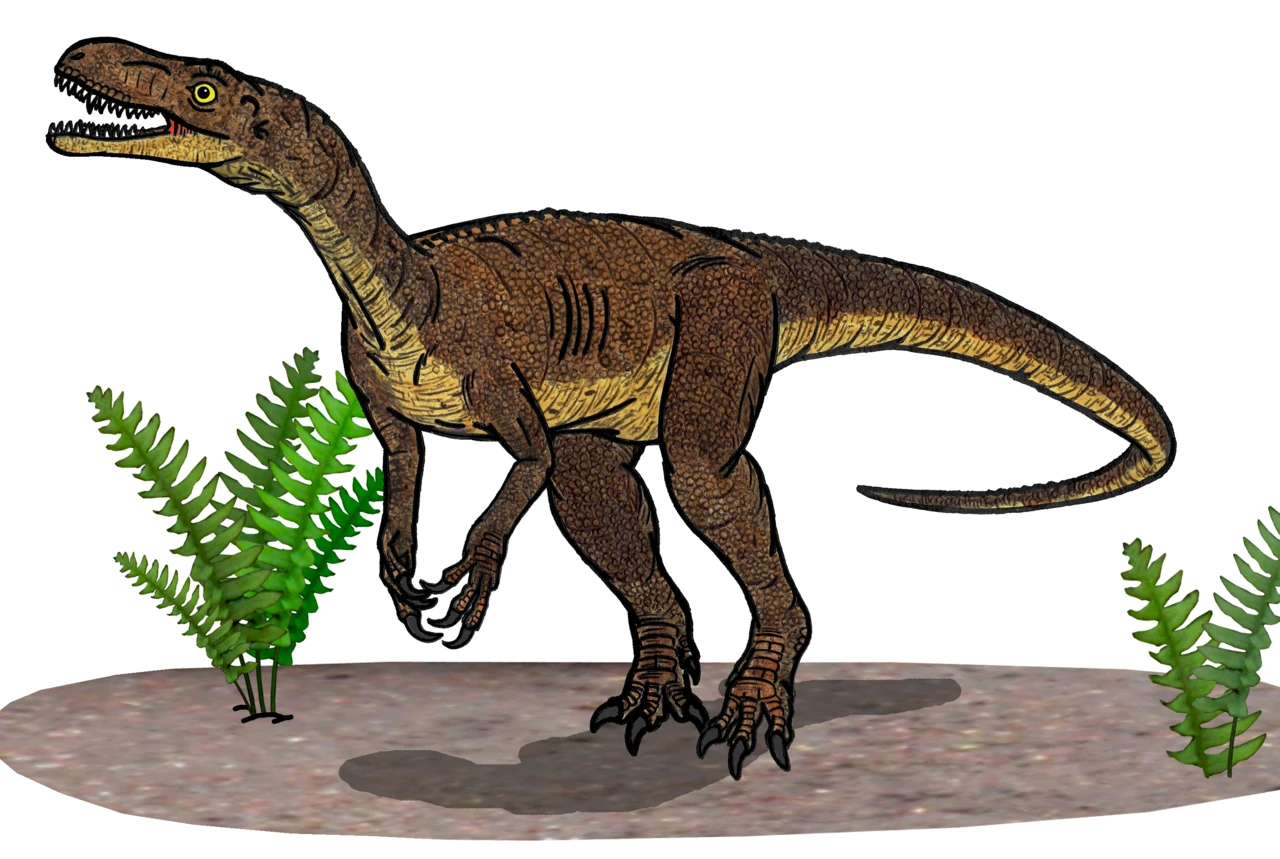
Life reconstruction of Eodromaeus murphi by Conty. Fossil anatomy informs the body, while missing parts, soft tissues, brown coloration and the illustrated vegetation remain reconstructions. [1]
Eodromaeus 400 AJV.png · Conty. CC BY 3.0. Commons-listed 1280px preview converted to WebP; 640px thumbnail generated. Composition and colors unchanged.
Scientific reconstruction is an interpretation; source credit does not certify every anatomical detail.
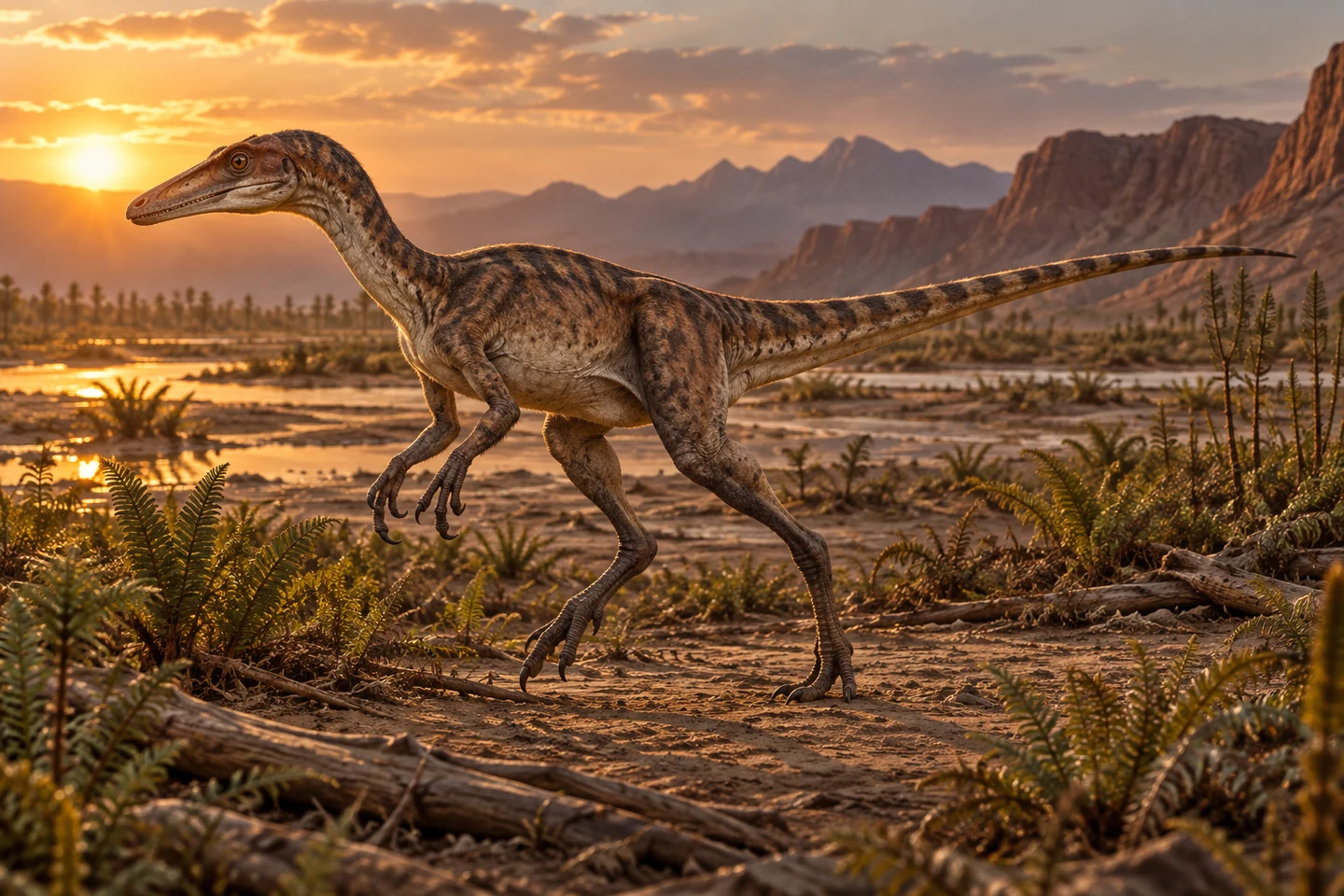
Original cinematic interpretation of Eodromaeus. Anatomy, soft tissues and colors are reconstructed choices. Lighting, coloration and scenery are artistic choices. This image does not document a fossil locality or behavior.
Original artwork · artistic interpretation.
Scientific view: source-informed reconstruction, credited paleoart or specimen-based imagery. Movie-style view: Original artistic interpretation. Reconstructions involve uncertainty.
MEET THE ANIMAL
Eodromaeus murphi was a small dinosaur from Late Triassic Argentina, around 230 million years ago. Its sharp teeth and claws support a meat-eating reconstruction. It belongs near the early branches of the predatory dinosaur family tree, rather than being a miniature version of a much later giant. An early relative need not be the direct ancestor of any particular famous dinosaur. [S1]
The original description records curved teeth and elongated fingers with claws that could grasp. Its lightly built skeleton and hindlimbs support movement on two legs. These features describe the equipment of a predator, but they do not identify each prey animal or establish a measured running speed. Anatomy helps test possible actions without recording every action during life. [D1]
The discoverer’s exhibit gives a rounded length of about 1.2 metres. This is a reconstruction reference, with no stated growth stage, rather than a measured average or an adult population range. Its name means dawn runner, reflecting its early place in dinosaur history. A small reconstructed body can therefore inform comparisons with other dinosaurs without supplying a precise biography or a size limit for the species. [D3] [S1]
PREHISTORIC ANIMAL DOSSIER
The animal, the evidence, and the questions still open.
A small predator from the early dinosaur radiation, Eodromaeus had sharp teeth, grasping hands and a lightly built body.
Profile scope: Species — Eodromaeus murphi; the 2011 description uses complementary individuals to reconstruct anatomy, rather than a measured living population.
Source supported identifies a description documented by the cited source. Inferred marks a reconstruction or functional estimate. Debated marks competing interpretations. Not established means the sources reviewed for this dossier do not support a firm conclusion; it does not mean a behavior never occurred.
A size reference is an estimate, not a population range. Nesting evidence does not by itself establish courtship, mate choice, or lifelong pairing.
About 1.2 m (exhibit reference)
A rounded reconstruction length listed by the discoverer's exhibit. Maturity is not specified, so it is excluded from adult comparison data. [D3]
About 4.5–6.8 kg (news reference)
Converted from the research team's rounded 10–15 lb account. This is an approximate reconstruction reference, not a population range. [D2]
Predatory feeding
Recurved teeth and clawed grasping hands support carnivory; exact prey choices are not demonstrated. [D1]
Ischigualasto, Argentina
The fossils occur in sediments of a former rift valley in southwestern Pangaea, about 230 million years old. [D2]
Two-legged terrestrial movement
The hindlimb reconstruction supports bipedal movement. Speed claims remain biomechanical interpretations rather than observations. [D1]
Curved teeth and grasping hands
The original description records recurved teeth and elongated grasping digits with claws. [D1]
Not established here
The reviewed species description does not establish eggs, nests, clutch size or parental care.
Not established here
No species-specific mating ritual or courtship display is established in the reviewed sources.
Paired burial; group habits unresolved
Two individuals helped reconstruct the skeleton. Their association alone does not establish stable groups or cooperative hunting. [D2]
Sources and inspection notes for the claims in this profile.
THE STORY IN THE FOSSILS
Described in 2011, Eodromaeus added a small carnivore to the already diverse Ischigualasto dinosaur assemblage. Its anatomy helped researchers compare early predatory adaptations with those of contemporary Eoraptor. [1]
The study combined material from individuals found together. That association improves anatomical knowledge, while leaving their daily social relationships unresolved. [2]
The dossier identifies the scope of each reference estimate. A mount, an individual fossil and a species-wide adult range are different measurements. Comparison metrics remain unavailable where adult scope has not been established. Unknown does not mean zero.
Sources support the stated claims and scopes. Refer to the evidence notes for uncertainty.
KEEP EXPLORING
Herrerasaurus
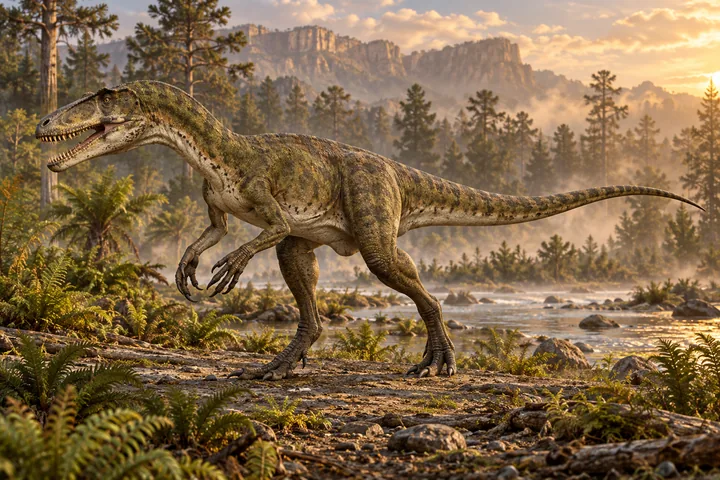
Herrerasaurus was a two-legged meat eater from Late Triassic Argentina. A 1988 skull revealed recurved teeth alongside powerful arms and grasping hands.
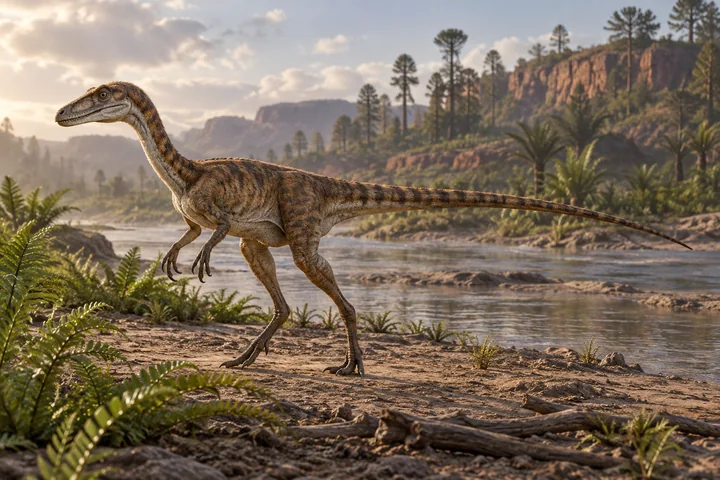
Eoraptor lunensis
Eoraptor was a small, early dinosaur from Argentina's Ischigualasto Formation. Its mixed dental features have produced competing feeding interpretations, and later studies place it near the origin of sauropodomorphs.
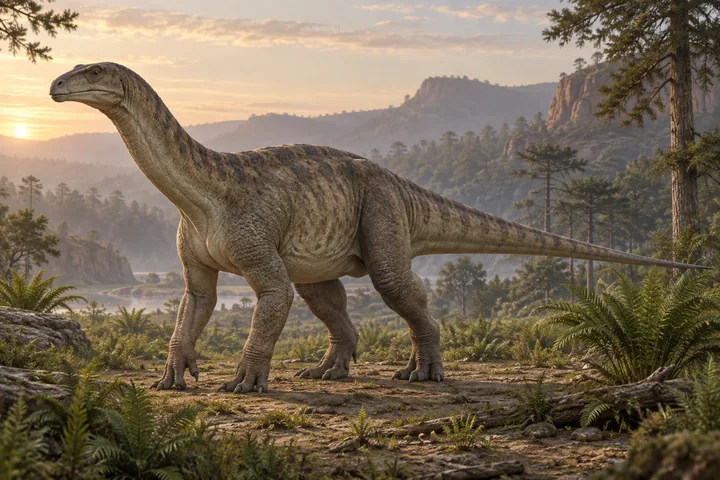
Riojasaurus incertus
Riojasaurus was a robust sauropodomorph from Late Triassic Argentina. Its small skull and unusual teeth became known through a skeleton smaller than the headless type.