EXPLORE PREHISTORY 220 prehistoric animal profiles · Scientific & movie-style image galleries

EXHIBIT 170

Aardonyx

Aardonyx celestae

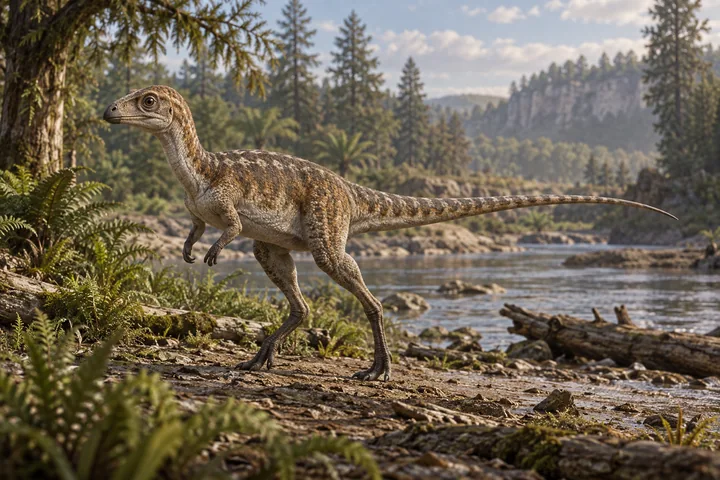
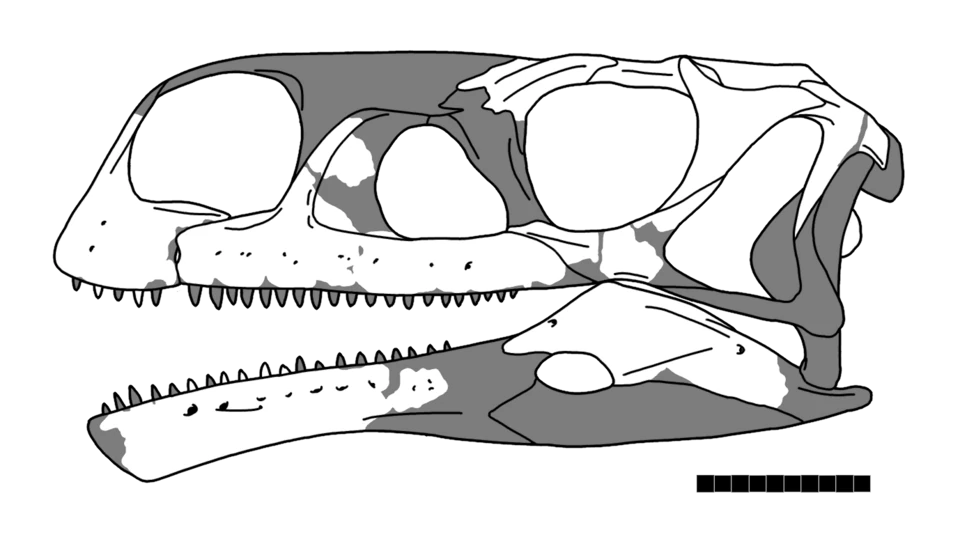
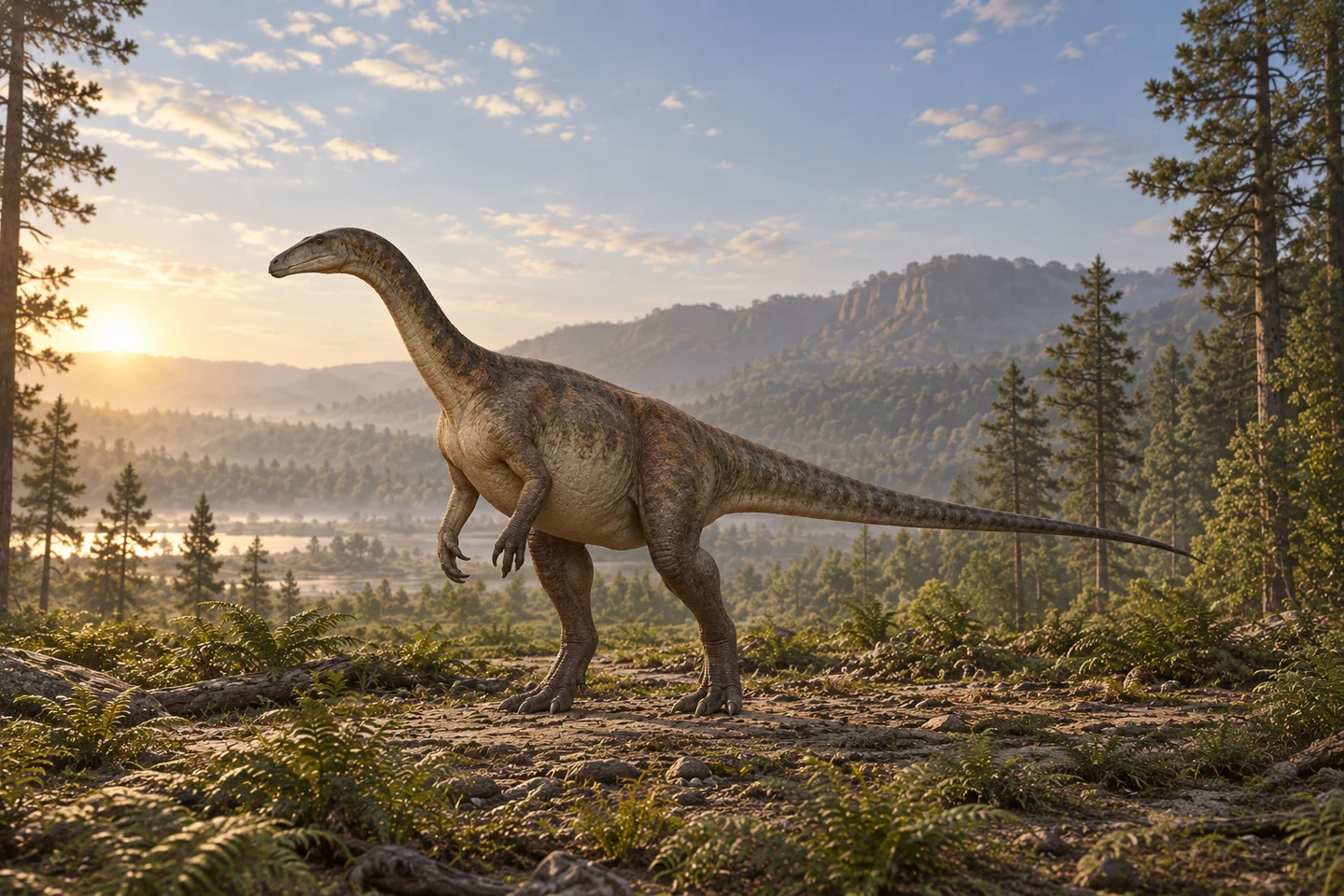
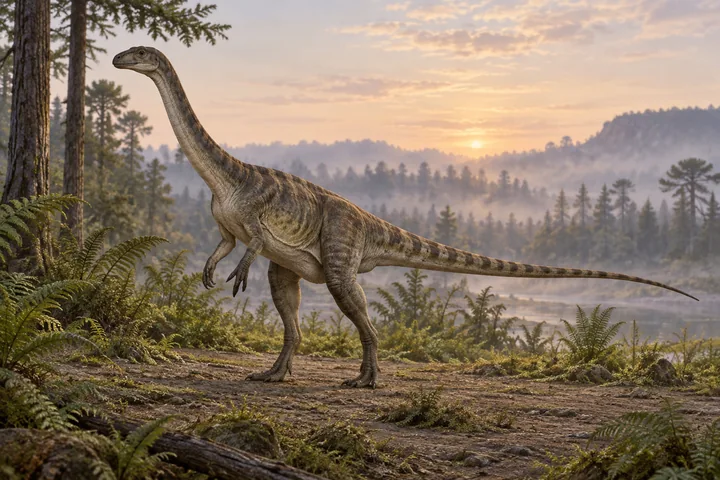
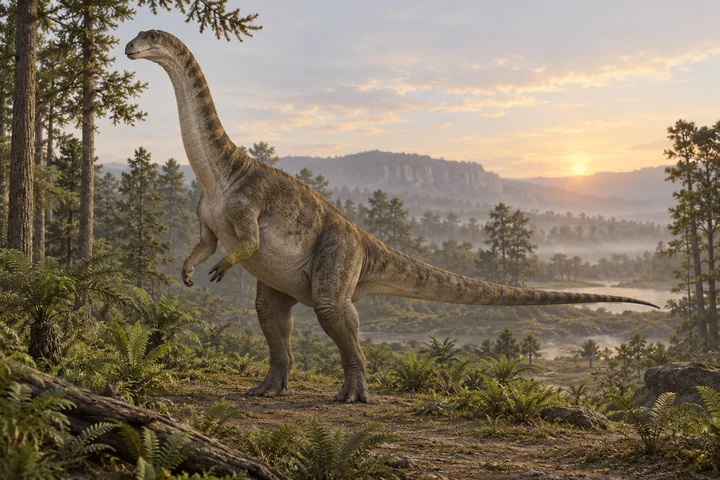
Aardonyx was a South African sauropodomorph whose jaws suggest bulk plant feeding while its forelimbs retain a mainly bipedal, grasping arrangement. [1]

Evidence profile
PERIODEarly Jurassic[5]
DIETHerbivoreEvidence and uncertainty in the dossier
TOTAL LENGTHSee the dossierEstimate scope matters
FOSSILS FOUNDSouth Africa[5]
CompareRead the dossierView the sources

MEET THE ANIMAL

Meet Aardonyx

Aardonyx was an Early Jurassic plant-eating sauropodomorph from South Africa, part of the wider group that includes giant sauropods. Its anatomy suggests mainly two-legged movement. The museum estimates its known young animals at around seven metres long; proposed larger adults are extrapolations. Its narrow jaws and inferred reduction of fleshy cheeks suggest a wider gape and bulk feeding, rather than identifying actual meals. Its reconstructed size should stay connected to the growth stage of the material. [D6]

Microscopic examination of long bones reveals rapid growth interrupted by cyclical marks. These structures help researchers investigate development, much as repeated marks can record changes in other growing tissues. They do not directly identify the age at first breeding. Young bones can tell us how an animal grew while leaving eggs, nest arrangements and parental care unknown. [D2]

Other South African fossils were initially compared with or referred to Aardonyx, then named Sefapanosaurus after a detailed anatomical study. Keeping those specimens separate prevents a combined picture that mixes two different named dinosaurs. Each animal's body profile must follow its own securely assigned bones, rather than acquiring extra features simply because another fossil was found nearby or looked broadly similar. [D4]

PREHISTORIC ANIMAL DOSSIER

A life in profile.

The animal, the evidence, and the questions still open.

Anatomy and bone growth place these fossils near the transition toward giant quadrupedal sauropods. Young individuals provide evidence about development without supplying a measured adult maximum. [D2] [D1]

Profile scope: Genus profile centered on Aardonyx celestae and immature Marc’s Quarry material, including maxilla holotype BP/1/6254. Historically compared Sefapanosaurus material belongs to a separate genus. [D1] [D4]

Time
Early Jurassic
Fossil locations in this exhibit
South Africa
How to read the evidence

Source supported identifies a description documented by the cited source. Inferred marks a reconstruction or functional estimate. Debated marks competing interpretations. Not established means the sources reviewed for this dossier do not support a firm conclusion; it does not mean a behavior never occurred.

A size reference is an estimate, not a population range. Nesting evidence does not by itself establish courtship, mate choice, or lifelong pairing.

Body length

Inferred

About 7 m; immature reconstruction reference

The detailed museum text estimates the two known young animals at around seven metres. It does not provide specimen-specific calculations or establish an adult range; proposed larger future adults are extrapolations. [D6]
Body mass

Inferred

About 1–2 tonnes; comparative estimate

The museum estimates mass by comparison with similar dinosaurs, without a specimen-specific calculation. The interval expresses reconstruction uncertainty for young material rather than two measured animals or an adult population range. [D6]

Diet

Inferred

Bulk plant browsing proposed

A narrow jaw and inferred reduction of fleshy cheeks suggest a wide gape and increased bulk feeding. This functional interpretation does not identify actual meals or particular plant species. [D1]

Habitat & fossil setting

Source supported

Early Jurassic upper Elliot Formation

The reviewed biostratigraphic account places Marc’s Quarry at Heelbo, Free State, South Africa, in the upper Elliot Formation. The exhibit does not assign a precise numerical age unsupported by the locality evidence. [D5]

Movement

Inferred

Habitual bipedality; grasping forelimbs retained

Short forelimbs and restricted forearm pronation favor mainly two-legged locomotion. Weight-bearing changes in the hindfoot preceded fully quadrupedal sauropods; the hands should not be restored as columnar sauropod forefeet. [D1]

Distinctive anatomy

Inferred

Vertebral fossae suggest early pneumatic features

Posterior dorsal vertebrae have complex fossae interpreted as traces of air-filled diverticula. This is an inference from bone anatomy, not preserved air sacs; unrelated giant Spion Kop bones are outside this profile. [D3]

Reproduction & life together

Reproduction & nesting

Not established

Not established here

Rapid bone growth and cyclical marks document development in immature material. These tissues do not directly identify sexual maturity, eggs, nests, incubation or parental care. [D2]

Courtship & mating

Not established

Not established here

Focused searches did not establish sexes, mating displays, calls or mate-choice behavior. Developmental evidence does not independently identify sexual dimorphism. [D2]

Social behavior

Not established

Not established here

The original quarry bones were interpreted as two immature individuals. Shared deposition does not demonstrate siblings, parental attendance, a persistent herd or coordinated behavior. [D1]

Dossier research & sources

Sources and inspection notes for the claims in this profile.

  1. A new transitional sauropodomorph dinosaur from the Early Jurassic of South Africa and the evolution of sauropod feeding and quadrupedalismProceedings of the Royal Society B; Yates, Bonnan, Neveling, Chinsamy & Blackbeard (2009 online; 2010 issue) · Accessed 2026-10-02Original full published text inspected: holotype, two immature quarry individuals, fibrolamellar growth, inferred bulk feeding, limited forearm pronation and habitual bipedality. · Inspected: page
  2. Rapid growth preceded gigantism in sauropodomorph evolutionCurrent Biology; Botha, Choiniere & Benson (2022) · Accessed 2026-10-02Original publisher abstract/highlights inspected: Aardonyx and Sefapanosaurus long-bone growth tissues, rapid growth with cyclical marks; group-level body-size shorthand is not used as an individual mass. · Inspected: abstract
  3. The early evolution of postcranial skeletal pneumaticity in sauropodomorph dinosaursActa Palaeontologica Polonica; Yates, Wedel & Bonnan (2012) · Accessed 2026-10-02Original sixteen-page PDF inspected: posterior dorsal fossae in Aardonyx and inferred pneumaticity; large unnamed Spion Kop sauropod material is not adopted as a gigantic Aardonyx. · Inspected: page
  4. A new basal sauropodiform from South Africa and the phylogenetic relationships of basal sauropodomorphsZoological Journal of the Linnean Society; Otero, Krupandan, Pol, Chinsamy & Choiniere (2015), institutional published paper · Accessed 2026-10-02Original 46-page PDF inspected: distinct Sefapanosaurus zastronensis, formerly compared/referred Aardonyx material and skeletal differences. · Inspected: page
  5. The sauropodomorph biostratigraphy of the Elliot Formation of southern Africa: Tracking the evolution of Sauropodomorpha across the Triassic–Jurassic boundaryActa Palaeontologica Polonica; McPhee, Bordy, Sciscio & Choiniere (2017) · Accessed 2026-10-02Original full publisher text inspected for Heelbo/Marc’s Quarry Aardonyx locality and upper Elliot Early Jurassic stratigraphy; precise numerical age is not adopted. · Inspected: page
  6. AardonyxNatural History Museum, London · Accessed 2026-10-02Current detailed museum page inspected: known young material around 7 m and comparative 1,000–2,000 kg estimate; unscoped header 8 m and speculative future adults over 10 m are not treated as measured individual sizes. · Inspected: page

THE STORY IN THE FOSSILS

Meet Aardonyx.

Aardonyx illustrates an evolutionary mosaic: feeding and hindfoot support were changing while the forelimbs still retained a mainly bipedal arrangement. [1]

Other South African bones initially compared with Aardonyx were later named Sefapanosaurus. Keeping those animals separate avoids a composite size and anatomy profile. [4]

A note on scale and time

The dossier identifies the scope of each reference estimate. A mount, an individual fossil and a species-wide adult range are different measurements. Comparison metrics remain unavailable where adult scope has not been established. Unknown does not mean zero.

Sources & editorial notes

Sources support the stated claims and scopes. Refer to the evidence notes for uncertainty.

  1. A new transitional sauropodomorph dinosaur from the Early Jurassic of South Africa and the evolution of sauropod feeding and quadrupedalismProceedings of the Royal Society B; Yates, Bonnan, Neveling, Chinsamy & Blackbeard (2009 online; 2010 issue) · Accessed 2026-10-02Original full published text inspected: holotype, two immature quarry individuals, fibrolamellar growth, inferred bulk feeding, limited forearm pronation and habitual bipedality. · Inspected: page
  2. Rapid growth preceded gigantism in sauropodomorph evolutionCurrent Biology; Botha, Choiniere & Benson (2022) · Accessed 2026-10-02Original publisher abstract/highlights inspected: Aardonyx and Sefapanosaurus long-bone growth tissues, rapid growth with cyclical marks; group-level body-size shorthand is not used as an individual mass. · Inspected: abstract
  3. The early evolution of postcranial skeletal pneumaticity in sauropodomorph dinosaursActa Palaeontologica Polonica; Yates, Wedel & Bonnan (2012) · Accessed 2026-10-02Original sixteen-page PDF inspected: posterior dorsal fossae in Aardonyx and inferred pneumaticity; large unnamed Spion Kop sauropod material is not adopted as a gigantic Aardonyx. · Inspected: page
  4. A new basal sauropodiform from South Africa and the phylogenetic relationships of basal sauropodomorphsZoological Journal of the Linnean Society; Otero, Krupandan, Pol, Chinsamy & Choiniere (2015), institutional published paper · Accessed 2026-10-02Original 46-page PDF inspected: distinct Sefapanosaurus zastronensis, formerly compared/referred Aardonyx material and skeletal differences. · Inspected: page
  5. The sauropodomorph biostratigraphy of the Elliot Formation of southern Africa: Tracking the evolution of Sauropodomorpha across the Triassic–Jurassic boundaryActa Palaeontologica Polonica; McPhee, Bordy, Sciscio & Choiniere (2017) · Accessed 2026-10-02Original full publisher text inspected for Heelbo/Marc’s Quarry Aardonyx locality and upper Elliot Early Jurassic stratigraphy; precise numerical age is not adopted. · Inspected: page
  6. AardonyxNatural History Museum, London · Accessed 2026-10-02Current detailed museum page inspected: known young material around 7 m and comparative 1,000–2,000 kg estimate; unscoped header 8 m and speculative future adults over 10 m are not treated as measured individual sizes. · Inspected: page

FOLLOW YOUR CURIOSITY

Who will you meet next?

KEEP EXPLORING

More from the collection