
Body length
InferredAbout 2 m; museum reference
The museum directory gives 2 m, while its specimen account reports up to 2.3 m. These are separate educational references, not a measured population range. [D1] [D2]
EXHIBIT 65
Hypsilophodon foxii
Hypsilophodon foxii was a small, ground-dwelling plant-eater from the Isle of Wight. Its lightly built skeleton and long hind limbs are consistent with agile running.
TWO WAYS TO PICTURE THE PAST
Compare the evidence with the familiar movie image. The illustrations are not to a shared scale.
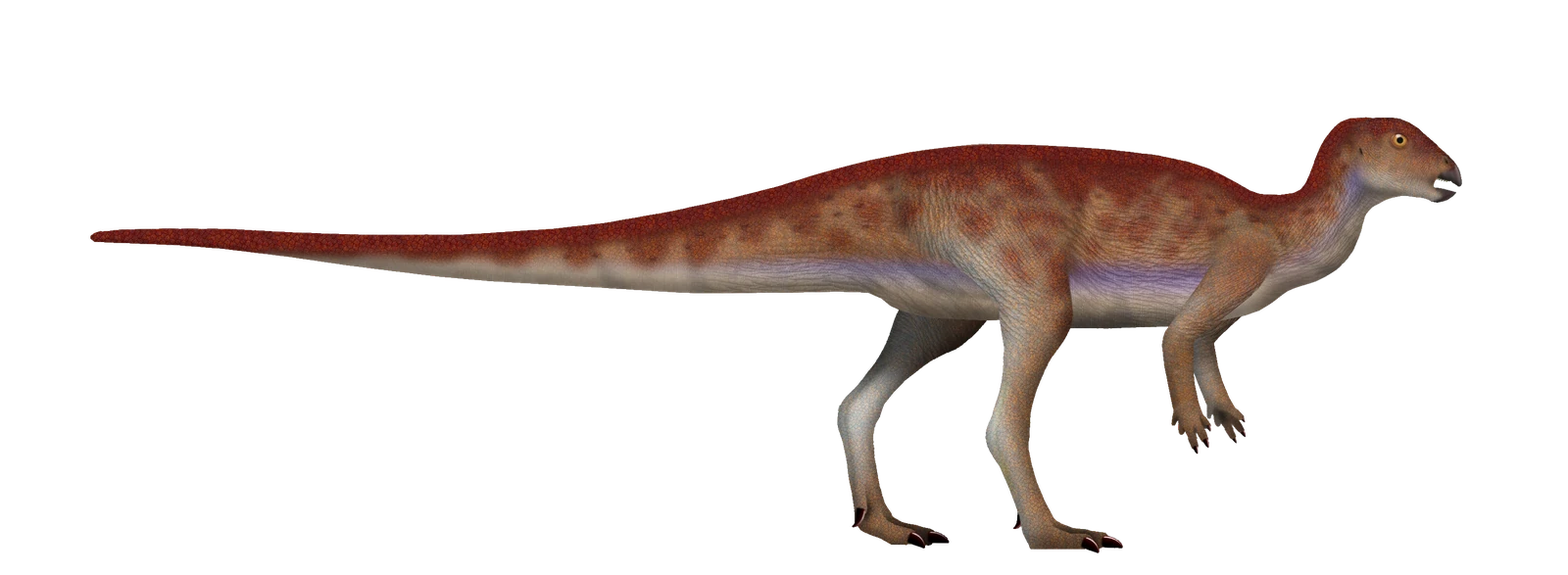
Artist reconstruction of Hypsilophodon foxii. Colours, skin pattern and other soft tissues remain interpretive. [2]
Hypsilophodon TD.png · TotalDino. CC BY-SA 4.0. Resized proportionally and converted to WebP; no anatomical edits. Same source license applies.
Scientific reconstruction is an interpretation; source credit does not certify every anatomical detail.
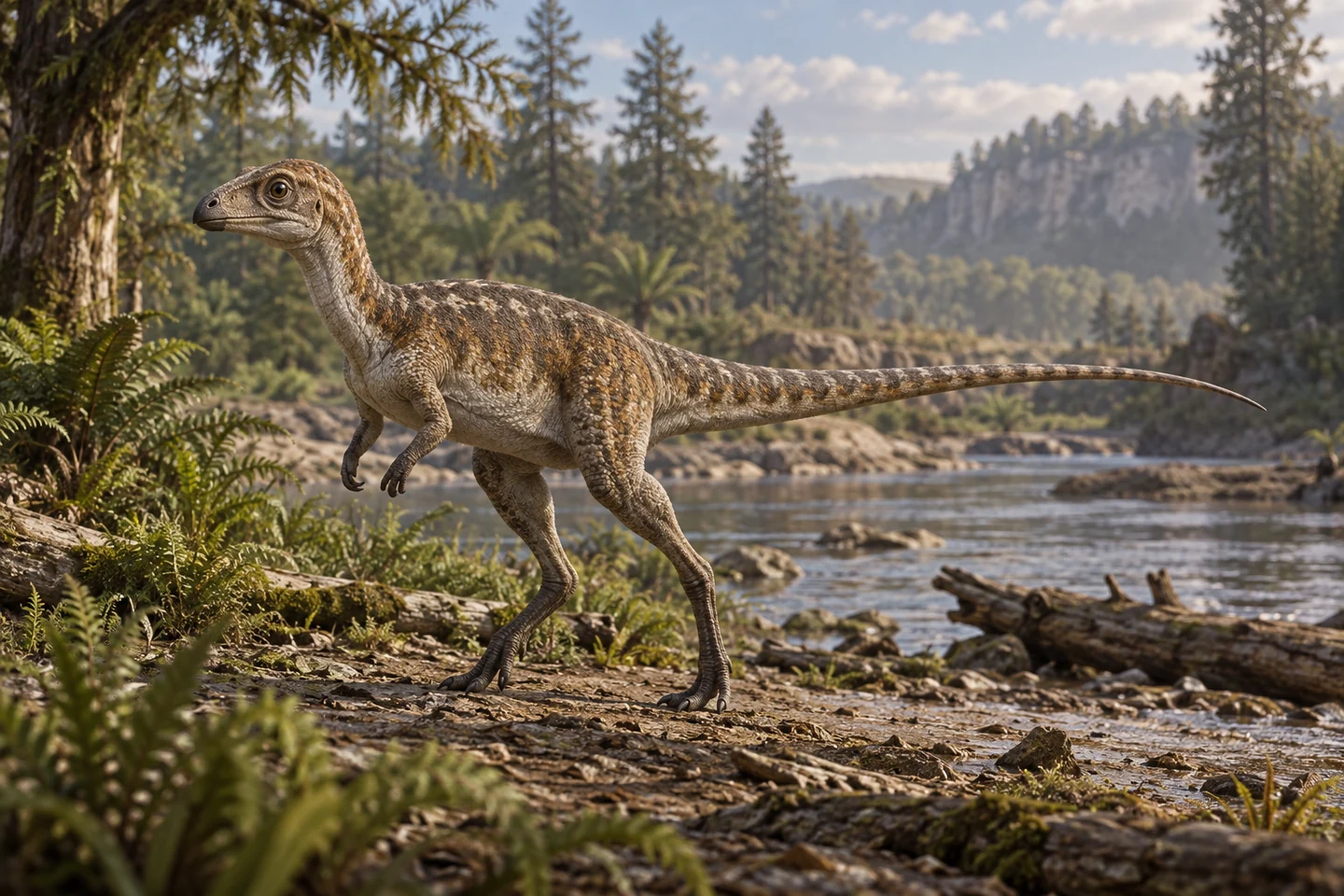
Original cinematic interpretation of Hypsilophodon. Anatomy, soft tissues and colors are reconstructed choices. Lighting, coloration and scenery are artistic choices. This image does not document a fossil locality or behavior.
Original artwork · artistic interpretation.
Scientific view: source-informed reconstruction, credited paleoart or specimen-based imagery. Movie-style view: Original artistic interpretation. Reconstructions involve uncertainty.
MEET THE ANIMAL
Hypsilophodon was a small dinosaur that moved on two legs and had a body suited to running. Its turtle-like beak helped nip low-growing plants. A modern museum reconstruction uses Isle of Wight fossils to portray this much smaller companion to the giant dinosaurs people often picture first. Running adaptations do not, by themselves, establish an exact top speed. [S1]
The Natural History Museum's collection includes a juvenile Hypsilophodon foxii skeleton from the island's Early Cretaceous rocks. A young animal provides valuable anatomy without settling the maximum size of adults. This distinction helps make sense of reconstructions: the stage of life represented by a fossil matters as much as which dinosaur name appears on its label. [S2]
Many skeletons occur in one fossil bed within river-floodplain sediments. Research considers catastrophic flooding as an explanation for the concentration. That possible burial history does not automatically establish a stable herd or reveal the dinosaurs' usual social structure before they died. [D3]
Thin-walled bones and long, slender hindlimbs and feet complete the picture of a lightly built animal. They help researchers reconstruct a body adapted for movement on the ground. [D2]
PREHISTORIC ANIMAL DOSSIER
The animal, the evidence, and the questions still open.
A small plant eater, Hypsilophodon preserves clues to movement and fossil accumulation.
Profile scope: Species: Hypsilophodon foxii. Museum size references specify neither adult specimens nor population ranges.
Source supported identifies a description documented by the cited source. Inferred marks a reconstruction or functional estimate. Debated marks competing interpretations. Not established means the sources reviewed for this dossier do not support a firm conclusion; it does not mean a behavior never occurred.
A size reference is an estimate, not a population range. Nesting evidence does not by itself establish courtship, mate choice, or lifelong pairing.
About 2 m; museum reference
The museum directory gives 2 m, while its specimen account reports up to 2.3 m. These are separate educational references, not a measured population range. [D1] [D2]
About 20 kg; museum reference
The directory lists 20 kg without specifying life stage, specimen or reconstruction method. It is not a measured live mass. [D1]
Plant-eater with a cropping beak
The museum describes a beak and broad teeth suited to clipping and processing plant material. Exact preferred plants are not established here. [D1]
Wessex Formation river floodplain
The Hypsilophodon Bed lies in Early Cretaceous floodplain sediments on the Isle of Wight. The study discusses seasonal dryness and heavy rainfall. [D3]
Ground-dwelling biped; running-adapted
The museum's limb description supports agile terrestrial movement. Historical tree-perching reconstructions were based on misinterpreted toe anatomy. [D1] [D2]
Light skeleton; long feet and hind limbs
The museum specimen account describes thin-walled bones and long, slender feet. Running capability is inferred from these proportions. [D2]
Not established here
The reviewed sources do not establish taxon-specific nests, clutch size or parental care.
Not established here
The reviewed evidence does not establish courtship displays, a mating system or sex differences.
Possible groups; burial history matters
Multiple skeletons occur in one bed; the sedimentological study considers catastrophic flooding of groups. Fossil concentration alone does not establish stable herd structure. [D3]
Sources and inspection notes for the claims in this profile.
THE STORY IN THE FOSSILS
Hypsilophodon was once imagined as a tree-perching dinosaur. Modern anatomical interpretation places it on the ground, where a light skeleton and long feet would have helped a two-legged plant-eater move quickly. [1] [2]
Many skeletons occur together in the Isle of Wight's Hypsilophodon Bed. A study of the surrounding sediments proposes flooding as a possible explanation. That context helps researchers ask whether the animals were together in life or were concentrated by the event that buried them. [3]
The dossier identifies the scope of each reference estimate. A mount, an individual fossil and a species-wide adult range are different measurements. Comparison metrics remain unavailable where adult scope has not been established. Unknown does not mean zero.
Sources support the stated claims and scopes. Refer to the evidence notes for uncertainty.
KEEP EXPLORING
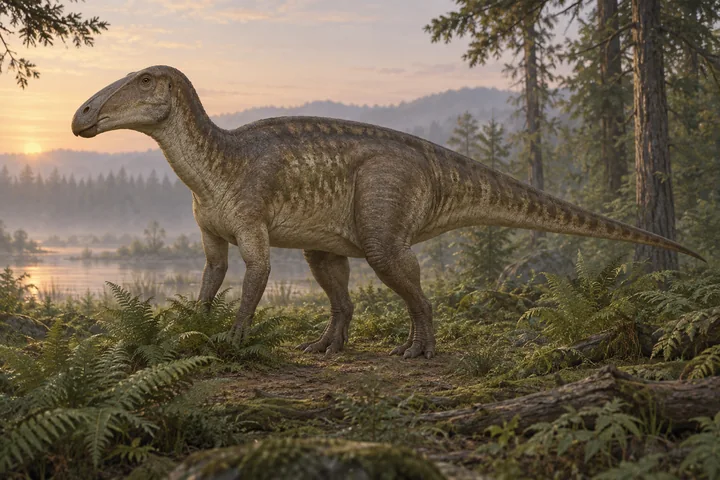
Equijubus normani
Equijubus was a crestless plant-eating hadrosauroid with a broad beak, distinctive cheek anatomy and plant microfossils associated with its teeth.
Jinzhousaurus yangi
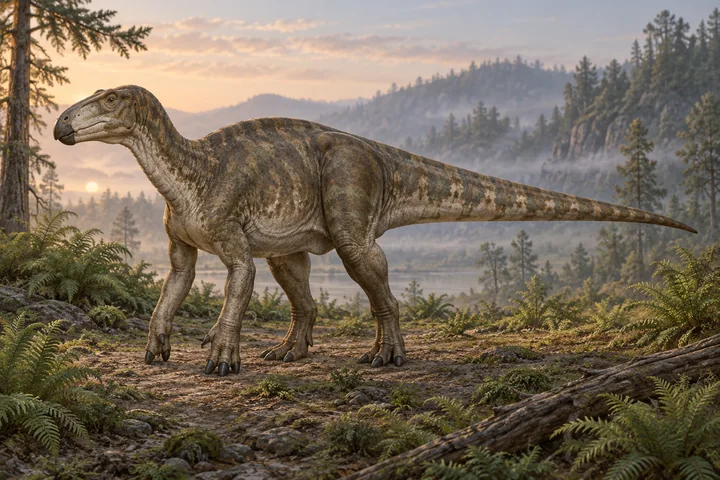
Jinzhousaurus was a crestless plant-eating ornithopod with a distinctive skull and unusually short, stout hand bones.
Kunbarrasaurus ieversi
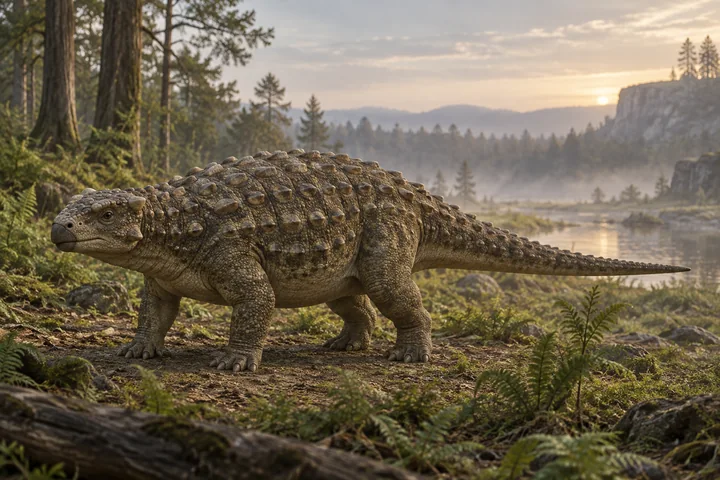
Kunbarrasaurus is an Australian armored dinosaur whose preserved gut contents provide direct evidence of plant eating.