
Body length
InferredAbout 10 m (museum reference)
The museum gives approximately 10 m and discusses larger bonebed individuals. This reference is not a directly measured living animal or full adult population range. [D1]
EXHIBIT 17
Albertosaurus sarcophagus
Albertosaurus had proportionately longer lower hind limbs than the heavier-built tyrannosaurines.
TWO WAYS TO PICTURE THE PAST
Compare the evidence with the familiar movie image. The illustrations are not to a shared scale.

The artist identifies this reconstruction as Albertosaurus sarcophagus. Fossil-informed anatomy: Lower tyrannosaur skull, eye-region bony ornament, short two-fingered arms and relatively long lower legs. Coloration and some soft tissues are interpretive; species reconstruction represents the genus. [1] [2]
Albertosaurus sarcophagus.png — Connor Ashbridge. CC BY 4.0. Remote source artwork displayed without additional cropping; Wikimedia supplies any display-size derivative.
Scientific picture served by Wikimedia · internet connection required.
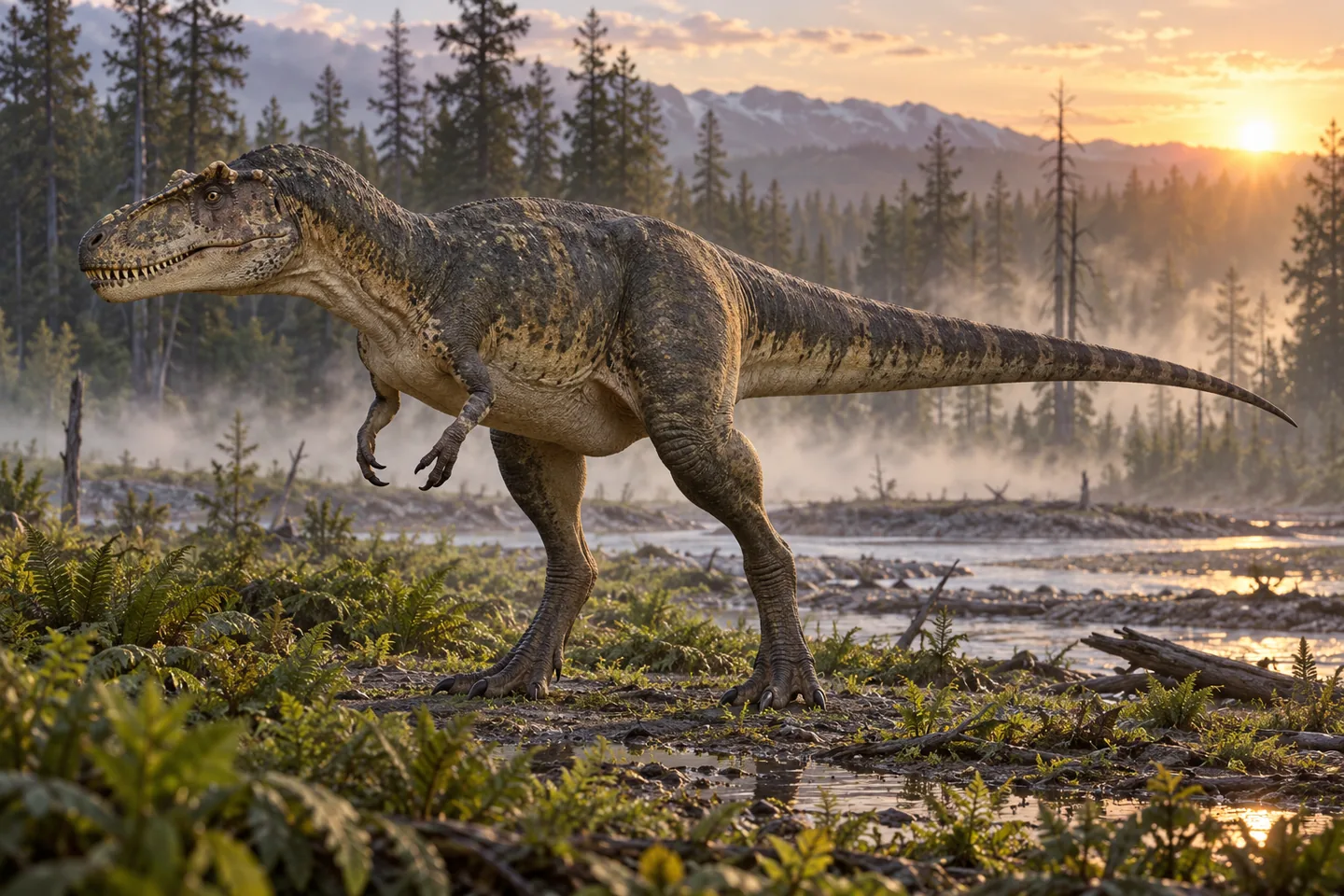
Cinematic Albertosaurus sarcophagus with a lower tyrannosaur head, small two-fingered arms and long lower legs; surface colors remain artistic. Dramatic lighting, surface detail and scenery are artistic choices. This is an original cinema-inspired picture, rather than a frame from a film or a documented fossil locality.
Original artwork · artistic interpretation.
Scientific view: credited paleoart interpreting fossil evidence, served online by Wikimedia. Movie-style view: Original artistic interpretation. Colors, soft tissues and settings involve reconstruction.
MEET THE ANIMAL
Albertosaurus sarcophagus was a Late Cretaceous predator from Alberta in Canada, closely related to Tyrannosaurus rex. Its serrated teeth had cutting edges like those of a steak knife. The animal belonged to the two-legged theropods, a group whose skeletons combine hindlimbs used for walking with smaller arms. Its teeth offer a particularly clear clue to a meat-eating lifestyle. [S1]
The museum account describes adults continuing to grow slowly after reaching adulthood. This is a reminder that growth stage matters when comparing fossils: a smaller individual need not represent a separate kind of dinosaur. A juvenile and an adult can belong to the same species while preserving different proportions and sizes. An educational size reference should therefore stay separate from measurements of a particular fossil. [S1]
A bonebed at Dry Island Buffalo Jump preserves multiple Albertosaurus sarcophagus individuals. The Royal Tyrrell Museum used this evidence to create an exhibit of several animals moving together. A bonebed means remains accumulated in one place; the reconstructed family scene goes beyond the arrangement of the bones themselves. This makes the site interesting for social questions without proving a coordinated hunting pack. Nest arrangements, parenting and courtship remain unresolved in the reviewed evidence. [S2]
PREHISTORIC ANIMAL DOSSIER
The animal, the evidence, and the questions still open.
Albertosaurus sarcophagus was an Albertan tyrannosaur with a large head, short two-fingered arms and relatively long lower hindlimbs. A multi-individual bonebed has led to proposals of social grouping, while cooperative hunting remains an inference.
Profile scope: Species — Albertosaurus sarcophagus
Source supported identifies a description documented by the cited source. Inferred marks a reconstruction or functional estimate. Debated marks competing interpretations. Not established means the sources reviewed for this dossier do not support a firm conclusion; it does not mean a behavior never occurred.
A size reference is an estimate, not a population range. Nesting evidence does not by itself establish courtship, mate choice, or lifelong pairing.
About 10 m (museum reference)
The museum gives approximately 10 m and discusses larger bonebed individuals. This reference is not a directly measured living animal or full adult population range. [D1]
Not established here
A species-specific adult mass estimate with a reviewed reconstruction method is not established in this source; juvenile weights are not substituted.
Meat eater
Sharp serrated teeth support carnivory. Cooperative pursuit and particular prey preferences require additional evidence. [D1]
Late Cretaceous Alberta floodplains
Alberta occurrence is well supported in the museum account, which reconstructs vegetated floodplains. Some extra-Albertan species referrals are uncertain. [D1]
Two-legged terrestrial movement
Long hindlimbs supported a bipedal animal. Speed estimates depend on biomechanical assumptions. [D1]
Large head, two-fingered arms, long lower hindlimbs
The museum describes a lower skull than T. rex and short two-fingered forelimbs. These are anatomical distinctions rather than demonstrated hunting tactics. [D1]
Not established here
Reviewed sources do not establish A. sarcophagus clutch size, nest architecture or parental care.
Eye-crest display proposed
Mate attraction and recognition are proposed crest functions. Bright coloration and a specific courtship ritual are not established here. [D1]
Group living suggested by a bonebed
Multiple individuals of different sizes occur together. Association supports a grouping hypothesis but does not demonstrate coordinated pack hunting. [D1]
Sources and inspection notes for the claims in this profile.
THE STORY IN THE FOSSILS
Albertosaurus sarcophagus had short, two-fingered arms, a long balancing tail and bony ornament near its eyes. Compared with tyrannosaurines, its skull was lower and its lower hind limbs proportionately longer. It belongs to Albertosaurinae, alongside the closely related but generally separate Gorgosaurus. [1] [2]
Joseph Tyrrell found the first fossils in Alberta in 1884 while searching for coal. A Horseshoe Canyon Formation bone bed contains at least 26 individuals, spanning different ages. Such an assemblage is valuable for studying growth, while cooperation during hunting remains an interpretation. [1] [2]
We have not established a comparable adult total-length estimate for this taxon in this draft. Specimen measurements in the text describe those individuals. The cited dates are approximately 72.5–68 million years ago. Species occurrence interval used by the Royal Tyrrell Museum. Unknown does not mean zero.
Sources and evidence notes for this exhibit.
KEEP EXPLORING
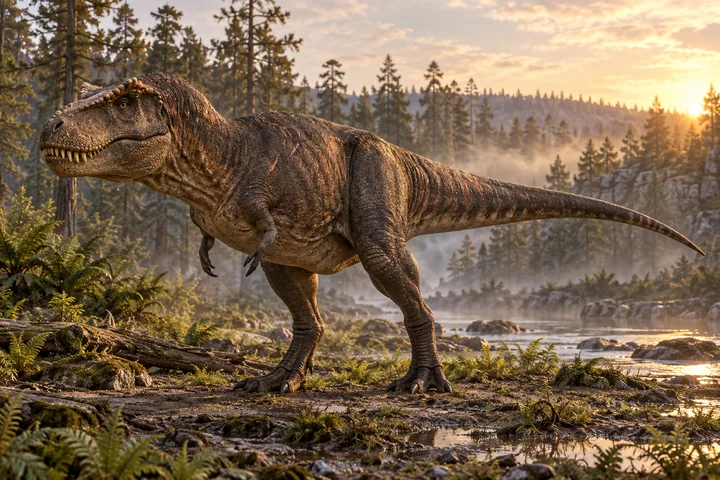
Daspletosaurus torosus
Daspletosaurus fossils include healed facial bites and evidence of a hadrosaur meal.
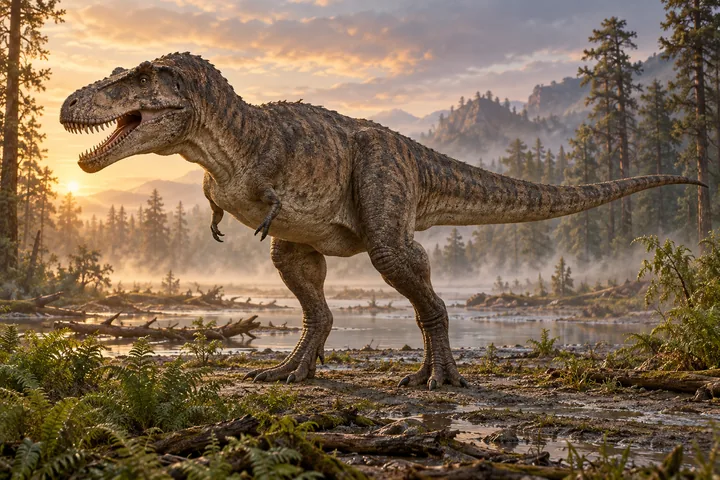
Tarbosaurus bataar
Tarbosaurus combined a huge head with exceptionally reduced forelimbs.
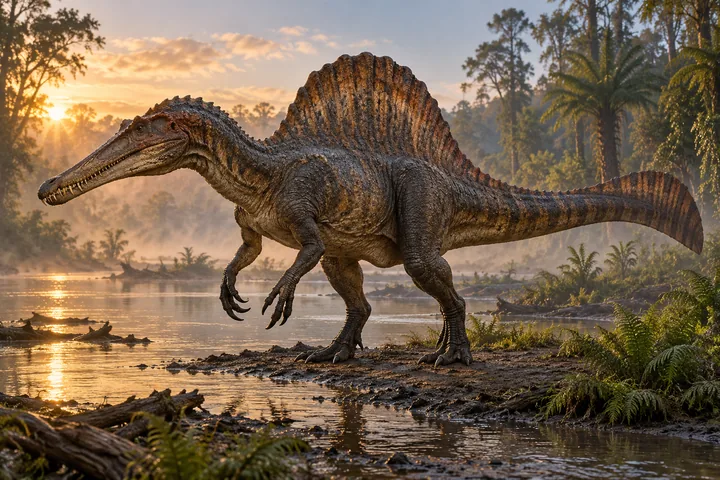
Spinosaurus
Spinosaurus had short hind limbs and a broad, paddle-shaped tail.