
Body length
InferredAbout 8–9 m (museum reference)
The museum provides an approximate species reference. Its maturity assessment and basis for a population range are not specified. [D1]
EXHIBIT 18
Daspletosaurus torosus
Daspletosaurus fossils include healed facial bites and evidence of a hadrosaur meal.
TWO WAYS TO PICTURE THE PAST
Compare the evidence with the familiar movie image. The illustrations are not to a shared scale.
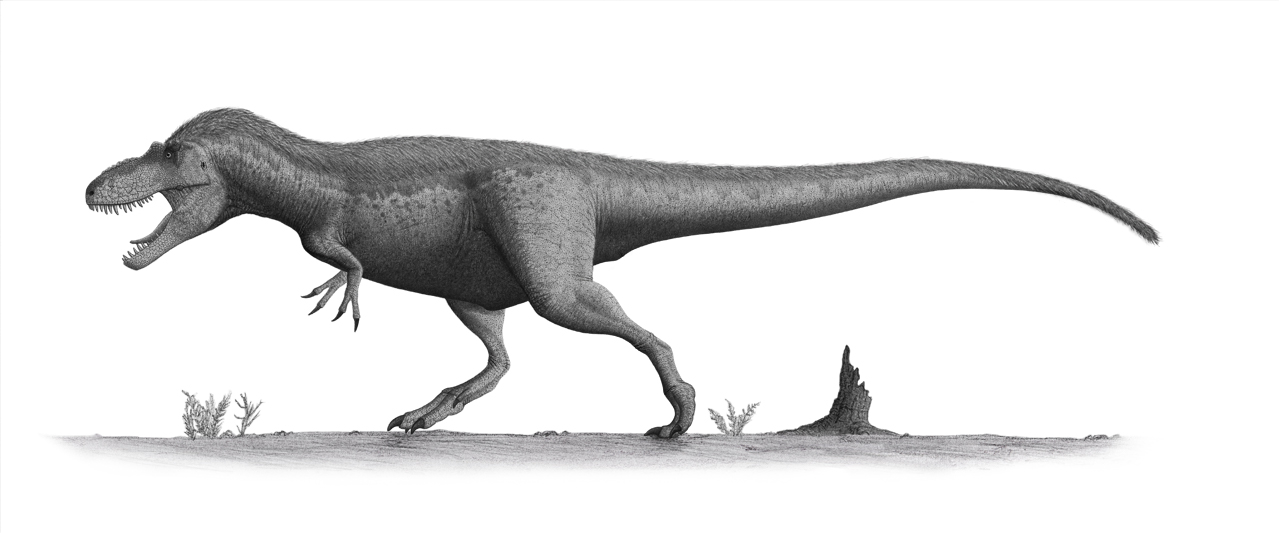
The artist identifies this reconstruction as Daspletosaurus torosus. Fossil-informed anatomy: Robust skull with eye-region crests, serrated teeth, muscular tail and short two-fingered arms. Dorsal feathering is speculative; artist discusses integument and 2017 fossil skin evidence. Proportions based on Gregory Paul skeletal; species reconstruction represents the genus. [1]
Daspletosaurus torosus steveoc.jpg — Steveoc 86. CC BY-SA 2.5. Remote source artwork displayed without additional cropping; Wikimedia supplies any display-size derivative.
Scientific picture served by Wikimedia · internet connection required.
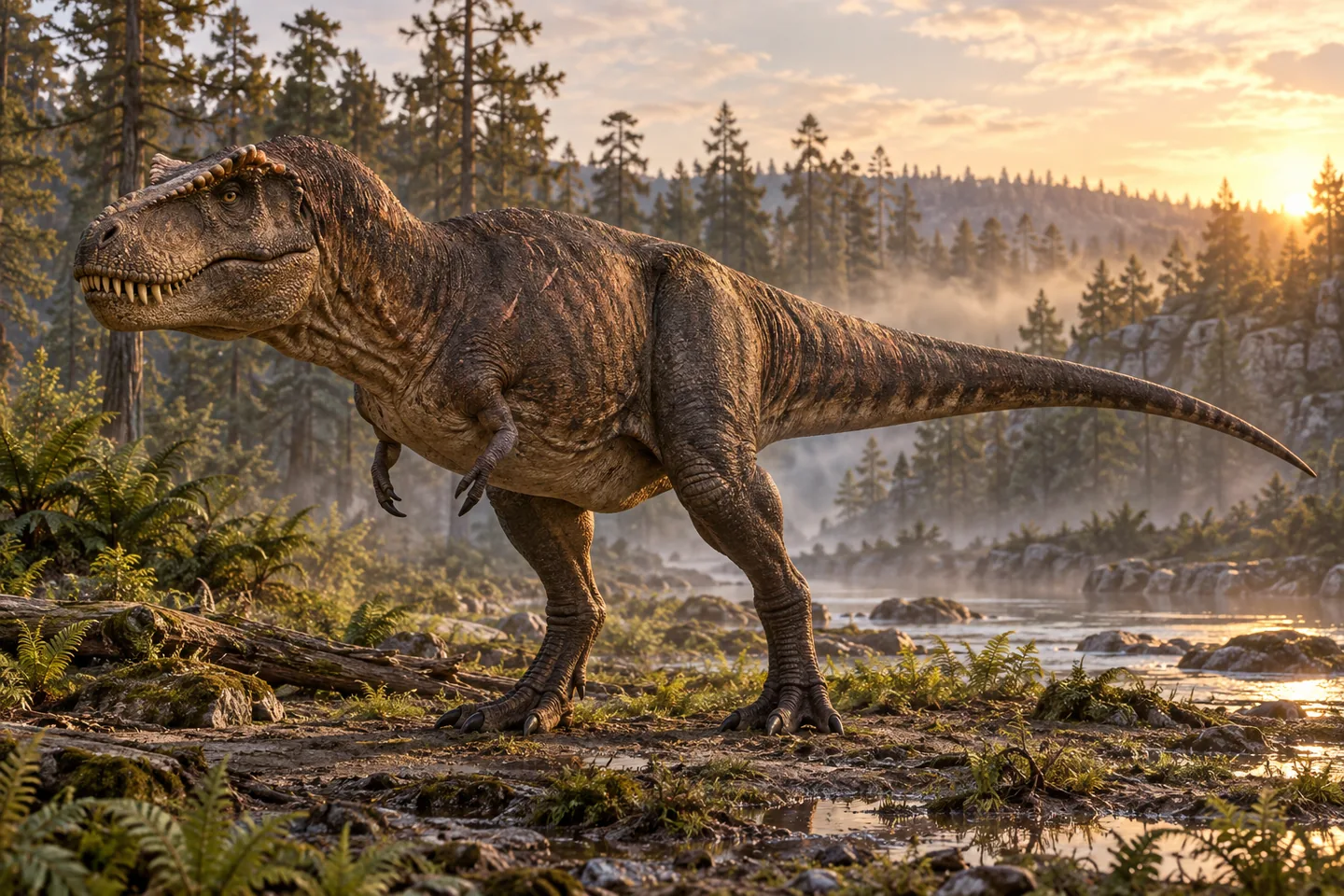
Cinematic Daspletosaurus torosus with a robust tyrannosaur head, eye crests and small two-fingered arms; scars and surface colors are artistic. Dramatic lighting, surface detail and scenery are artistic choices. This is an original cinema-inspired picture, rather than a frame from a film or a documented fossil locality.
Original artwork · artistic interpretation.
Scientific view: credited paleoart interpreting fossil evidence, served online by Wikimedia. Movie-style view: Original artistic interpretation. Colors, soft tissues and settings involve reconstruction.
MEET THE ANIMAL
Daspletosaurus torosus was a strongly built tyrannosaur from Late Cretaceous Alberta. An anatomical account describes a particularly robust animal, rather than simply a smaller version of Tyrannosaurus. Its skull includes a well-developed horn above the eye and roughened bone behind it. These features help researchers identify fossils by the structure of the bones, not just their overall size. [S1]
Its teeth also invite questions about feeding. A 2005 study illustrated a jaw identified as Daspletosaurus torosus with part of a tooth's outer enamel flaked away. The researchers interpreted similar damage as resulting from contact with food. Many isolated teeth in that study, however, could not confidently be separated between different tyrannosaurs. This limits what a broader sample can establish about one species, even when the study gives useful clues about tyrannosaur feeding mechanics. [S2]
The reference skeleton discussed in the anatomical account lacked its hind legs. Reconstructing a complete animal therefore combines preserved parts with comparisons and interpretation. That difference between evidence and restoration also matters for life scenes: robust bones do not record a particular hunting group, courtship display or parenting routine. Those behaviors remain unresolved for this species in the reviewed material. [S1]
PREHISTORIC ANIMAL DOSSIER
The animal, the evidence, and the questions still open.
Daspletosaurus torosus was a robust tyrannosaur from Late Cretaceous Alberta. Species-level scope matters because some fossils historically discussed as Daspletosaurus now belong to other species, so their behaviour is not automatically evidence for D. torosus.
Profile scope: Species — Daspletosaurus torosus
Source supported identifies a description documented by the cited source. Inferred marks a reconstruction or functional estimate. Debated marks competing interpretations. Not established means the sources reviewed for this dossier do not support a firm conclusion; it does not mean a behavior never occurred.
A size reference is an estimate, not a population range. Nesting evidence does not by itself establish courtship, mate choice, or lifelong pairing.
About 8–9 m (museum reference)
The museum provides an approximate species reference. Its maturity assessment and basis for a population range are not specified. [D1]
Not established here
A D. torosus mass estimate with a reviewed reconstruction method is not established in the inspected source.
Meat eater
Large curved, serrated teeth support carnivory. Feeding and gut-content claims involving other or historically uncertain Daspletosaurus material are not transferred to this species. [D1]
Late Cretaceous Alberta coastal plains
The museum identifies D. torosus in Alberta's Oldman Formation and reconstructs lowland streams and swamps. Depositional reconstruction does not establish an exclusive habitat preference. [D1]
Probably two-legged terrestrial movement
Its tyrannosaur limb reconstruction supports bipedal movement. A species-specific gait or maximum-speed study was not reviewed. [D1]
Robust skull and short two-fingered arms
The museum describes a strongly built skull, muscular tail and two-fingered forelimbs. The exact functions of the arms and skull crests remain interpretations. [D1]
Not established here
Reviewed sources do not establish D. torosus eggs, clutch size or parental care.
Not established here
Reviewed sources do not establish a D. torosus courtship sequence or mating posture.
Not established here
Reviewed sources do not establish D. torosus group size or coordinated hunting; genus-level or historically uncertain associations are not transferred to the species.
Sources and inspection notes for the claims in this profile.
THE STORY IN THE FOSSILS
Daspletosaurus torosus carried a large skull, curved serrated teeth and conspicuous bony crests around the eyes. Its short arms ended in two-fingered hands. Known fossils come from Alberta, where rivers crossed coastal plains and both swampy lowlands and forested uplands supported herbivorous dinosaurs. [1]
Hadrosaur remains identified as gut contents provide direct evidence of dinosaur prey. Some individuals also preserve healed facial injuries, showing survival after bites. The first fossils, collected in 1921, were initially mistaken for Gorgosaurus; Dale Russell established Daspletosaurus as a separate genus in 1970. [1]
We have not established a comparable adult total-length estimate for this taxon in this draft. Specimen measurements in the text describe those individuals. The cited dates are approximately 77–74 million years ago. Published species-level educational dating; not a complete occurrence survey. Unknown does not mean zero.
Sources and evidence notes for this exhibit.
KEEP EXPLORING
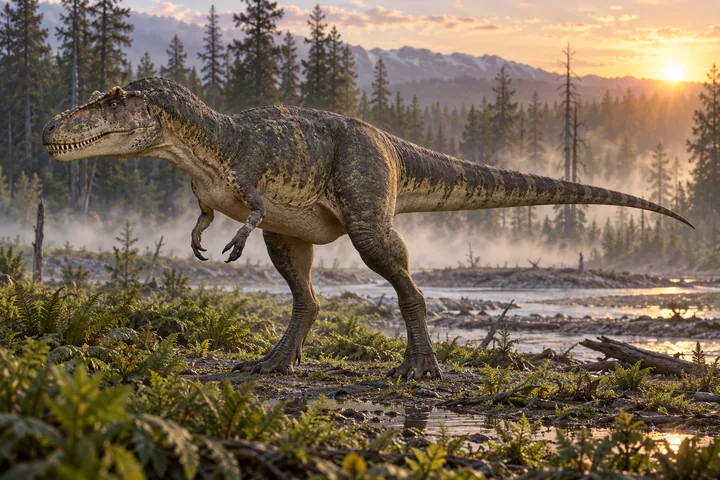
Albertosaurus sarcophagus
Albertosaurus had proportionately longer lower hind limbs than the heavier-built tyrannosaurines.
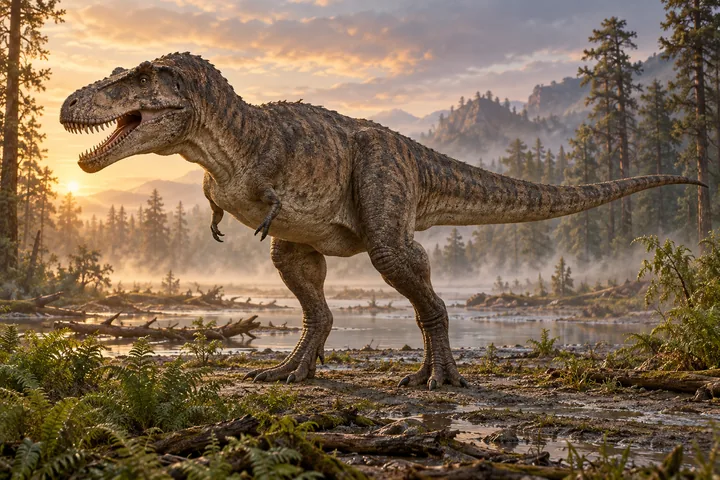
Tarbosaurus bataar
Tarbosaurus combined a huge head with exceptionally reduced forelimbs.
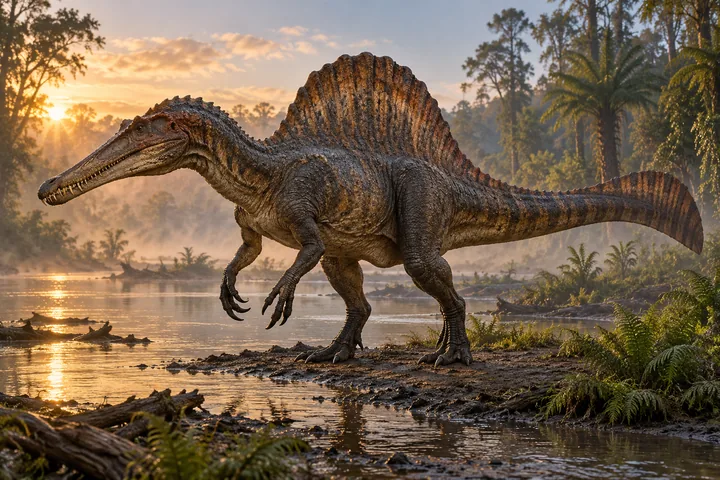
Spinosaurus
Spinosaurus had short hind limbs and a broad, paddle-shaped tail.