
Body length
InferredAbout 6 m (museum genus reference)
The museum names A. remotus as type species but gives no specimen or maturity basis for length. This is not a measured adult A. altai or its holotype's total length. [D1]
EXHIBIT 103
Alioramus altai
Alioramus had a long low snout; its best-described skeleton was young. [2]
TWO WAYS TO PICTURE THE PAST
Compare the evidence with the familiar movie image. The illustrations are not to a shared scale.
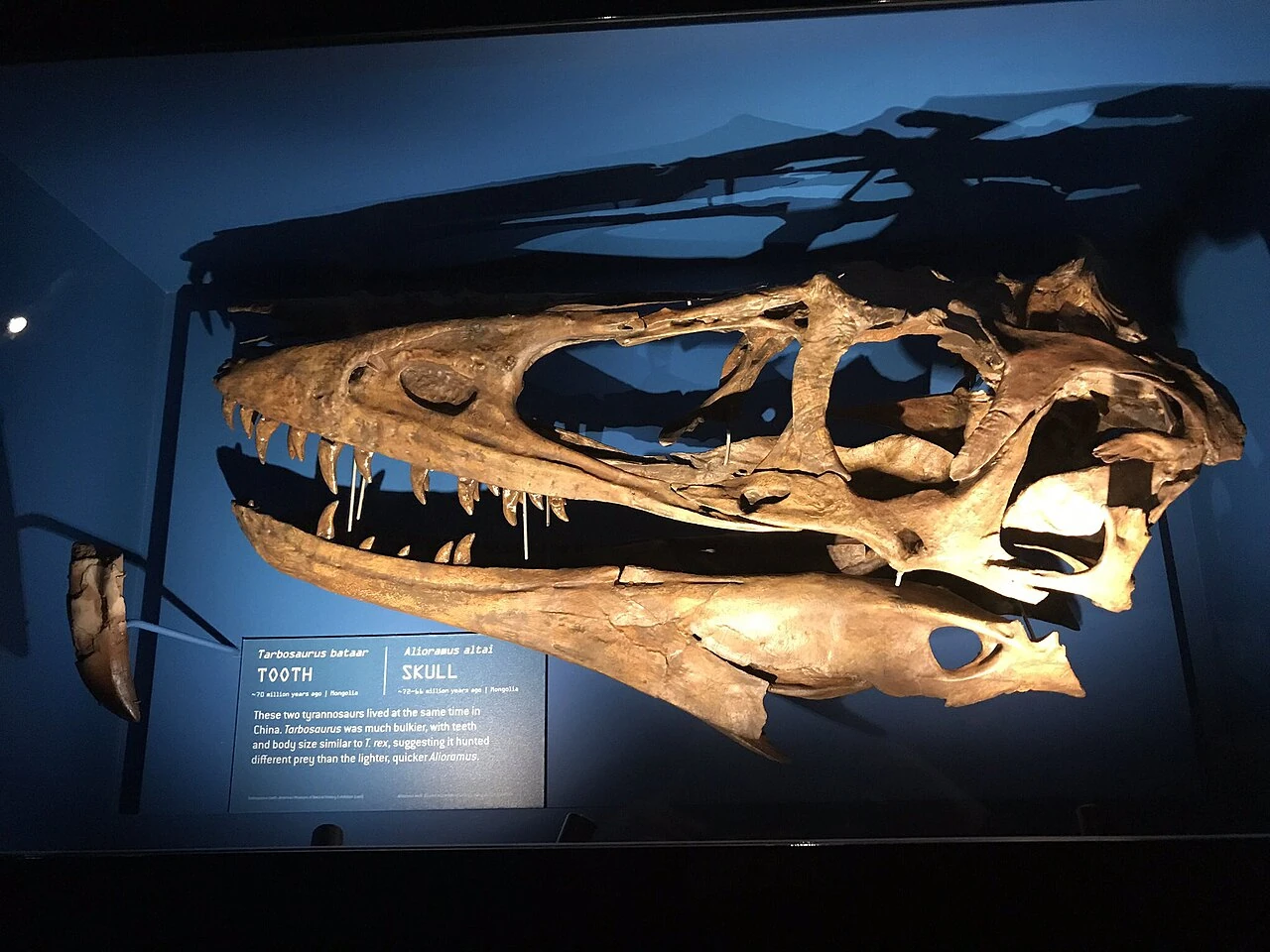
Skull display identified as Alioramus altai in the American Museum of Natural History's T. rex exhibit, photographed by Ben Miller. The label identifies a nine-year-old juvenile; displayed skull assembly includes reconstructed relationships between bones. The Commons record does not inventory casts versus originals. This is not a complete adult skull or adult size reference. [2]
Alioramus altai skull at AMNH.jpg · Ben Miller. CC BY-SA 4.0. Current Commons image converted to WebP and proportionally resized for the thumbnail; no cropping, mirroring, anatomical edits or compositing. Original scale bars and annotations retained where present. Same source license applies.
Skeletal mounts and drawings may restore missing parts; the caption identifies the displayed material.
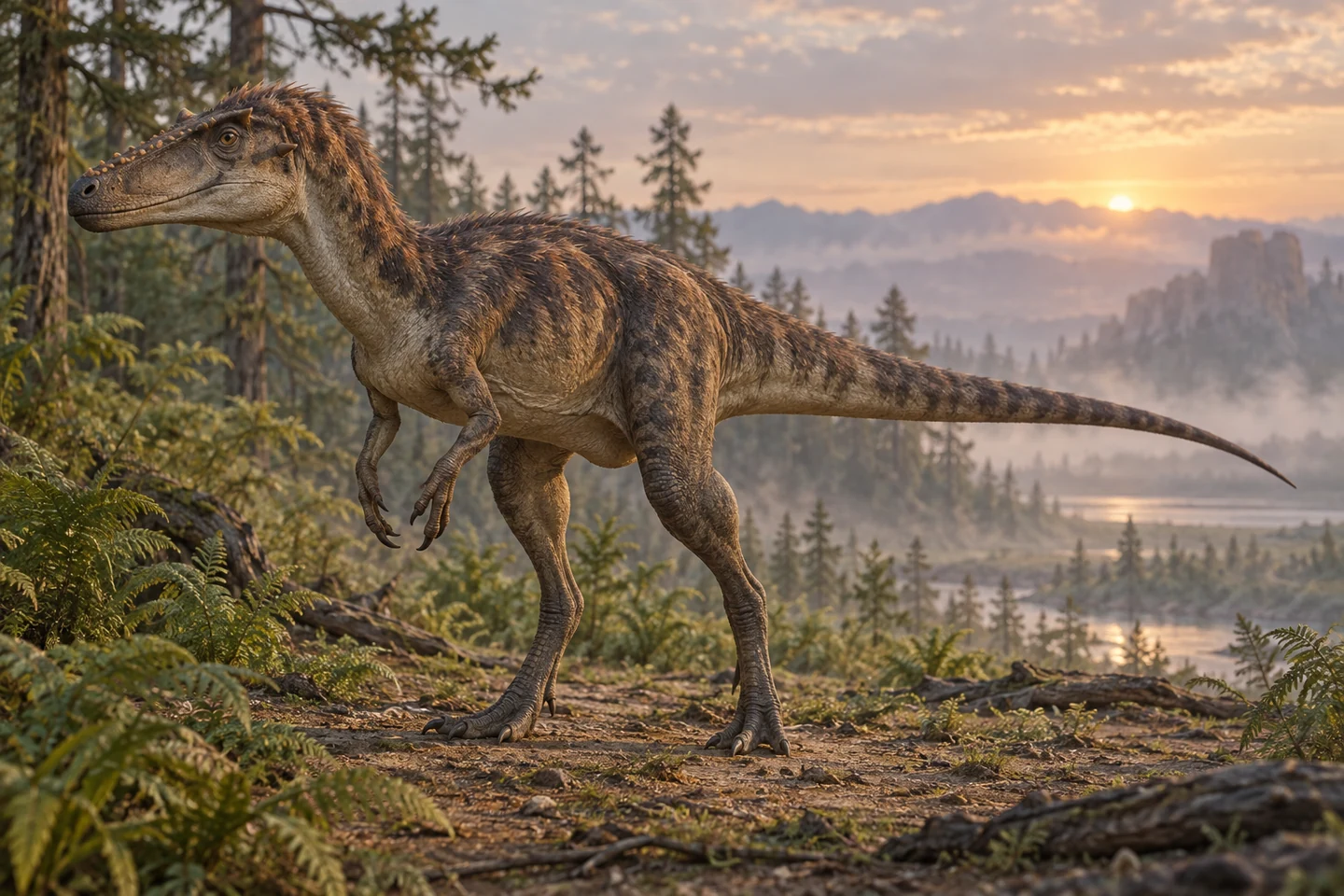
Original cinematic interpretation of Alioramus altai. Colors, soft tissues, scenery and missing anatomy are reconstructed artistic choices; this is not a directly observed individual or behavior. This interpretation follows juvenile/subadult material, not an established adult size. Lighting, coloration and scenery are artistic choices. This image does not document a fossil locality or behavior.
Original artwork · artistic interpretation.
Scientific view: source-informed reconstruction, credited paleoart or specimen-based imagery. Movie-style view: Original artistic interpretation. Reconstructions involve uncertainty.
MEET THE ANIMAL
Alioramus was a meat-eating tyrannosaur from Mongolia. The genus includes named species that need to be kept distinct when discussing size. A museum reference of about six metres is not a measured adult Alioramus altai or the complete length of its original specimen. The name groups related evidence, rather than making every fossil interchangeable. [D1]
The known young Alioramus altai had a long snout and ornamented head. A detailed revision distinguishes it from Tarbosaurus of similar size, so it should not simply be treated as a small Tarbosaurus. A complete sequence from young to adult remains needed to understand how its own features changed. Being small does not automatically mean being the juvenile of another genus. [D4]
CT work has examined the internal braincase. Researchers can reconstruct an endocast, a model of the space inside that part of the skull. An endocast is not preserved brain tissue and does not record an observed behavior. It offers evidence about internal anatomy while leaving important limits on what can be said about intelligence, senses, or everyday activities. [D3]
PREHISTORIC ANIMAL DOSSIER
The animal, the evidence, and the questions still open.
Growth evidence concerns a young A. altai; an adult fossil series remains lacking. [D2]
Profile scope: Genus — Alioramus; gallery focus A. altai. [D2]
Source supported identifies a description documented by the cited source. Inferred marks a reconstruction or functional estimate. Debated marks competing interpretations. Not established means the sources reviewed for this dossier do not support a firm conclusion; it does not mean a behavior never occurred.
A size reference is an estimate, not a population range. Nesting evidence does not by itself establish courtship, mate choice, or lifelong pairing.
About 6 m (museum genus reference)
The museum names A. remotus as type species but gives no specimen or maturity basis for length. This is not a measured adult A. altai or its holotype's total length. [D1]
About 369 kg for IGM 100/1844
Regression estimate for the A. altai holotype, histologically an actively growing nine-year juvenile-to-subadult. It is not an adult or species-wide mass. [D2]
Meat-eating tyrannosaurid
Carnivory is supported by the toothed skull and museum profile. Precise prey preferences are not established. [D1]
Nemegt Formation at Tsagaan Khushuu
A. altai comes from Maastrichtian deposits of southern Mongolia. The A. remotus type locality has not been securely correlated to exactly the same age in this study. [D2]
Two-legged reconstruction
Preserved hindlimb and pelvic material supports bipedal restoration; forelimbs are missing in the A. altai holotype. No measured running speed is assigned. [D2]
Long low snout with cranial ornament
The A. altai skull has nasal bumps and projecting cheek ornament. CT documents internal braincase cavities; reconstructed endocasts are not preserved brain tissue. [D2] [D3]
Not established here
Focused nest, egg and reproductive searches did not establish Alioramus clutch size, incubation, parental care or reproductive maturity. Growth age alone cannot determine breeding readiness.
Not established here
Reviewed anatomy and focused courtship searches do not demonstrate sexual dimorphism, mate choice or a display ritual. Cranial bumps are preserved; their courtship role is not.
Not established here
Reviewed individual skeletons do not establish packs or solitary habits. Occurrence alongside another tyrannosaurid does not show cooperation.
Sources and inspection notes for the claims in this profile.
THE STORY IN THE FOSSILS
A. altai was still growing at roughly nine years old. Its long snout and ornament differ from equivalently sized Tarbosaurus; it cannot simply be treated as a small Tarbosaurus. A complete adult growth series is still needed. [4] [2]
A later cranial revision retains Qianzhousaurus and Alioramus as distinct genera of long-snouted tyrannosaurids. Their resemblance does not justify counting one dinosaur twice under competing names. [5]
The dossier identifies the scope of each reference estimate. A mount, an individual fossil and a species-wide adult range are different measurements. Comparison metrics remain unavailable where adult scope has not been established. Unknown does not mean zero.
Sources support the stated claims and scopes. Refer to the evidence notes for uncertainty.
KEEP EXPLORING
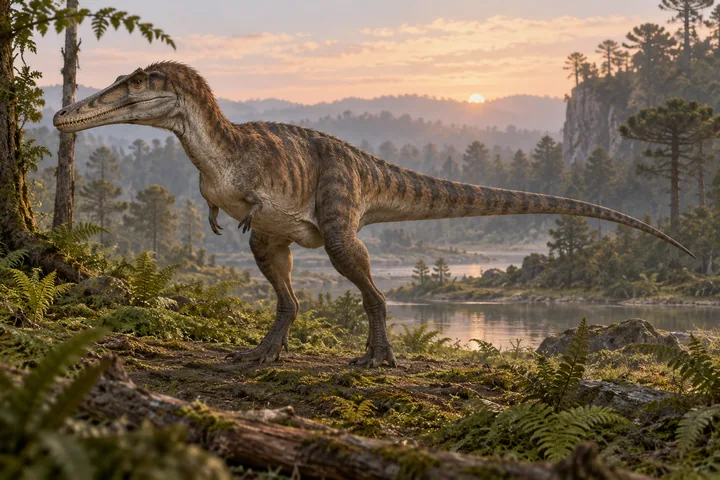
Qianzhousaurus sinensis
Qianzhousaurus was a long-snouted tyrannosaur from southern China, with skull proportions very different from deep-headed relatives.
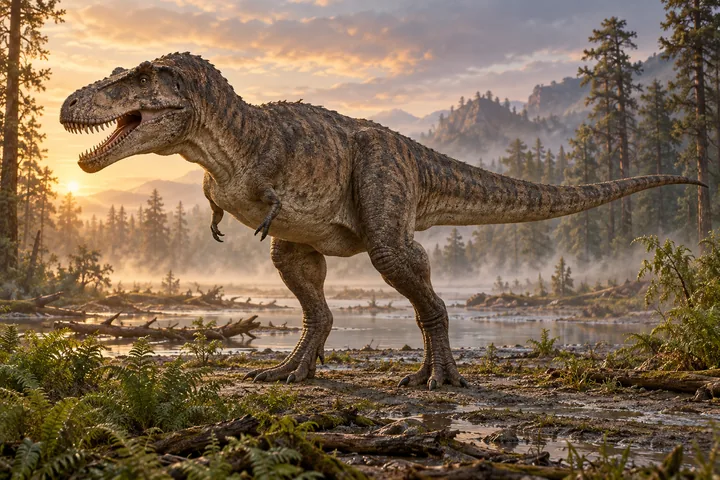
Tarbosaurus bataar
Tarbosaurus bataar was a large Asian tyrannosaur. Its relatively slender skull distinguishes it from its North American relative Tyrannosaurus rex.
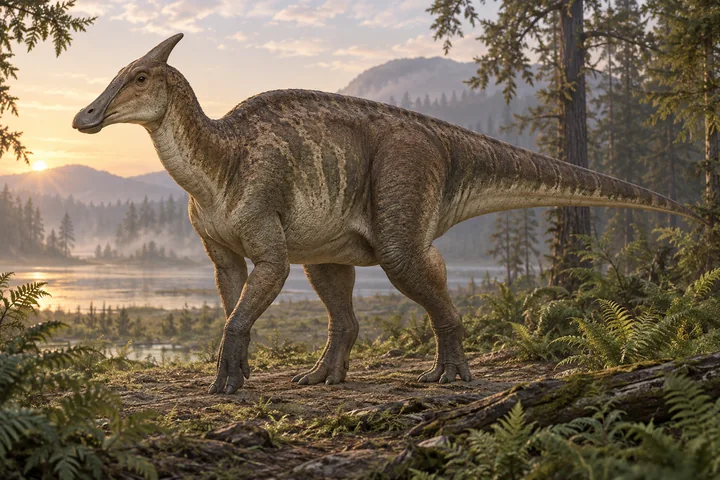
Saurolophus angustirostris
Distinctive crests, skin and perinatal evidence.