EXPLORE PREHISTORY 220 prehistoric animal profiles · Scientific & movie-style image galleries

EXHIBIT 79

Saurolophus

Saurolophus angustirostris

Distinctive crests, skin and perinatal evidence.

Evidence profile
PERIODLate Cretaceous[2]
DIETHerbivoreEvidence and uncertainty in the dossier
TOTAL LENGTHSee the dossierEstimate scope matters
FOSSILS FOUNDCanada, Mongolia[2]
CompareRead the dossierView the sources

MEET THE ANIMAL

Meet Saurolophus

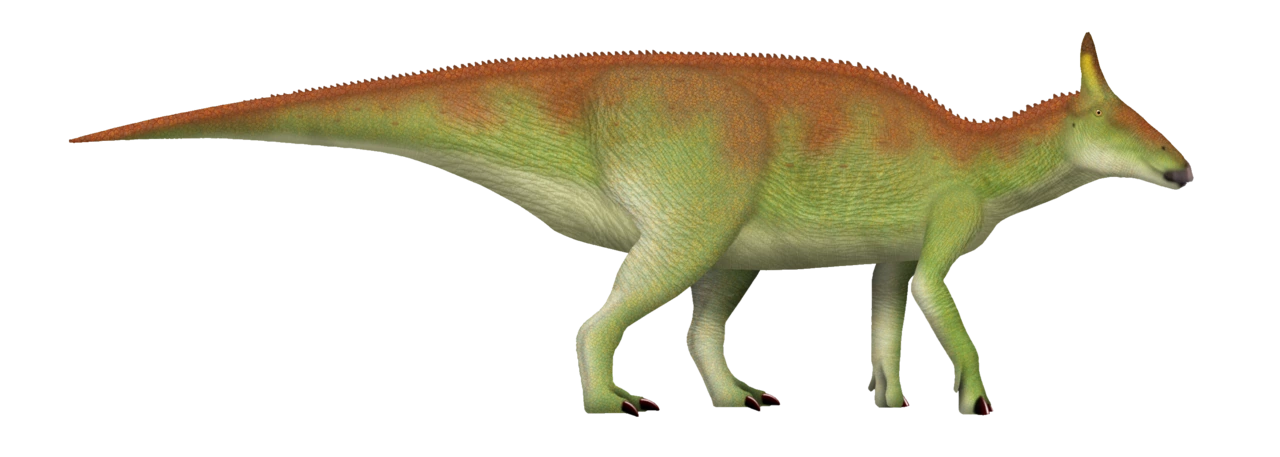
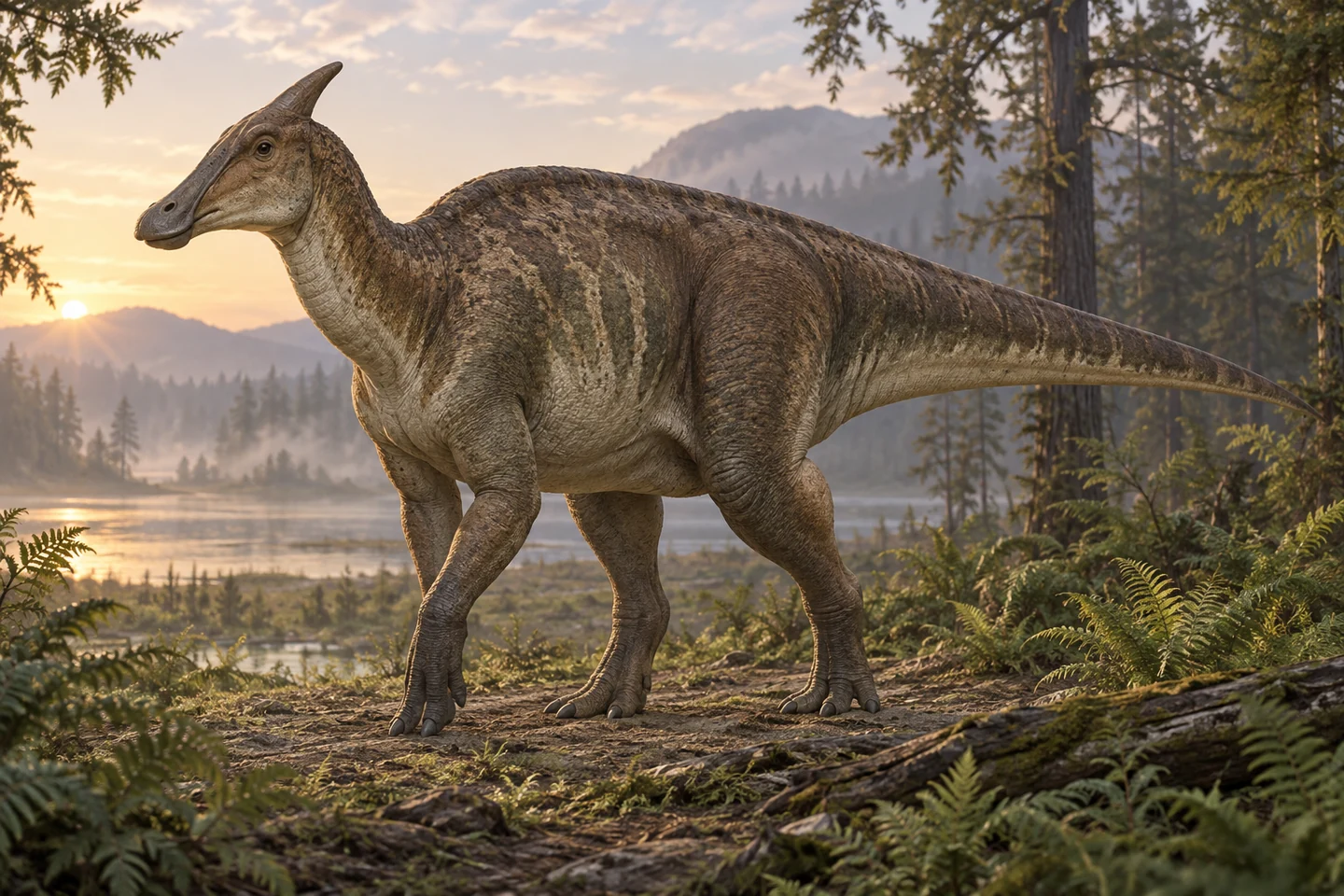
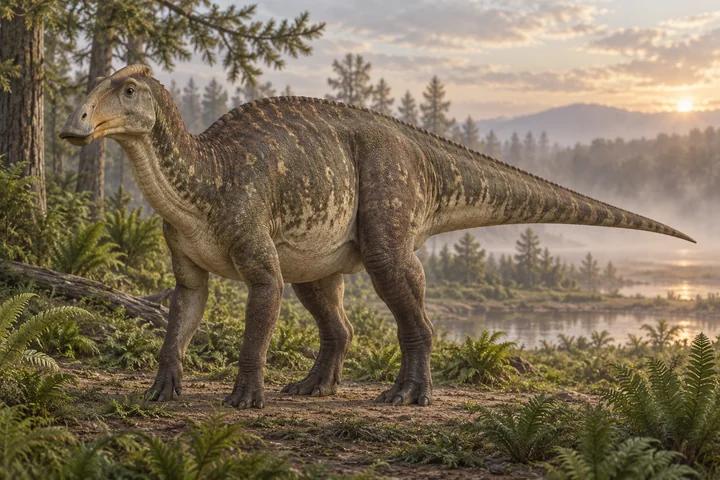
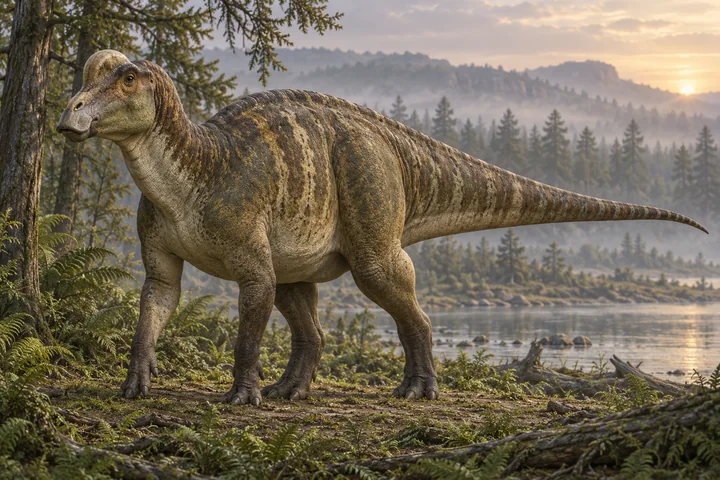
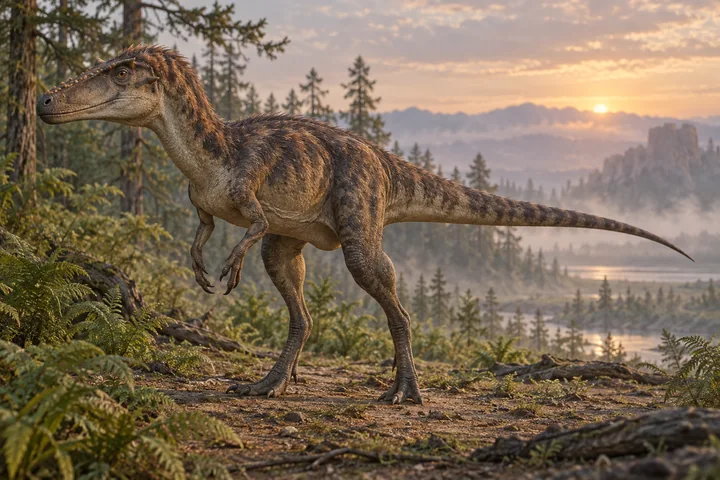
Saurolophus was a plant-eating dinosaur with a solid crest on its head. Canadian and Mongolian species shared the genus name, but their skulls and growth patterns were not identical. Comparing the species helps researchers separate features shared by relatives from differences belonging to one particular kind of animal. [D1] [D2]

Skin impressions add details that bones cannot provide. They preserve arrangements of scales, including different patterns in the two species. Bands of different scale types are evidence of skin structure, rather than proof of colored stripes. An illustration may show a pattern of pigment, but that choice cannot be read directly from those scale impressions. [D3]

Very young Mongolian animals were found with eggshell fragments. Their skulls lacked the developed adult crest, helping reveal how appearance changed during growth. Researchers could not firmly decide whether the animals were still embryos or had already hatched. The association supplies important reproductive evidence without settling incubation time, parental feeding, or the exact moment of hatching. [D4]

PREHISTORIC ANIMAL DOSSIER

A life in profile.

The animal, the evidence, and the questions still open.

Paired gallery species differ.

Profile scope: Genus — Saurolophus; species distinguished below.

Time
Late Cretaceous
Fossil locations in this exhibit
Canada, Mongolia
How to read the evidence

Source supported identifies a description documented by the cited source. Inferred marks a reconstruction or functional estimate. Debated marks competing interpretations. Not established means the sources reviewed for this dossier do not support a firm conclusion; it does not mean a behavior never occurred.

A size reference is an estimate, not a population range. Nesting evidence does not by itself establish courtship, mate choice, or lifelong pairing.

Body length

Inferred

About 12.6 m for PIN 662/2

The estimate scales this large S. angustirostris individual against the roughly ten-metre holotype. It lacks histological sampling and is not a verified biological maximum or a genus-wide size range. [D8]

Body mass

Inferred

About 6,640 kg for AMNH 5220

Limb-circumference estimate for mature S. osborni; not a genus average or Mongolian S. angustirostris. [D7]

Diet and feeding

Inferred

Plant-eating

The museum identifies Saurolophus as herbivorous. This classification does not establish exact plant species, feeding height or seasonal food preferences. [D1]

Habitat and setting

Source supported

Canadian and Mongolian continental settings

The Mongolian Dragon’s Tomb animals accumulated in a meandering river channel. The depositional setting is directly studied; their full habitat preferences remain uncertain. [D5]

Movement

Inferred

Adults probably mainly used four legs

Comparative skeletal criteria support predominantly quadrupedal adult hadrosaurids. This family-level inference does not establish a unique gait or speed for either Saurolophus species. [D6]

Recognizable anatomy

Source supported

Solid crest and species-specific scale patterns

Fossils preserve differing scale arrangements in the Canadian and Mongolian species. Tail bands in S. angustirostris concern scale architecture, not proven colored stripes. [D2] [D3]

Reproduction & life together

Reproduction and nesting

Inferred

Perinatal bones with eggshell fragments

Mongolian S. angustirostris material includes very young individuals and associated shell. The study cannot firmly distinguish near-term embryos from hatchlings, or establish clutch size, incubation time or parental feeding. [D4]

Mating and courtship

Not established

Not established here

The reviewed crest, skin, young-animal and bonebed sources do not establish mate choice, display rituals or sex-specific crest functions.

Social behavior

Inferred

Group living inferred for Mongolian material

The Dragon’s Tomb preserves multiple Saurolophus size classes. Taphonomic analysis supports a social group dying together; cause of death and long-term herd organization remain unresolved. [D5]

Dossier research & sources

Sources and inspection notes for the claims in this profile.

  1. SaurolophusNatural History Museum, London · Accessed 2026-10-02Museum profile; rounded reference size, diet, identity and geographic occurrence. Life stage and individual basis of size values are not specified. · Inspected: page
  2. Cranial osteology and ontogeny of Saurolophus angustirostris from the Late Cretaceous of Mongolia, with comments on Saurolophus osborni from CanadaActa Palaeontologica Polonica · Accessed 2026-10-02Original comparative study abstract; distinct Canadian and Mongolian species, skull anatomy and ontogeny. · Inspected: abstract
  3. Standardized Terminology and Potential Taxonomic Utility for Hadrosaurid Skin Impressions: A Case Study for Saurolophus from Canada and MongoliaPLOS ONE · Accessed 2026-10-02Original study; preserved scale architecture, species differences and limits of reconstructing complete integument. · Inspected: page
  4. Perinatal Specimens of Saurolophus angustirostris from the Upper Cretaceous of MongoliaPLOS ONE · Accessed 2026-10-02Original study; perinatal bones, associated eggshell fragments, early skull development and uncertainty about pre- versus post-hatching status. · Inspected: page
  5. Sedimentological and taphonomic observations on the Dragon’s Tomb Saurolophus bonebed, Nemegt Formation (Upper Cretaceous), MongoliaUniversity of New England Research Repository / Palaeogeography, Palaeoclimatology, Palaeoecology · Accessed 2026-10-02Original authors’ abstract in institutional repository; meandering-channel setting, multiple size classes and inferred catastrophic death of a social group. · Inspected: abstract
  6. Osteological correlates for quadrupedality in ornithischian dinosaursActa Palaeontologica Polonica · Accessed 2026-10-02Original comparative study abstract; adult hadrosaurid locomotor inference is broader-group evidence, not species-specific tracks. · Inspected: abstract
  7. Rates of Dinosaur Body Mass Evolution Indicate 170 Million Years of Sustained Ecological Innovation on the Avian Stem LineagePLOS Biology · Accessed 2026-10-02Original paper methods and downloaded Dataset S1 inspected; Full data and Mass estimates sheets identify specimen, maturity notes, limb measurements and calculated mass. Dataset retained locally for scope verification. · Inspected: page
  8. Uninterrupted growth in a non-polar hadrosaur explains the gigantism among duck-billed dinosaursPalaeontology / Wiley · Accessed 2026-10-02Original full text inspected; proportional length estimation for S. angustirostris specimens, limitations of fragmentary material, lack of histological sampling for PIN 662/2 and growth evidence. · Inspected: page

THE STORY IN THE FOSSILS

Skin is evidence; color is interpretation.

Impressions associated with Saurolophus skeletons record how scales varied across the body. The species differ in these arrangements. A striped-looking arrangement of scale types does not tell us that the living animal carried stripes of pigment. [3]

The smallest Mongolian individuals add another dimension: their skulls lack the developed adult crest. They help reconstruct growth, while their developmental state leaves the moment of hatching unresolved. [4]

A note on scale and time

The dossier identifies the scope of each reference estimate. A mount, an individual fossil and a species-wide adult range are different measurements. Comparison metrics remain unavailable where adult scope has not been established. Unknown does not mean zero.

Sources & editorial notes

Sources support the stated claims and scopes. Refer to the evidence notes for uncertainty.

  1. SaurolophusNatural History Museum, London · Accessed 2026-10-02Museum profile; rounded reference size, diet, identity and geographic occurrence. Life stage and individual basis of size values are not specified. · Inspected: page
  2. Cranial osteology and ontogeny of Saurolophus angustirostris from the Late Cretaceous of Mongolia, with comments on Saurolophus osborni from CanadaActa Palaeontologica Polonica · Accessed 2026-10-02Original comparative study abstract; distinct Canadian and Mongolian species, skull anatomy and ontogeny. · Inspected: abstract
  3. Standardized Terminology and Potential Taxonomic Utility for Hadrosaurid Skin Impressions: A Case Study for Saurolophus from Canada and MongoliaPLOS ONE · Accessed 2026-10-02Original study; preserved scale architecture, species differences and limits of reconstructing complete integument. · Inspected: page
  4. Perinatal Specimens of Saurolophus angustirostris from the Upper Cretaceous of MongoliaPLOS ONE · Accessed 2026-10-02Original study; perinatal bones, associated eggshell fragments, early skull development and uncertainty about pre- versus post-hatching status. · Inspected: page
  5. Sedimentological and taphonomic observations on the Dragon’s Tomb Saurolophus bonebed, Nemegt Formation (Upper Cretaceous), MongoliaUniversity of New England Research Repository / Palaeogeography, Palaeoclimatology, Palaeoecology · Accessed 2026-10-02Original authors’ abstract in institutional repository; meandering-channel setting, multiple size classes and inferred catastrophic death of a social group. · Inspected: abstract
  6. Osteological correlates for quadrupedality in ornithischian dinosaursActa Palaeontologica Polonica · Accessed 2026-10-02Original comparative study abstract; adult hadrosaurid locomotor inference is broader-group evidence, not species-specific tracks. · Inspected: abstract
  7. Rates of Dinosaur Body Mass Evolution Indicate 170 Million Years of Sustained Ecological Innovation on the Avian Stem LineagePLOS Biology · Accessed 2026-10-02Original paper methods and downloaded Dataset S1 inspected; Full data and Mass estimates sheets identify specimen, maturity notes, limb measurements and calculated mass. Dataset retained locally for scope verification. · Inspected: page
  8. Uninterrupted growth in a non-polar hadrosaur explains the gigantism among duck-billed dinosaursPalaeontology / Wiley · Accessed 2026-10-02Original full text inspected; proportional length estimation for S. angustirostris specimens, limitations of fragmentary material, lack of histological sampling for PIN 662/2 and growth evidence. · Inspected: page

FOLLOW YOUR CURIOSITY

Who will you meet next?

KEEP EXPLORING

More from the collection