
Body length
InferredAbout 9.7 m (museum reference)
The museum gives this approximate genus reference. It does not specify a specimen, maturity assessment or population range. [D1]
EXHIBIT 07
Allosaurus
Allosaurus combined three-fingered hands with small horns above its eyes.
TWO WAYS TO PICTURE THE PAST
Compare the evidence with the familiar movie image. The illustrations are not to a shared scale.

The artist identifies this reconstruction as Allosaurus fragilis. This view illustrates one form within the genus, rather than every species or individual. Fossil-informed anatomy: Bipedal theropod; three-fingered hands, serrated teeth and modest horns above the eyes. Coloration and other soft tissues are interpretive; species reconstruction represents the genus. [1]
Allosaurus Revised.jpg — Fred Wierum. CC BY-SA 4.0. Remote source artwork displayed without additional cropping; Wikimedia supplies any display-size derivative.
Scientific picture served by Wikimedia · internet connection required.
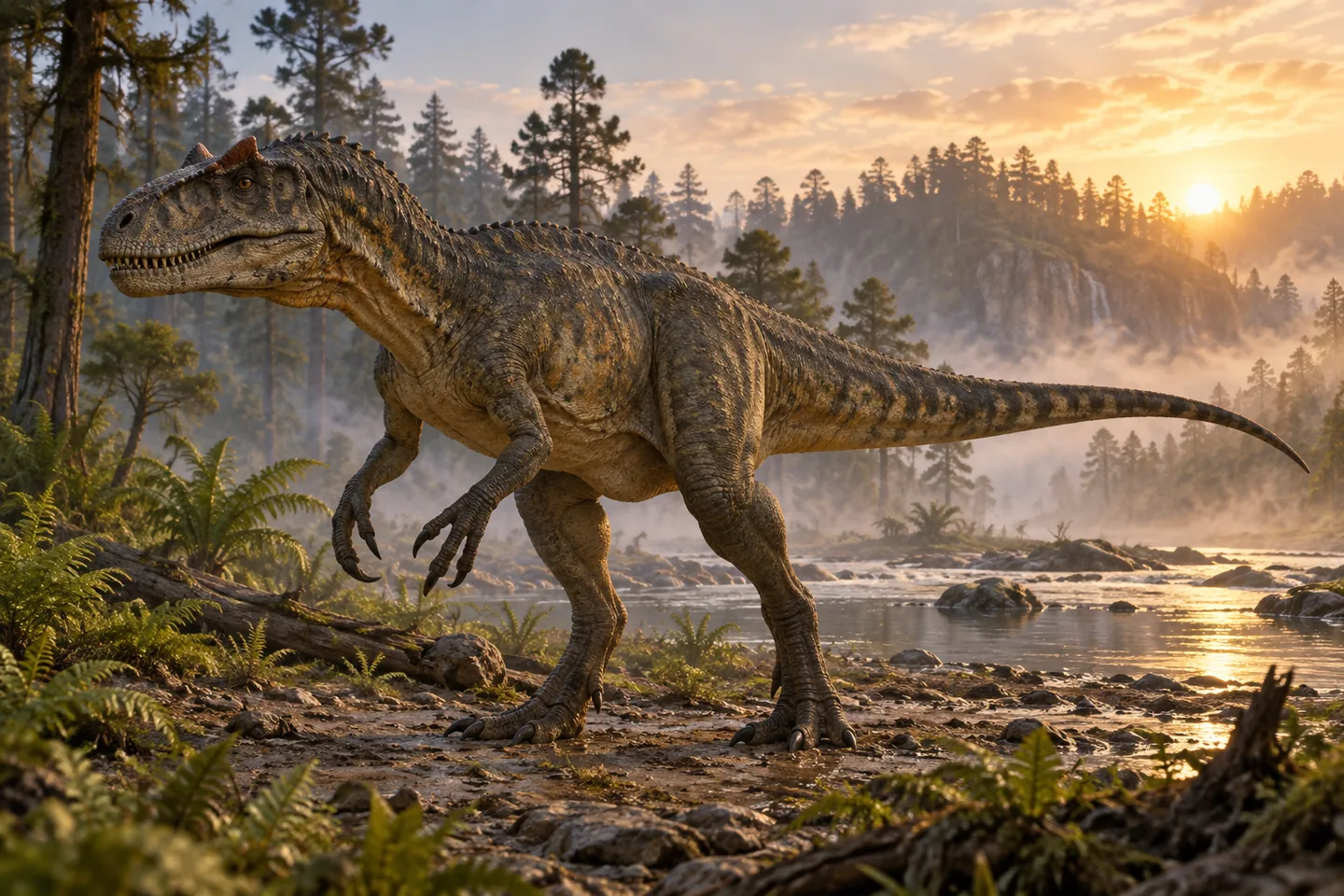
Cinematic Allosaurus with a long balanced tail, three-fingered forelimbs and small eye horns; color and skin details are artistic. Dramatic lighting, surface detail and scenery are artistic choices. This is an original cinema-inspired picture, rather than a frame from a film or a documented fossil locality.
Original artwork · artistic interpretation.
Scientific view: credited paleoart interpreting fossil evidence, served online by Wikimedia. Movie-style view: Original artistic interpretation. Colors, soft tissues and settings involve reconstruction.
MEET THE ANIMAL
Allosaurus was a large meat-eating dinosaur of the Late Jurassic. Fossils of Allosaurus fragilis occur in North America's Morrison Formation, where it is a familiar predator. Its skull and teeth are valuable clues to feeding. The formation also preserves many other dinosaurs, allowing researchers to compare animals that shared this ancient setting. [D2]
An American Museum of Natural History display illustrates how fossils can inspire a life scene. Its Allosaurus cast stands beside a carcass whose bones carry grooves, possibly made by teeth or claws. Allosaurus teeth found nearby helped inspire that arrangement. The display is an interpretation of associated evidence; it does not preserve a photograph of the dinosaur feeding or show how the animal died. [S1]
Evidence inside a bone can also have competing explanations. Tissue in one specimen was interpreted as related to reproduction, but a later review argued that disease could explain it instead. That disagreement prevents the fossil from securely establishing reproductive age or nesting habits. A striking fossil may support several ideas until further evidence helps distinguish them. [D3] [D4]
PREHISTORIC ANIMAL DOSSIER
The animal, the evidence, and the questions still open.
Allosaurus was a large carnivore of the Late Jurassic with serrated teeth, three-fingered hands and small horns above its eyes. Bonebeds and unusual bone tissue have prompted behavioural hypotheses, but their interpretation requires caution.
Profile scope: Genus — Allosaurus
Source supported identifies a description documented by the cited source. Inferred marks a reconstruction or functional estimate. Debated marks competing interpretations. Not established means the sources reviewed for this dossier do not support a firm conclusion; it does not mean a behavior never occurred.
A size reference is an estimate, not a population range. Nesting evidence does not by itself establish courtship, mate choice, or lifelong pairing.
About 9.7 m (museum reference)
The museum gives this approximate genus reference. It does not specify a specimen, maturity assessment or population range. [D1]
About 2.7 tonnes (museum reference)
The museum gives a rounded 2,700 kg reconstruction estimate. Its method and life stage are not specified. [D1]
Meat eater; feeding on other dinosaurs
Serrated teeth and attributed feeding traces support carnivory. Feeding traces do not by themselves distinguish hunting from scavenging. [D1] [D2]
Late Jurassic Morrison Formation, North America
The park documents A. fragilis in the Morrison Formation. That species example does not establish every Allosaurus species' habitat preferences. [D2]
Two-legged terrestrial movement
The museum describes a bipedal animal. Precise running speed remains a biomechanical estimate. [D1]
Serrated teeth, three-fingered hands, brow horns
These skeletal features are described in the museum profile. The horns' functions remain hypotheses. [D1]
Reproductive tissue interpretation disputed
A 2008 study interpreted tissue as medullary bone associated with reproduction. A later review argues that pathology could explain the Allosaurus specimen, so it does not securely establish reproductive age or nesting. [D3] [D4]
Brow-horn display proposed
Mate attraction is one proposed function of the horns. No courtship sequence is established by the reviewed sources. [D1]
Group living and hunting debated
Bonebeds prompted group-living proposals, but accumulation can have other causes. Coordinated hunting is not demonstrated by those associations. [D1] [D2]
Sources and inspection notes for the claims in this profile.
THE STORY IN THE FOSSILS
Allosaurus carried serrated, dagger-shaped teeth and walked on two hind limbs. Its eye horns and three-fingered hands distinguish its outline from later tyrannosaurs. The museum places it in Allosauridae and lists Allosaurus fragilis as the type species of the genus. [1]
Several individuals occur together in bone beds, but such concentrations do not establish cooperative hunting. Stegosaurus bones bear attributed Allosaurus bite marks, while sauropod remains indicate scavenging. Whether it regularly attacked the largest living herbivores remains an open question for researchers. [1]
We have not established a comparable adult total-length estimate for this taxon in this draft. Specimen measurements in the text describe those individuals. The cited dates are approximately 152–145 million years ago. Published genus-level educational dating; not a specimen age. Unknown does not mean zero.
Sources and evidence notes for this exhibit.
KEEP EXPLORING
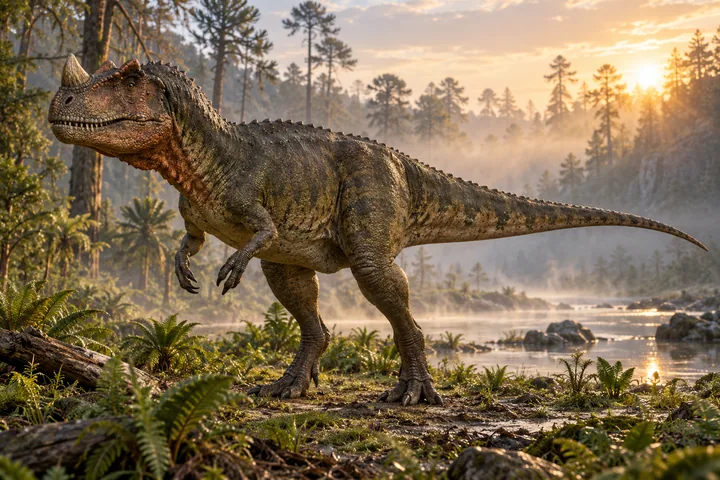
Ceratosaurus
Ceratosaurus had a nose horn and small bony armor pieces along its back.
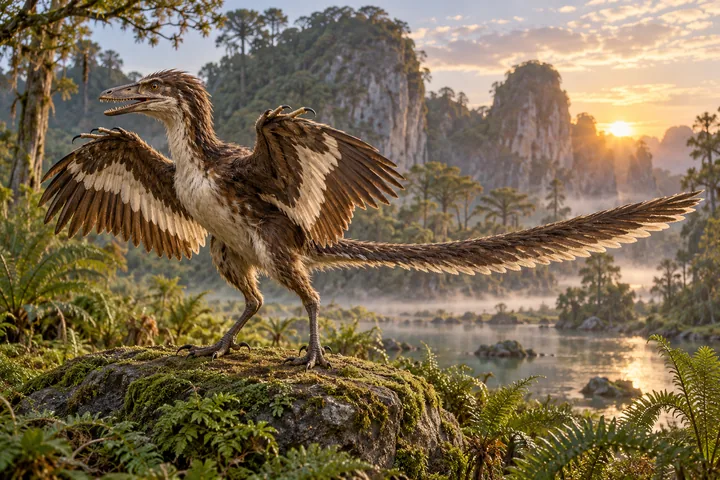
Archaeopteryx
Feathered wings combined with teeth and a long bony tail.
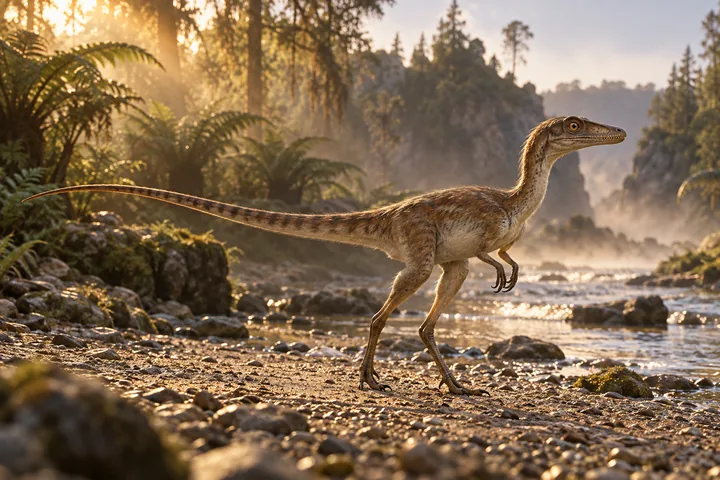
Compsognathus
A small predator whose last meal survived inside its fossil.