
Body length
InferredAbout 6–7 m (museum reference)
The museum gives approximately 6–7 m. Its reference does not specify a maturity-tested specimen or adult population range. [D1]
EXHIBIT 13
Ceratosaurus
Ceratosaurus had a nose horn and small bony armor pieces along its back.
TWO WAYS TO PICTURE THE PAST
Compare the evidence with the familiar movie image. The illustrations are not to a shared scale.

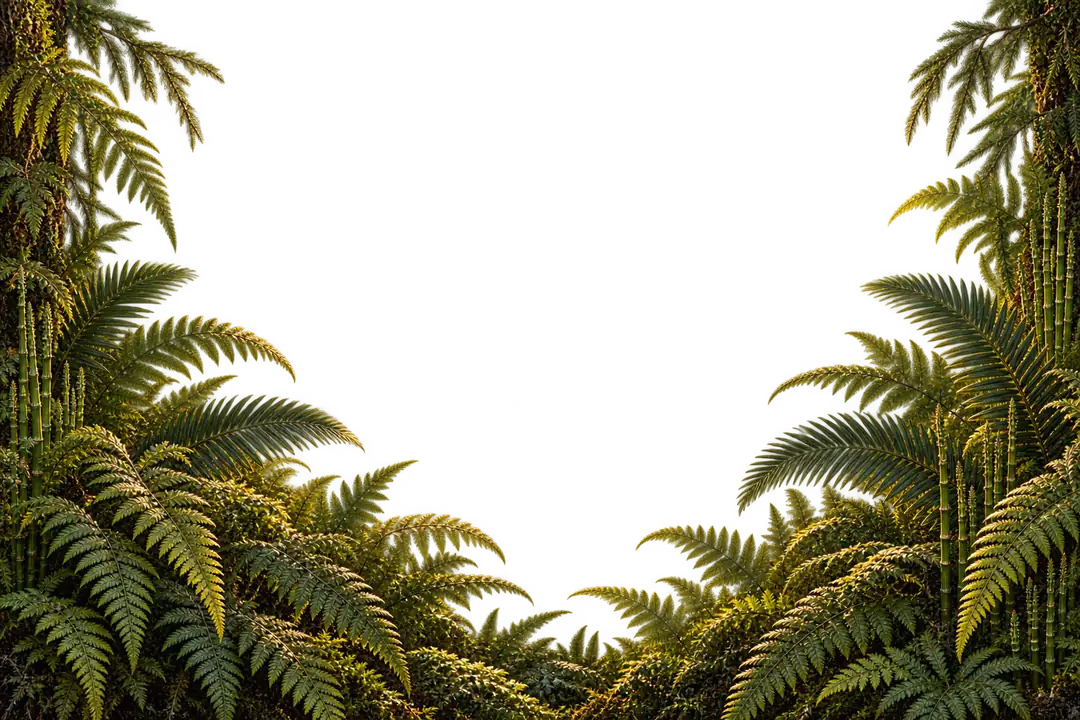
The artist identifies this reconstruction as Ceratosaurus nasicornis. This view illustrates one form within the genus, rather than every species or individual. Fossil-informed anatomy: Bipedal carnivore with a prominent nasal horn and a row of small dorsal osteoderms. Coloration and other soft tissues are interpretive; species reconstruction represents the genus. [1]
Life reconstruction of Ceratosaurus nasicornis.png — Connor Ashbridge. CC BY 4.0. Remote source artwork displayed without additional cropping; Wikimedia supplies any display-size derivative.
Scientific picture served by Wikimedia · internet connection required.
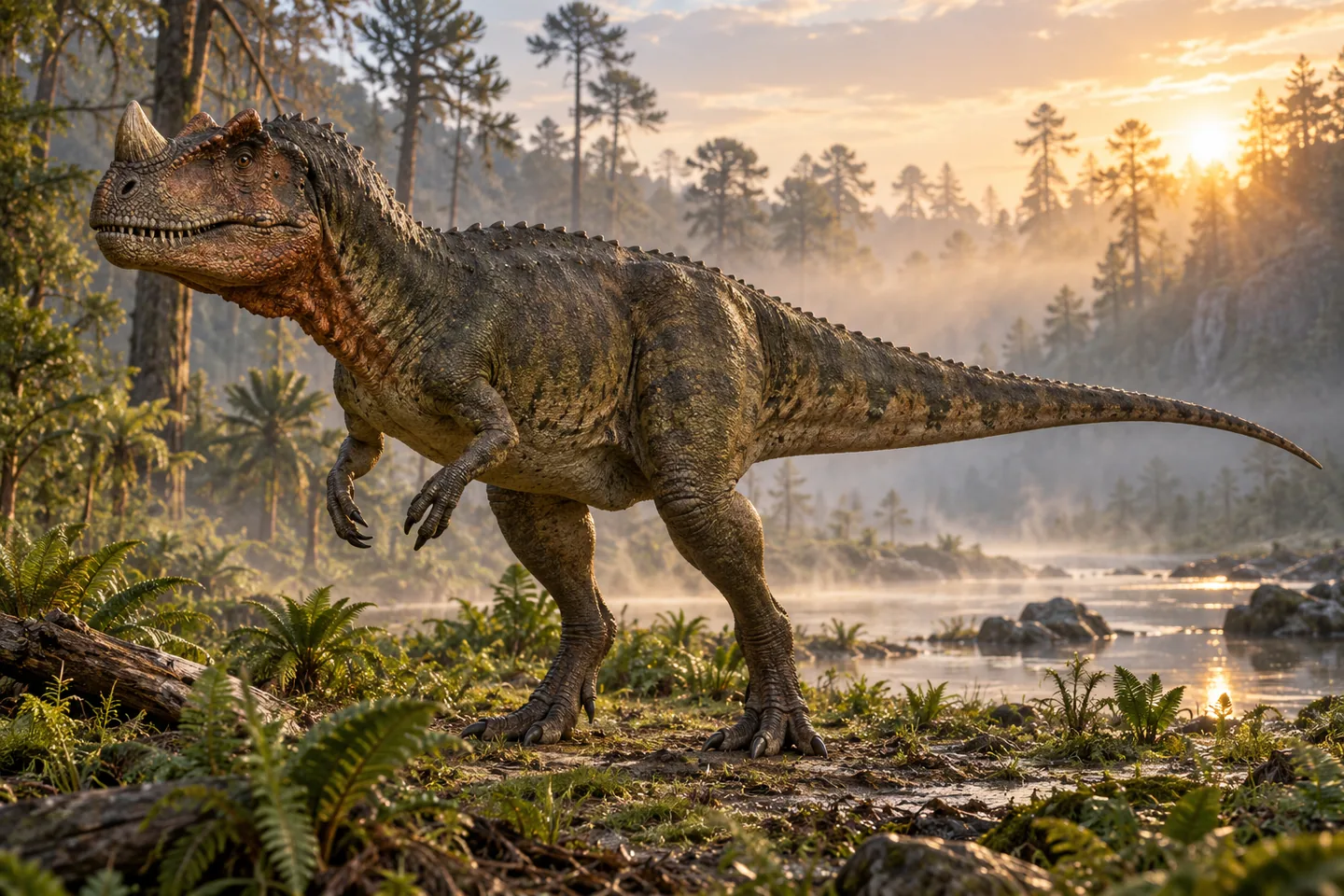
Cinematic Ceratosaurus with a single nose horn and subtle bony plates along the back; skin color and soft-tissue ornament are artistic. Dramatic lighting, surface detail and scenery are artistic choices. This is an original cinema-inspired picture, rather than a frame from a film or a documented fossil locality.
Original artwork · artistic interpretation.
Scientific view: credited paleoart interpreting fossil evidence, served online by Wikimedia. Movie-style view: Original artistic interpretation. Colors, soft tissues and settings involve reconstruction.
MEET THE ANIMAL
Ceratosaurus was a meat-eating dinosaur of the Late Jurassic Morrison Formation. A horn formed from the nasal bones adorned the top of its snout. At Dinosaur National Monument, a single front upper-jaw bone identifies its presence: that bone holds three teeth, a useful difference from other local predatory dinosaurs. Ceratosaurus is considerably rarer in these fossil assemblages than Allosaurus. [D2]
The Smithsonian preserves the skeleton used to name and describe Ceratosaurus. Such an important reference is called a type specimen; later discoveries can be compared with it. Its long, blade-like teeth and row of bony armor along the back add to the distinctive outline. For many years, however, part of this skeleton remained hidden inside rock and a museum wall, limiting the areas scientists could examine. [S1]
Preparing that fossil again exposed parts that had not been accessible for close study. It also allowed casts to be made for a dramatic exhibit beside Stegosaurus. A museum battle scene helps visitors imagine these animals, but it is a reconstruction, not a preserved record of that particular fight. The fossil gives stronger evidence for anatomy and identification than for a complete hunting routine, courtship or parental care. [S1]
PREHISTORIC ANIMAL DOSSIER
The animal, the evidence, and the questions still open.
Ceratosaurus combined a nasal horn with small bony armour along the back. It was a relatively uncommon Late Jurassic carnivore compared with Allosaurus in the North American fossil assemblages reviewed here.
Profile scope: Genus — Ceratosaurus
Source supported identifies a description documented by the cited source. Inferred marks a reconstruction or functional estimate. Debated marks competing interpretations. Not established means the sources reviewed for this dossier do not support a firm conclusion; it does not mean a behavior never occurred.
A size reference is an estimate, not a population range. Nesting evidence does not by itself establish courtship, mate choice, or lifelong pairing.
About 6–7 m (museum reference)
The museum gives approximately 6–7 m. Its reference does not specify a maturity-tested specimen or adult population range. [D1]
About 980 kg (museum reference)
The museum lists a rounded reconstructed mass. The calculation method and life stage are not specified. [D1]
Meat eater
Its teeth support carnivory. Hypotheses about aquatic prey or scavenging particular dinosaurs do not establish a complete diet. [D1] [D2]
Late Jurassic North America and Portugal
The museum lists these fossil regions; the park documents Morrison Formation material. These occurrences do not establish a single preferred environment. [D1] [D2]
Probably two-legged terrestrial movement
The theropod skeletal reconstruction supports bipedal movement. A genus-specific gait or speed test was not reviewed. [D1]
Nasal horn and small dorsal armour
The nasal horn and small bony plates along the back are skeletal features. The horn's small size and form inform, but do not prove, functional interpretations. [D1]
Not established here
Reviewed sources do not establish Ceratosaurus clutch size, nest architecture or parental care.
Horn display proposed
Mate attraction and species recognition are proposed horn functions. They do not establish a courtship sequence or sex-specific horn shape. [D1]
Not established here
Reviewed sources do not establish a typical Ceratosaurus group size; isolated finds do not prove that it always lived alone.
Sources and inspection notes for the claims in this profile.
THE STORY IN THE FOSSILS
The first Ceratosaurus skeleton was found in Colorado in 1883 and named by Othniel Charles Marsh the following year. Many bones remained connected, making it unusually informative for its time. Later discoveries in Utah and Portugal expanded knowledge of the genus’s distribution. [1]
The nose horn was probably too delicate for serious combat, so display or recognition are plausible explanations. Ceratosaurus lived alongside the more frequently preserved Allosaurus. Attributed tooth marks on Allosaurus remains suggest feeding on carcasses, while other proposed prey choices remain less certain. [1]
We have not established a comparable adult total-length estimate for this taxon in this draft. Specimen measurements in the text describe those individuals. The cited dates are approximately 152–145 million years ago. Published genus-level educational dating; not a specimen age. Unknown does not mean zero.
Sources and evidence notes for this exhibit.
KEEP EXPLORING
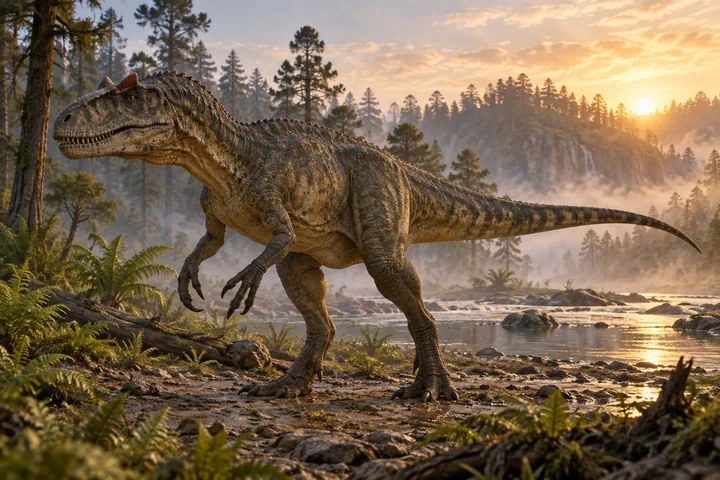
Allosaurus
Allosaurus combined three-fingered hands with small horns above its eyes.
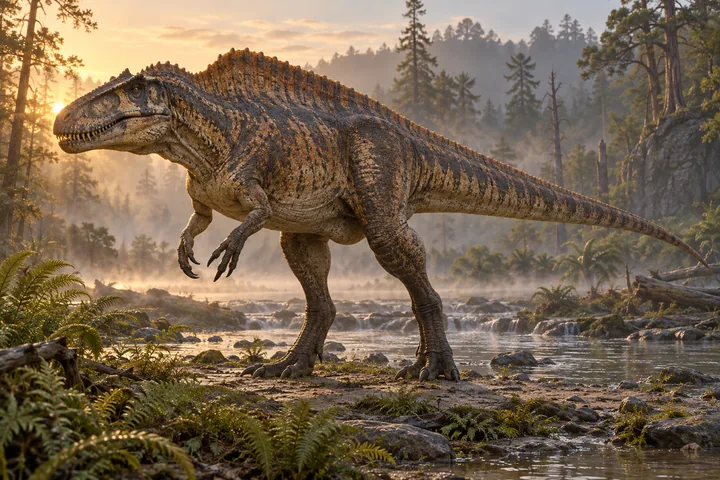
Acrocanthosaurus
Acrocanthosaurus carried unusually tall spines on its back, hip and tail vertebrae.
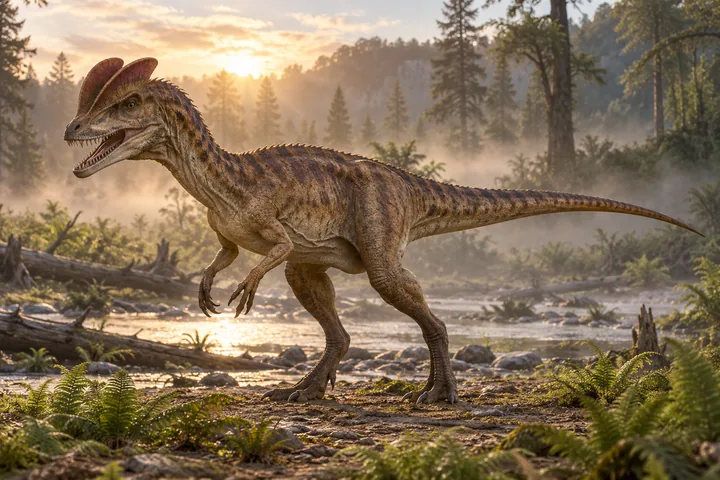
Dilophosaurus
Dilophosaurus had paired head crests penetrated by air spaces.