
Body length
InferredAbout 7 m (museum reference)
The museum gives a rounded reconstructed length. The reference does not identify a maturity-tested specimen or population range. [D1]
EXHIBIT 14
Dilophosaurus
Dilophosaurus had paired head crests penetrated by air spaces.
TWO WAYS TO PICTURE THE PAST
Compare the evidence with the familiar movie image. The illustrations are not to a shared scale.

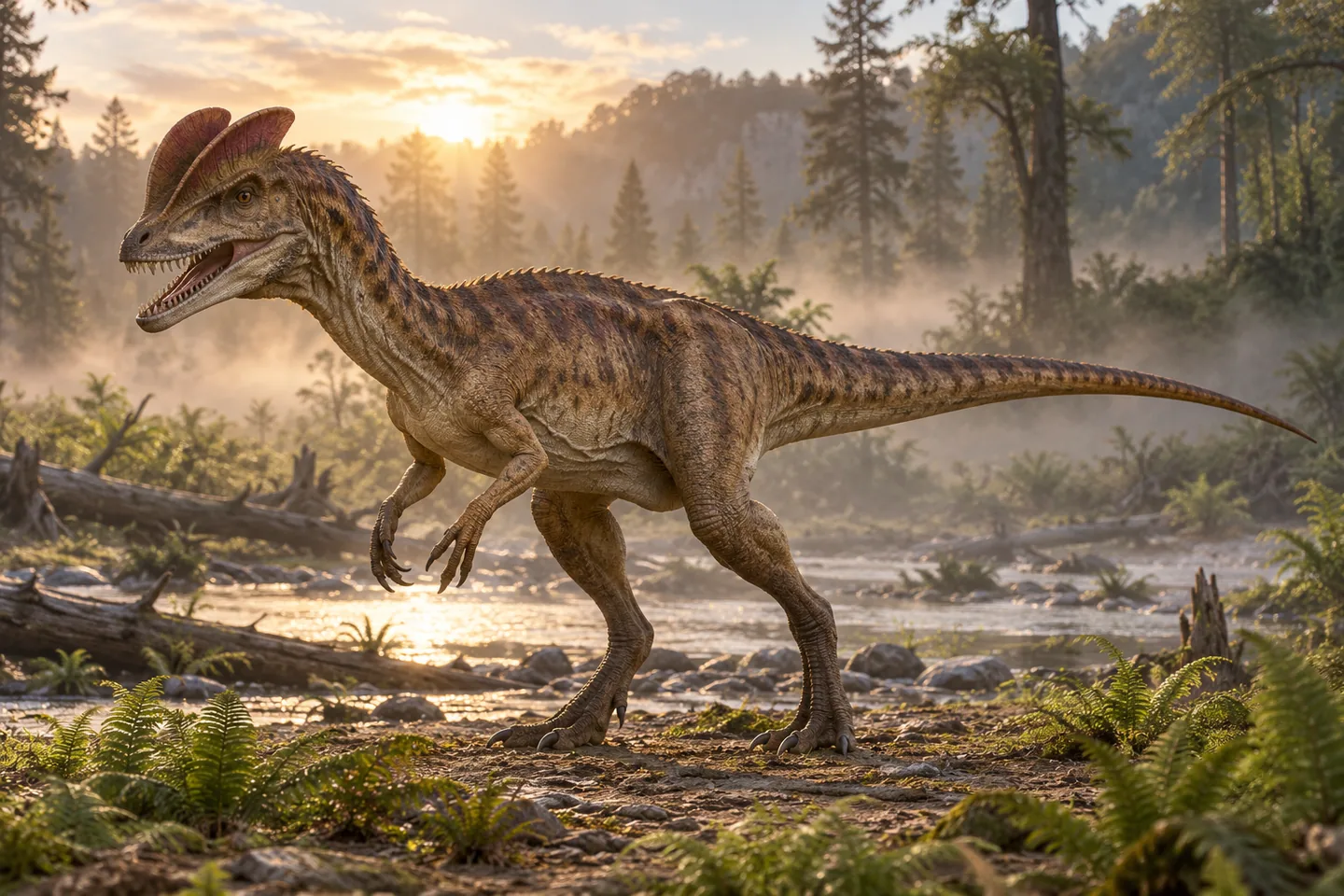
The artist identifies this reconstruction as Dilophosaurus wetherilli. This view illustrates one form within the genus, rather than every species or individual. Fossil-informed anatomy: Large bipedal predator with paired thin cranial crests, a notched snout and substantial jaws. Coloration and other soft tissues are interpretive; species reconstruction represents the genus. [1] [2]
Life reconstruction of Dilophosaurus wetherilli.png — Connor Ashbridge. CC BY 4.0. Remote source artwork displayed without additional cropping; Wikimedia supplies any display-size derivative.
Scientific picture served by Wikimedia · internet connection required.
Cinematic Dilophosaurus with paired cranial crests and a powerful notched jaw; retain its large theropod proportions and use artistic surface colors. Dramatic lighting, surface detail and scenery are artistic choices. This is an original cinema-inspired picture, rather than a frame from a film or a documented fossil locality.
Original artwork · artistic interpretation.
Scientific view: credited paleoart interpreting fossil evidence, served online by Wikimedia. Movie-style view: Original artistic interpretation. Colors, soft tissues and settings involve reconstruction.
MEET THE ANIMAL
Dilophosaurus wetherilli was a large predatory dinosaur from the Early Jurassic of northern Arizona. Its fossils come from the Kayenta Formation in the Navajo Nation. Two crests along its skull make it recognizable. A detailed 2020 study revisited earlier discoveries and described additional specimens, building a fuller anatomical picture from five individuals rather than relying on a single skeleton. [S1]
The crests were made from expanded skull bones, including bones around the nose and the front of the eyes. These are preserved structures, not a fictional neck frill. The study also examined differences along the neck vertebrae, the bones forming that part of the backbone. Close comparisons of skulls and skeletons supported one species in the studied material despite differences between the individual fossils. [S1]
Those comparisons also tested its place among predatory dinosaurs. The researchers did not recover a simple separate family containing all the familiar crested early predators. Some similarities may instead reflect features inherited more widely among early theropods. This illustrates why appearance alone does not settle relationships. The anatomical work provides a strong starting point for understanding Dilophosaurus, while the reviewed evidence does not establish a particular courtship routine, nest structure or parental-care behavior. [S1]
PREHISTORIC ANIMAL DOSSIER
The animal, the evidence, and the questions still open.
Dilophosaurus was a sizeable Early Jurassic predator with paired skull crests and a powerful jaw. A modern anatomical revision describes air spaces reinforcing parts of its skeleton and rejects the weak-jawed portrayal familiar from fiction.
Profile scope: Genus — Dilophosaurus; anatomical revision concerns D. wetherilli
Source supported identifies a description documented by the cited source. Inferred marks a reconstruction or functional estimate. Debated marks competing interpretations. Not established means the sources reviewed for this dossier do not support a firm conclusion; it does not mean a behavior never occurred.
A size reference is an estimate, not a population range. Nesting evidence does not by itself establish courtship, mate choice, or lifelong pairing.
About 7 m (museum reference)
The museum gives a rounded reconstructed length. The reference does not identify a maturity-tested specimen or population range. [D1]
About 400 kg (museum reference)
The museum lists a rounded reconstruction estimate. Its method and life stage are not specified in the profile. [D1]
Meat eater
The revised anatomy supports a substantial predator with powerful jaw muscles. Specific prey preferences are not established by that anatomy alone. [D2] [D1]
Early Jurassic Arizona; desert-and-river setting
Arizona fossils establish regional occurrence. The museum reconstructs dunes and rivers; this does not demonstrate a single habitat preference. [D2] [D1]
Two-legged terrestrial movement
The museum describes bipedal movement. Detailed running-speed estimates are not reviewed here. [D1]
Paired crests, strong jaws, skeletal air spaces
The revision identifies reinforced skull anatomy and strong jaw attachment sites. Fossils reviewed here do not establish the fictional neck frill or venom. [D2] [D1]
Not established here
Reviewed sources do not establish Dilophosaurus eggs, nest arrangement or parental care.
Crest display proposed
The museum proposes display and mate attraction as possible crest functions. No courtship ritual or sex-specific crest difference is established. [D1]
Not established here
Reviewed sources do not establish a typical Dilophosaurus group size or coordinated hunting behaviour.
Sources and inspection notes for the claims in this profile.
THE STORY IN THE FOSSILS
A 2020 analysis examined five relatively complete specimens from Arizona’s Kayenta Formation. These fossils belong to the Navajo Nation and are held in trust by university collections. Their anatomy confirms a substantial predator, with jaw bones providing attachment scaffolding for powerful muscles. [2]
The paired skull crests contained interconnected air spaces, part of a skeleton with bird-like pneumatic features. A keratin covering could have altered their living outline. Neither a spreading neck frill nor venom-spitting has fossil support; both are additions associated with Jurassic Park. [1] [2]
We have not established a comparable adult total-length estimate for this taxon in this draft. Specimen measurements in the text describe those individuals. The cited dates are approximately 183 million years ago. University research summary dates the Kayenta dinosaur to approximately 183 Ma. Unknown does not mean zero.
Sources and evidence notes for this exhibit.
KEEP EXPLORING
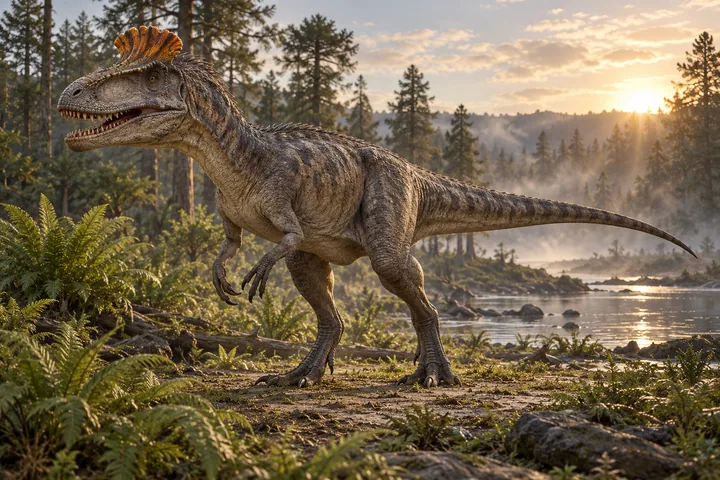
Cryolophosaurus ellioti
Cryolophosaurus had a fluted crest running across the top of its skull.
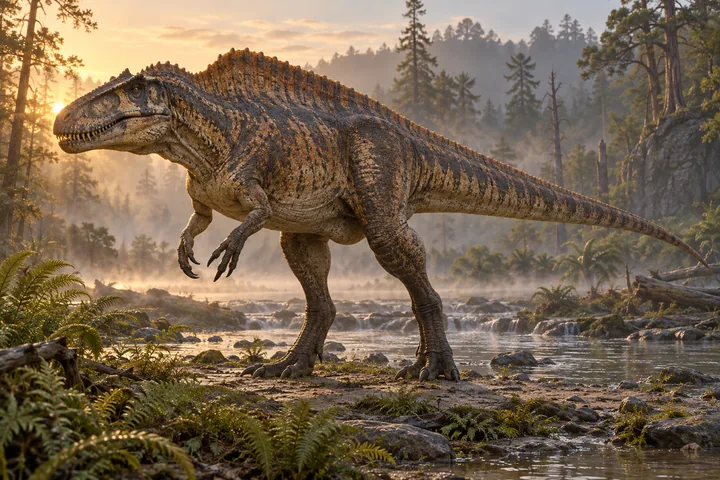
Acrocanthosaurus
Acrocanthosaurus carried unusually tall spines on its back, hip and tail vertebrae.
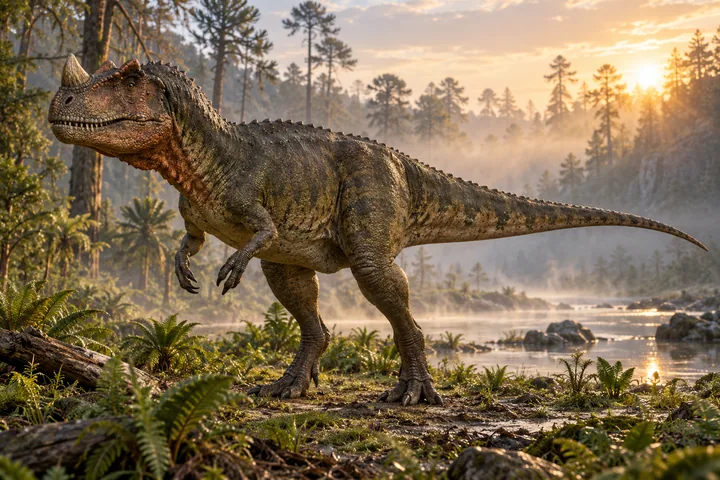
Ceratosaurus
Ceratosaurus had a nose horn and small bony armor pieces along its back.