
Body length
InferredAbout 15 m (reconstruction reference)
The original reconstruction estimates this scale; no complete individual or proven adult species maximum is identified. [D1]
EXHIBIT 240
Ampelosaurus atacis
Dinosaur
Ampelosaurus was a French titanosaur known from bones, teeth and several distinctive armor elements. [1]
TWO WAYS TO PICTURE THE PAST
Compare the evidence with the familiar movie image. The illustrations are not to a shared scale.
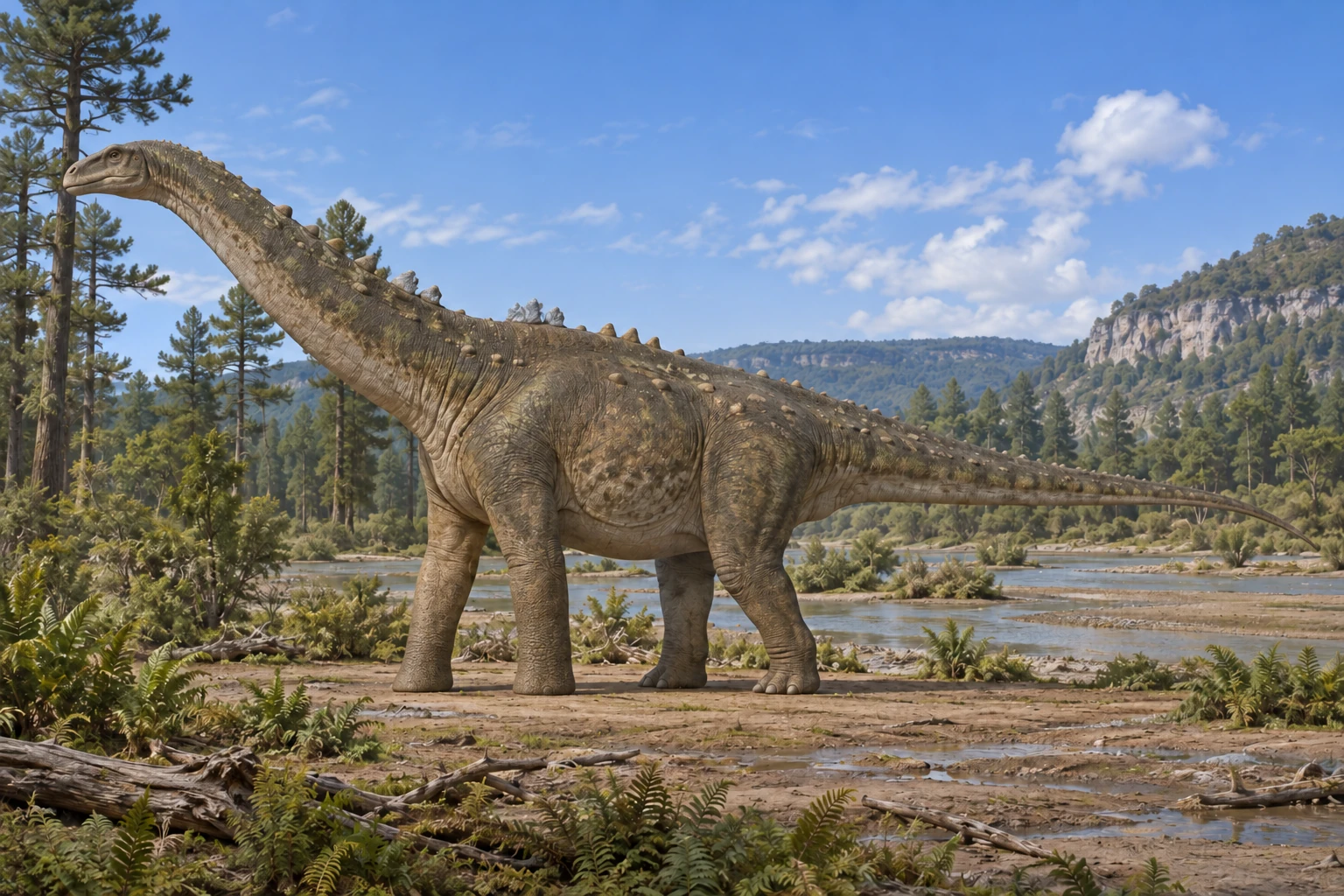
An illustrative reconstruction. Compare its anatomy with the evidence and limitations in the dossier. [1]
Source-informed reconstruction. Appearance evidence [1]. Original illustration; missing anatomy, coloration and scenery include interpretation.
Fossils constrain this life reconstruction. Missing anatomy, coloration and the environmental scene include interpretation; the dossier explains the evidence limits.
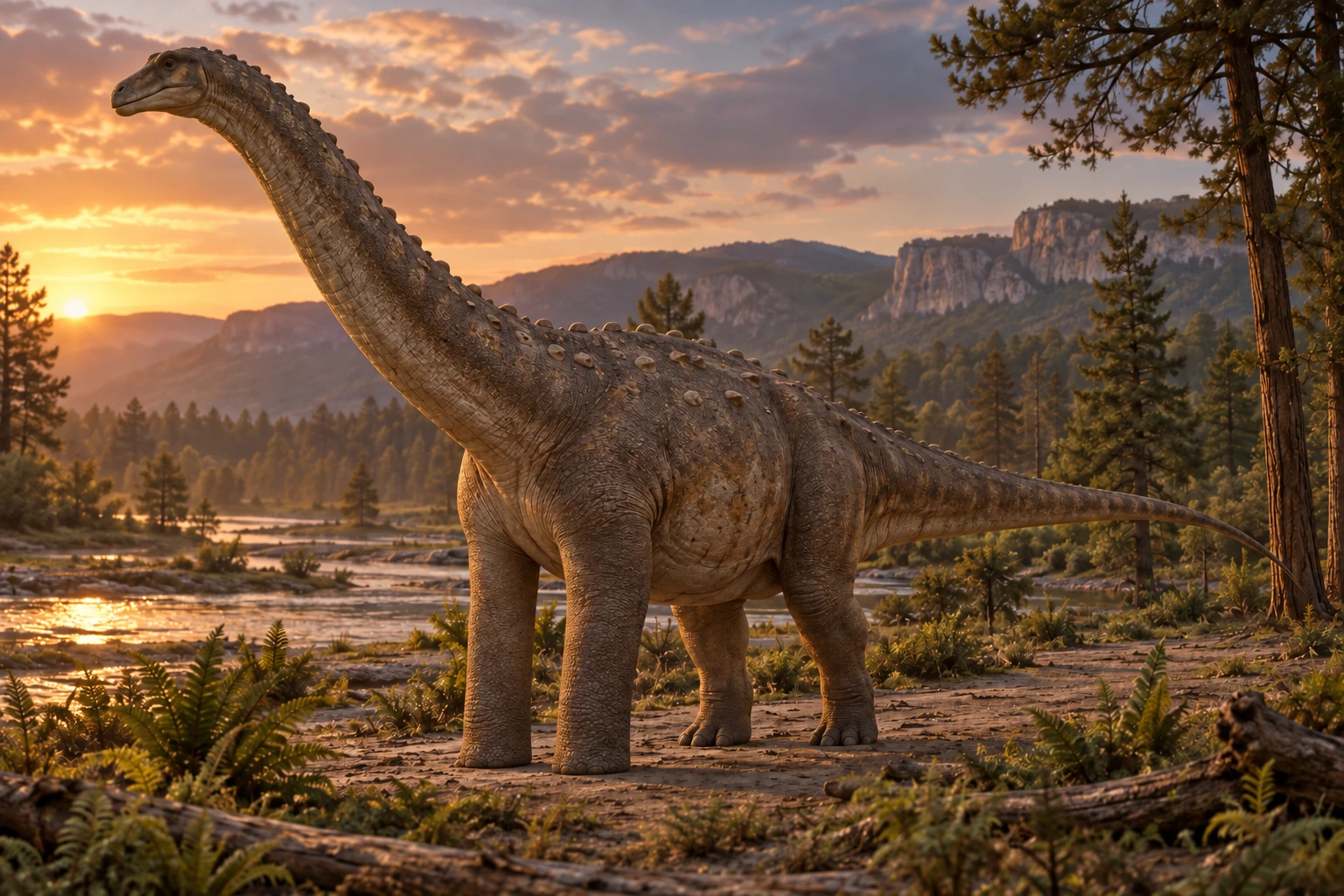
An illustrative reconstruction. Compare its anatomy with the evidence and limitations in the dossier. Lighting, coloration and scenery are artistic choices. This image does not document a fossil locality or behavior.
Original artwork · artistic interpretation.
Scientific view: source-informed reconstruction, credited paleoart or specimen-based imagery. Movie-style view: Original artistic interpretation. Reconstructions involve uncertainty.
MEET THE ANIMAL
Ampelosaurus was a long-necked, four-legged plant eater from southern France. The museum directory gives a length reference of about fifteen meters, making it a substantial animal even among familiar dinosaur displays. That number is a reconstruction rather than a measured complete skeleton. Teeth, limb bones and other skeletal parts help identify a titanosaur, while illustrations must supply missing soft tissues and colors. [D3]
The original description named Ampelosaurus atacis from fossils in the Upper Aude Valley. Its type consists of three connected back vertebrae, with other material referred from the same fossil deposits. Several bony skin elements were also described. They support the presence of armor, but the fossils do not show exactly where every plate, knob or spine sat on a living animal. [D1]
Later researchers examined thin sections of its bones to investigate growth. They found changes in the organization of bone tissue that suggest growth slowed. Such evidence cannot by itself prove that the dinosaur became an island dwarf, and robust or slender bones do not automatically identify males and females. The study also leaves uncertainties because not every largest known bone was sampled. [D2]
PREHISTORIC ANIMAL DOSSIER
The animal, the evidence, and the questions still open.
Bone sections show changes in growth tissue without establishing every individual's final size or sex. [D2]
Profile scope: Genus — French Ampelosaurus atacis; type C3-247 vertebrae and referred Upper Aude material. [D1]
Source supported identifies a description documented by the cited source. Inferred marks a reconstruction or functional estimate. Debated marks competing interpretations. Not established means the sources reviewed for this dossier do not support a firm conclusion; it does not mean a behavior never occurred.
A size reference is an estimate, not a population range. Nesting evidence does not by itself establish courtship, mate choice, or lifelong pairing.
About 15 m (reconstruction reference)
The original reconstruction estimates this scale; no complete individual or proven adult species maximum is identified. [D1]
Not established here
The reviewed directory supplies no maturity-qualified numerical mass adopted here. [D3]
Plant feeding inferred
Institutional classification and sauropod anatomy support herbivory; particular foods are not preserved. [D3]
Southern French terrestrial setting
Bellevue material studied histologically is Late Campanian–early Maastrichtian; fossils represent land animals rather than a marine habitat. [D2]
Quadrupedal sauropod reconstruction
Four weight-bearing limbs support the body; movement speed is not measured. [D3]
Titanosaur bones and osteoderms
Several bony armor elements are documented, but their arrangement on a living body is unknown. [D1]
Not established here
Reviewed bones do not identify a genus-specific egg or nest. [D1]
Not established here
Robust and gracile bone forms do not prove sexes or mating displays. [D2]
Not established here
A disarticulated fossil accumulation does not by itself demonstrate a living herd. [D1]
Sources and inspection notes for the claims in this profile.
THE STORY IN THE FOSSILS
The reviewed bone sections record slower-growing tissue, but that does not alone prove island dwarfism or establish sexual differences. [2]
The museum's size reference introduces scale while the dossier identifies the limits of whole-body reconstruction. [3]
The dossier identifies the scope of each reference estimate. A mount, an individual fossil and a species-wide adult range are different measurements. Comparison metrics remain unavailable where adult scope has not been established. Unknown does not mean zero.
Sources support the stated claims and scopes. Refer to the evidence notes for uncertainty.
KEEP EXPLORING
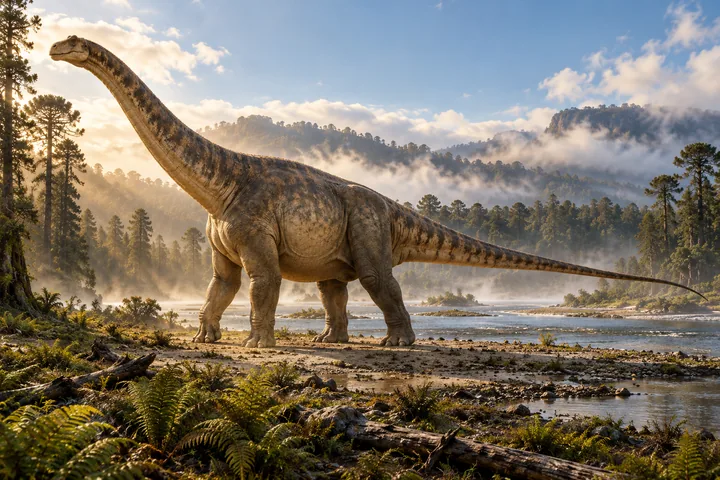
Argentinosaurus huinculensis
Argentinosaurus huinculensis was an enormous Late Cretaceous plant-eating titanosaur from Argentina. Its fragmentary remains reveal great scale while leaving its complete proportions uncertain.
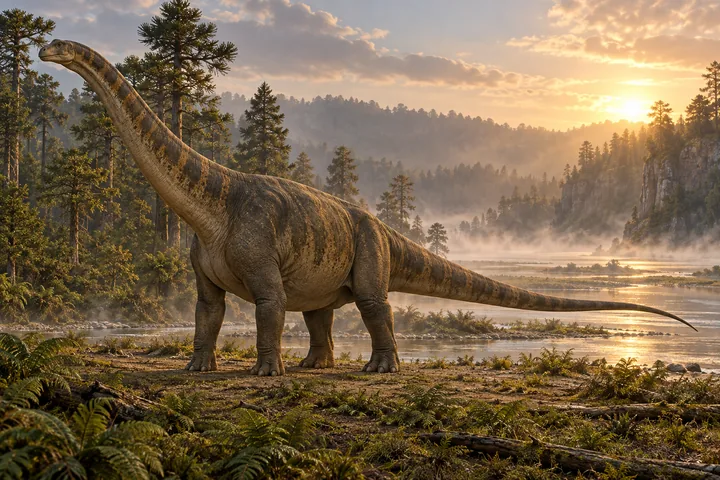
Dreadnoughtus schrani
Dreadnoughtus schrani was a giant plant-eating titanosaur from Patagonia. Its well-preserved skeleton offers unusual anatomical detail, while competing methods produce markedly different mass estimates.
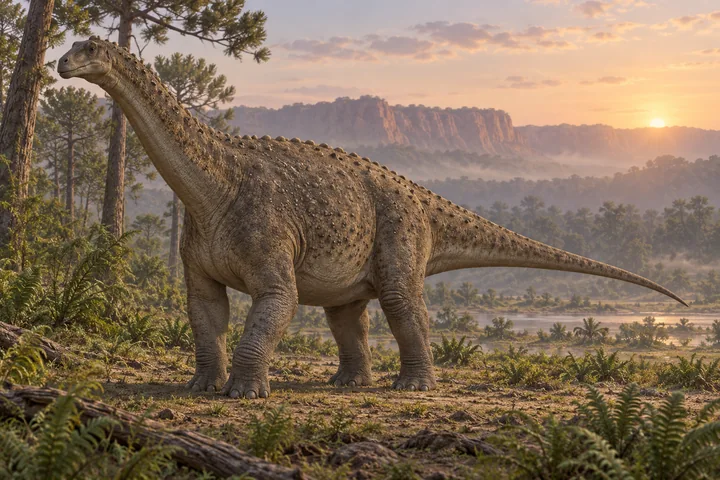
Saltasaurus loricatus
Saltasaurus was an Argentine titanosaur whose fossils preserve bony plates and tiny skin ossicles.