
Length
InferredHolotype: about 26 m (reconstructed)
Drexel reports this reconstructed length for an individual whose bones indicate continued growth. It does not establish the size range of fully grown adults. [D1]
EXHIBIT 54
Dreadnoughtus schrani
An exceptionally complete giant that was still growing.
TWO WAYS TO PICTURE THE PAST
Compare the evidence with the familiar movie image. The illustrations are not to a shared scale.

The artist identifies this reconstruction as Dreadnoughtus schrani. Fossil-informed anatomy: Massive quadrupedal titanosaur with long neck and tail; much axial and limb anatomy preserved, but head, hands and missing neck portions are reconstructed. Relatively small original:600×355px; avoid heavy enlargement. Unknown soft tissue, colour and incompletely preserved anatomy are reconstructed. [1] [2]
Dreadnoughtus NT small.jpg — Nobu Tamura; cropped by Monsieur X; human scale removed by Cetorhinus typus. CC BY-SA 4.0. Remote source artwork displayed without additional cropping; Wikimedia supplies any display-size derivative.
Scientific picture served by Wikimedia · internet connection required.
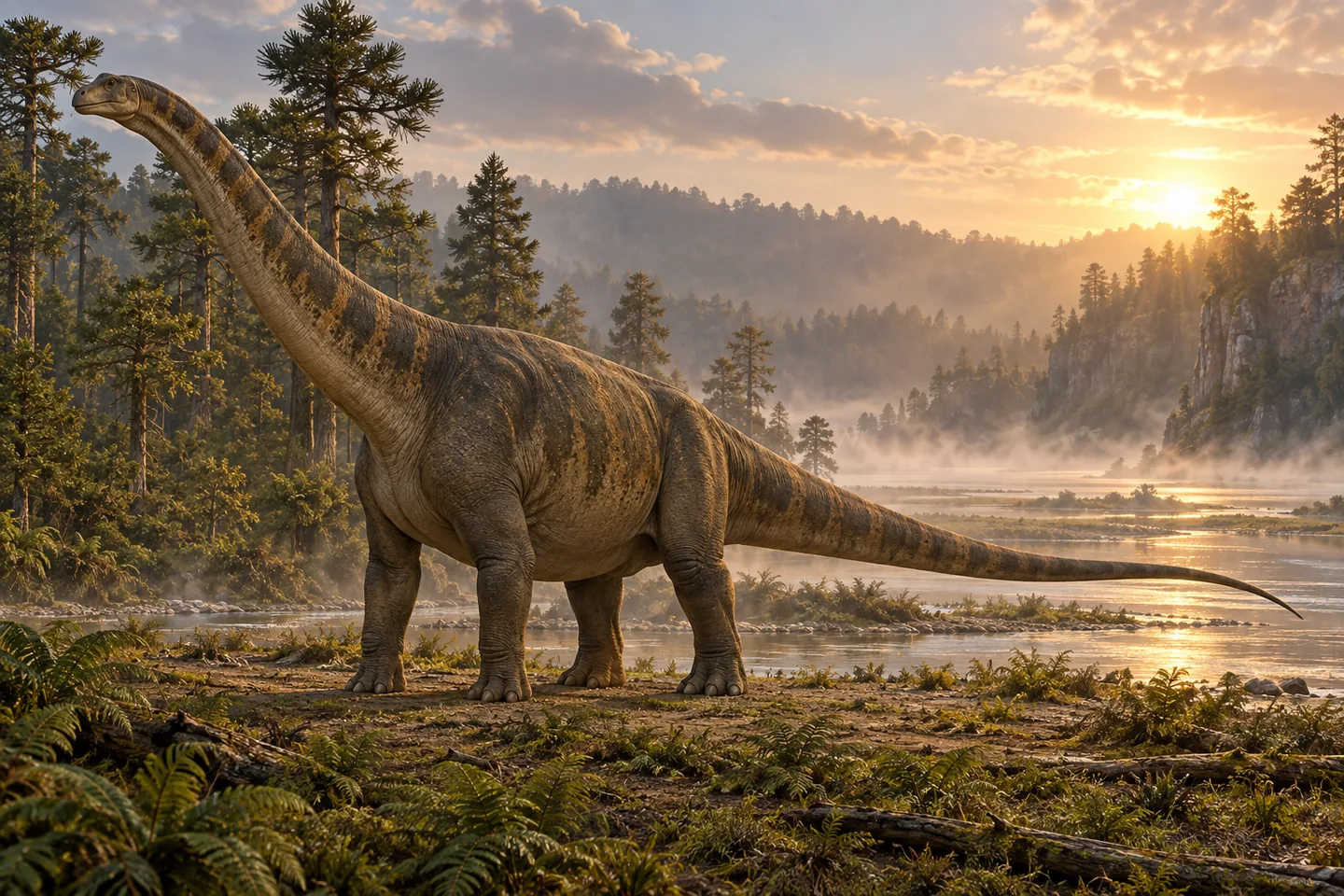
Cinematic Dreadnoughtus on massive supporting limbs, long neck and tail; head and extremities reconstructed conservatively from titanosaur relatives, speculative colour and no fixed mass claim. Dramatic lighting, surface detail and scenery are artistic choices. This is an original cinema-inspired picture, rather than a frame from a film or a documented fossil locality.
Original artwork · artistic interpretation.
Scientific view: credited paleoart interpreting fossil evidence, served online by Wikimedia. Movie-style view: Original artistic interpretation. Colors, soft tissues and settings involve reconstruction.
MEET THE ANIMAL
Dreadnoughtus schrani was an enormous long-necked titanosaur from Late Cretaceous Patagonia, in southern Argentina. Two individuals preserve complementary parts of its skeleton. Their bones include substantial portions of the limbs, shoulder region, pelvis and tail, giving researchers unusually useful evidence for reconstructing a giant sauropod. The remains are still incomplete, particularly where a complete head and feet would be needed. [S1]
Its weight is especially sensitive to the method used. One estimate scaled up from limb measurements; another built a three-dimensional body around the skeleton and allowed different amounts of soft tissue. The latter produced considerably lower estimates. Neither weighs the living dinosaur directly. Their disagreement shows why a giant’s famous weight should be reported with its reconstruction method, rather than treated as a precise measurement. [S2]
Microscopic bone structure indicates that the larger described individual was still growing when it died. It therefore cannot automatically define the maximum adult size of the species. The bones also preserve muscle attachment details that help researchers understand how its body was supported. Finding two animals provides anatomical comparisons, but does not by itself establish a herd or explain their relationships during life. [S1]
PREHISTORIC ANIMAL DOSSIER
The animal, the evidence, and the questions still open.
Dreadnoughtus preserves unusually informative limb and trunk material for a giant titanosaur. Its holotype was still growing, and limb-based versus volumetric methods give sharply different masses for that same individual.
Profile scope: Species: Dreadnoughtus schrani; size estimates concern the growing holotype, not a fully grown adult range.
Source supported identifies a description documented by the cited source. Inferred marks a reconstruction or functional estimate. Debated marks competing interpretations. Not established means the sources reviewed for this dossier do not support a firm conclusion; it does not mean a behavior never occurred.
A size reference is an estimate, not a population range. Nesting evidence does not by itself establish courtship, mate choice, or lifelong pairing.
Holotype: about 26 m (reconstructed)
Drexel reports this reconstructed length for an individual whose bones indicate continued growth. It does not establish the size range of fully grown adults. [D1]
Holotype estimates differ: 22.1–38.2 versus 59.3 tonnes
The original limb-circumference method produced 59,300 kg; three volumetric models yielded roughly 22,100–38,200 kg. This disagreement concerns methods applied to one growing specimen, not an adult species range. [D1] [D2]
Plant eater
The discovery team identifies a herbivorous titanosaur. Its proposed feeding envelope and food intake are reconstructions rather than preserved behavior. [D1]
Southern Patagonian forest and floodplain reconstructed
Drexel describes a temperate forest setting and rapid burial after a river breached its levee. Depositional circumstances do not establish preferred habitat everywhere. [D1]
Four-legged terrestrial reconstruction
Preserved fore- and hindlimb bones support quadrupedal reconstruction. A digital neutral pose is a modelling choice, not an observed walking cycle. [D1] [D2]
Massive limbs with pronounced muscle attachments
The holotype retains many limb bones and clear attachment scars. Most of its skull and neck remain missing despite unusually good preservation for a giant titanosaur. [D1] [D2]
Not established here
The reviewed sources do not establish nest structure, incubation or parental care for Dreadnoughtus schrani.
Not established here
The reviewed sources do not establish a courtship sequence or mating system for Dreadnoughtus schrani.
Not established here
Two individuals were recovered at the site. This association does not establish herd living, pair bonding or usual group size. [D1]
Sources and inspection notes for the claims in this profile.
THE STORY IN THE FOSSILS
The Dreadnoughtus discovery recovered two skeletons in southern Patagonia. The larger individual preserved much of the skeleton outside the head, providing an unusually detailed view of a giant titanosaur. Drexel researchers estimated it at about 26 metres long and concluded that it was not yet fully grown. [1]
Its mass illustrates how different methods can disagree. The original limb-circumference calculation gave 59,300 kilograms, whereas a later volumetric study produced roughly 22,100–38,200 kilograms across its model variants. Those numbers concern a particular specimen and modelling choices, rather than a settled range for full-grown adults. [1] [2]
We have not established a comparable adult total-length estimate for this taxon in this draft. Specimen measurements in the text describe those individuals. The cited dates are approximately 77 million years ago. Approximate reference age, represented by equal endpoints; not a demonstrated full temporal range. Unknown does not mean zero.
Sources and evidence notes for this exhibit.
KEEP EXPLORING
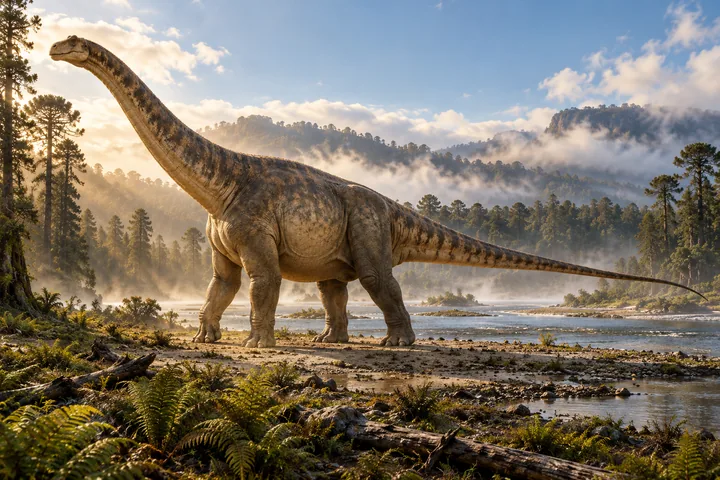
Argentinosaurus huinculensis
A giant known from fragments, with no skull yet found.
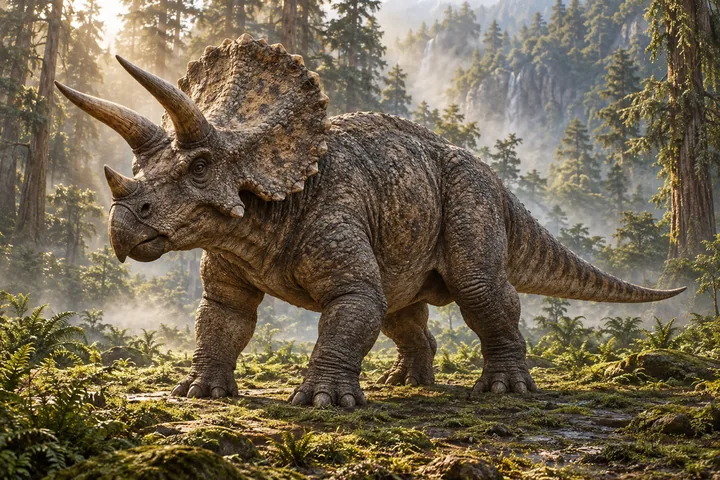
Triceratops horridus
Three horns, a broad frill, and a plant-eater beneath the formidable silhouette.
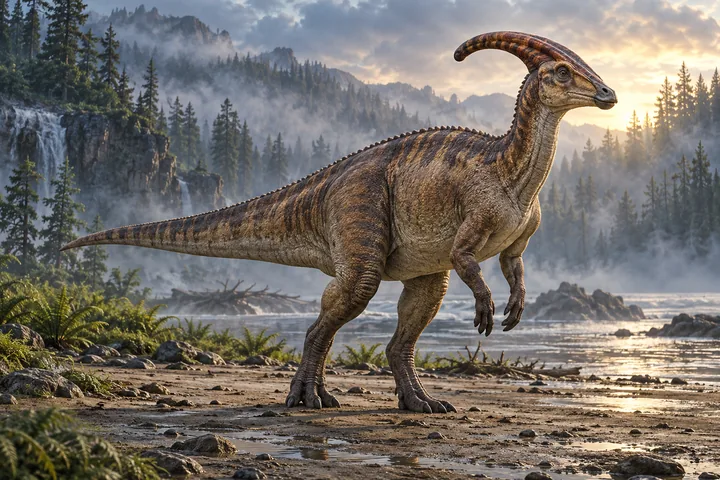
Parasaurolophus walkeri
A hollow crest and a skeleton that records an injured animal's life.