
Length
InferredAbout 8 m (museum reference)
A rounded museum reference, not a measured population range; the page does not specify the specimen, method or growth stage. [D1]
EXHIBIT 41
Ankylosaurus
Bony plates and a heavy tail club.
TWO WAYS TO PICTURE THE PAST
Compare the evidence with the familiar movie image. The illustrations are not to a shared scale.

The artist identifies this reconstruction as Ankylosaurus magniventris. This view illustrates one form within the genus, rather than every species or individual. Fossil-informed anatomy: Low quadruped with broad armoured body, beaked head and heavy terminal tail club; avoid a rigidly asserted plate arrangement. Armour arrangement incorporates reconstruction because a complete articulated body is unavailable. Colours and soft tissue are artistic interpretation. [1]
Ankylosaurus magniventris reconstruction.png — Emily Willoughby; head and armour revisions by FunkMonk. CC BY-SA 3.0. Remote source artwork displayed without additional cropping; Wikimedia supplies any display-size derivative.
Scientific picture served by Wikimedia · internet connection required.
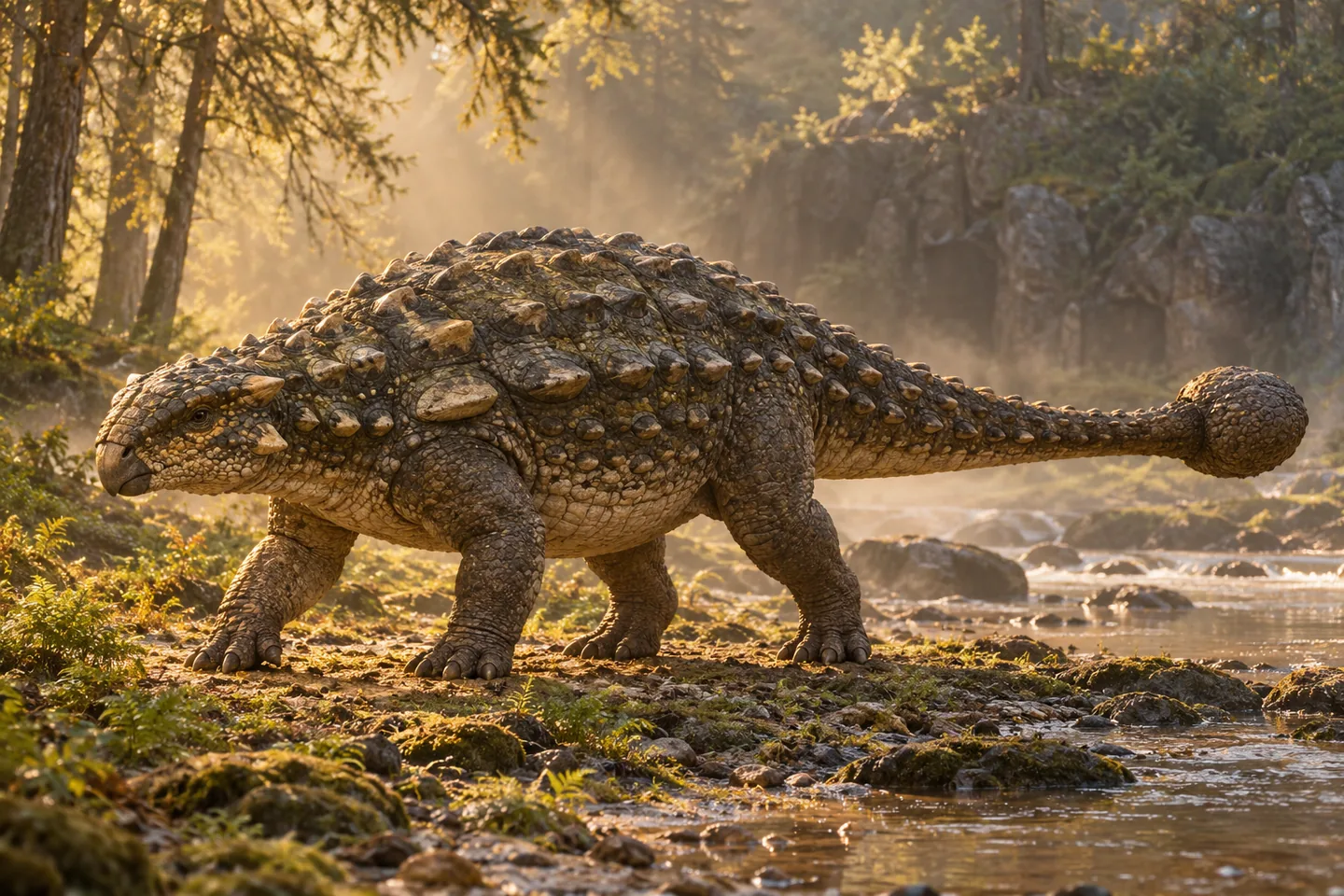
Cinematic low view of a broad quadruped with bony body armour and a heavy tail club; restrained speculative colours, horizontal tail, no invented horns. Dramatic lighting, surface detail and scenery are artistic choices. This is an original cinema-inspired picture, rather than a frame from a film or a documented fossil locality.
Original artwork · artistic interpretation.
Scientific view: credited paleoart interpreting fossil evidence, served online by Wikimedia. Movie-style view: Original artistic interpretation. Colors, soft tissues and settings involve reconstruction.
MEET THE ANIMAL
Ankylosaurus magniventris was a broad, bulky armored dinosaur from the latest Cretaceous of western North America. It moved on four legs and carried bony plates embedded in its skin. A stiffened section at the end of the tail supported enlarged bony structures forming a club. It shared its broader world with dinosaurs including Tyrannosaurus, Triceratops and Edmontosaurus. [S1]
Despite its fame, Ankylosaurus is known from relatively incomplete remains. Reconstructions therefore combine preserved parts with comparisons to better-known relatives. A detailed study revisited old specimens and identified additional skull and armor fragments. It also reconsidered how the plates were arranged, including bands over the neck and shoulders. Familiar museum or book illustrations can change as this evidence improves. [S1]
Its anatomy was unusual even among its armored relatives. The teeth were proportionally small, and the external nostrils were positioned differently from those of many related dinosaurs. Researchers discussed possible consequences for feeding and smell but could not confidently choose between explanations. The tail club and armor are preserved structures; their presence does not supply a filmed battle or settle every question about how Ankylosaurus lived. [S1]
PREHISTORIC ANIMAL DOSSIER
The animal, the evidence, and the questions still open.
Ankylosaurus carried extensive body armour and a heavy tail club, but an entire skeleton has not been recovered. Separate finds constrain its appearance while leaving the precise arrangement of back armour unresolved.
Profile scope: Genus: Ankylosaurus; directory identifies type species A. magniventris.
Source supported identifies a description documented by the cited source. Inferred marks a reconstruction or functional estimate. Debated marks competing interpretations. Not established means the sources reviewed for this dossier do not support a firm conclusion; it does not mean a behavior never occurred.
A size reference is an estimate, not a population range. Nesting evidence does not by itself establish courtship, mate choice, or lifelong pairing.
About 8 m (museum reference)
A rounded museum reference, not a measured population range; the page does not specify the specimen, method or growth stage. [D1]
About 8,000 kg (museum reference)
A rounded museum reference, not a measured population range; the page does not specify the specimen, method or growth stage. [D1]
Low-growing plants likely
The beak and teeth support plant feeding. Ferns, shrubs and fruit are proposed foods, rather than a verified menu for each individual. [D1]
Latest Cretaceous North American fossil localities
Fossils occur in Canada and the USA, including Montana's Hell Creek Formation. The reviewed directory places the genus about 68–66 million years ago. [D1]
Four-legged walking
The museum reconstructs quadrupedal movement. Its suggestion of mostly slow travel does not establish a measured top speed. [D1]
Bony armour and a tail club
The club and armour are fossil-supported; their defensive function is inferred. The exact back-armour layout remains uncertain. [D1]
Not established here
The reviewed sources do not establish nest structure, incubation or parental care for Ankylosaurus.
Not established here
The reviewed sources do not establish a courtship sequence or mating system for Ankylosaurus.
Not established here
The reviewed sources do not establish usual group size or lasting social organization for Ankylosaurus.
Sources and inspection notes for the claims in this profile.
THE STORY IN THE FOSSILS
Bony plates covered Ankylosaurus, while a heavy club ended its tail. The first bones were collected in Montana’s Hell Creek Formation in 1906. Those remains were incomplete, and the tail club was discovered later, so its familiar silhouette combines evidence from different finds. [1]
The club could probably swing powerfully sideways, with more limited vertical movement. Defence against predators is a plausible use rather than directly observed behaviour. Its beak and grinding teeth identify a plant eater; low-growing vegetation is the museum’s interpretation of its feeding habits. [1]
We have not established a comparable adult total-length estimate for this taxon in this draft. Specimen measurements in the text describe those individuals. The cited dates are approximately 68–66 million years ago. Unknown does not mean zero.
Sources and evidence notes for this exhibit.
KEEP EXPLORING
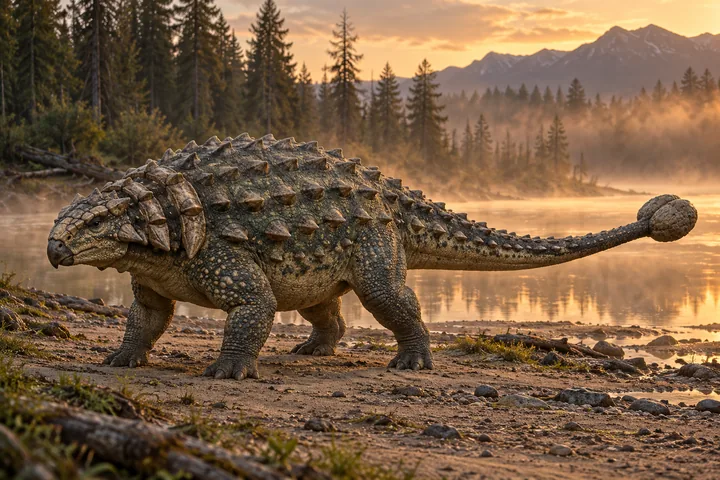
Euoplocephalus
Neck armour helps separate this ankylosaur from former look-alike referrals.
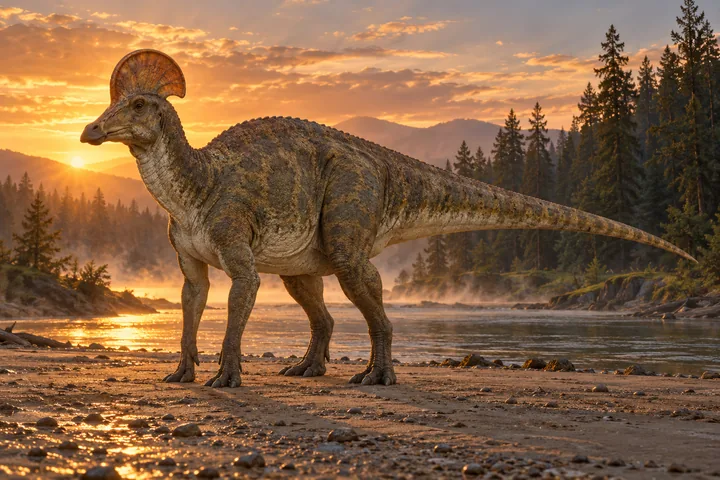
Corythosaurus
A helmet-like crest enclosing elaborate nasal passages.
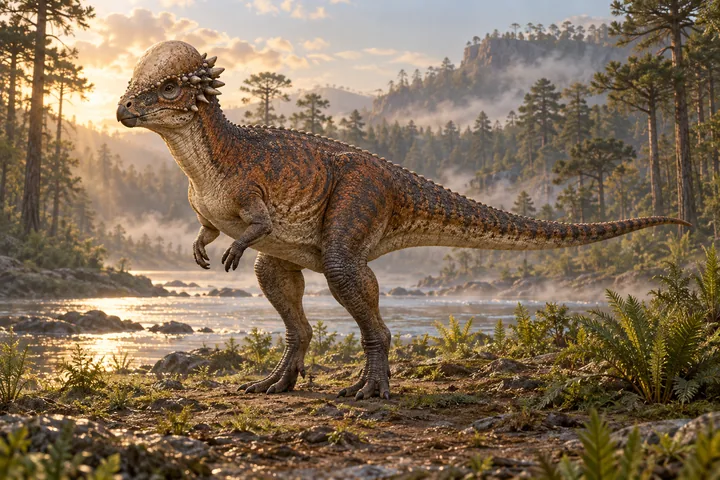
Pachycephalosaurus
A bony dome ringed with spikes and bumps.