
Length
InferredAbout 3 m (museum reference)
A rounded museum reference, not a measured population range; the page does not specify the specimen, method or growth stage. [D1]
EXHIBIT 48
Pachycephalosaurus
A bony dome ringed with spikes and bumps.
TWO WAYS TO PICTURE THE PAST
Compare the evidence with the familiar movie image. The illustrations are not to a shared scale.

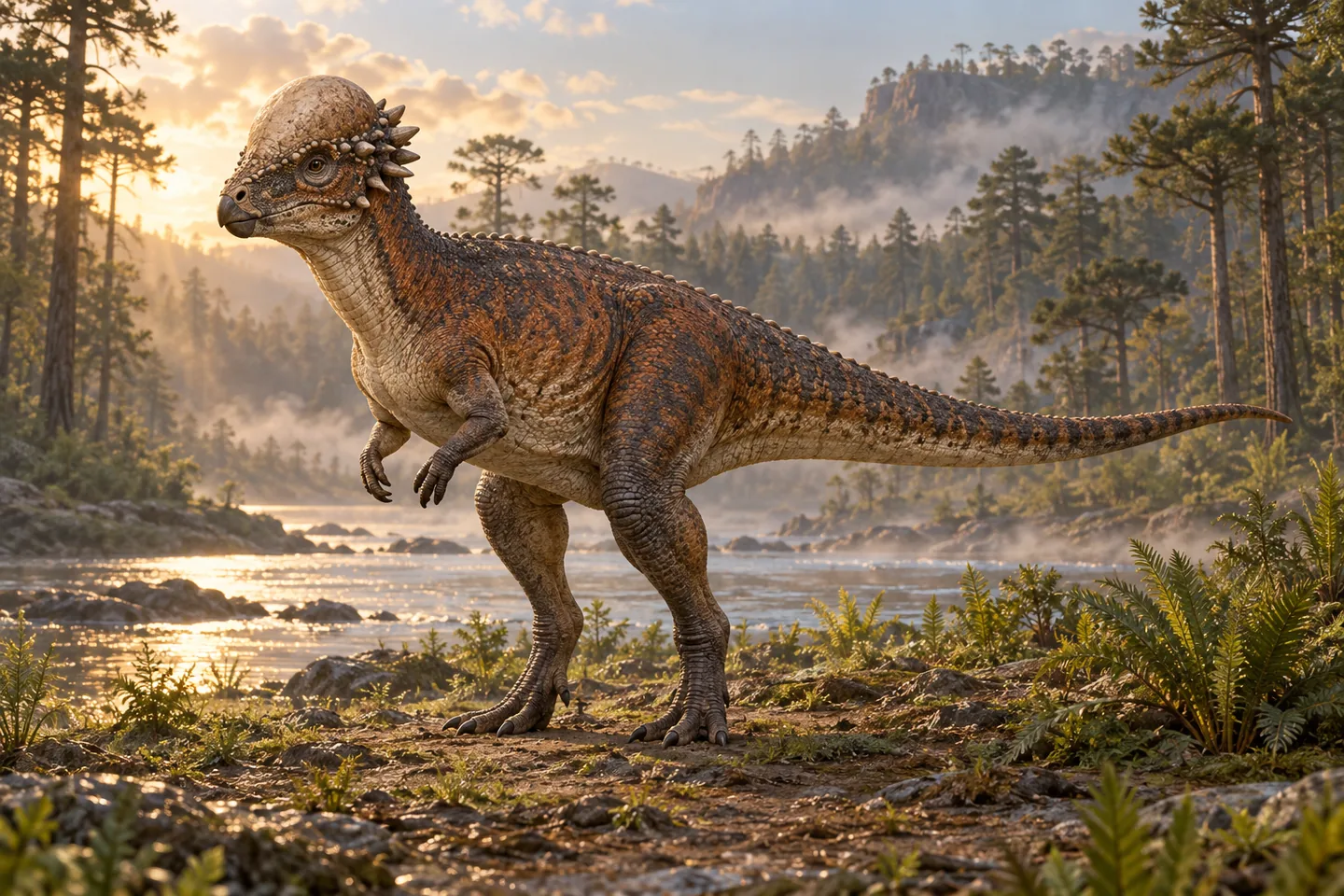
The artist identifies this reconstruction as Pachycephalosaurus. Fossil-informed anatomy: Biped with large bony dome surrounded by bumps and spikes, a cropping beak and long tail; no ceratopsian frill. Skull is better supported than much of the restored body. Colour and soft tissue are artistic interpretation; the source identifies the genus only. [1]
Pachycephalosaurus TD.png — TotalDino. CC BY-SA 4.0. Remote source artwork displayed without additional cropping; Wikimedia supplies any display-size derivative.
Scientific picture served by Wikimedia · internet connection required.
Cinematic bipedal Pachycephalosaurus with rounded bony head dome, surrounding bumps and small spikes; balanced long tail and speculative scaled colouring. Dramatic lighting, surface detail and scenery are artistic choices. This is an original cinema-inspired picture, rather than a frame from a film or a documented fossil locality.
Original artwork · artistic interpretation.
Scientific view: credited paleoart interpreting fossil evidence, served online by Wikimedia. Movie-style view: Original artistic interpretation. Colors, soft tissues and settings involve reconstruction.
MEET THE ANIMAL
Pachycephalosaurus was a two-legged dinosaur from the latest Cretaceous of western North America. Its thick skull dome, surrounded by bumps and spikes, gives it an instantly recognizable head. Teeth suggest plant eating, while their sharp edges have also prompted ideas about omnivory. Those comparisons do not prove a particular mixed menu or show that every pointed tooth belonged to an animal eating meat. [S1]
One dome assigned to Pachycephalosaurus wyomingensis preserves damaged areas interpreted as trauma followed by infection. Healing shows that the individual survived the original damage. Researchers consider such injuries consistent with aggressive interactions, supplying evidence beyond the simple idea that a thick head must be for fighting. The precise cause of each wound remains uncertain. [D2]
The familiar image of two animals charging directly into each other is therefore a hypothesis to test, not a witnessed event. Researchers have debated the dome’s strength and possible display role. Skull injuries do not identify the animals’ sex or establish competition for mates. A distinctive skull can inform questions about behavior while leaving courtship and lasting social organization unresolved. [S1]
PREHISTORIC ANIMAL DOSSIER
The animal, the evidence, and the questions still open.
Pachycephalosaurus had a thick skull dome ringed by bumps and spikes. Lesions on one P. wyomingensis dome have been interpreted as trauma followed by infection, supporting possible combat without revealing a mating system.
Profile scope: Genus: Pachycephalosaurus; pathology study concerns a P. wyomingensis dome.
Source supported identifies a description documented by the cited source. Inferred marks a reconstruction or functional estimate. Debated marks competing interpretations. Not established means the sources reviewed for this dossier do not support a firm conclusion; it does not mean a behavior never occurred.
A size reference is an estimate, not a population range. Nesting evidence does not by itself establish courtship, mate choice, or lifelong pairing.
About 3 m (museum reference)
A rounded museum reference, not a measured population range; the page does not specify the specimen, method or growth stage. [D1]
About 450 kg (museum reference)
A rounded museum reference, not a measured population range; the page does not specify the specimen, method or growth stage. [D1]
Plants likely; omnivory also proposed
The museum notes a plant-cropping beak but also meat-eater-like front teeth. These comparisons leave the exact diet unsettled. [D1]
Warm, humid North American environments reconstructed
The museum reconstructs a subtropical setting with flowering plants. Fossils are reported from Montana, South Dakota, Wyoming and Alberta. [D1]
Two-legged walking
The museum reconstructs bipedal movement. Specific running speeds are not established here. [D1]
Thick skull dome surrounded by bumps and spikes
The dome is clear fossil anatomy. Fighting and display remain proposed functions rather than a complete behavioral reconstruction. [D1]
Not established here
The reviewed sources do not establish nest structure, incubation or parental care for Pachycephalosaurus.
Not established here
The reviewed sources do not establish a courtship sequence or mating system for Pachycephalosaurus. Possible skull combat does not identify the participants' sex or prove competition for mates.
Skull combat inferred from lesions
Researchers interpreted dome lesions as traumatic injury with secondary infection, consistent with aggressive interactions. The injury's precise cause and usual social organization remain unresolved. [D2]
Sources and inspection notes for the claims in this profile.
THE STORY IN THE FOSSILS
Pachycephalosaurus carried a large bony head dome surrounded by bumps and spikes. Some researchers interpret it as equipment for head-butting; others emphasize display. Both uses remain possible. Its two-legged body and plant-cropping beak give it a very different silhouette from the horned dinosaurs. [1]
Fossils occur in Montana, South Dakota, Wyoming and Alberta. The museum describes a likely plant-based diet, although some front teeth resemble those of carnivores. It also reports that many scientists interpret Dracorex and Stygimoloch as younger growth stages of Pachycephalosaurus rather than separate genera. [1]
We have not established a comparable adult total-length estimate for this taxon in this draft. Specimen measurements in the text describe those individuals. The cited dates are approximately 69–66 million years ago. Unknown does not mean zero.
Sources and evidence notes for this exhibit.
KEEP EXPLORING
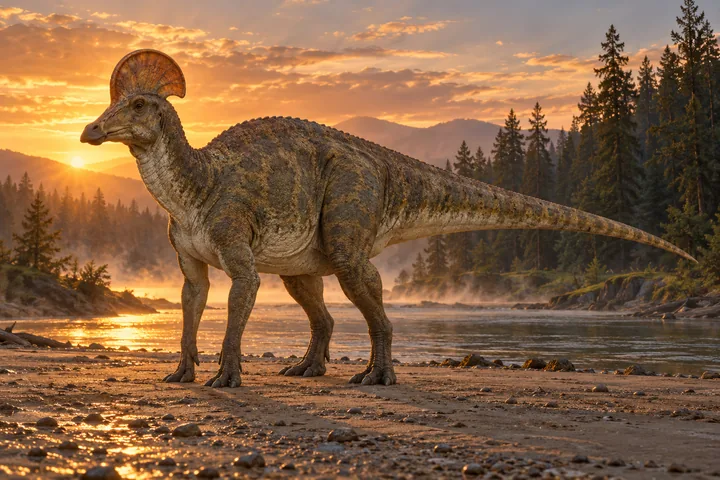
Corythosaurus
A helmet-like crest enclosing elaborate nasal passages.
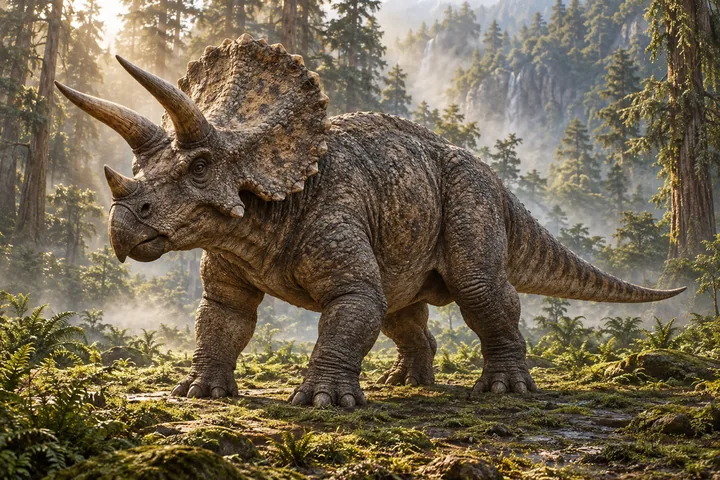
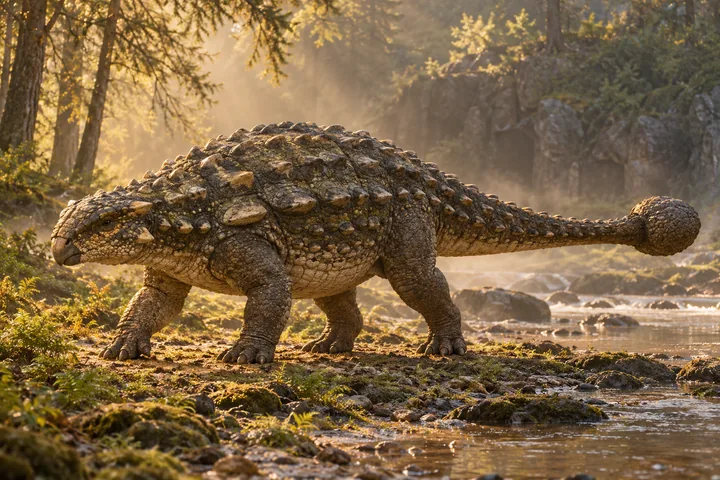
Triceratops horridus
Three horns, a broad frill, and a plant-eater beneath the formidable silhouette.