Body length
Inferred4.6 m length; 4 m flipper span, museum references
NHM separates length and span for a large specimen. These approximate reconstructions are not an adult species range. [D2]
EXHIBIT 213
Archelon ischyros
Marine turtle
Archelon ischyros was a giant marine turtle with powerful front flippers and a reduced bony shell. Its exact diet and nesting record remain unresolved. [2]
TWO WAYS TO PICTURE THE PAST
Compare the evidence with the familiar movie image. The illustrations are not to a shared scale.
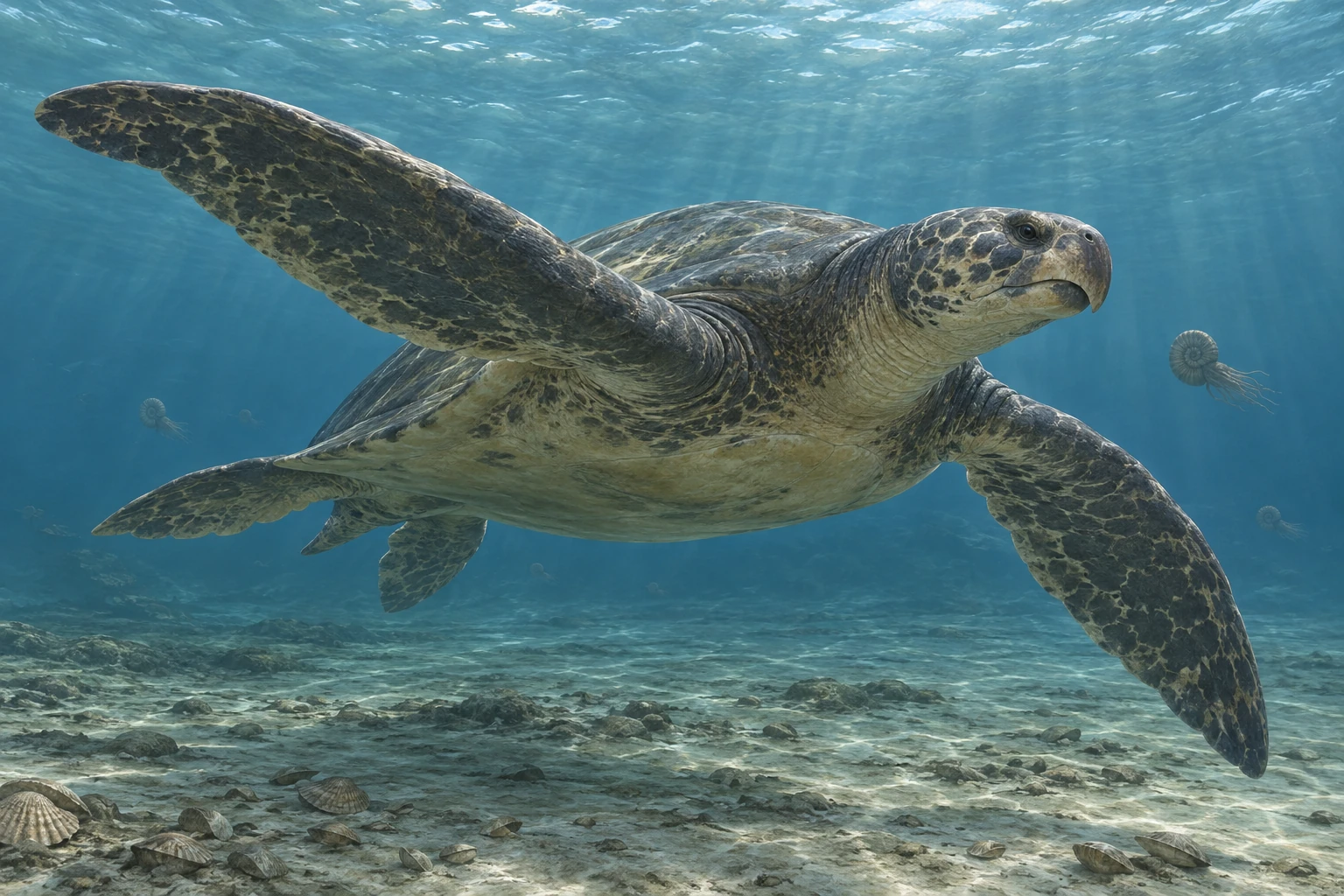
An illustrative reconstruction. Compare its anatomy with the evidence and limitations in the dossier. [3]
Source-informed reconstruction. Appearance evidence [3]. Original illustration; missing anatomy, coloration and scenery include interpretation.
Fossils constrain this life reconstruction. Missing anatomy, coloration and the environmental scene include interpretation; the dossier explains the evidence limits.
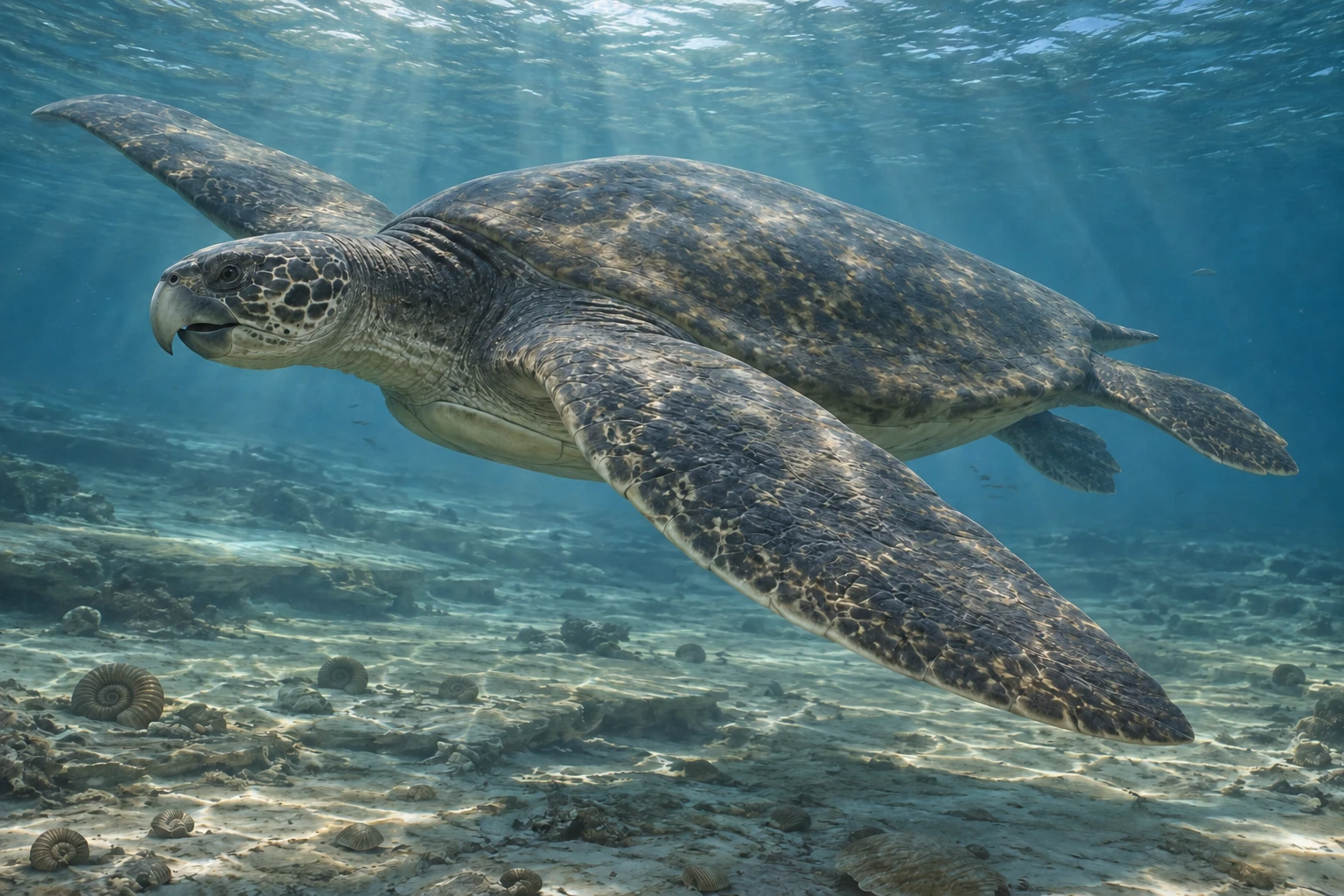
An illustrative reconstruction. Compare its anatomy with the evidence and limitations in the dossier. Lighting, coloration and scenery are artistic choices. This image does not document a fossil locality or behavior.
Original artwork · artistic interpretation.
Scientific view: source-informed reconstruction, credited paleoart or specimen-based imagery. Movie-style view: Original artistic interpretation. Reconstructions involve uncertainty.
MEET THE ANIMAL
Archelon ischyros was a giant marine turtle from the Late Cretaceous. It belonged to an extinct turtle group called the protostegids. Large front flippers and a broad shell outline made it different from a land tortoise. Its bony shell was reduced to a framework rather than the fully solid covering many people imagine for a turtle. [D2]
A museum replica at the University of Manitoba represents a skeleton from South Dakota’s Pierre Shale, about seventy-five million years old. This rock formed in the great sea that once crossed North America. Its enormous front limbs are interpreted as underwater wings. Measuring the spread of those limbs is different from measuring the animal from head to tail. [D1]
The Vienna museum’s skeleton can be studied with a digital model that reveals its underside. That helps researchers examine the surviving structure, but it cannot show original colors or complete living skin. A fossil skeleton also does not record a social group. Knowing that a turtle was large and marine leaves many questions about its daily behavior open. [D3]
PREHISTORIC ANIMAL DOSSIER
The animal, the evidence, and the questions still open.
The Vienna museum preserves a giant skeleton whose underside can be examined through a digital model. Its bones provide a structural record, while skin coverage and living colors require interpretation. [D3]
Profile scope: Genus Archelon, represented by A. ischyros. A South Dakota skeleton and museum replicas are separate objects; shell span, mounted span and body length are not interchangeable. [D1]
Source supported identifies a description documented by the cited source. Inferred marks a reconstruction or functional estimate. Debated marks competing interpretations. Not established means the sources reviewed for this dossier do not support a firm conclusion; it does not mean a behavior never occurred.
A size reference is an estimate, not a population range. Nesting evidence does not by itself establish courtship, mate choice, or lifelong pairing.
4.6 m length; 4 m flipper span, museum references
NHM separates length and span for a large specimen. These approximate reconstructions are not an adult species range. [D2]
2.2–3.2 tonnes; museum reconstruction
A specimen reconstruction, not an adult population range. [D2]
Not established here
The museum notes no preserved stomach contents. A strong beak suggests animal feeding; another protostegid’s meals do not directly establish Archelon foods. [D2]
Late Cretaceous Western Interior Seaway
The replica represents a skeleton from South Dakota Pierre Shale, about seventy-five million years old, deposited in the inland sea. [D1]
Large front flippers as underwater wings
The institutional account interprets powerful front limbs for swimming, not an observed stroke, migration route or measured speed. [D1]
Preserved shell framework and limb bones
The skeleton preserves shell framework and limb bones, not living skin. Its scan exposes bone geometry rather than original pigment. [D3]
Egg laying inferred; nests not identified here
Turtle comparisons suggest egg laying, but no Archelon nest or hatchling is reported here; parenting remains unknown. [D2]
Not established here
The account establishes no sex-specific displays, breeding colors, mate choice or courtship. [D1]
Not established here
The skeleton and scan record individual anatomy rather than a living group. No stable pair or parental association is established here. [D3]
Sources and inspection notes for the claims in this profile.
THE STORY IN THE FOSSILS
A digital model reveals the underside of a mounted skeleton. Seeing the bones improves anatomical study, while the missing texture makes the limit clear. [3]
The Manitoba mount is a replica. Its broad span conveys scale, but dimensions must not become an independent measurement of another fossil individual. [1]
The dossier identifies the scope of each reference estimate. A mount, an individual fossil and a species-wide adult range are different measurements. Comparison metrics remain unavailable where adult scope has not been established. Unknown does not mean zero.
Sources support the stated claims and scopes. Refer to the evidence notes for uncertainty.
KEEP EXPLORING
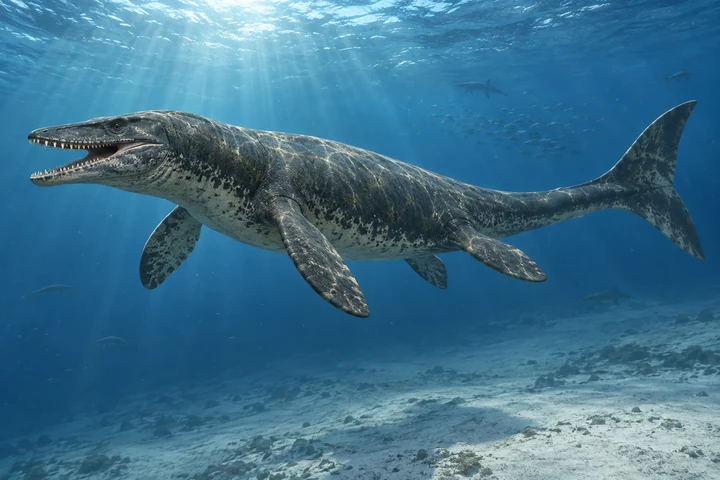
Mosasaurus hoffmanni
Marine reptile
Mosasaurus was a large marine lizard with four flippers, a long tail and toothed jaws. Its size is reconstructed from incomplete fossils.
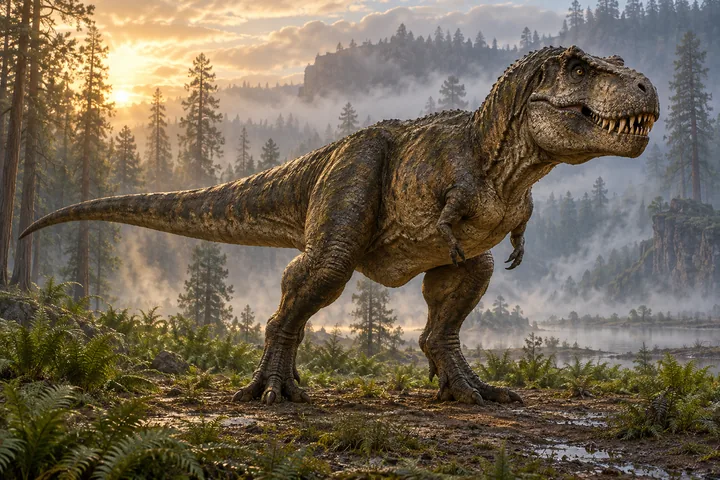
Tyrannosaurus rex
Tyrannosaurus rex was a large meat-eating dinosaur from the final part of the Cretaceous in western North America. Fossil teeth, bite marks and skeletons reveal a powerful animal whose behaviour still invites questions.
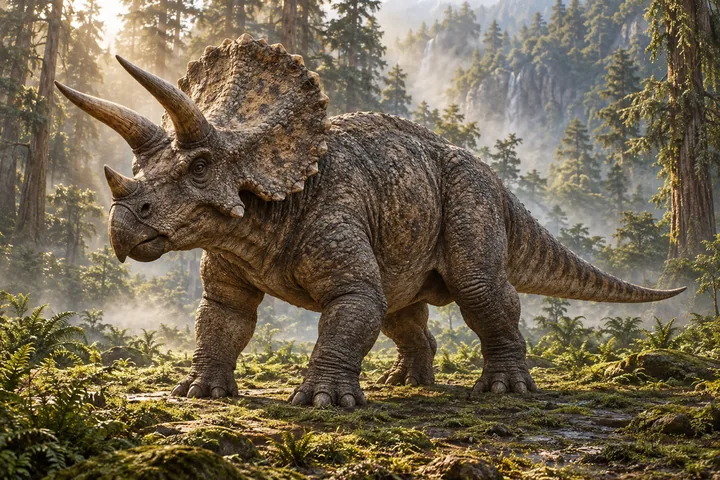
Triceratops horridus
Triceratops horridus was a horned dinosaur of the Late Cretaceous. Skin impressions attributed to this species reveal scales, while skulls and their positions in rock layers help researchers distinguish it from the later Triceratops prorsus.