
Size reference
Not establishedNot established here
The scanned fossil is incomplete; the separate A. acadica reference forewing is estimated at 29 mm, not body length. [D2]
EXHIBIT 281
Archimylacris
Prehistoric insect
Archimylacris was a cockroach-like insect; scanning revealed climbing pads and slender running legs. [1]
TWO WAYS TO PICTURE THE PAST
Compare the evidence with the familiar movie image. The illustrations are not to a shared scale.
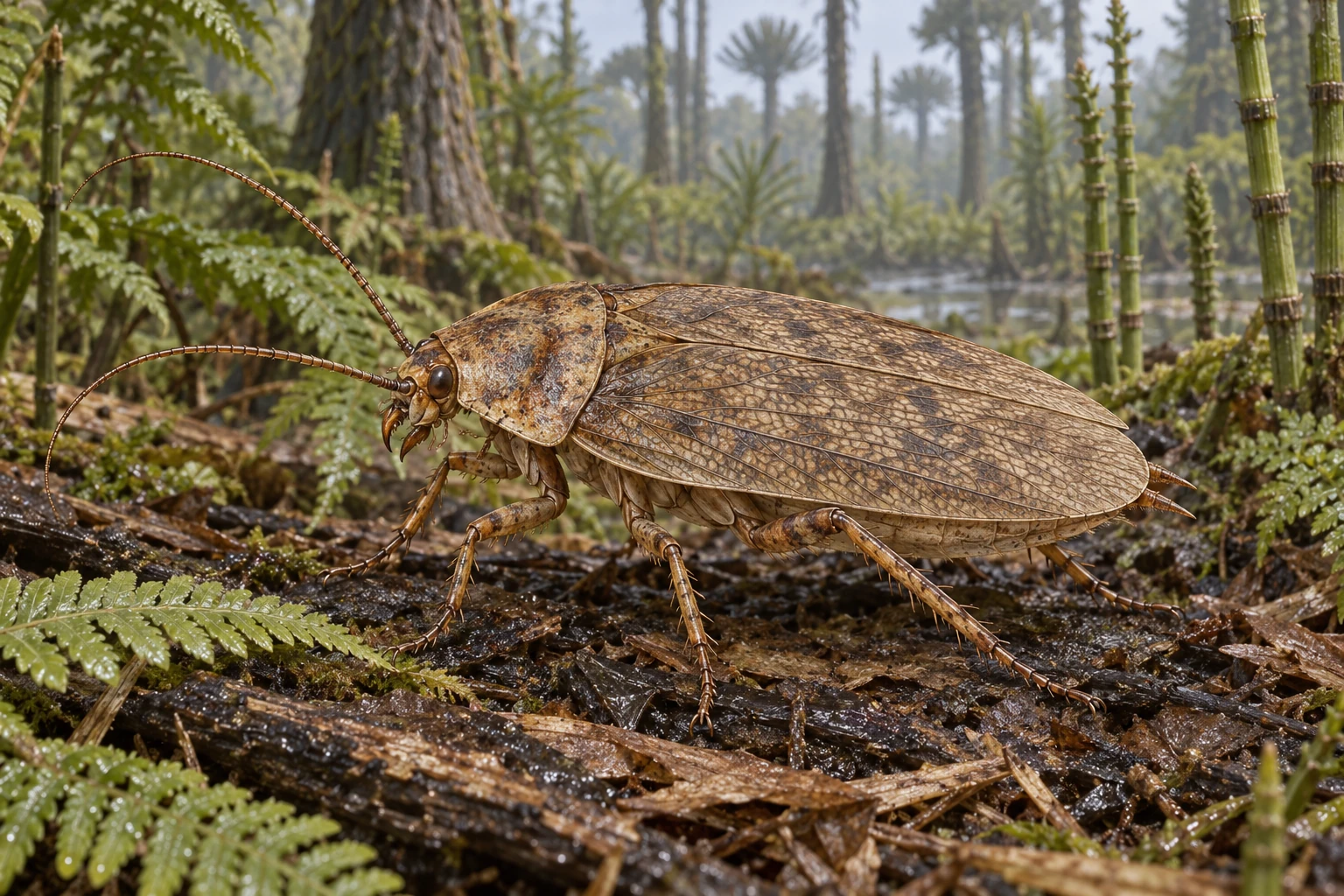
An illustrative reconstruction. Compare its anatomy with the evidence and limitations in the dossier. [1]
Source-informed reconstruction. Appearance evidence [1]. Original illustration; missing anatomy, coloration and scenery include interpretation.
Fossils constrain this life reconstruction. Missing anatomy, coloration and the environmental scene include interpretation; the dossier explains the evidence limits.
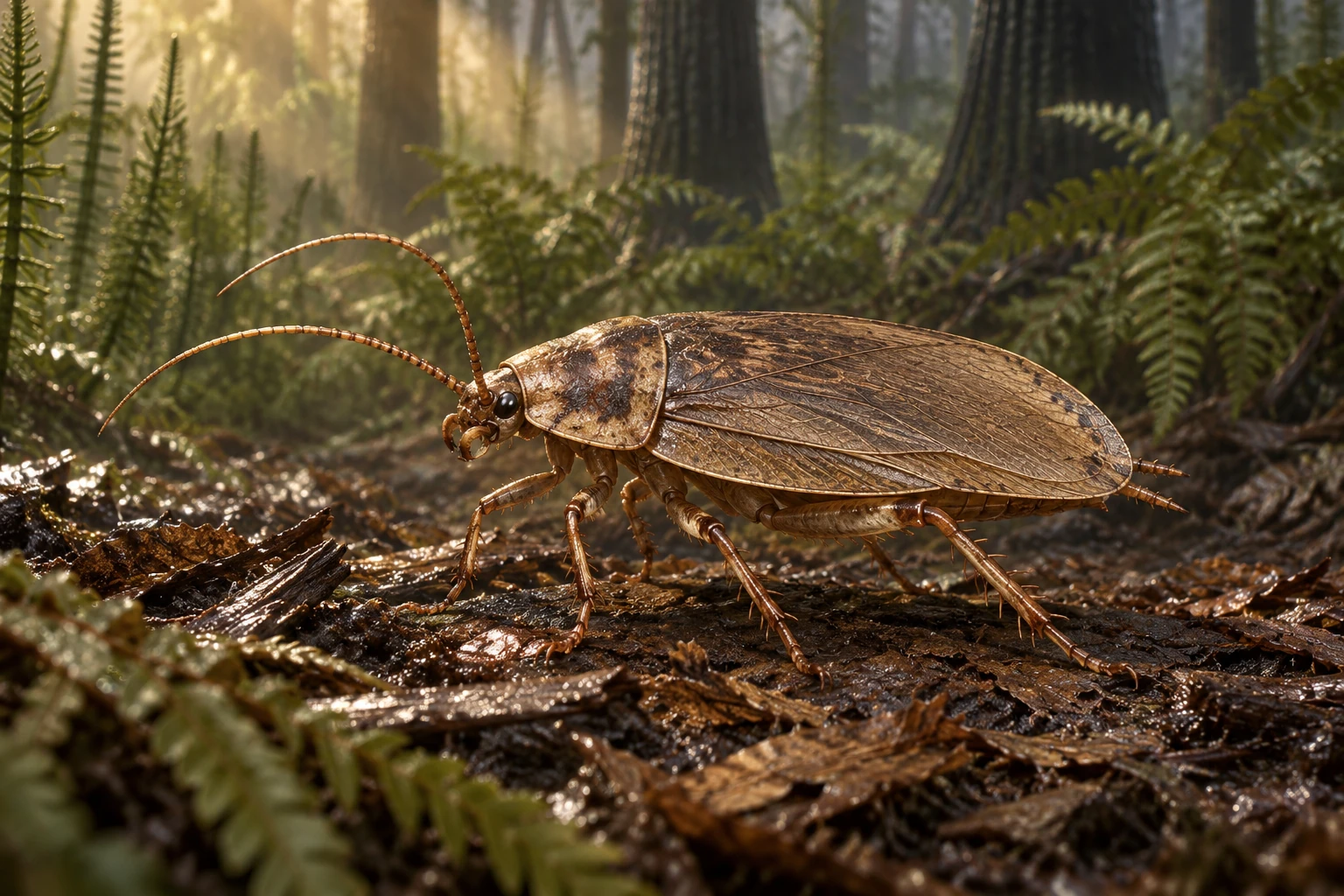
An illustrative reconstruction. Compare its anatomy with the evidence and limitations in the dossier. Lighting, coloration and scenery are artistic choices. This image does not document a fossil locality or behavior.
Original artwork · artistic interpretation.
Scientific view: source-informed reconstruction, credited paleoart or specimen-based imagery. Movie-style view: Original artistic interpretation. Reconstructions involve uncertainty.
MEET THE ANIMAL
Archimylacris looked broadly like a cockroach, but it belonged to an early branch near cockroaches, mantises and termites. The most useful body fossil for this reconstruction is A. eggintoni, found at Coseley in Britain. It lived about 311 million years ago. X-rays let researchers build a three-dimensional model from structures hidden inside its rock nodule. Some head and abdominal parts remained incomplete. [D1]
The research-team account explains how this model improved the picture of life on a Carboniferous forest floor. Its long legs and specialized feet could help it move across uneven surfaces and climb plants. A living illustration adds an entire body around the surviving evidence. Colors and the exact scene are artistic choices, and no stopwatch can tell us its running speed. [D3]
A 2026 study revisited the genus using a Canadian A. acadica wing and historical drawings. Wing veins help separate and connect old names, but a wing measurement is not a whole-animal length. Several proposed genus synonyms remain tentative. Different fossils therefore answer different questions: body scans illuminate movement, while wings help researchers examine identity and distribution. [D2]
PREHISTORIC ANIMAL DOSSIER
The animal, the evidence, and the questions still open.
X-ray reconstruction exposes otherwise hidden appendages; its missing head margins and abdomen require restoration. [D1]
Profile scope: Genus — Archimylacris; A. eggintoni holotype NHM In 31273 supplies the body reconstruction. A. acadica wing evidence is separate. [D1]
Source supported identifies a description documented by the cited source. Inferred marks a reconstruction or functional estimate. Debated marks competing interpretations. Not established means the sources reviewed for this dossier do not support a firm conclusion; it does not mean a behavior never occurred.
A size reference is an estimate, not a population range. Nesting evidence does not by itself establish courtship, mate choice, or lifelong pairing.
Not established here
The scanned fossil is incomplete; the separate A. acadica reference forewing is estimated at 29 mm, not body length. [D2]
Not established here
The reviewed wing revision supplies no mass estimate. [D2]
Decaying organic matter inferred
Mandible form and forest context support detritivory; no identified stomach meal. [D1]
Carboniferous forest setting
The scanned British fossil comes from Coal Measures; Canadian wings occur in fluvial deposits, not proof of aquatic life. [D2]
Running and climbing inferred
Long low-set legs, adhesive pads and claws support these functions; no measured speed. [D1]
Pads on five-part feet
Microtomography revealed articulated feet and jaws hidden within a siderite nodule. [D1]
Likely male specimen
An absent ovipositor supports a male interpretation; eggs and juvenile stages are not established here. [D1]
Not established here
The reviewed fossil/wing accounts do not document mating displays. [D2]
Not established here
An individual reconstruction and wing occurrences do not establish colonies or cooperation. [D2]
Sources and inspection notes for the claims in this profile.
THE STORY IN THE FOSSILS
The virtual fossil lets researchers examine feet without breaking the rock apart. Independent wing revision addresses naming rather than proving an entire living body. [3] [2]
The dossier identifies the scope of each reference estimate. A mount, an individual fossil and a species-wide adult range are different measurements. Comparison metrics remain unavailable where adult scope has not been established. Unknown does not mean zero.
Sources support the stated claims and scopes. Refer to the evidence notes for uncertainty.
KEEP EXPLORING
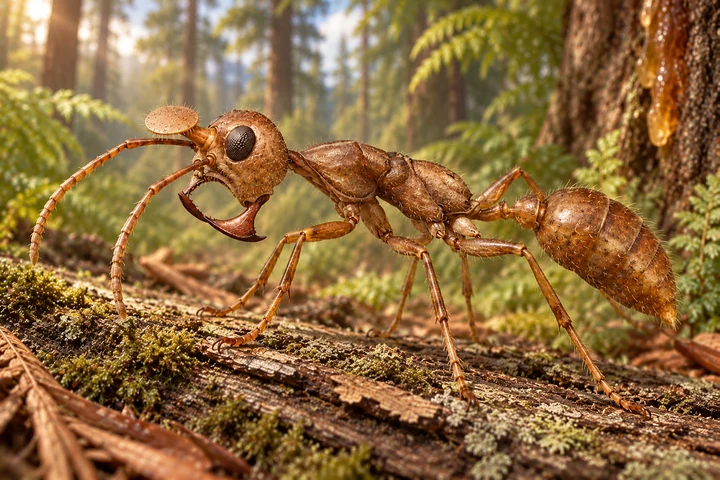
Linguamyrmex
Prehistoric insect
Linguamyrmex was a Cretaceous ant with curved jaws and a reinforced paddle-shaped facial projection.
Edestus
Prehistoric fish
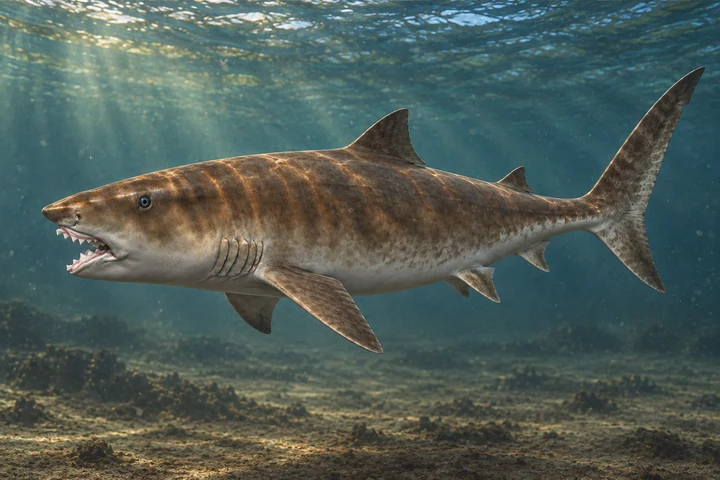
A Pennsylvanian cartilaginous fish with opposing curved tooth blades along the jaw midlines.
Tyrannosaurus rex
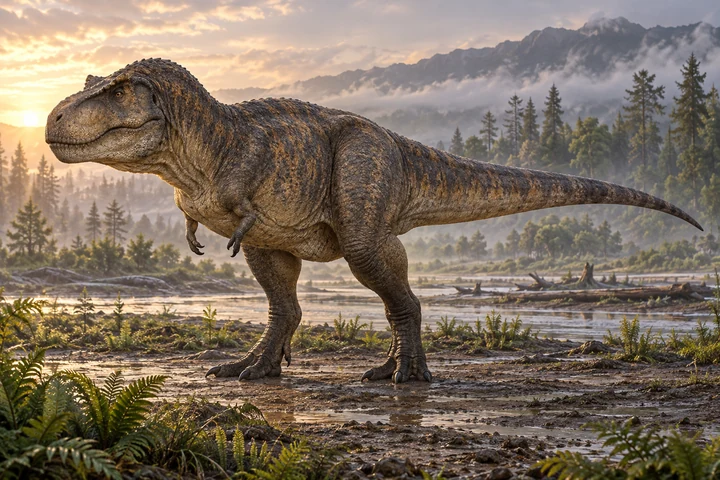
Tyrannosaurus rex was a large meat-eating dinosaur from the final part of the Cretaceous in western North America. Fossil teeth, bite marks and skeletons reveal a powerful animal whose behaviour still invites questions.