
Body length
InferredAbout 5–6 m (museum reference)
Rounded reconstructed length range without a stated maturity basis; not an observed adult population range. [D4]
TWO WAYS TO PICTURE THE PAST
Compare the evidence with the familiar movie image. The illustrations are not to a shared scale.
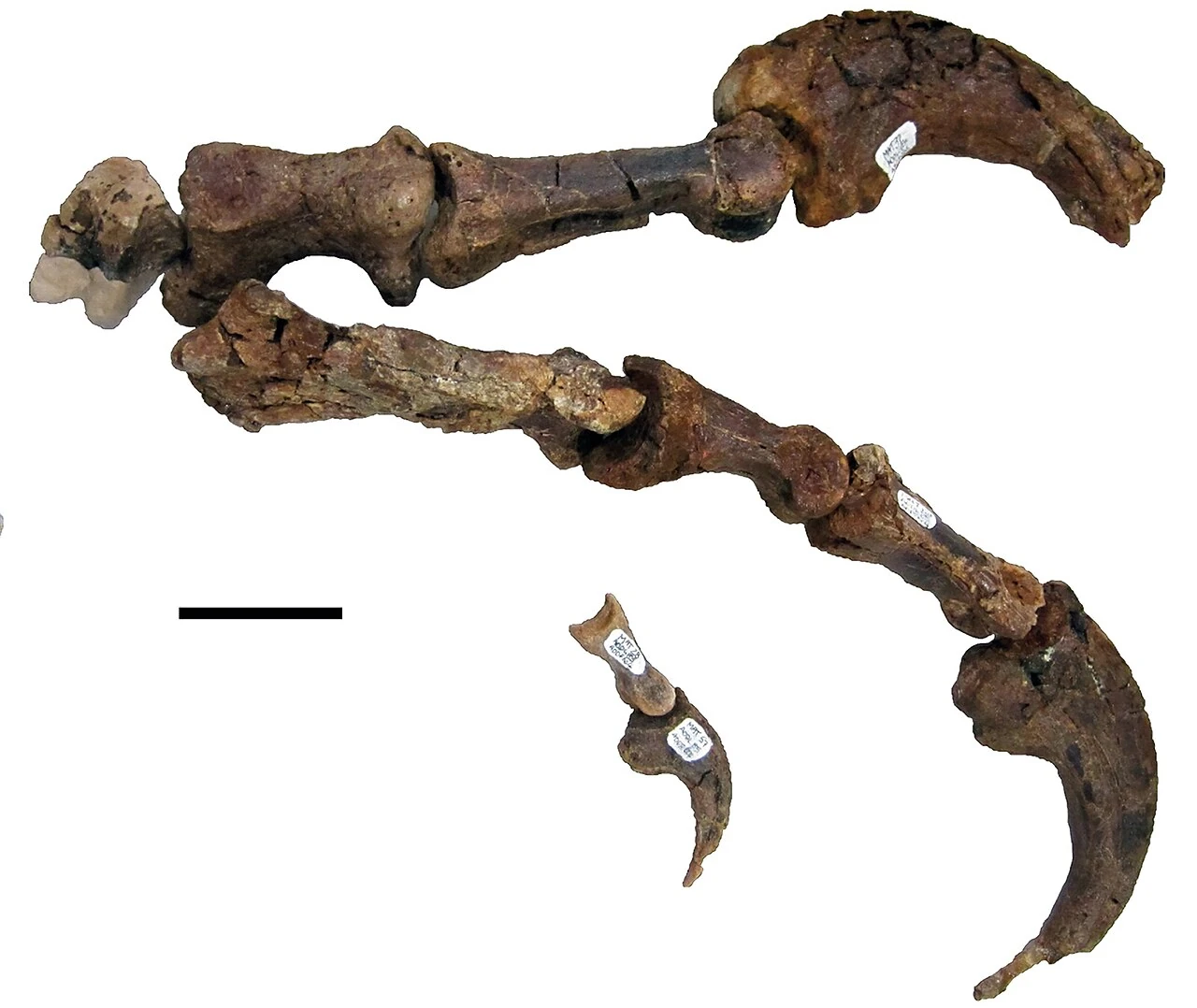
Australovenator wintonensis holotype hand, AODF 0604, assembled by Poropat and colleagues (2023). This palmomedial arrangement incorporates right-side carpal, metacarpal and finger elements without mirroring them; it is not an untouched articulated left hand. The original 5 cm scale bar is retained. [2]
Australovenator left manus.jpg · Stephen F. Poropat, Phil R. Bell, Lachlan J. Hart, Steven W. Salisbury and Benjamin P. Kear. CC BY-SA 4.0. Current Commons image converted to WebP and proportionally resized for the thumbnail; no cropping, mirroring, anatomical edits or compositing. Original scale bars and annotations retained where present. Same source license applies.
The photograph or figure shows the credited fossil material; displayed mounts and labels can include interpretation.
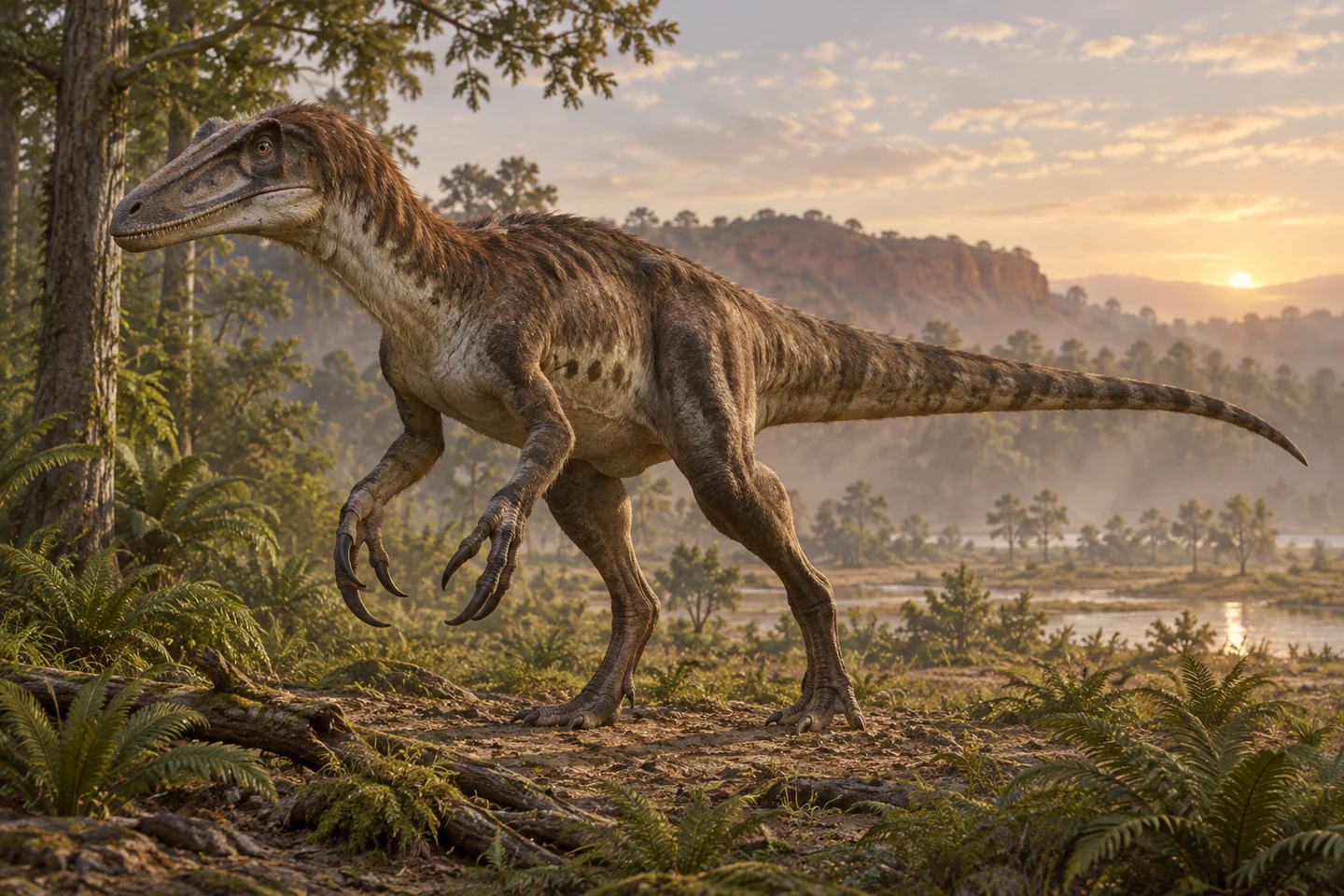
Original cinematic interpretation of Australovenator wintonensis. Colors, soft tissues, scenery and missing anatomy are reconstructed artistic choices; this is not a directly observed individual or behavior. Lighting, coloration and scenery are artistic choices. This image does not document a fossil locality or behavior.
Original artwork · artistic interpretation.
Scientific view: source-informed reconstruction, credited paleoart or specimen-based imagery. Movie-style view: Original artistic interpretation. Reconstructions involve uncertainty.
MEET THE ANIMAL
Australovenator was a meat-eating dinosaur from Queensland, Australia. Its museum profile follows revised dating of the fossil-bearing Winton rocks to roughly 93 million years ago, in the Late Cretaceous. That age is younger than the original interpretation. The change shows why geological dating must stay connected to the particular rocks around a fossil. [D4]
Its hands carried three fingers and enlarged curved claws. These were hand claws, rather than the large second-toe claw associated with some familiar raptors. Newly recovered arm and wrist bones from the original specimen added details that had been missing. Studying those actual elements gives a firmer picture than borrowing the hands of a different dinosaur. [D2]
Researchers fitted the forelimb bones together to investigate their possible movement. The resulting models suggest substantial bending and grasping potential, but missing cartilage and other soft tissues limit the exact range of motion. A possible grasping action does not record how prey was handled. Australovenator's arms are unusually informative because preserved bones let researchers test movement ideas while keeping the uncertain parts of the reconstruction visible. [D3]
PREHISTORIC ANIMAL DOSSIER
The animal, the evidence, and the questions still open.
Flexible forelimbs inform grasping reconstructions; soft tissues limit exact movements. [D3]
Profile scope: Species — Australovenator wintonensis. [D1]
Source supported identifies a description documented by the cited source. Inferred marks a reconstruction or functional estimate. Debated marks competing interpretations. Not established means the sources reviewed for this dossier do not support a firm conclusion; it does not mean a behavior never occurred.
A size reference is an estimate, not a population range. Nesting evidence does not by itself establish courtship, mate choice, or lifelong pairing.
About 5–6 m (museum reference)
Rounded reconstructed length range without a stated maturity basis; not an observed adult population range. [D4]
About 314 kg (limb-scaling model)
Measured-circumference estimate. Dataset specimen entry is only 'AAOD', with no inventory number or maturity assessment; not an adult average. [D5]
Meat-eating with serrated teeth
Recurved, compressed tooth crowns support a cutting dentition. Sharing a fossil deposit with a sauropod does not prove a predation event. [D1]
Winton Formation, Matilda Site
The Queensland holotype occurs in fine sediment interpreted as abandoned-channel or billabong fill. Later zircon-based dating shifts this material into the Late Cretaceous, rather than the original latest-Albian interpretation. [D1] [D4]
Bipedal reconstruction; mobile grasping arms
Hindlimbs support a two-legged reconstruction. Forelimb articulation models indicate substantial flexion and grasping potential; missing cartilage limits exact motion, and no speed is assigned. [D1] [D3]
Three fingers with enlarged manual claws
Additional holotype arm and hand elements document large recurved claws and the wrist. These are hand claws, not an enlarged dromaeosaur-style toe claw. [D2]
Not established here
Focused egg, nesting and bone-histology searches did not establish assigned Australovenator eggs, parental care, clutch size or breeding maturity.
Not established here
Reviewed osteological and movement studies do not establish sexual dimorphism, pairing or courtship; focused reproductive searches yielded no direct demonstration.
Not established here
At Matilda Site, Australovenator and a sauropod occur with aquatic vertebrate remains. This depositional association does not establish packs, cooperation or a witnessed hunt. [D1]
Sources and inspection notes for the claims in this profile.
THE STORY IN THE FOSSILS
New arm elements recovered from the holotype site made Australovenator's hands unusually informative. Bone articulation suggests they could pull inward and grasp; soft tissues remain a constraint on exact range of motion and prey-handling reconstructions. [3]
Dating also matters. Zircons from the fossil-bearing Winton rocks support an age of roughly 93 million years in the museum's revised account, considerably younger than the original age assignment. The catalog follows that later geological context. [4]
The dossier identifies the scope of each reference estimate. A mount, an individual fossil and a species-wide adult range are different measurements. Comparison metrics remain unavailable where adult scope has not been established. Unknown does not mean zero.
Sources support the stated claims and scopes. Refer to the evidence notes for uncertainty.
KEEP EXPLORING
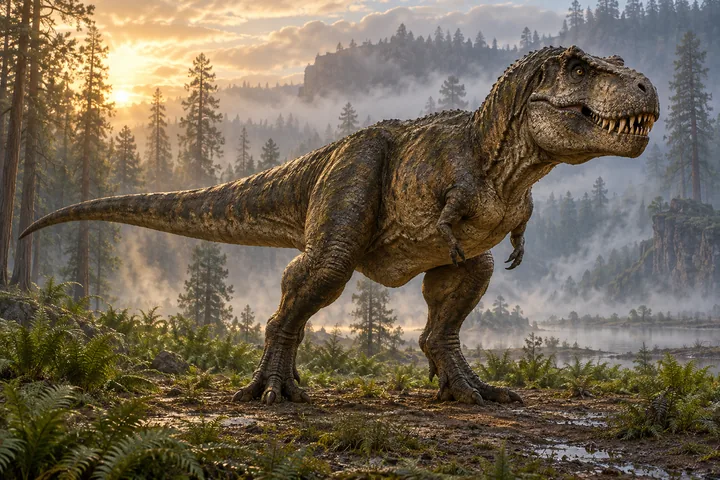
Tyrannosaurus rex
Tyrannosaurus rex was a large meat-eating dinosaur from the final part of the Cretaceous in western North America. Fossil teeth, bite marks and skeletons reveal a powerful animal whose behaviour still invites questions.
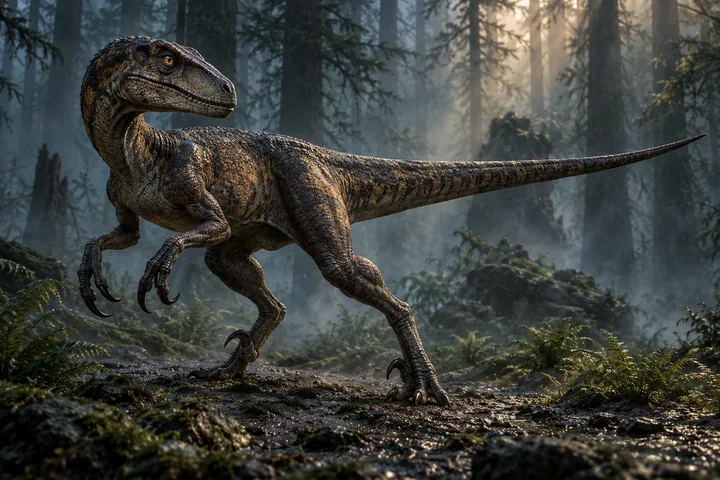
Velociraptor mongoliensis
Velociraptor mongoliensis was a lightly built meat-eater from Late Cretaceous Mongolia. Its long limbs, teeth and enlarged foot claws made it distinctive, while the Fighting Dinosaurs specimen records a remarkable interaction with a horned dinosaur.
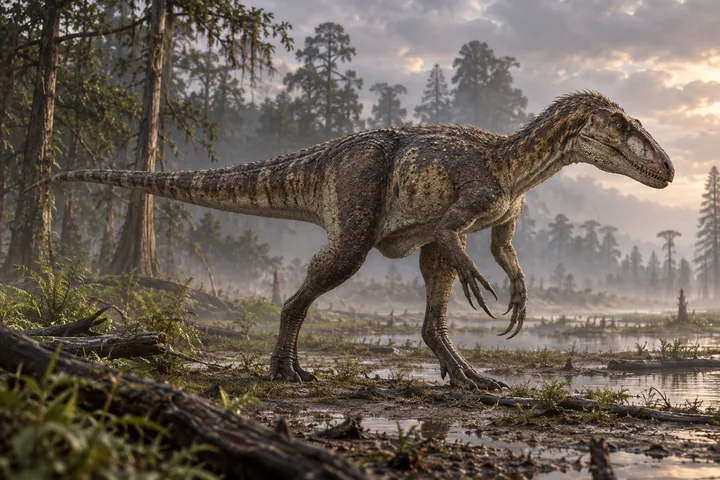
Dryptosaurus aquilunguis
Dryptosaurus was an eastern North American tyrannosauroid with a short upper arm and unusually large hand. Its partial skeleton and changing restorations reveal how evidence and imagination interact.