EXPLORE PREHISTORY 220 prehistoric animal profiles · Scientific & movie-style image galleries

EXHIBIT 154

Bactrosaurus

Bactrosaurus johnsoni

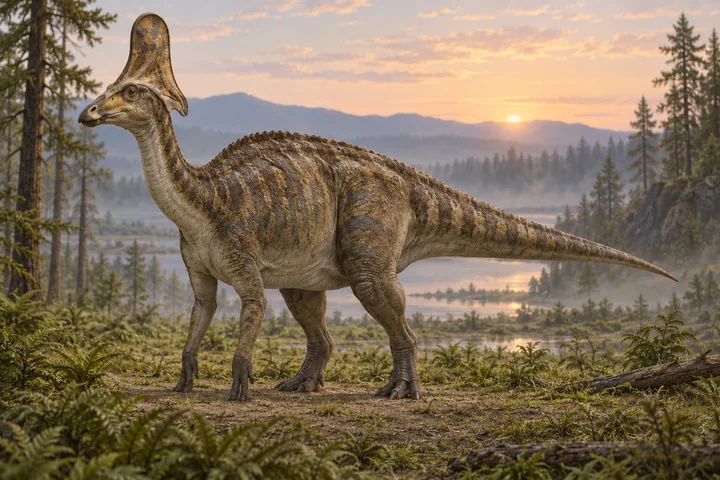
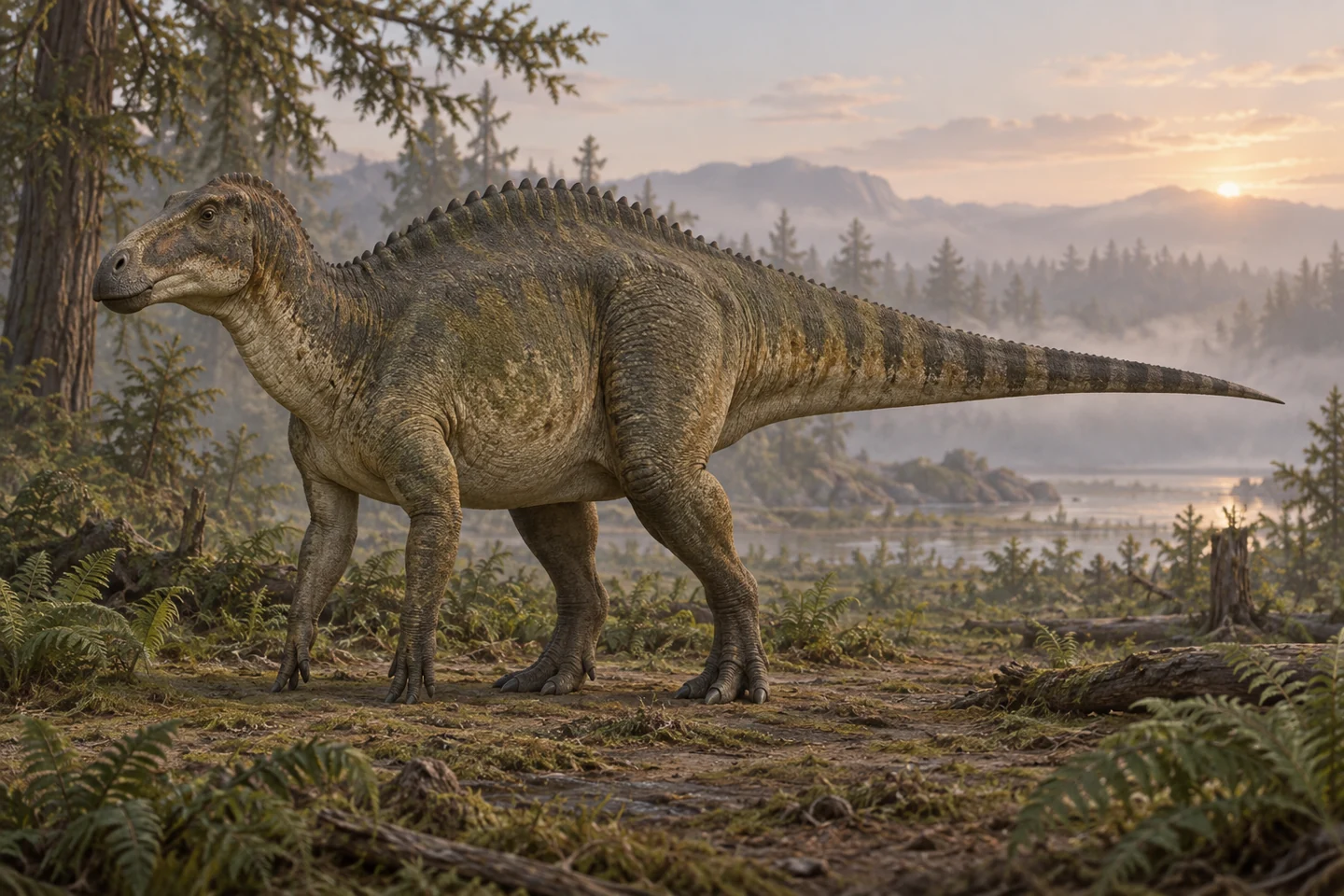
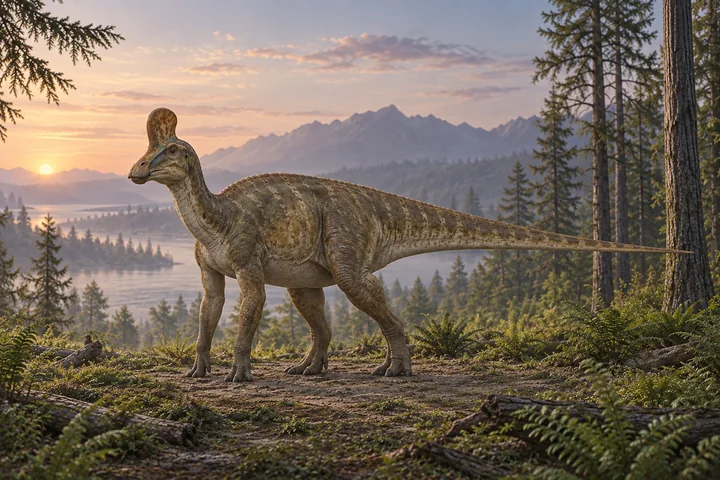
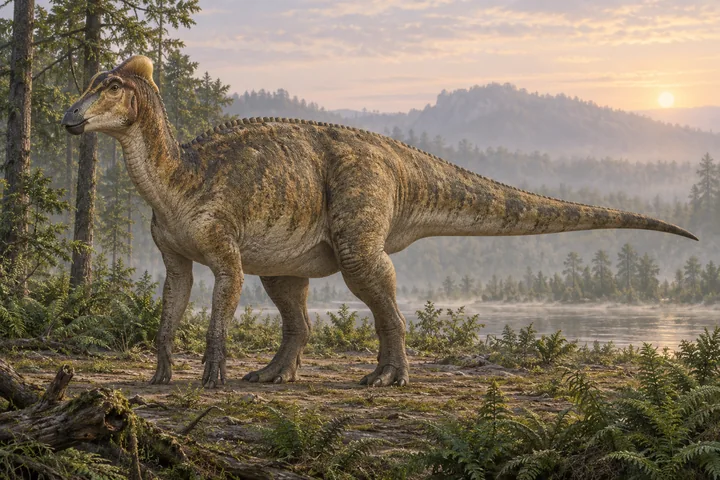
Bactrosaurus was a crestless plant-eating hadrosauroid with robust limbs and tooth batteries, represented at several growth stages. [1]

Evidence profile
PERIODLate Cretaceous[1]
DIETHerbivoreEvidence and uncertainty in the dossier
TOTAL LENGTHSee the dossierEstimate scope matters
FOSSILS FOUNDInner Mongolia, China[1]
CompareRead the dossierView the sources

MEET THE ANIMAL

Meet Bactrosaurus

Bactrosaurus was a plant-eating dinosaur from Late Cretaceous China. The museum provides a general length reference of about six metres. It is an educational estimate without a specified individual or growth stage, rather than a verified maximum. Skull fragments and body bones have been found from multiple animals, including younger and older individuals; their age differences need careful interpretation. [D3]

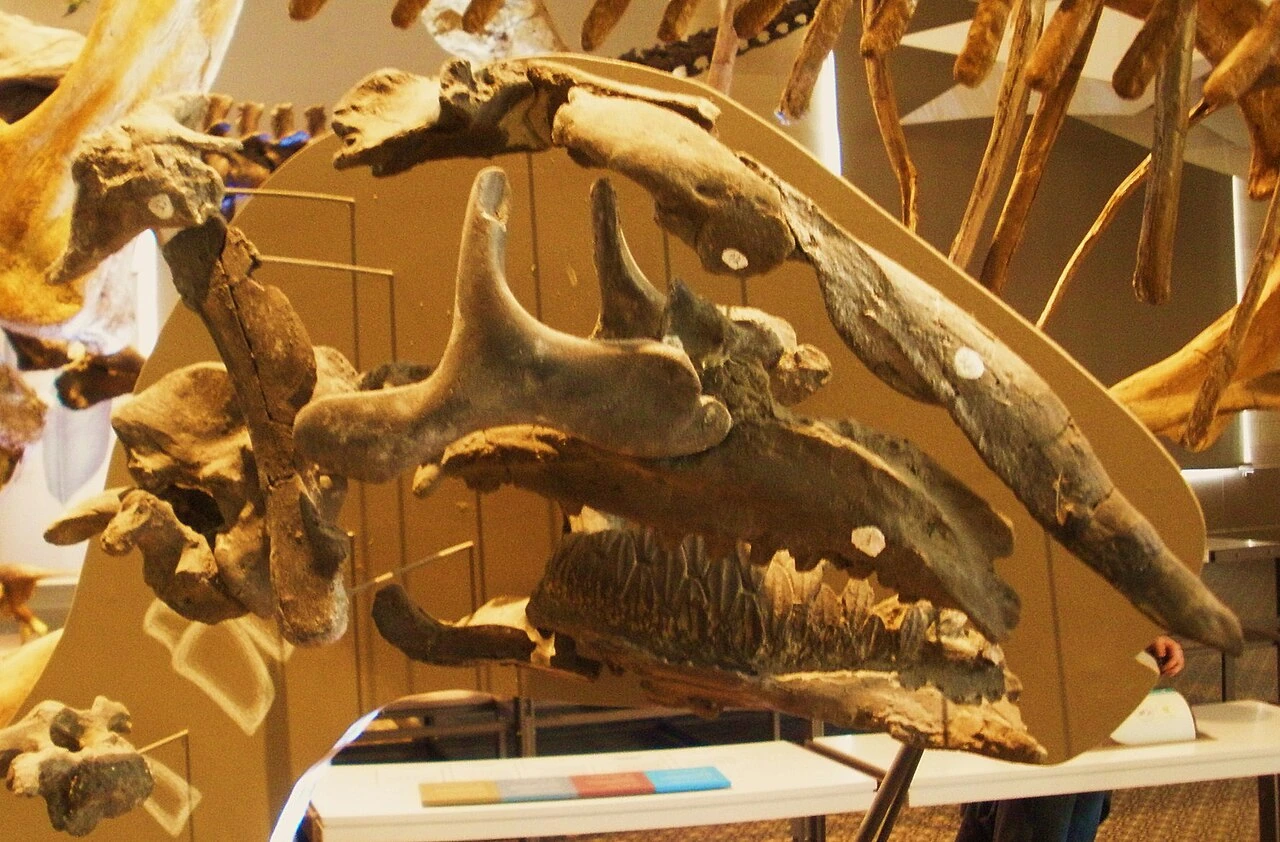
Descriptions document cheek-tooth batteries and incomplete hand bones that could potentially bear weight. The batteries are groups of teeth involved in processing vegetation. Hand anatomy makes forelimb use a testable question, while missing elements limit the reconstruction. Preserved bones do not reproduce the exact steps of a living animal or turn the pose of a mount into an observed walking style. [D1]

Scientific names associated with Bactrosaurus also need careful checking. A study could not substantiate an older assignment of material called Bactrosaurus prynadai to Tanius, another named dinosaur. Such a proposal is not a settled synonym for all Bactrosaurus. Comparisons must identify which specimen and species are being discussed before combining their evidence into one animal's profile. [D5]

PREHISTORIC ANIMAL DOSSIER

A life in profile.

The animal, the evidence, and the questions still open.

Juvenile-to-adult comparisons distinguish growth-related changes from diagnostic features; association of isolated bones and precise formation age require caution. [D2]

Profile scope: B. johnsoni from Erenhot: size-associated disarticulated type AMNH 6553, other juvenile/adult bones and new Sino-Belgian material. [D1]

Time
Late Cretaceous
Fossil locations in this exhibit
Inner Mongolia, China
How to read the evidence

Source supported identifies a description documented by the cited source. Inferred marks a reconstruction or functional estimate. Debated marks competing interpretations. Not established means the sources reviewed for this dossier do not support a firm conclusion; it does not mean a behavior never occurred.

A size reference is an estimate, not a population range. Nesting evidence does not by itself establish courtship, mate choice, or lifelong pairing.

Length

Inferred

About 6-6.5 m; largest-material reconstruction

Largest AMNH 6365 cranial and AMNH 6553 limb/jaw comparisons define a size-based adult reference. AMNH 6553 contains multiple individuals; this is not one measured animal or a species range. [D2]
Body mass

Inferred

About 1.8 t; adult-material model

Benson models mature-labelled AMNH 6553 limb circumferences. The collection contains multiple individuals; these size-associated bones are not securely paired. [D4] [D2]

Diet

Source supported

Plant eater

Museum classification and the described cheek-tooth batteries support herbivory. Exact plants and seasonal preferences are unresolved. [D3] [D1]

Habitat

Source supported

Late Cretaceous Iren Dabasu Formation

Erenhot bonebeds in Inner Mongolia preserve Bactrosaurus. Published studies disagree about finer formation age; no narrow numeric interval is adopted. [D2]

Locomotion

Inferred

Probably mainly four-legged

Skeletal correlates favor predominant quadrupedality in Bactrosaurus, although occasional bipedal stance is not excluded. [D6]

Distinctive anatomy

Source supported

Crestless skull, deep jaws and robust limbs

Adult limb shafts and muscle-attachment flanges are more developed than in juveniles; these differences cannot automatically diagnose separate species. [D2]

Reproduction & life together

Reproduction and nesting

Not established

Not established here

An ontogenetic series documents juvenile and adult bones, not a securely attributed nest, parental care or reproductive age. [D2]

Courtship and mating

Not established

Not established here

Growth variation establishes neither sex differences nor mating behavior. [D2]

Social behavior

Not established

Not established here

Disarticulated bones of different sizes occur together. Their association does not alone distinguish a living herd, transported remains or repeated accumulation. [D1]

Dossier research & sources

Sources and inspection notes for the claims in this profile.

  1. New Bactrosaurus (Dinosauria: Hadrosauroidea) material from Iren Dabasu (Inner Mongolia, P.R. China)Bulletin of the Royal Belgian Institute of Natural Sciences; Godefroit and colleagues (1998) · Accessed 2026-10-02Original full paper inspected, type/specimen lists and cranial/manual/vertebral figures. AMNH 6553 bones associated mainly by size; SBDE 95E5 hand supports potential forelimb weight bearing. Distinct from Gilmoreosaurus; type Iren Dabasu Late Cretaceous. · Inspected: page
  2. Cranial and appendicular ontogeny of Bactrosaurus johnsoni, a hadrosauroid dinosaur from the Late Cretaceous of northern ChinaPalaeontology; Prieto-Márquez (2011) · Accessed 2026-10-02Original publisher full text inspected: Methods estimates 6-6.5 m from largest AMNH 6365/6553 material using other hadrosauroid proportions, with size-based adult classification; AMNH 6553 explicitly includes multiple individuals. Skull/limb growth and age disagreement reviewed; no histological breeding age inferred. · Inspected: page
  3. BactrosaurusNatural History Museum, London · Accessed 2026-10-02Museum profile inspected: 6 m educational length, herbivory and China. Specimen/maturity/method unspecified; old precise age interval and family classification not adopted. · Inspected: excerpt
  4. Rates of Dinosaur Body Mass Evolution Indicate 170 Million Years of Sustained Ecological Innovation in the Avian Stem LineagePLOS Biology; Benson and colleagues (2014) · Accessed 2026-10-02Original Dataset S1 FullData and Masses rows independently inspected locally: AMNH 6553, mature label, measured limb circumferences and mass 1797.338 kg. Size-associated type scope checked against 1998 description. · Inspected: page
  5. Postcranial osteology of the basally branching hadrosauroid dinosaur Tanius sinensis from the Upper Cretaceous Wangshi Group of Shandong, ChinaJournal of Vertebrate Paleontology; Borinder and colleagues (2021) · Accessed 2026-10-02Institutional original abstract inspected; proposed Bactrosaurus prynadai-to-Tanius assignments cannot be substantiated. No genus-wide Tanius synonym adopted. · Inspected: abstract
  6. Osteological correlates for quadrupedality in ornithischian dinosaursActa Palaeontologica Polonica; Maidment and Barrett (2014) · Accessed 2026-10-02Original full paper inspected, especially pp 67-68: probably predominant quadrupedality in hadrosaurids and Bactrosaurus; Equijubus has only one codable correlate. Comparative inference, not genus-identified tracks. · Inspected: page

THE STORY IN THE FOSSILS

Meet Bactrosaurus

The new Sino-Belgian collection clarified Bactrosaurus anatomy, including incomplete hand elements that could bear weight. Such fossils make posture a testable skeletal inference while leaving exact hand reconstruction incomplete. [1]

Juvenile and adult skulls and limbs differ in robustness and proportions. The study distinguishes developmental change from diagnostic features. [2]

A note on scale and time

The dossier identifies the scope of each reference estimate. A mount, an individual fossil and a species-wide adult range are different measurements. Comparison metrics remain unavailable where adult scope has not been established. Unknown does not mean zero.

Sources & editorial notes

Sources support the stated claims and scopes. Refer to the evidence notes for uncertainty.

  1. New Bactrosaurus (Dinosauria: Hadrosauroidea) material from Iren Dabasu (Inner Mongolia, P.R. China)Bulletin of the Royal Belgian Institute of Natural Sciences; Godefroit and colleagues (1998) · Accessed 2026-10-02Original full paper inspected, type/specimen lists and cranial/manual/vertebral figures. AMNH 6553 bones associated mainly by size; SBDE 95E5 hand supports potential forelimb weight bearing. Distinct from Gilmoreosaurus; type Iren Dabasu Late Cretaceous. · Inspected: page
  2. Cranial and appendicular ontogeny of Bactrosaurus johnsoni, a hadrosauroid dinosaur from the Late Cretaceous of northern ChinaPalaeontology; Prieto-Márquez (2011) · Accessed 2026-10-02Original publisher full text inspected: Methods estimates 6-6.5 m from largest AMNH 6365/6553 material using other hadrosauroid proportions, with size-based adult classification; AMNH 6553 explicitly includes multiple individuals. Skull/limb growth and age disagreement reviewed; no histological breeding age inferred. · Inspected: page
  3. BactrosaurusNatural History Museum, London · Accessed 2026-10-02Museum profile inspected: 6 m educational length, herbivory and China. Specimen/maturity/method unspecified; old precise age interval and family classification not adopted. · Inspected: excerpt
  4. Rates of Dinosaur Body Mass Evolution Indicate 170 Million Years of Sustained Ecological Innovation in the Avian Stem LineagePLOS Biology; Benson and colleagues (2014) · Accessed 2026-10-02Original Dataset S1 FullData and Masses rows independently inspected locally: AMNH 6553, mature label, measured limb circumferences and mass 1797.338 kg. Size-associated type scope checked against 1998 description. · Inspected: page
  5. Postcranial osteology of the basally branching hadrosauroid dinosaur Tanius sinensis from the Upper Cretaceous Wangshi Group of Shandong, ChinaJournal of Vertebrate Paleontology; Borinder and colleagues (2021) · Accessed 2026-10-02Institutional original abstract inspected; proposed Bactrosaurus prynadai-to-Tanius assignments cannot be substantiated. No genus-wide Tanius synonym adopted. · Inspected: abstract
  6. Osteological correlates for quadrupedality in ornithischian dinosaursActa Palaeontologica Polonica; Maidment and Barrett (2014) · Accessed 2026-10-02Original full paper inspected, especially pp 67-68: probably predominant quadrupedality in hadrosaurids and Bactrosaurus; Equijubus has only one codable correlate. Comparative inference, not genus-identified tracks. · Inspected: page

FOLLOW YOUR CURIOSITY

Who will you meet next?

KEEP EXPLORING

More from the collection