
Body length
InferredAbout 1 m (museum reference)
Rounded educational value, without a named specimen or maturity assessment; it is not a verified adult maximum. [D1]
TWO WAYS TO PICTURE THE PAST
Compare the evidence with the familiar movie image. The illustrations are not to a shared scale.
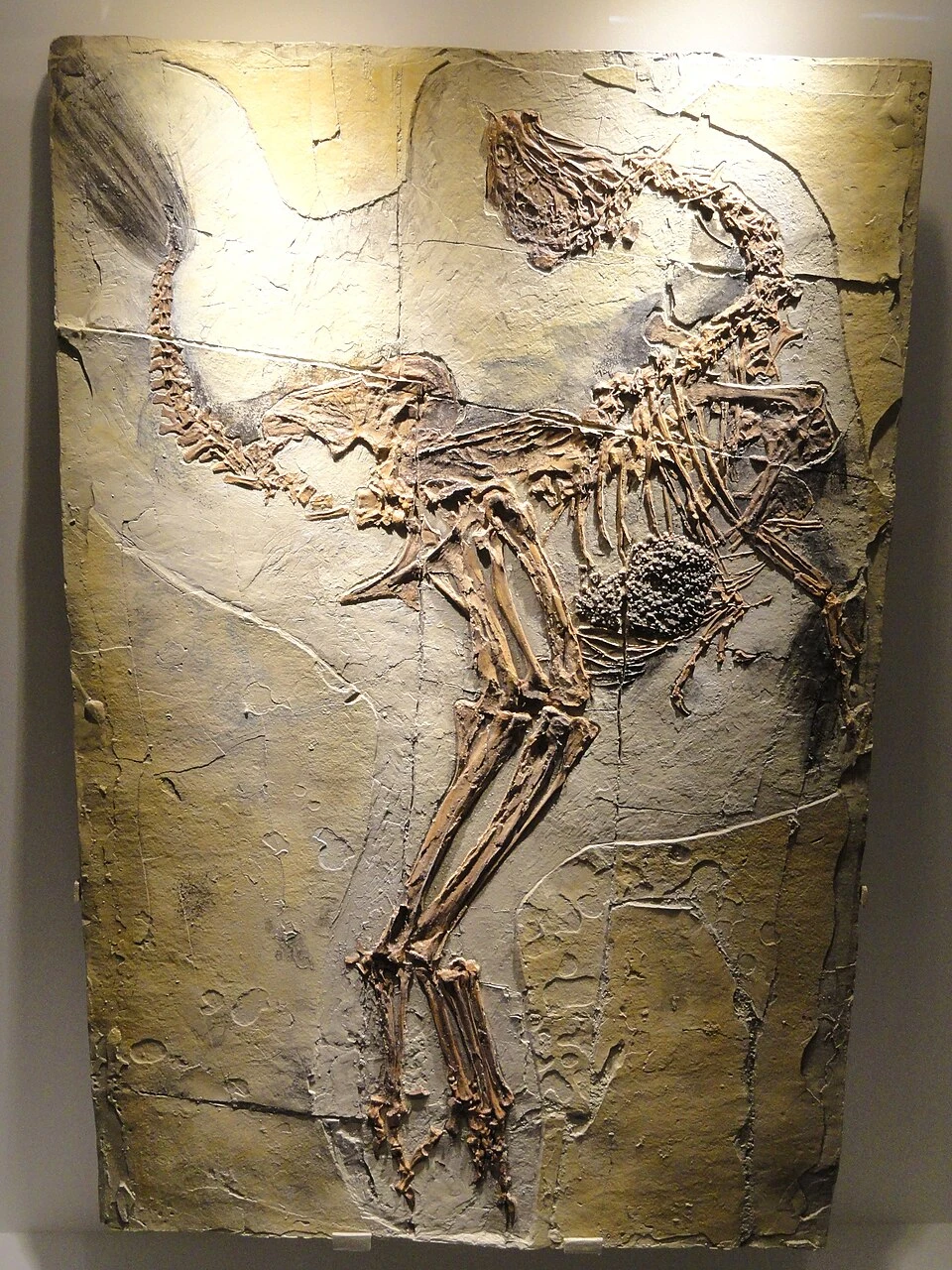
Museum slab display identified as Caudipteryx zoui at Houston Museum of Natural Science, photographed by Daderot. The Commons record does not provide a specimen number or establish original versus replica; the photograph shows the displayed bones and feather traces rather than a restored color pattern. [5]
Caudipteryx zoui, feathered dinosaur plate, Early Cretaceous, Yixian Formation, Liaoning, China - Houston Museum of Natural Science - DSC01866.JPG · Daderot. CC0 1.0. Current Commons image converted to WebP and proportionally resized; no cropping, mirroring, anatomical edits or compositing. Original annotations retained. The source license applies to these versions.
The photograph or figure shows the credited fossil material; displayed mounts and labels can include interpretation.
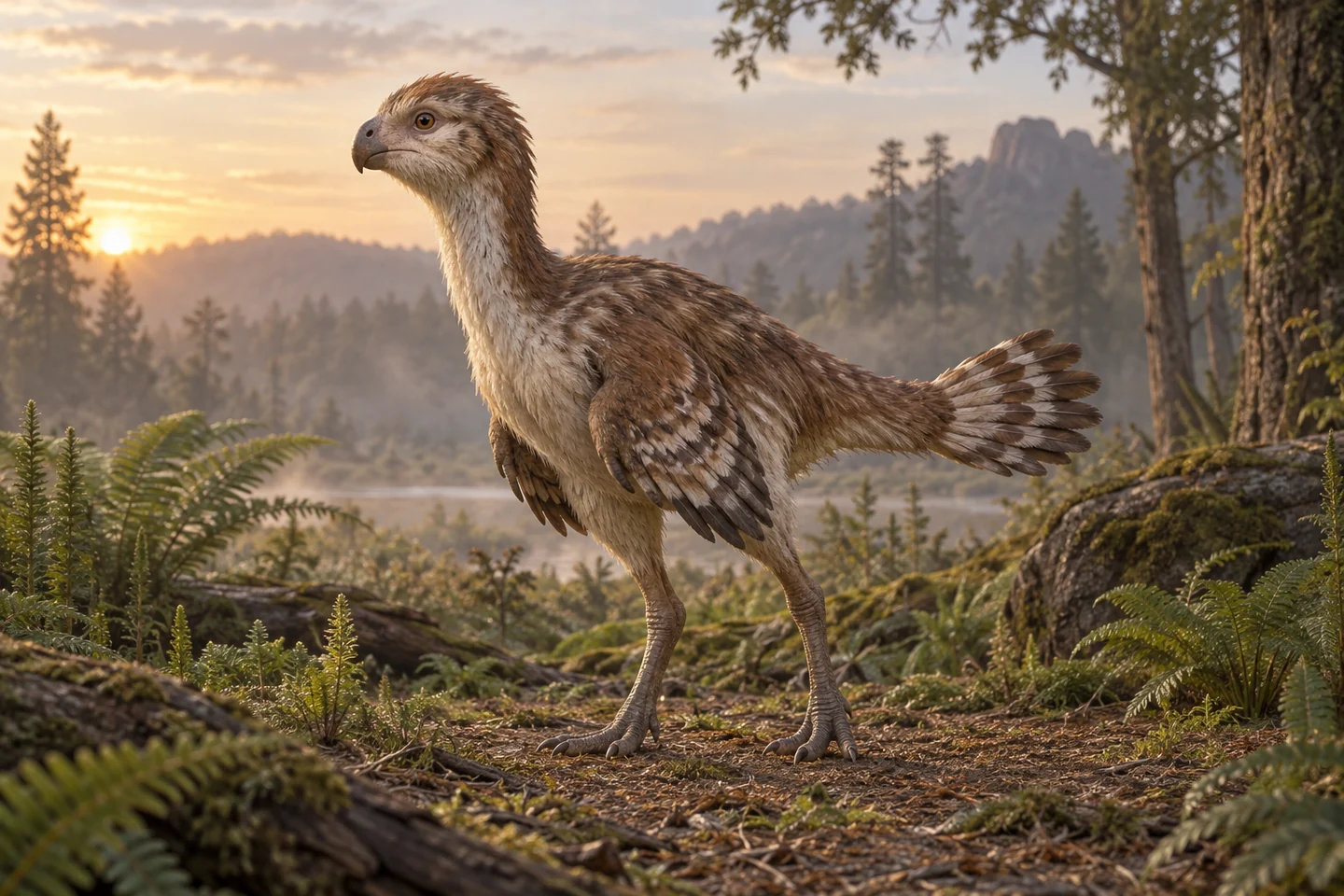
Original cinematic interpretation of Caudipteryx zoui. Colors, soft tissues, scenery and missing anatomy are reconstructed artistic choices; this is not a directly observed individual or behavior. Feather colors and posture are artistic; the animal is grounded rather than shown in flight. Lighting, coloration and scenery are artistic choices. This image does not document a fossil locality or behavior.
Original artwork · artistic interpretation.
Scientific view: source-informed reconstruction, credited paleoart or specimen-based imagery. Movie-style view: Original artistic interpretation. Reconstructions involve uncertainty.
MEET THE ANIMAL
Caudipteryx was a small dinosaur from Early Cretaceous China. A museum reference of about one metre gives a rough sense of its length without establishing an adult maximum. Weak teeth and gizzard stones have contributed to dietary ideas, including omnivory. Stones inside the digestive system do not by themselves identify a precise menu of plants and animals. [D1]
Its fossils preserve feathers, an important anatomical observation rather than just a feature borrowed from modern birds. The feather discoveries helped connect non-avian dinosaurs with the wider history of bird feathers. Preserving a feather does not reveal every way the animal used it. Anatomy and function need separate evidence, even when a reconstruction makes the covering easy to imagine. [D2]
Researchers later tested whether running could passively move reconstructed wings. Mathematical models and experiments investigated that physical possibility without observing a fossil animal flapping. The study does not demonstrate powered flight or measure an actual running speed. Caudipteryx is therefore a useful example of feathers outside a straightforward flying-bird picture: preserved structures are clear evidence, while their movement and purposes require careful interpretation. [D4]
PREHISTORIC ANIMAL DOSSIER
The animal, the evidence, and the questions still open.
Symmetrical vaned feathers accompanied a terrestrial body plan; their presence does not establish powered flight. [D4]
Profile scope: Genus — Caudipteryx; C. zoui and C. dongi remain separate species. [D3]
Source supported identifies a description documented by the cited source. Inferred marks a reconstruction or functional estimate. Debated marks competing interpretations. Not established means the sources reviewed for this dossier do not support a firm conclusion; it does not mean a behavior never occurred.
A size reference is an estimate, not a population range. Nesting evidence does not by itself establish courtship, mate choice, or lifelong pairing.
About 1 m (museum reference)
Rounded educational value, without a named specimen or maturity assessment; it is not a verified adult maximum. [D1]
About 5 kg (biomechanical model)
The 2019 study used a generic reconstructed body and femur-based scaling. Its modeled mass is not a weighed fossil individual or species-wide range. [D4]
Omnivory inferred; herbivory also proposed
The museum suggests insects and possibly plants from weak teeth and gizzard stones. The 2000 description favored plant eating; stones alone do not establish a prey or plant menu. [D1] [D3]
Yixian Formation, northeastern China
C. dongi was described from Liaoning deposits of the Yixian Formation; the formation records burial settings, not exclusive habitat preferences. [D3]
Ground-dwelling, flightless reconstruction
Long hindlimbs and short arms support terrestrial movement. The 2019 passive-flapping model and experiments do not demonstrate powered flight or measure fossil running speed. [D4]
Short tail with a fan of vaned feathers
The tail fan is preserved without a fused pygostyle. Arm and tail feathers need not have had the same functions as those of flying birds. [D5]
Not established here
Focused reproductive searches did not establish an assigned Caudipteryx nest, clutch size, incubation time or parental attendance in the inspected sources.
Tail display is a comparative hypothesis
Oviraptorosaur tail comparisons make visual display plausible. They do not reveal a Caudipteryx mating ritual, mate choice or confirmed differences between sexes. [D5]
Not established here
Reviewed anatomical and biomechanical records do not establish flock size, lifelong grouping or coordinated behavior; focused social searches found no secure genus-specific demonstration.
Sources and inspection notes for the claims in this profile.
THE STORY IN THE FOSSILS
The original feather discoveries made a small non-avian dinosaur part of the evidence linking dinosaur integument with bird feathers. A fossil feather is an anatomical observation; its exact behavioral use requires additional evidence. [2]
A later study tested whether running could passively move reconstructed wings. Its mathematical and experimental result explores a possible physical mechanism; it does not record an animal flapping in life. [4]
The dossier identifies the scope of each reference estimate. A mount, an individual fossil and a species-wide adult range are different measurements. Comparison metrics remain unavailable where adult scope has not been established. Unknown does not mean zero.
Sources support the stated claims and scopes. Refer to the evidence notes for uncertainty.
KEEP EXPLORING
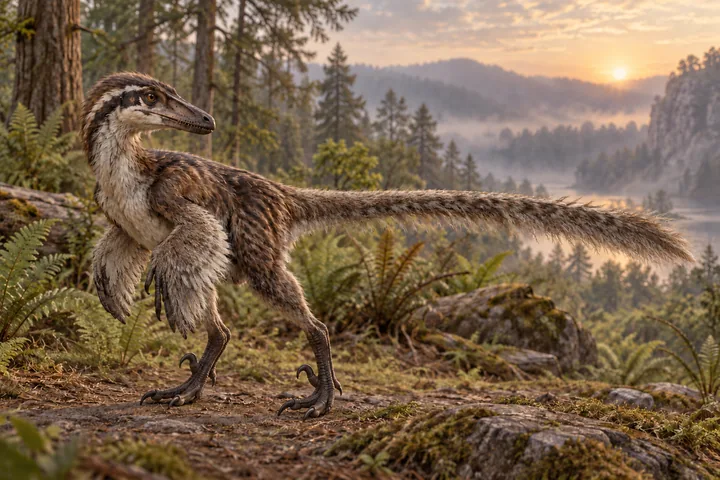
Sinornithosaurus millenii
Sinornithosaurus preserves branching feather structures in stone.
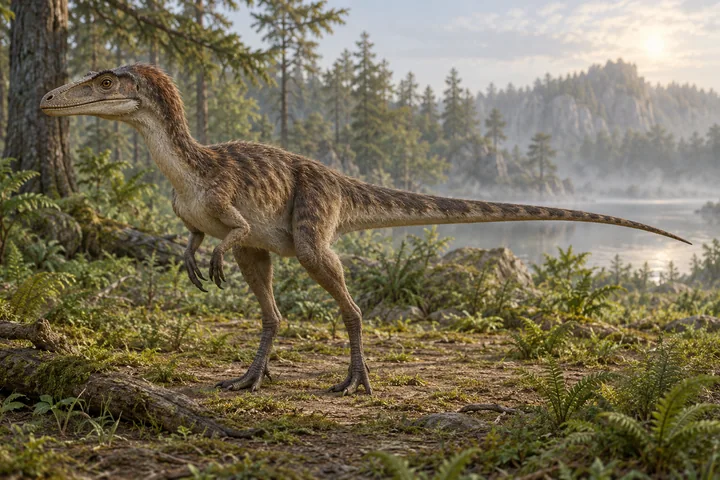
Dilong paradoxus
Dilong was a small tyrannosauroid with long arms; a referred fossil preserves branching skin filaments.
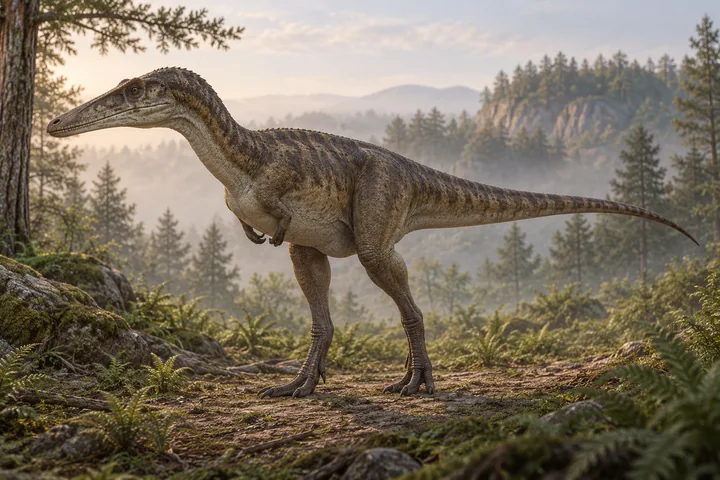
Xiongguanlong baimoensis
Xiongguanlong had a remarkably long, shallow snout and several skeletal features later seen in giant tyrannosaurids.