
Length
InferredAbout 10 m; museum reference
The educational reconstruction lacks specimen, life-stage and method details. It is not a directly measured adult or species range. [D5]
EXHIBIT 176
Cedarpelta bilbeyhallorum
Cedarpelta was a large armored plant eater with an elongate skull and comparatively subdued cranial ornament. [4]
TWO WAYS TO PICTURE THE PAST
Compare the evidence with the familiar movie image. The illustrations are not to a shared scale.
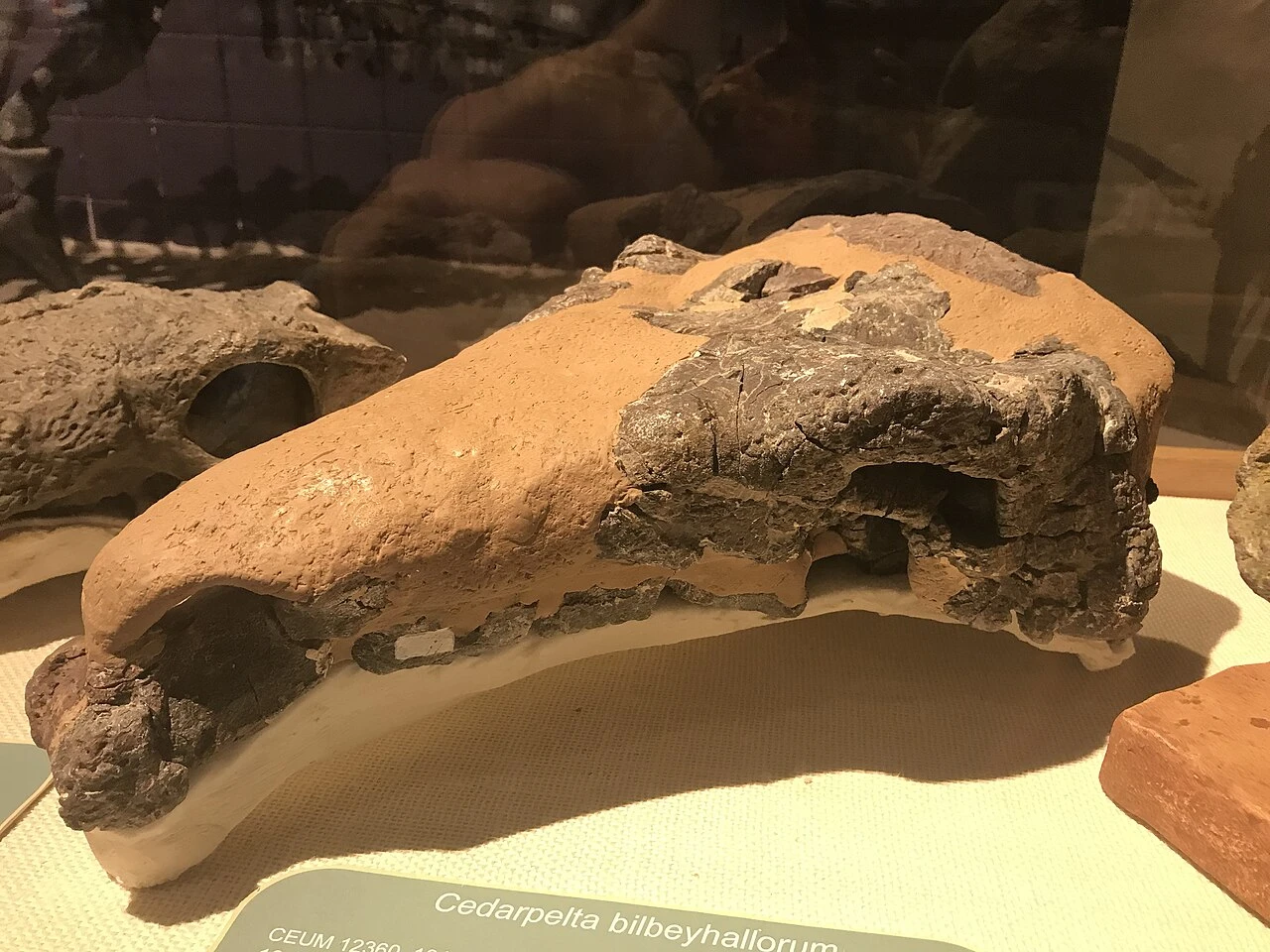
Museum display of C. bilbeyhallorum, labeled CEUM 12360, with original bone and extensive restoration visible. Published reconstruction combined two incomplete immature skulls and restored missing regions comparatively; it is not one complete excavated skull. Living colors and soft tissues are unknown. [4]
Cedarpelta.jpg · ケラトプスユウタ. CC BY-SA 4.0. Proportional resizing and WebP conversion; no anatomy edits.
Skeletal mounts and drawings may restore missing parts; the caption identifies the displayed material.
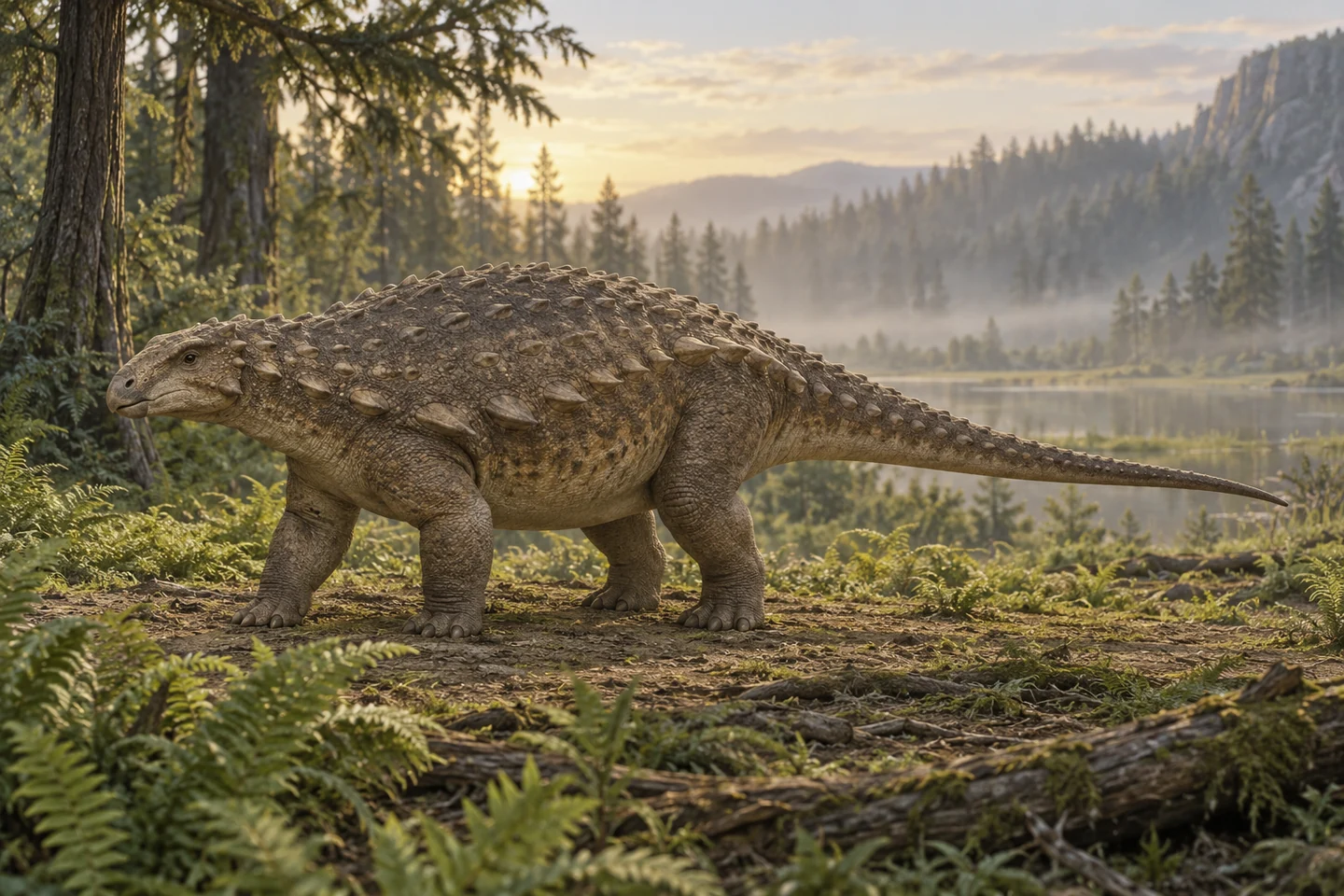
Original cinematic interpretation of Cedarpelta. Incomplete skull and postcranial material guide this reconstruction. Beak, complete armor layout and simple tail tip restore missing regions; a club is not assumed or ruled out by this image. Colors, lighting and scenery are artistic choices; this is not directly observed behavior. Lighting, coloration and scenery are artistic choices. This image does not document a fossil locality or behavior.
Original artwork · artistic interpretation.
Scientific view: source-informed reconstruction, credited paleoart or specimen-based imagery. Movie-style view: Original artistic interpretation. Reconstructions involve uncertainty.
MEET THE ANIMAL
Cedarpelta was an armored dinosaur from Early Cretaceous Utah. Later fieldwork places its quarries in the upper Ruby Ranch part of the Cedar Mountain Formation. Two large skulls were interpreted as juvenile, and several kinds of dinosaur occurred in the deposits. Large fossil size and skeletal maturity are therefore separate questions; a substantial skull need not belong to a fully grown animal. [D2]
Its skull was elongated and only modestly ornamented compared with more elaborately armored relatives. No associated complete tail club is established in the reviewed evidence. This lack of evidence should not be converted into proof that every Cedarpelta lacked a club, or replaced with a familiar club simply to complete an illustration. [D4]
The referred body bones include robust limbs that support a four-legged reconstruction by comparison with other ankylosaurs. However, missing regions still require restoration. The surviving bones do not measure running speed or show an exact walking rhythm. An individual mass model is also not established by the reviewed description, so a rendered body cannot be treated as a directly measured weight. [D1]
PREHISTORIC ANIMAL DOSSIER
The animal, the evidence, and the questions still open.
The fossils document an unusual armored dinosaur, but an associated complete tail club is not established. Relationships within Ankylosauria remain sensitive to analysis. [D1] [D6]
Profile scope: C. bilbeyhallorum: incomplete juvenile skulls and referred postcrania from Utah’s Price River quarries; reconstructions combine material and restore missing anatomy. [D2] [D3]
Source supported identifies a description documented by the cited source. Inferred marks a reconstruction or functional estimate. Debated marks competing interpretations. Not established means the sources reviewed for this dossier do not support a firm conclusion; it does not mean a behavior never occurred.
A size reference is an estimate, not a population range. Nesting evidence does not by itself establish courtship, mate choice, or lifelong pairing.
About 10 m; museum reference
The educational reconstruction lacks specimen, life-stage and method details. It is not a directly measured adult or species range. [D5]
Not established here
The reviewed postcranial description supplies no clearly scoped individual mass model; skull/body composites cannot establish weight directly. [D1]
Plant eater
Museum and survey accounts identify herbivory. Exact food plants, gut contents and feeding height are not established here. [D4] [D5]
Albian upper Ruby Ranch Member, Utah
The 2016 field study places the quarries in Cedar Mountain Formation’s upper Ruby Ranch succession, revising the older basal-Mussentuchit assignment. [D2]
Probably quadrupedal
Referred robust limbs and ankylosaur relationships support a four-legged reconstruction. Genus-identified tracks and speed are not established. [D1]
Elongate skull; modest cranial ornament
The survey emphasizes a weakly ornamented skull and straight ischium. Lack of tail-club evidence does not prove every individual lacked one. [D4]
Not established here
Both skulls retain sutures interpreted as incomplete maturity. This does not establish sexual maturity, sex, nests or parental care. [D3]
Not established here
Cranial ornament and a hypothetically restored tail do not demonstrate display, mate choice or sex differences. No mating evidence is established. [D4]
Not established here
Several individuals and dinosaur kinds occur in the quarries. Disarticulated association alone does not establish a Cedarpelta herd or family group. [D2]
Sources and inspection notes for the claims in this profile.
THE STORY IN THE FOSSILS
The reconstructed skull combines information from two incomplete skulls. Missing parts were mirrored or restored comparatively, so it is not a single complete skull exactly as excavated. [3]
Later fieldwork identifies the type skulls as large juveniles in an Albian assemblage. Size, skeletal maturity and reproductive adulthood are separate questions that a large fossil alone cannot settle. [2]
The dossier identifies the scope of each reference estimate. A mount, an individual fossil and a species-wide adult range are different measurements. Comparison metrics remain unavailable where adult scope has not been established. Unknown does not mean zero.
Sources support the stated claims and scopes. Refer to the evidence notes for uncertainty.
KEEP EXPLORING
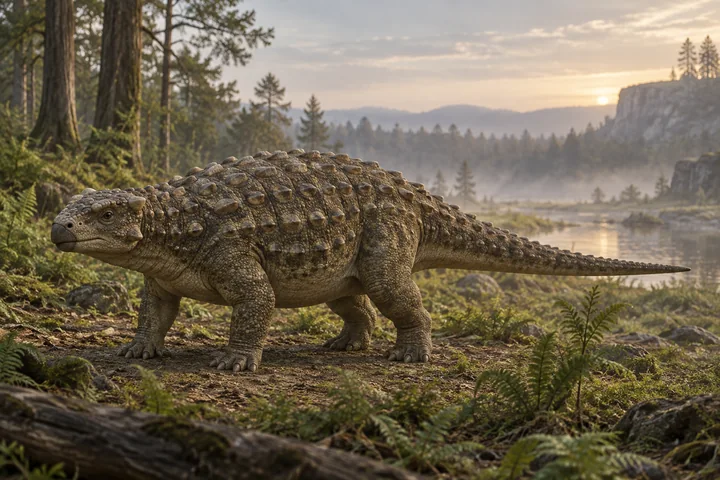
Kunbarrasaurus ieversi
Kunbarrasaurus is an Australian armored dinosaur whose preserved gut contents provide direct evidence of plant eating.
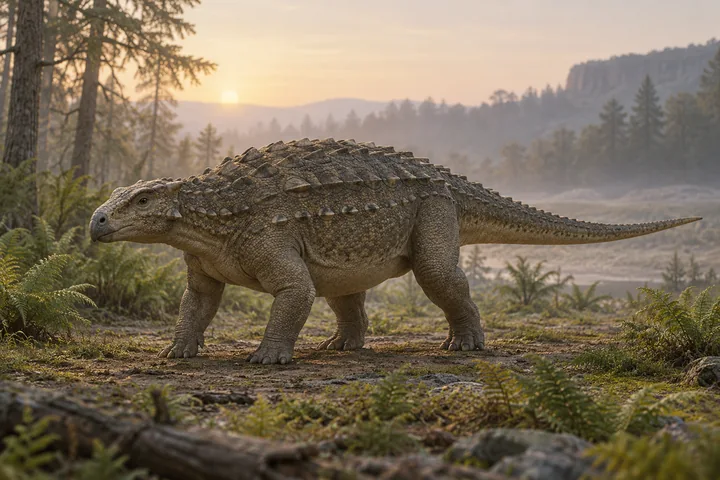
Gobisaurus domoculus
Gobisaurus was an armored plant eater identified principally through a skull from Inner Mongolia.
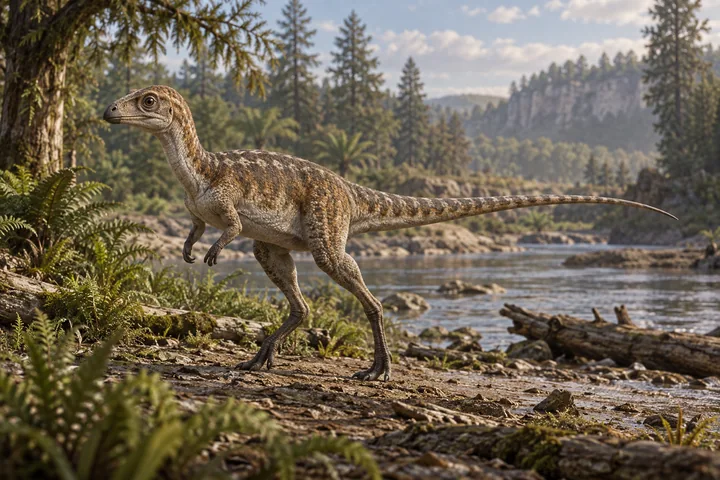
Hypsilophodon foxii
Hypsilophodon foxii was a small, ground-dwelling plant-eater from the Isle of Wight. Its lightly built skeleton and long hind limbs are consistent with agile running.