
Length
InferredUp to about 5 m; skull-based museum estimate
The museum extrapolates from skull size without disclosing method or maturity. No measured adult-individual comparison is used. [D3]
EXHIBIT 175
Gobisaurus domoculus
Gobisaurus was an armored plant eater identified principally through a skull from Inner Mongolia. [3]
TWO WAYS TO PICTURE THE PAST
Compare the evidence with the familiar movie image. The illustrations are not to a shared scale.
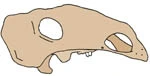
Generalized illustration of G. domoculus holotype IVPP V 12563 adapted from the original description. It illustrates skull form, rather than a complete preserved body or a disputed Zhongyuansaurus referral. Living colors and soft tissues are unknown. [4]
Gobisaurus.jpg · Greygirlbeast. CC BY-SA 3.0. Converted to WebP at the original 150 by 76 pixels; no upsampling or anatomy edits.
Skeletal mounts and drawings may restore missing parts; the caption identifies the displayed material.
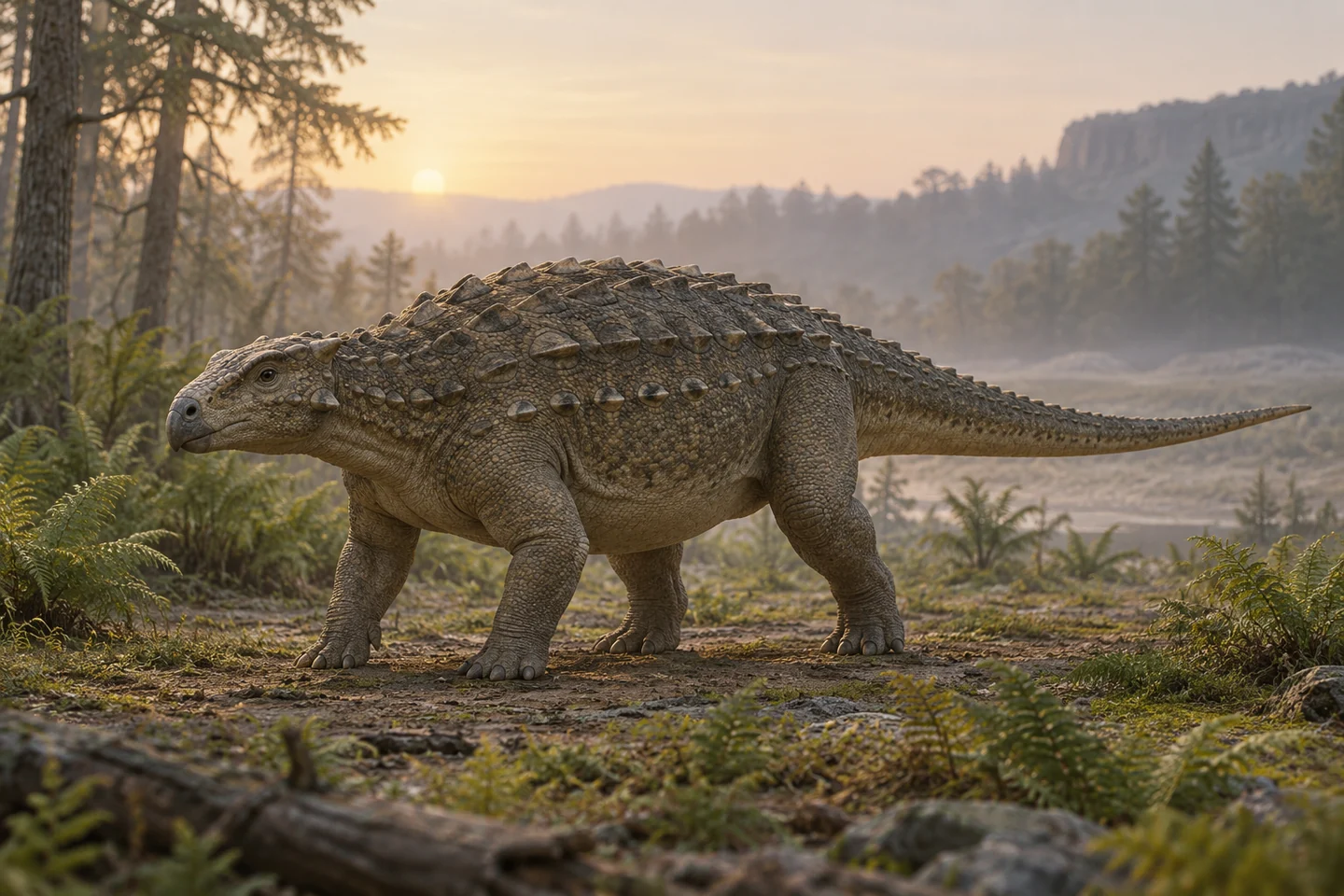
Original cinematic interpretation of Gobisaurus. The published type description concerns the skull; body, armor arrangement and simple tail tip are comparative artistic hypotheses, without claiming a confirmed club or its absence. Colors, lighting and scenery are artistic choices; this is not directly observed behavior. Lighting, coloration and scenery are artistic choices. This image does not document a fossil locality or behavior.
Original artwork · artistic interpretation.
Scientific view: source-informed reconstruction, credited paleoart or specimen-based imagery. Movie-style view: Original artistic interpretation. Reconstructions involve uncertainty.
MEET THE ANIMAL
Gobisaurus was a plant-eating armored dinosaur from China. The museum estimates a body length of up to about five metres by extrapolating from the skull. That means the size is reconstructed from a part of the animal, not measured from a complete skeleton. The calculation method and growth stage are unspecified, so it is not a verified adult maximum. [D3]
The original study concentrated on a skull, while the body bones were unavailable for examination. The skull has a relatively long snout and surface armor. Its missing body limits the certainty of a complete restoration, including limb proportions and walking details. A finished illustration should not make an unknown tail or foot look as securely established as the skull. [D1]
More recent research places the Maortu fossil assemblage in the Lower Cretaceous Miaogou Formation of Inner Mongolia. This revises the geological framework used in some older accounts. A dinosaur's period and location should follow the best supported identification of its rock horizon, while avoiding a precise numerical age that the inspected research does not establish for that individual fossil. [D2]
PREHISTORIC ANIMAL DOSSIER
The animal, the evidence, and the questions still open.
The skull resembles Shamosaurus closely, with a relatively long snout and granular surface armor. Similarity has prompted taxonomic debate rather than a settled merger. [D4]
Profile scope: G. domoculus, holotype IVPP V 12563; disputed Zhongyuansaurus referrals and proposed Shamosaurus overlap are treated separately. [D1] [D4]
Source supported identifies a description documented by the cited source. Inferred marks a reconstruction or functional estimate. Debated marks competing interpretations. Not established means the sources reviewed for this dossier do not support a firm conclusion; it does not mean a behavior never occurred.
A size reference is an estimate, not a population range. Nesting evidence does not by itself establish courtship, mate choice, or lifelong pairing.
Up to about 5 m; skull-based museum estimate
The museum extrapolates from skull size without disclosing method or maturity. No measured adult-individual comparison is used. [D3]
Not established here
The type description focuses on a skull; postcranium was unavailable for study. No securely scoped mass model is established in these reviewed sources. [D1]
Plant eater
Museum classification supports herbivory; gut contents and a genus-specific plant menu are not established here. [D3]
Lower Cretaceous Maortu, Inner Mongolia
Recent original research assigns the Maortu assemblage including Gobisaurus to Miaogou Formation; older Ulansuhai labels and numerical ages are not adopted uncritically. [D2]
Probably quadrupedal
This follows ankylosaurid relationships. The original study could not examine postcranium, so stance and limb proportions are restored comparatively. [D1]
Long-snouted skull with granular armor
The researcher contrasts this texture with later ankylosaurids’ distinct skull tiles. A complete type-associated tail club is not demonstrated here. [D4] [D1]
Not established here
An incompletely mature Zhongyuansaurus skull was discussed in the synonym proposal; disputed referral cannot establish Gobisaurus breeding age or nesting. [D4]
Not established here
The type skull does not demonstrate sex differences, mate choice or courtship; a reconstructed tail is not behavioral evidence. [D1]
Not established here
Poorly documented type provenance and one described skull do not establish a herd, family group or conspecific aggregation. [D1]
Sources and inspection notes for the claims in this profile.
THE STORY IN THE FOSSILS
Later systematic studies consider whether separately named Chinese ankylosaurs represent the same genus. Conflicting treatments require a clear boundary between the secure type and disputed referrals. [5]
Henan Geological Museum’s 2025 report announces a new species of Zhongyuansaurus, retaining that genus. This contrasts with the earlier synonym proposal and is not treated as another confirmed Gobisaurus species. [6]
The dossier identifies the scope of each reference estimate. A mount, an individual fossil and a species-wide adult range are different measurements. Comparison metrics remain unavailable where adult scope has not been established. Unknown does not mean zero.
Sources support the stated claims and scopes. Refer to the evidence notes for uncertainty.
KEEP EXPLORING
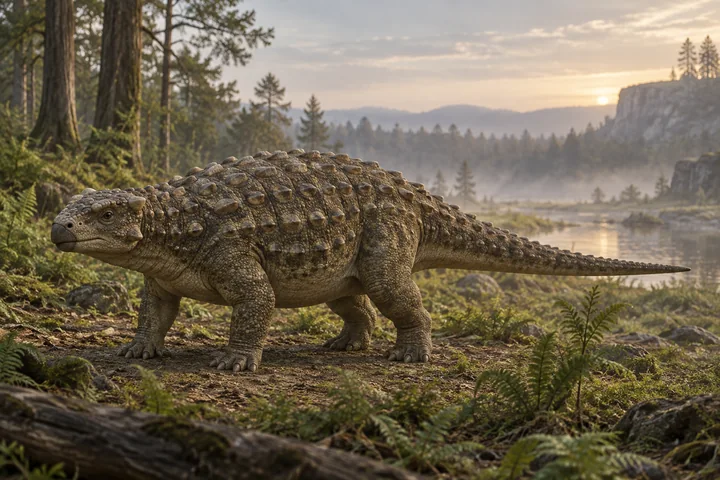
Kunbarrasaurus ieversi
Kunbarrasaurus is an Australian armored dinosaur whose preserved gut contents provide direct evidence of plant eating.
Cedarpelta bilbeyhallorum
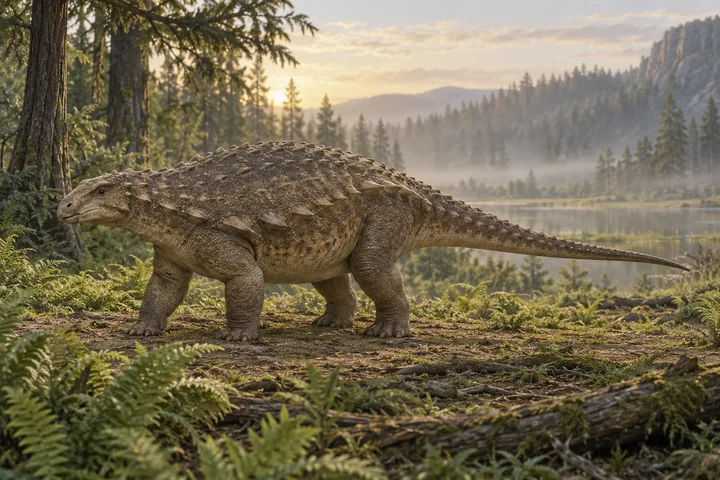
Cedarpelta was a large armored plant eater with an elongate skull and comparatively subdued cranial ornament.
Hypsilophodon foxii
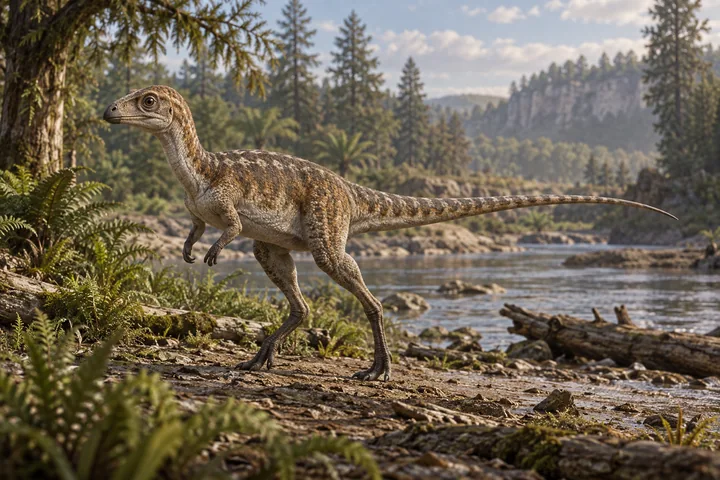
Hypsilophodon foxii was a small, ground-dwelling plant-eater from the Isle of Wight. Its lightly built skeleton and long hind limbs are consistent with agile running.