
Body length
InferredAbout 4 m (museum reference)
Educational reference without specimen, reconstruction method or maturity. The incomplete type does not establish an adult maximum. [D3]
EXHIBIT 159
Chindesaurus bryansmalli
Chindesaurus is anchored to a partial postcranial skeleton from Arizona, rather than a complete skull-and-body fossil. [2]
TWO WAYS TO PICTURE THE PAST
Compare the evidence with the familiar movie image. The illustrations are not to a shared scale.
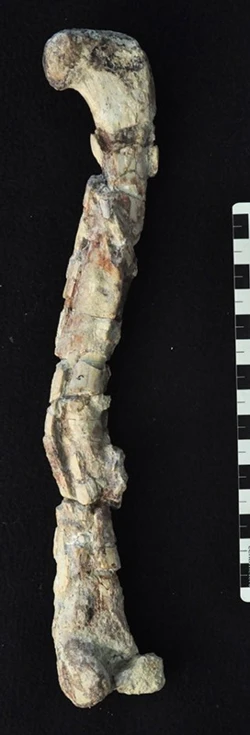
Right femur photographed from behind, identified as Chindesaurus bryansmalli by the U.S. National Park Service. The institutional page supplies no specimen number, so it is not automatically treated as the PEFO 10395 type. The scale and broken bone are retained; no complete body or adult size can be read from this image alone. [1]
Chindesaurus femur.png · U.S. National Park Service. Public domain (U.S. federal government). Current Commons 250 px preview converted to WebP; the smaller source was not upsampled and the thumbnail retains the same dimensions. No cropping, mirroring, anatomical edits or compositing; original scale retained.
The photograph or figure shows the credited fossil material; displayed mounts and labels can include interpretation.
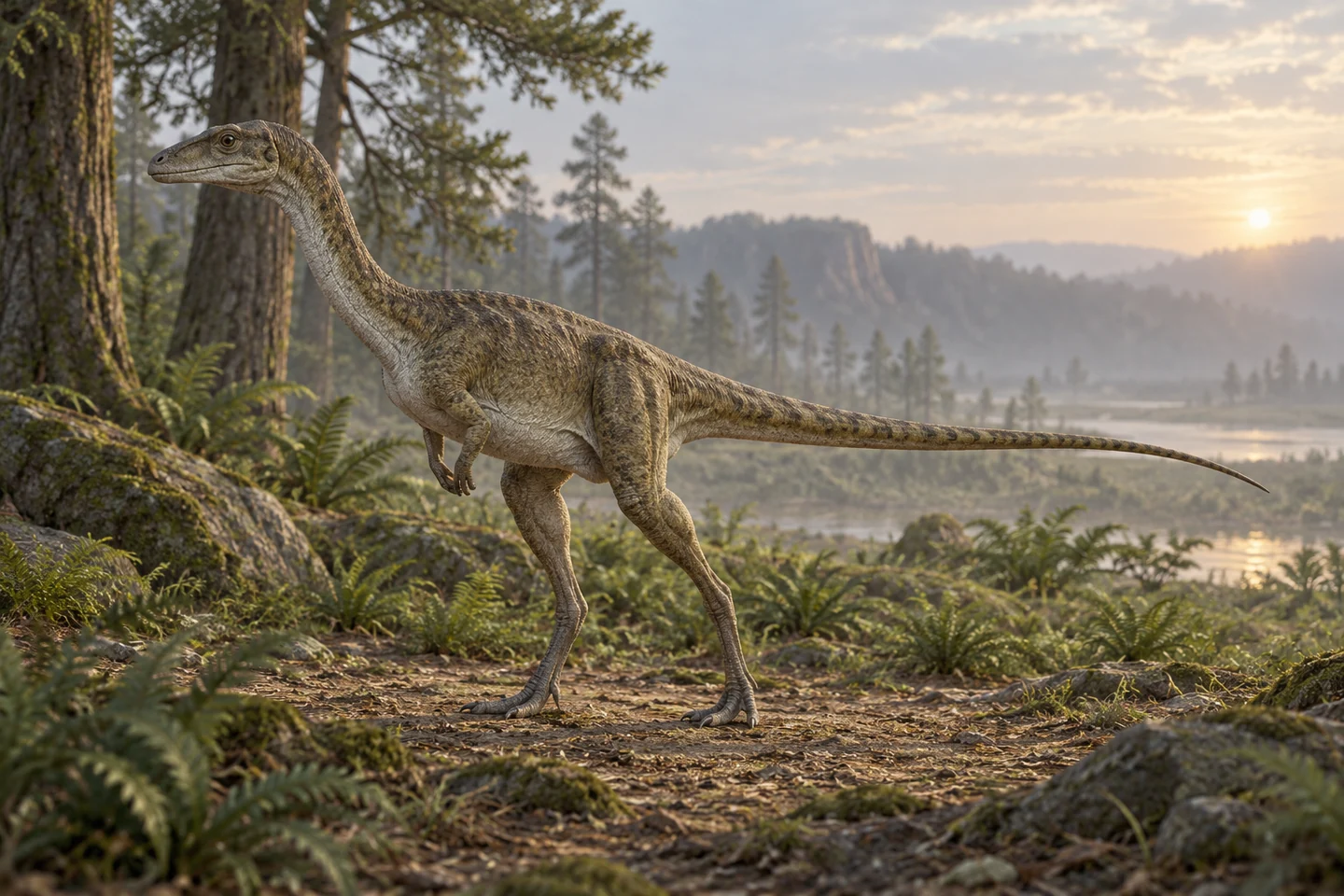
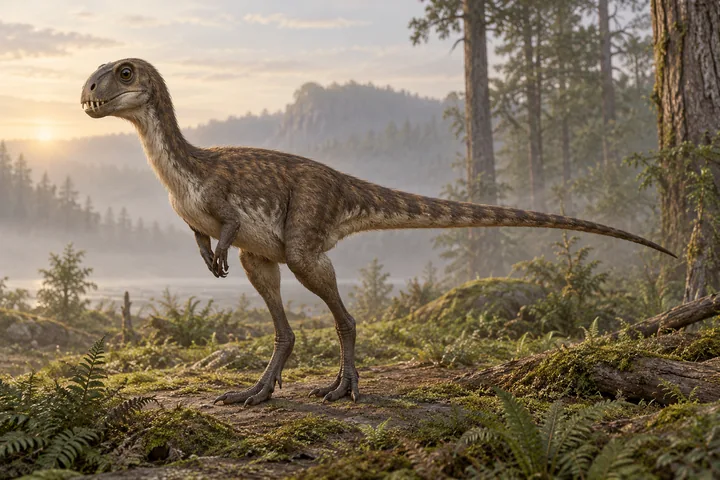
Original cinematic interpretation of Chindesaurus. The incomplete postcranial material guides the hindlimbs; skull, arms and external covering are comparative reconstructions. Lighting, colors and scenery are artistic choices; this image does not document directly observed behavior. Lighting, coloration and scenery are artistic choices. This image does not document a fossil locality or behavior.
Original artwork · artistic interpretation.
Scientific view: source-informed reconstruction, credited paleoart or specimen-based imagery. Movie-style view: Original artistic interpretation. Reconstructions involve uncertainty.
MEET THE ANIMAL
Chindesaurus was a Late Triassic dinosaur from the United States. The museum classifies it as a carnivore and gives a general length reference of about four metres. Neither classification nor size reference comes from a complete animal with a preserved meal. The length has no specified individual or growth stage and should not be treated as a verified adult maximum. [D3]
Its discovery at Petrified Forest National Park became an important part of the park's dinosaur history. The skeleton is partial, so identification depends on comparing the surviving bones, not just recognizing a dinosaur-shaped fragment. A park can preserve many valuable fossils without every similar bone being securely assigned to the same genus. An identification should follow the actual specimen's evidence. [D2]
An isolated hip bone once referred to Chindesaurus was later diagnosed separately as Caseosaurus. That history shows why older names and referrals need checking. Moving a fossil between named dinosaurs changes which animal its anatomy can describe. The separate diagnosis is not a reason to combine both genera into one uniform body or treat every historical assignment as settled. [D4]
PREHISTORIC ANIMAL DOSSIER
The animal, the evidence, and the questions still open.
A 2026 Morphoraptora hypothesis links it with Tawa. Fossil referrals and a newly named, non-overlapping type require particular caution. [D5]
Profile scope: Genus — Chindesaurus; secure scope centered on C. bryansmalli type PEFO 10395. [D1]
Source supported identifies a description documented by the cited source. Inferred marks a reconstruction or functional estimate. Debated marks competing interpretations. Not established means the sources reviewed for this dossier do not support a firm conclusion; it does not mean a behavior never occurred.
A size reference is an estimate, not a population range. Nesting evidence does not by itself establish courtship, mate choice, or lifelong pairing.
About 4 m (museum reference)
Educational reference without specimen, reconstruction method or maturity. The incomplete type does not establish an adult maximum. [D3]
Not established here
The partial type has no defensible individual mass estimate in the reviewed sources; museum length is not converted into an invented weight. [D1] [D3]
Carnivory inferred by comparison
Museum classification as a carnivore is comparative, rather than preserved Chindesaurus teeth or stomach contents. [D3]
Chinle Formation, Arizona
The type comes from Petrified Forest National Park in the Late Triassic Chinle Formation; only secure material anchors this occurrence. [D1]
Two-legged movement inferred
Preserved pelvic and hindlimb anatomy supports a bipedal restoration. Its incomplete skeleton does not establish speed or endurance. [D1]
Partial backbone, pelvis and hindlimbs
The revised diagnosis relies on postcranial characters, including distinctive tibial anatomy; the head in life art is comparative. [D1]
Not established here
A partial postcranial type does not identify breeding age, eggs, nesting or parental care; focused searches located no direct evidence. [D1]
Not established here
Neither soft tissues nor a diagnostic skull are preserved in the type. No reviewed source identifies a mating display. [D1]
Not established here
Historical referrals include nondiagnostic material. Several similarly assigned fossils cannot by themselves establish a Chindesaurus social group. [D1]
Sources and inspection notes for the claims in this profile.
THE STORY IN THE FOSSILS
A park discovery can be historically important without every similar fragment being diagnosable. The redescription narrowed secure Chindesaurus identity to the type material. [2] [1]
Ptychotherates was named from a skull in a younger deposit. Its lack of anatomical overlap with Chindesaurus requires a reservation for future catalog expansion. [5]
The dossier identifies the scope of each reference estimate. A mount, an individual fossil and a species-wide adult range are different measurements. Comparison metrics remain unavailable where adult scope has not been established. Unknown does not mean zero.
Sources support the stated claims and scopes. Refer to the evidence notes for uncertainty.
KEEP EXPLORING
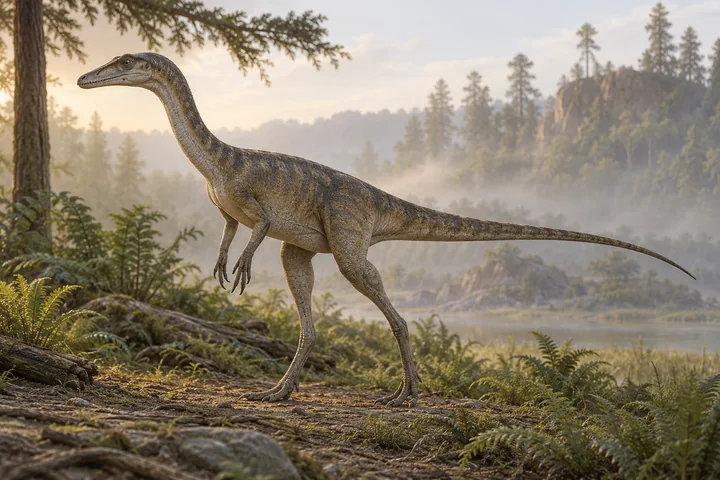
Tawa hallae
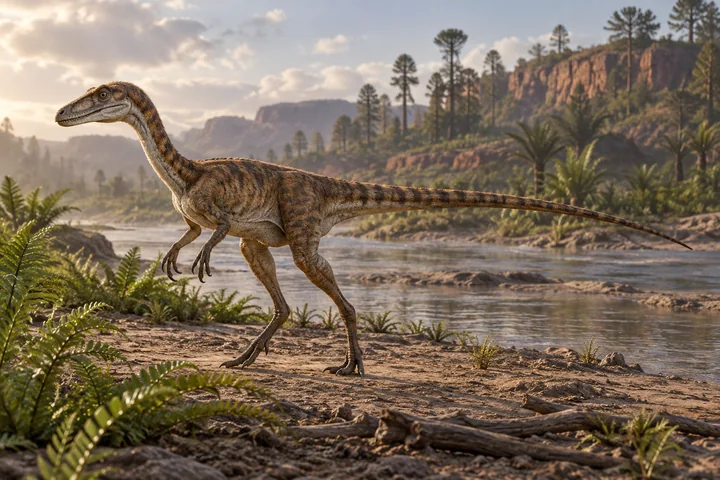
Tawa combined a long snout, slender limbs and a hand with three functional fingers.
Daemonosaurus chauliodus
Daemonosaurus is known from a small, deep skull with unusually enlarged front teeth.
Eoraptor lunensis
Eoraptor was a small, early dinosaur from Argentina's Ischigualasto Formation. Its mixed dental features have produced competing feeding interpretations, and later studies place it near the origin of sauropodomorphs.